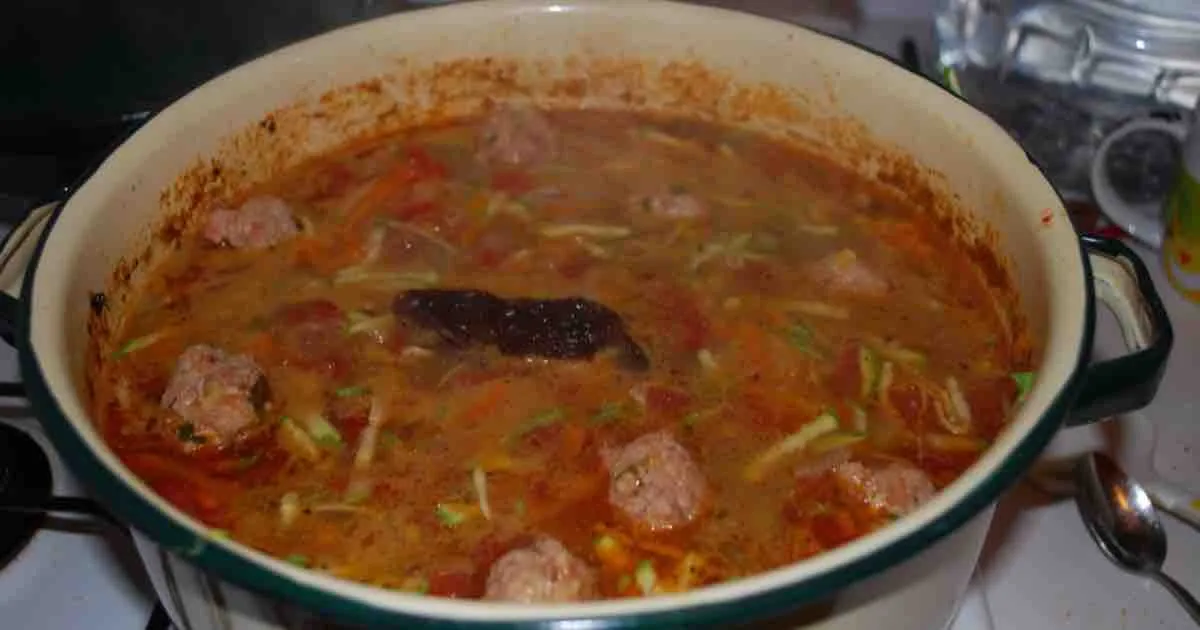
Costa Rican meatball soup, or sopa de albóndigas, is one of those weeknight pots that shows up all over the country when the weather turns cool. It pairs small pork meatballs with corn, chayote, and root vegetables in a clean, light broth. The result is comforting without being heavy, and it leans on pantry staples you can find at most grocery stores.
This version follows the home-style recipe shared by Costa Rican home cooks: a handful of vegetables, a short simmer, and meatballs seasoned with onion, red pepper, cilantro, and thyme. If you already like Mexican albondigas soup, think of this as the lighter Central American cousin, built on broth rather than a thick tomato base.
Key Takeaways
- Sopa de albóndigas is a everyday Costa Rican soup of small pork meatballs simmered with corn, chayote, potato, and carrot in a light broth
- The meatballs use onion, red pepper, cilantro, and thyme, with no breadcrumbs or rice filler
- Chayote is the signature vegetable; zucchini works as a substitute if you cannot find it
- The whole pot comes together in about 50 minutes and is served over white rice
- It is a one-pot, freezer-friendly meal that tastes even better the next day
How to Make Costa Rican Meatball Soup (Sopa de Albóndigas)
- Make the meatballs. In a bowl, combine ground pork, onion, red pepper, cilantro, thyme, pepper, and salt. Mix with your hands just until blended, then roll into 8 small meatballs.
- Build the broth. Add onion, red pepper, corn, celery, carrot, zucchini, potato, chayote, salt, garlic, pepper, oregano, chicken stock, and water to a heavy pot. Cover and bring to a gentle simmer.
- Simmer the vegetables. Cook covered over medium-high heat for 15 minutes until the potato and chayote begin to soften.
- Add the meatballs. Slide the meatballs into the broth, keeping them whole. Lower to a simmer and cook for 20 minutes until the meatballs are cooked through.
- Season and serve. Taste the broth and adjust salt. Ladle into bowls over white rice, with warm tortillas on the side.
What Is Sopa de Albóndigas?
The word albóndigas is Spanish for meatballs, borrowed into Costa Rican cooking the same way it reached Mexico, the Philippines, and much of Latin America. Costa Rica’s Ministry of Culture lists sopa de albóndigas con tomate as a recognized part of the country’s food heritage, which tells you how everyday the dish really is. You can read the cultural entry at the Sistema de Información Cultural de Costa Rica.
What sets the Costa Rican version apart is restraint. There is no tomato sauce, no rice stuffed inside the meatballs, and no long list of spices. The broth stays clear, the vegetables do the talking, and the meatballs stay small and tender. It is the kind of soup a grandmother makes on a rainy afternoon, the sort of meal Costa Ricans call “sopita” with real affection.
The other defining ingredient is chayote, a mild green squash that softens into the broth without falling apart. If your market does not carry it, zucchini is the easiest stand-in, though the texture is a touch softer.
Ingredients
For the Meatballs
- Ground pork (80/20) - The fat keeps the meatballs juicy. Ground beef works too; the flavor is a little deeper.
- White onion and red bell pepper - Fine chop so they mix evenly and cook through inside the small meatballs.
- Fresh cilantro - The herbal note that makes this taste Costa Rican rather than generic.
- Dried thyme - A small amount goes a long way in a light broth.
- Salt and black pepper - The only seasoning inside the meatballs.
For the Broth
- Chicken stock and water - Two cups of stock plus four cups of water keeps the broth savory but not salty.
- Corn, celery, carrot, zucchini, potato, chayote - The classic vegetable mix. Cut them into sticks or small dice so they cook in the same window.
- Garlic, oregano, salt, pepper - The broth seasonings, kept simple on purpose.
Tips for the Best Costa Rican Meatball Soup
Do Not Overmix the Meatballs
Ground pork gets tight and rubbery if you work it too long. Mix only until the seasonings are spread through the meat, then stop. Wet hands make rolling the 8 small meatballs easier and keeps them from sticking.
Keep the Simmer Gentle
Once the meatballs go in, drop the heat so the broth barely bubbles. A rolling boil knocks the meatballs around and can break them. Small, steady bubbles are what you want.
Cut the Vegetables Evenly
Sticks and small dice of roughly the same size cook at the same rate. If the potato pieces are huge and the zucchini is thin, one will be raw while the other turns to mush.
Salt at the End
Chicken stock already carries salt, so taste the broth after the vegetables simmer before adding the final pinch. You can always add more, but you cannot take it back.
Variations
With Beef
Swap the pork for ground beef, or use a half-and-half mix. The soup gets a richer, darker flavor while staying just as simple.
With Rice in the Meatballs
Some Costa Rican home cooks add a spoon of cooked rice to the meatball mix for extra body. It is not traditional in the light broth version, but it works if you want a heartier bite.
Spicy Version
Add a sliced mild chili (or a dash of Salsa Lizano, Costa Rica’s pantry staple) to the broth for a little heat and tang.
With Extra Vegetables
Green beans, peas, or diced calabaza squash all fit. Add firmer vegetables with the first simmer and quick-cooking ones in the last 5 minutes.
What to Serve With Costa Rican Meatball Soup
The standard move is a scoop of white rice in the bottom of the bowl, then ladle the soup over it. Warm corn tortillas on the side are common too. The rice soaks up the broth and turns one pot of soup into a full meal.
If you want to build a Latin American soup night, pair this with Colombian albondigas soup or Italian wedding soup for a trio of meatball soups from different traditions. For the full list, browse the meatball soups hub.
Storage and Reheating
- Refrigerator: Store in an airtight container for up to 4 days. The broth thickens as the potatoes and chayote release starch, so add a splash of water when reheating.
- Freezer: Freeze the soup without the rice for up to 3 months. The meatballs and broth freeze well; cooked rice gets grainy, so add fresh rice when you serve.
- Reheat: Warm gently on the stove over medium-low heat. Avoid a hard boil so the meatballs stay intact.
Frequently Asked Questions
What is sopa de albondigas made of?
It is a broth-based soup with small meatballs, usually pork or beef, and vegetables like corn, potato, carrot, and chayote. The Costa Rican version skips tomato and rice filler, so the broth stays light and clear.
What does chayote taste like?
Chayote is a mild, slightly sweet green squash with a crisp texture that softens when cooked. It absorbs the broth without falling apart. Zucchini is the easiest substitute if you cannot find it.
Can I use ground beef instead of pork?
Yes. Ground beef makes a slightly deeper, richer soup, while pork stays lighter and more traditional. A half pork, half beef mix also works well if you want the best of both.
Is Costa Rican meatball soup spicy?
No, the base recipe is not spicy. The heat comes only from black pepper. Add a mild chili or a dash of Salsa Lizano if you want a little kick.
How long does it keep in the fridge?
The soup stores for up to 4 days in an airtight container. The broth thickens as it sits, so stir in a little water when you reheat it on the stove.
What do you serve with it?
White rice in the bowl and warm tortillas on the side are the standard accompaniments. The rice soaks up the broth and makes the soup a complete meal.
Related Recipes
- Mexican Albondigas Soup (Caldo de Albondigas) - The tomato-based cousin from just up the isthmus
- Colombian Albondigas Soup with Hogao - Another Latin American meatball soup with a sofrito base
- Filipino Almondigas Meatball Soup - The Spanish-influenced soup that reached the Pacific
- Italian Wedding Soup with Meatballs - Tiny meatballs in a clear chicken broth with escarole
- Meatball Soups Hub - Every meatball soup on the site in one place