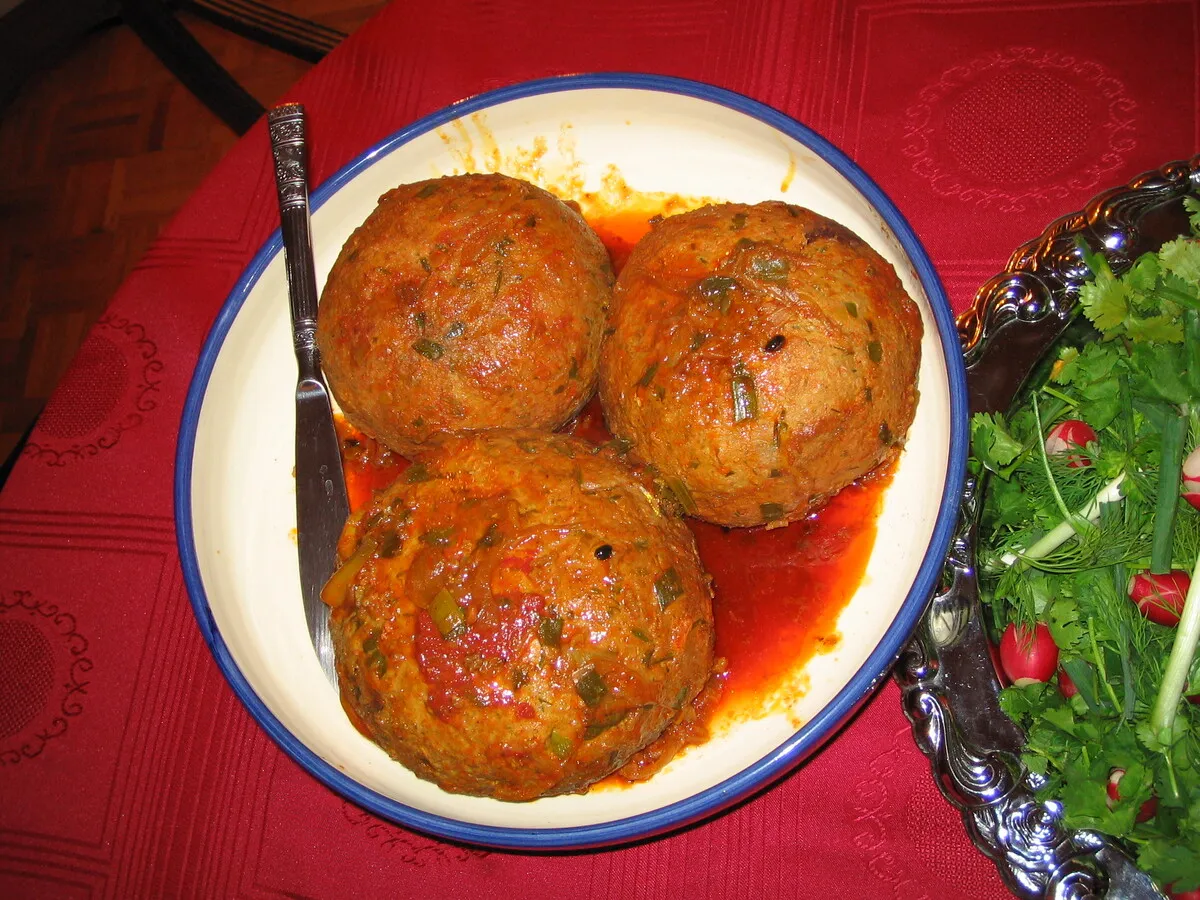
Gondi (pronounced GOHN-dee) are Persian Jewish chicken meatballs bound with chickpea flour and simmered in a golden turmeric broth with whole chickpeas. This is the quintessential Shabbat dish of Iranian Jewish households - served every Friday night for generations, brought to Israel by Iranian Jews, and now enjoyed across the world as one of the most comforting bowls of soup in Middle Eastern cooking.
What makes gondi different from every other chicken meatball? The chickpea flour. Instead of breadcrumbs or eggs, gondi use besan (chickpea flour) as the binding agent, which gives them a distinctive springy, tender texture and a subtle nutty flavor that breadcrumbs cannot replicate. The result is naturally gluten-free, high in protein, and deeply satisfying.
Key Takeaways
- Chickpea flour is the binding agent. Not breadcrumbs, not eggs - besan (chickpea flour) holds the meatball together and gives gondi their signature texture. This makes the dish naturally gluten-free and suitable for Passover.
- Grate and squeeze the onion. Finely grated onion moisture hydrates the chickpea flour and adds flavor without chunky pieces. Squeeze out excess water to keep the mixture from becoming too wet.
- Rest the mixture before shaping. At least 30 minutes in the fridge allows the chickpea flour to hydrate and the mixture to firm up, making shaping easier and producing a more cohesive meatball.
- Do not stir for the first 5 minutes. The gondi need undisturbed heat to form a stable outer layer. Stirring too early causes them to break apart in the broth.
- Use homemade chicken broth if possible. The broth is half the dish. A rich, well-seasoned chicken broth makes the difference between good gondi and transcendent gondi.
How to Make Gondi
Step 1 - Make the Gondi Mixture
Place the grated, squeezed onion in a large bowl. Add the ground chicken, chickpea flour, oil, cumin, turmeric, cardamom, 1 tsp salt, and pepper. Mix with your hands until the mixture is smooth, slightly sticky, and uniform in color - about 2 minutes of kneading. The chickpea flour should be fully incorporated with no dry pockets.
Cover the bowl with plastic wrap and refrigerate for at least 30 minutes. Overnight is better - the chickpea flour continues to hydrate, producing a smoother, more cohesive meatball.
Step 2 - Prepare the Broth
Bring 6 cups of chicken broth to a boil in a large, wide pot. Add the soaked chickpeas (drained), halved onion, bay leaves, remaining 1/4 tsp salt, and a pinch of turmeric for color. Reduce heat to medium-low and simmer uncovered for 20 minutes while you shape the gondi.
Step 3 - Shape the Gondi
Remove the chilled mixture from the fridge. Wet your hands with cold water - this prevents sticking. Pinch off about 2 tablespoons of the mixture and roll between your palms into smooth balls about 1.5 inches (4 cm) across. You should get about 24 gondi.
Step 4 - Cook the Gondi
Gently drop the gondi one by one into the simmering broth. Do not stir for the first 5 minutes. The protein needs time to set and form a stable outer layer. After 5 minutes, use a slotted spoon to gently nudge any gondi that stick to the bottom.
Simmer uncovered for 25 to 30 minutes until the gondi are cooked through, slightly puffed, and float on the surface. The broth should be golden from the turmeric and fragrant with cumin and cardamom.
Step 5 - Serve
Remove and discard the halved onion and bay leaves. Taste and adjust salt. Ladle the gondi and broth into bowls and garnish generously with fresh chopped cilantro and parsley. Serve with warm flatbread - sangak, lavash, or pita - for dipping into the golden broth.
What is Gondi?
Gondi (Persian: گندی) is a traditional Persian Jewish dish of meatballs made from ground chicken, lamb, or veal mixed with chickpea flour and aromatic spices. The dish is traditionally served on Shabbat (the Jewish Sabbath) and other holidays in Iranian Jewish households.
The name “gondi” is believed to derive from a Persian word, though some sources note it is also a bawdy Persian expression - the kind of linguistic double meaning that accrues to beloved comfort foods over centuries. What matters is the tradition: every Persian Jewish family has their own version, and the dish is so central to Shabbat dinner that it is often the first thing mentioned when someone describes an Iranian Jewish Friday night.
Gondi arrived in Israel with the mass emigration of Iranian Jews in the 1950s and 1960s. Today it is one of the defining dishes of Persian Jewish cuisine in Israel, served in homes, restaurants, and at holiday celebrations.
Why Chickpea Flour?
The use of chickpea flour (besan) as a binding agent is what makes gondi unique among meatball traditions. Most meatballs use breadcrumbs, eggs, or rice to bind the meat. Gondi use chickpea flour, which serves three purposes:
- Binding - the flour absorbs moisture and holds the meatball together without eggs
- Texture - it creates a springy, tender bite that is lighter than breadcrumb-bound meatballs
- Flavor - chickpea flour adds a subtle nutty sweetness that complements the warm spices
Chickpea flour is also naturally gluten-free, which makes gondi suitable for Passover (when wheat products are avoided) and for anyone following a gluten-free diet.
Variations
- Lamb gondi - substitute ground lamb for chicken. The result is richer and more traditional in some families.
- Turkey gondi - use ground turkey for a leaner version. The texture is slightly firmer than chicken.
- Veal gondi - historically common, though less popular today. Adds a delicate, mild flavor.
- Abgoosht style - cook a whole chicken in the broth, stuff it with rice, and serve the gondi as a first course with the chicken and rice as the main course. This is the full Shabbat dinner presentation.
- With dried lime - some families add a dried lime (limoo amani) to the broth for a bright, sour note.
Storage and Reheating
- Fridge: Store gondi and broth separately in airtight containers for up to 4 days.
- Freezer: Freeze the shaped, uncooked gondi on a parchment-lined baking sheet, then transfer to a freezer bag. Freeze for up to 3 months. Cook directly from frozen - add 5 to 10 minutes to the simmer time.
- Reheat: Warm the broth in a saucepan, then add the cooked gondi and simmer gently for 5 minutes until heated through. Do not boil vigorously or the gondi may break apart.
Serving Suggestions
- Sabzi khordan - a plate of fresh herbs (cilantro, parsley, watercress), scallions, radishes, and walnuts. This is the traditional Shabbat starter alongside the gondi.
- Warm flatbread - sangak, lavash, or pita for dipping into the broth.
- White rice - serve the gondi and broth over steamed basmati rice for a more substantial meal.
- Pickles - torshi (Persian mixed pickles) cut the richness of the broth.
Frequently Asked Questions
What is gondi made of?
Gondi are made from ground chicken (or turkey, lamb, or veal) mixed with chickpea flour, grated onion, oil, and warm spices including cumin, turmeric, and cardamom. The mixture is shaped into balls and simmered in chicken broth with whole chickpeas. The dish is traditionally served on Shabbat in Persian Jewish households.
Is gondi gluten-free?
Yes. Gondi use chickpea flour (besan) as the binding agent instead of breadcrumbs or wheat flour, making the dish naturally gluten-free. This is one reason gondi are traditionally served during Passover, when wheat products are avoided.
Can I make gondi ahead of time?
Yes. The gondi mixture can be made up to 24 hours in advance and refrigerated. Shaped gondi can be frozen on a parchment-lined baking sheet, then transferred to a freezer bag for up to 3 months. Cook directly from frozen, adding 5 to 10 minutes to the simmer time.
What does gondi taste like?
Gondi have a mild, savory chicken flavor with subtle nuttiness from the chickpea flour and warm depth from the cumin, turmeric, and cardamom. The texture is springy and tender - lighter than breadcrumb-bound meatballs but denser than matzo balls. The golden broth is fragrant and deeply comforting.
What is the difference between gondi and matzo balls?
Both are dumplings simmered in chicken broth, but the ingredients and traditions differ. Matzo balls use matzo meal (ground unleavened bread) and are an Ashkenazi Jewish tradition. Gondi use chickpea flour and are a Persian Jewish tradition. Gondi are typically smaller, denser, and more savory than matzo balls.
Can I make gondi without a food processor?
Yes. Finely grate the onion by hand and use pre-ground chicken. Mix the ingredients thoroughly by hand until smooth and cohesive. The mixture should be slightly sticky and hold together when rolled into a ball.