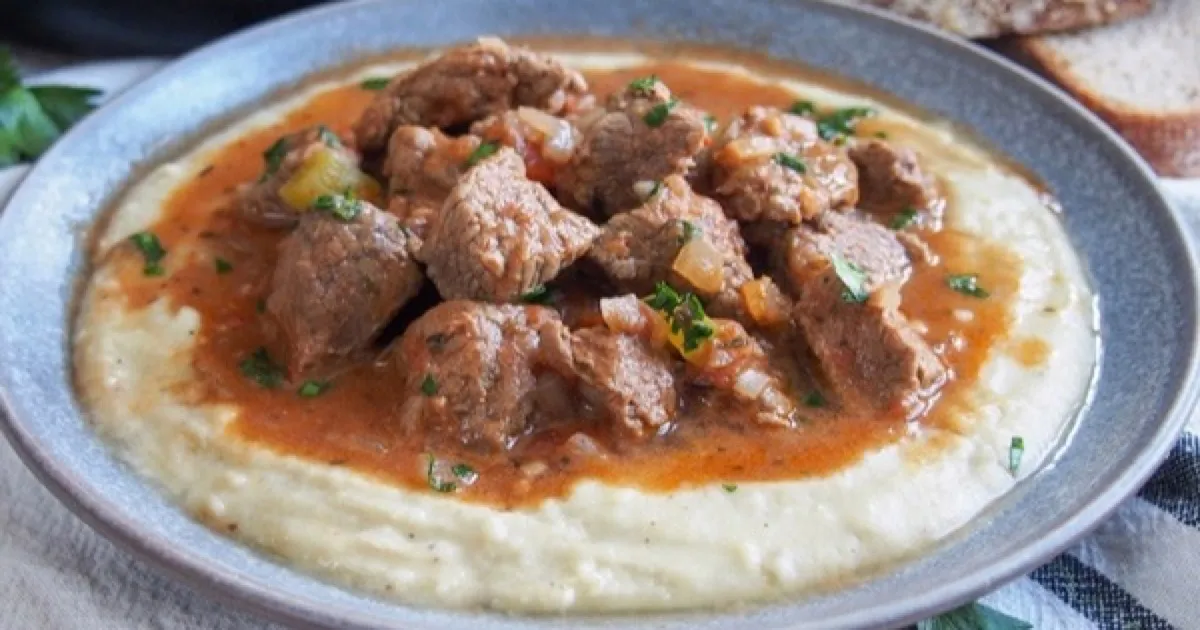
Hunkar begendi - “the sultan liked it” - is one of the great surviving dishes of Ottoman palace cuisine. Tender Turkish meatballs sit on a bed of smoky eggplant purée enriched with butter, milk, and melted cheese. The name tells you everything: somewhere in the imperial kitchens of Istanbul, a sultan took one bite and made sure it would never be forgotten.
The dish dates to the mid-19th century, when Sultan Abdülaziz received Empress Eugénie of France at Topkapi Palace. The palace chefs observed the visiting French cooks preparing béchamel sauce and adapted it with the one ingredient every Turkish kitchen had in abundance: grilled eggplant. The result was beğendi - a silky purée of charred eggplant folded into a cheese béchamel - served with the sultan’s favorite stew. The meatballs version, called köfteli hünkar beğendi, is the weeknight shortcut that still shows up on Turkish restaurant menus and home dinner tables today.
The secret is smoke. The eggplants must be charred directly over an open flame until the skin blackens and the flesh collapses. This step cannot be skipped - without the smoky depth, you have eggplant white sauce, not beğendi. In about 45 minutes, the whole thing comes together: meatballs brown in the same skillet, a quick béchamel pulls together in a saucepan, and the charred eggplant ties it all together.
Key Takeaways
- The eggplant must be charred directly over flame - oven roasting loses the smoky soul of the dish.
- “Beğendi” refers to the eggplant purée itself, not just the full dish. You will see “chicken beğendi” and “meatball beğendi” on menus across Turkey.
- Mix the meatball mixture just until combined - overworking makes them dense instead of tender.
- Use warm milk in the béchamel to prevent lumps.
- A final drizzle of melted butter mixed with pul biber (red pepper flakes) is traditional and adds color and gentle heat.
How to Make Hunkar Begendi
- Char the eggplants directly over a gas flame or under a broiler, turning with tongs, until the skins are completely blackened and the flesh has collapsed, about 12 to 15 minutes total. The flesh must be completely soft - if it resists when you press it, keep charring.
- Transfer the eggplants to a plate and let cool for 5 minutes. Cut open, scoop out the flesh, and squeeze dry before chopping. The liquid can be bitter and watery, so pressing it out keeps the purée concentrated.
- Make the meatballs: combine the ground beef, pork, breadcrumbs, egg, grated onion, garlic, cumin, paprika, salt, and pepper. Mix just until combined, then roll into 16 to 18 walnut-sized meatballs.
- Heat 2 tbsp olive oil in a large skillet over medium-high heat. Brown the meatballs in batches for 3 to 4 minutes per side until golden all over. Transfer to a plate.
- Make the béchamel: melt 3 tbsp butter in a saucepan over medium heat. Add the flour and stir for 2 minutes until it smells nutty and turns light golden. Gradually whisk in the warm milk, stirring constantly until thickened, about 3 to 4 minutes.
- Remove the saucepan from the heat. Stir in the grated cheese until melted, then fold in the chopped eggplant. Season with salt and pepper.
- Spread the eggplant béchamel on a serving plate. Arrange the meatballs on top. Melt 1 tbsp butter with red pepper flakes and drizzle over the meatballs. Garnish with fresh parsley.
Ingredients
- 1 lb (450 g) ground beef (80/20)
- 1/2 lb (225 g) ground pork
- 1/2 cup (50 g) breadcrumbs
- 1 large egg, lightly beaten
- 1 small onion, grated and squeezed dry
- 2 cloves garlic, minced
- 1 tsp ground cumin
- 1 tsp sweet paprika
- 1 tsp kosher salt
- 1/2 tsp black pepper
- 2 tbsp olive oil
- 2 large eggplants (about 1.5 lbs / 680 g total)
- 3 tbsp butter (for béchamel)
- 3 tbsp all-purpose flour
- 1 1/4 cups (300 ml) warm whole milk
- 1/2 cup (55 g) grated kaşar cheese (or low-moisture mozzarella + a little parmesan)
- Salt and pepper to taste
- 1 tbsp butter (for finishing)
- 1/2 tsp red pepper flakes (pul biber)
- Fresh parsley, chopped
Why the Smoke Matters
Beğendi without char is just eggplant white sauce. The eggplants need to be placed directly over a gas burner, charcoal grill, or blazing broiler and turned until the skin is completely blackened and blistered, the flesh inside collapsed and drinking in smoke. This step is non-negotiable according to every Turkish cook from Istanbul to Izmir - the smoky pulp beaten into the béchamel is what makes this dish taste like a memory of a campfire rather than a pot of vegetables with cheese.
If you have a gas stove, hold each eggplant with tongs directly over the flame, turning every 2 to 3 minutes, for about 12 to 15 minutes total. The skin should be entirely black. Once charred, the peeling is easy - the skin slides off in sheets, leaving behind the soft, fragrant flesh.
Tips for the Best Hunkar Begendi
Keep the meatballs tender
The same rule applies as with every Turkish köfte: mix the meat only until the ingredients come together. Overworking ground meat develops the protein and creates a dense, sausage-like texture instead of the loose, juicy bite that belongs in this dish. The breadcrumbs and egg act as a panade, trapping moisture inside each meatball during the quick browning.
Warm the milk for the béchamel
Cold milk hitting hot butter and flour will seize and create lumps that are difficult to smooth out. Warm the milk gently in the microwave or a small pot before whisking it into the roux. Add it gradually, a few tablespoons at a time, whisking until smooth before adding more.
Do not overdo the cheese
The begendi sauce should taste like smoky eggplant with a gentle richness from cheese, not like mac and cheese. A half cup of grated kaşar or low-moisture mozzarella is enough. Stronger cheeses like aged cheddar or sharp parmesan will overpower the eggplant. Add a tablespoon of parmesan if you want extra depth, but keep the eggplant as the star.
Ali Nazik vs Hunkar Begendi
Both dishes feature charred eggplant and meat, but they diverge at the sauce. Ali nazik (meaning “gentle touch”) is a lighter preparation: charred eggplant is mashed with yogurt and garlic, then topped with grilled lamb or chicken. Hunkar begendi replaces the yogurt with a butter-and-flour béchamel enriched with melted cheese, creating a much richer, silkier base. The name ali nazik translates roughly to “delicate touch” or “gentle fingers,” said to honor the deft hands of the cook who first combined the ingredients. The hunkar begendi’s béchamel, by contrast, is the French-inspired foundation that palace cooks adapted for the sultan.
Serving Ideas
- Serve with crusty Turkish bread or pide to mop up the eggplant purée and sauce.
- Over fluffy white rice for a more filling dinner.
- With a simple salad of tomatoes, cucumbers, and red onion dressed in olive oil and lemon.
- As part of a Turkish mezze spread alongside kofte ekmek and fresh herbs.
- Browse the full Turkish meatball recipes collection for more köfte ideas.
Variations
- Lamb stew version: replace the meatballs with 1 lb diced lamb shoulder. Brown the lamb, add chopped tomatoes, onion, garlic, and a tablespoon of tomato paste, then simmer covered for 45 to 50 minutes until tender. The stew version is the original palace preparation.
- Chicken version (tavuklu hünkar beğendi): swap the meatballs for 1 lb boneless chicken thighs, browned and simmered in a light tomato sauce.
- Vegetarian version: skip the meat entirely and roast mushrooms, bell peppers, and zucchini to top the eggplant purée. The beğendi sauce stands on its own.
- Spicier: double the red pepper flakes or add a spoonful of harissa to the meatball mixture.
Storage
The meatball stew and eggplant purée can be made separately up to 2 days ahead. Store the meatballs and sauce in one container and the begendi in another, both refrigerated. Reheat gently over low heat, adding a splash of warm milk to the begendi if it has thickened. The combined dish freezes well for up to 3 months - thaw overnight in the fridge before reheating.
FAQ
What is the difference between hunkar begendi and ali nazik?
Ali nazik uses charred eggplant mashed with yogurt and garlic as its base, topped with grilled lamb or chicken. Hunkar begendi replaces the yogurt with a rich butter-and-flour béchamel enriched with melted cheese, creating a silkier, creamier purée. Both dishes showcase charred eggplant, but hunkar begendi is the richer, more indulgent palace version while ali nazik is lighter and more everyday.
What cheese is used in hunkar begendi?
The traditional choice is kaşar, a Turkish semi-firm cheese similar to young kashkaval. Outside Turkey, low-moisture mozzarella with a small amount of parmesan is the closest substitute. Avoid very strong cheeses like aged cheddar or blue cheese - they overpower the delicate smoky eggplant flavor that defines the dish.
Can I make hunkar begendi without charcoal or gas flame?
Yes, but you lose the smoky depth. Place whole eggplants on a foil-lined baking sheet and roast under a screaming hot broiler for 35 to 40 minutes, turning halfway through, until the skin is charred and the flesh is completely soft. The broiler version gets close, but nothing matches the direct flame for true smoke flavor.
What meat works best for hunkar begendi - meatballs or lamb chunks?
Both are traditional. Meatballs (köfteli hünkar beğendi) are the weeknight version - faster, easier, and more uniform in every bite. Lamb chunks (the original palace preparation) take longer to cook but deliver deeper flavor, especially from shoulder or leg cuts. Either way, the eggplant béchamel purée underneath is identical.
Can I make hunkar begendi ahead of time?
Yes. The meatball stew and eggplant purée are best made separately and stored in the fridge for up to 2 days. Reheat gently over low heat and assemble just before serving. The begendi may thicken as it cools - stir in a splash of warm milk to bring it back to a pourable consistency.