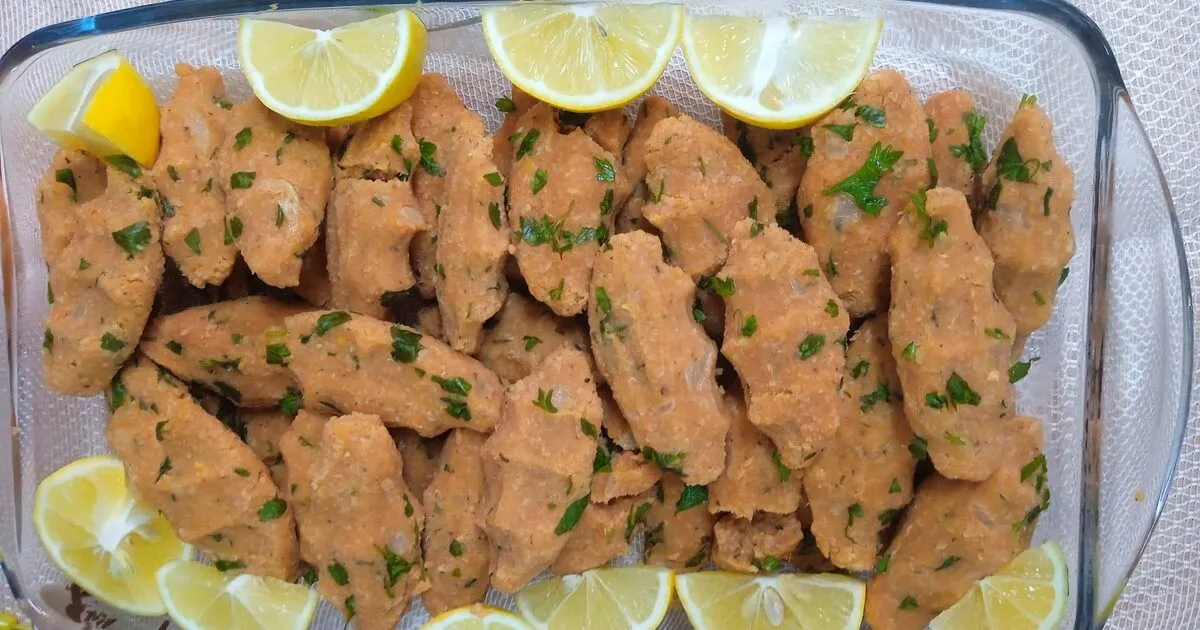
Mercimek köftesi, the Turkish red lentil kofte, is the argument for plant-based cooking that needs no excuse: bright orange patties of cooked red lentils and fine bulgur, kneaded with pepper paste, cumin, and lemon, then served cold on crisp lettuce leaves. Despite the name - köfte translates as meatball - there is no meat anywhere in the dish.
It is a fixture of the Turkish meze table: a plate appears at family gatherings, afternoon tea, and picnics, and somehow the leftovers are the most contested item in the fridge. What makes it work is the texture. The lentils cook down to a soft paste that binds the bulgur, so the kofte hold their shape with no eggs, no breadcrumbs, and no oven.
This recipe follows the home-style method: simmer lentils, rest the bulgur in the residual heat, knead in the flavors, and shape by hand. Serve it at room temperature the way it is eaten in Turkey, wrapped in lettuce with a squeeze of lemon.
Key Takeaways
- Mercimek köftesi is a no-bake vegan kofte of red lentils and fine bulgur.
- Do not drain the cooked lentils - the remaining moisture softens the bulgur.
- Fine koftelik bulgur is essential; coarse pilaf bulgur makes the mixture crumble.
- Knead the mixture until it holds a squeezed shape - no eggs or binders needed.
- Serve cold or at room temperature on lettuce with lemon and pomegranate molasses.
How to Make Mercimek Köftesi
- Rinse 1 1/2 cups red lentils until the water runs mostly clear. Place in a saucepan with 3 1/2 cups water, bring to a boil, then lower to a simmer and cook, stirring occasionally, for 18 to 22 minutes. The lentils should be completely soft, like a thick porridge, with a little moisture still visible. Do not drain them.
- Turn off the heat and immediately stir in 1 cup fine bulgur. Cover the pan and let it rest for 20 to 25 minutes. The bulgur absorbs the remaining liquid and becomes tender without any further cooking.
- While the bulgur rests, warm 1/3 cup olive oil in a frying pan over medium-low heat. Cook the diced onion, stirring regularly, for 7 to 8 minutes, until soft and translucent. Do not let it brown - the goal is sweet onion flavor, not fried.
- Stir in 1 tbsp tomato paste and 1 tbsp Turkish red pepper paste. Cook for another 1 to 2 minutes, until the paste aroma mellows and the oil turns a warm red. Remove from the heat.
- Once the lentil mixture is cool enough to handle, add the onion-paste mixture, 1 tsp cumin, 1 tsp pul biber, 1/2 tsp black pepper, and 1 tsp salt. Knead by hand for 4 to 5 minutes, until the mixture is smooth, cohesive, and holds a squeezed shape.
- Knead in the juice of 1 lemon and 2 tbsp pomegranate molasses. Fold in the sliced spring onions and chopped parsley. Taste and adjust the salt, lemon, or molasses.
- Take heaped tablespoon portions and squeeze them in your palm, pressing with your fingers to form ridged oval patties. Wet your hands occasionally so the mixture does not stick.
- Arrange the kofte over lettuce leaves, rest for 15 to 20 minutes, and serve at room temperature with lemon wedges and extra pomegranate molasses.
Ingredients
For the kofte
- 1 1/2 cups (300 g) red lentils
- 3 1/2 cups (830 ml) water
- 1 cup (180 g) fine bulgur (koftelik bulgur)
- 1/3 cup (80 ml) olive oil
- 1 medium onion, finely diced
- 1 tbsp tomato paste
- 1 tbsp Turkish red pepper paste (tatli or aci biber salcasi)
- 1 tsp ground cumin
- 1 tsp pul biber (Aleppo pepper)
- 1/2 tsp black pepper
- 1 tsp fine salt, plus more to taste
- 2 tbsp pomegranate molasses
- Juice of 1 lemon
- 4 spring onions, finely sliced
- 1/2 bunch flat-leaf parsley, finely chopped
For serving
- Romaine or butter lettuce leaves
- Lemon wedges
- Extra pomegranate molasses
What Is Mercimek Köftesi?
Mercimek köftesi literally means “lentil meatball” in Turkish, and the name describes the shape, not the contents: the red lentil and bulgur mixture is squeezed into the same ridged oval patties as meat kofte. The word köfte comes from the Persian kuftan, to pound, and in Turkish cooking it covers everything from grilled meatballs to this fully plant-based meze.
The dish is made from two pantry basics - red lentils and fine bulgur - plus onion, tomato and red pepper paste, and a handful of spices. The lentils cook into a soft paste that acts as the binder, and the bulgur absorbs the leftover moisture to give the kofte their firm but tender bite. It is naturally vegan, gluten-containing (bulgur is wheat), and served cold or at room temperature, which makes it a perfect make-ahead appetizer.
It is one of the most common dishes on the Turkish meze table, alongside haydari yogurt dip, kisir bulgur salad, and pickled vegetables. For more Turkish ball-shaped favorites, see the Turkish meatball recipes roundup.
Mercimek Köftesi vs Çiğ Köfte
Both are bulgur-based Turkish kofte shaped by hand, and they look similar on the plate. The difference is in the base and the heat.
Çiğ köfte means “raw meatball” and is a no-cook dish of fine bulgur kneaded with tomato paste, isot pepper, and pomegranate molasses, traditionally with raw meat, though the modern vegan street version - which we cover in our çiğ köfte recipe - leaves the meat out. Mercimek köftesi starts by simmering red lentils, so it is fully cooked and needs no raw ingredients at all.
Flavor-wise, çiğ köfte leans spicy and smoky from isot and pul biber. Mercimek köftesi brings sweet onion, cumin, and a bright lemon finish, and its orange color comes from the lentils and red pepper paste rather than heavy spice. If you like one, the other is an easy next recipe.
Why Fine Bulgur Matters
Bulgur comes in several grind sizes, and this recipe only works with the fine one, often labeled koftelik bulgur (bulgur for kofte) in Turkish brands.
The fine grain softens in the hot lentil mixture by simply resting under a lid. Coarse pilaf bulgur does not absorb enough moisture that way - it stays chewy and prevents the kofte from holding together when you squeeze them. The test is easy: if the mixture crumbles after kneading, the bulgur was too coarse or the lentils were cooked too dry.
A gluten-free version is possible with finely cooked quinoa in place of the bulgur, but the texture is noticeably different and Turkish cooks would not call the result mercimek köftesi. If strict gluten-free is not required, stick with the classic.
How to Make It Ahead
Mercimek köftesi is one of the best make-ahead appetizers in Turkish cooking. The kofte keep for hours at room temperature and for several days in the fridge, which is why they show up at picnics and tea tables.
To prepare in advance, shape the kofte, cover them, and refrigerate for up to 3 days. Store the lettuce separately so it stays crisp, and take the kofte out about 15 minutes before serving so they come to room temperature. Do not reheat them - cold or room temperature is the point.
You can also knead in a few tablespoons of extra fine bulgur and rest the mixture again if it feels too soft after standing. The mixture is forgiving, and tasting before shaping is the standard Turkish kitchen move.
Serving Ideas
The classic way is a platter of lettuce leaves with the kofte piled on top, lemon wedges, and a drizzle of pomegranate molasses. Everyone picks up a kofte in a leaf, squeezes lemon over it, and eats it by hand - no fork required.
On a fuller meze spread, serve it with haydari yogurt dip, stuffed grape leaves, pickled cucumbers, and warm bread. It also makes a satisfying light lunch with a simple tomato salad, or picnic food at its best since it needs no reheating. For another hand-shaped Turkish favorite, compare it with the meatless çiğ köfte.
FAQ
What is mercimek köftesi?
A traditional Turkish meze of red lentils and fine bulgur kneaded with sauteed onion, tomato and red pepper paste, cumin, and lemon, then squeezed by hand into ridge-marked patties. Despite the name (lentil meatball), it contains no meat and is naturally vegan.
Is mercimek köftesi the same as çiğ köfte?
No. Çiğ köfte is a raw bulgur mixture kneaded with spicy pepper pastes and traditionally raw meat. Mercimek köftesi cooks red lentils into a soft paste first, making it a fully cooked, no-raw-ingredient dish with a sweeter, lemony flavor.
What kind of bulgur should I use?
Fine bulgur, sold as koftelik bulgur in Turkish brands. Coarse pilaf bulgur will not soften properly in the lentil moisture and leaves the kofte crumbly. In a pinch, fine couscous works, but the authentic recipe uses fine bulgur.
Is mercimek köftesi gluten-free?
No. Bulgur is made from wheat, so the classic recipe contains gluten. A gluten-free adaptation can use finely cooked quinoa instead of bulgur, but the texture and taste change.
How long does mercimek köftesi keep?
Up to 3 days in the fridge in an airtight container, with the lettuce stored separately. Serve it cold or at room temperature - it is not meant to be reheated.
