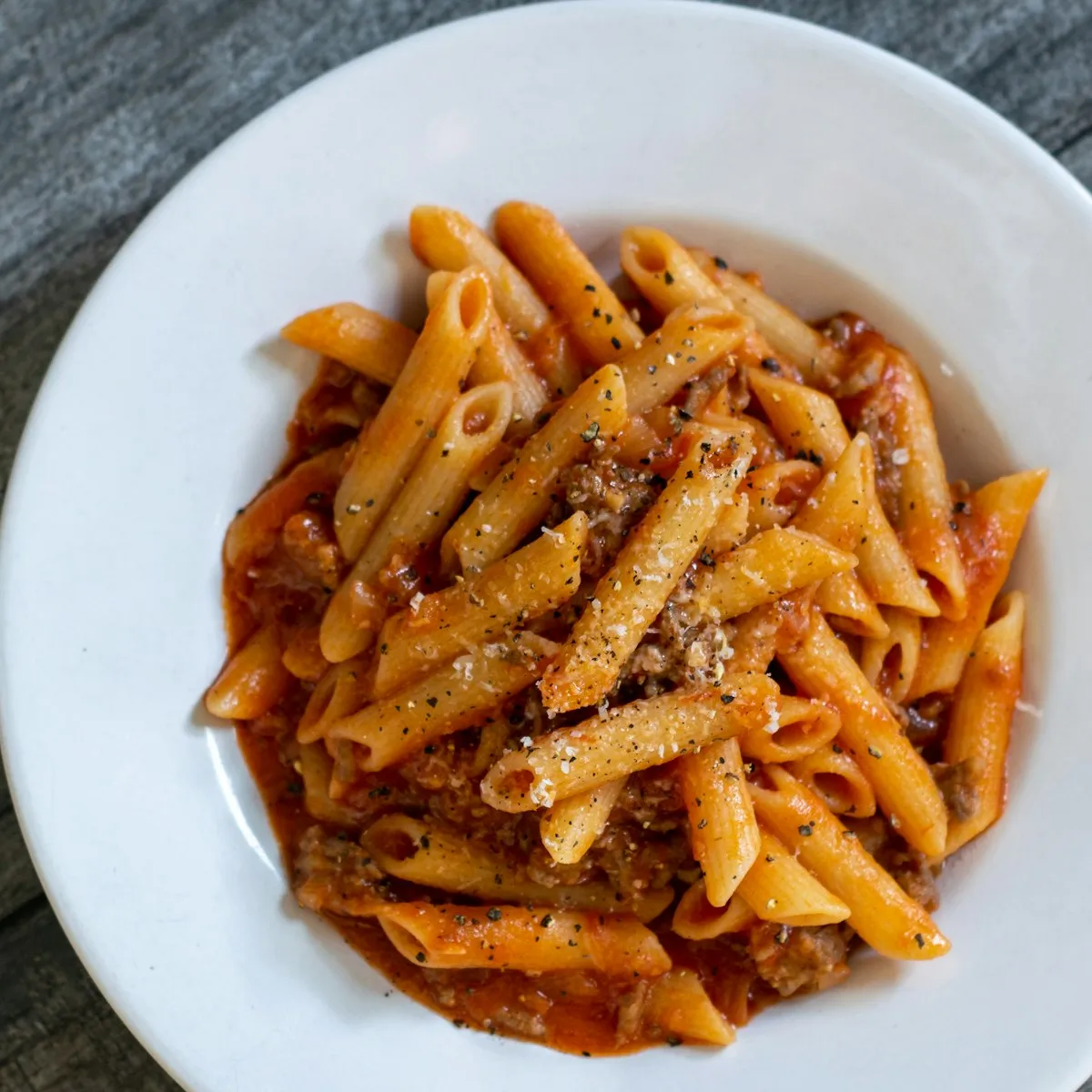
Spaghetti and meatballs is the dish that built Italian-American cuisine. A rich tomato sauce, tender beef-and-pork meatballs, and a mountain of al dente spaghetti - this is the recipe every home cook should master. It takes under an hour, feeds six, and tastes better than any restaurant version.
The secret is a panade (milk-soaked breadcrumbs) that keeps the meatballs soft, a beef-pork blend for depth of flavor, and a sauce that simmers in the same pot where the meatballs were browned. Every layer of flavor builds on the last.
Key Takeaways
- Panade is non-negotiable - milk-soaked breadcrumbs keep meatballs tender. The same technique powers our classic beef meatballs in marinara.
- Beef-pork blend gives the best flavor and texture. All-beef works, but pork adds fat and sweetness.
- Brown meatballs first - the fond (browned bits) left in the pot builds the sauce base. Do not skip this step.
- Golf-ball-sized meatballs nest into spaghetti better than oversized ones. About 1.5 inches across.
- Reserve pasta water - starchy water helps the sauce cling to every strand of spaghetti.
How to Make Spaghetti and Meatballs
-
Make the panade. Stir panko and milk in a bowl. Let sit 5 minutes until absorbed.
-
Mix the meatballs. Add beef, pork, egg, Parmesan, 1 clove garlic, salt, pepper, and oregano to the panade. Mix gently with hands until just combined. Do not overmix.
-
Shape. Form into 24 golf-ball-sized meatballs (about 1.5 inches).
-
Brown the meatballs. Heat olive oil in a large Dutch oven or deep skillet over medium-high heat. Brown meatballs in batches, 2 to 3 minutes per side. Transfer to a plate. The browned bits (fond) left in the pot build the sauce base.
-
Build the sauce. In the same pot, saute remaining 2 cloves garlic for 30 seconds until fragrant. Pour in crushed tomatoes. Season with salt and pepper. The tomatoes deglaze the pan, dissolving the fond into the sauce.
-
Simmer together. Nestle browned meatballs into the sauce. Bring to a simmer, cover, and cook 20 minutes on low heat. During this time, the meatballs finish cooking and absorb tomato flavor while the sauce picks up richness from the meat juices.
-
Cook the pasta. Meanwhile, cook spaghetti in a large pot of salted boiling water until al dente according to package directions. Reserve 1 cup pasta water before draining.
-
Toss and serve. Toss drained spaghetti with a ladle of sauce and a splash of pasta water. Serve topped with meatballs, torn basil, and extra Parmesan.
Ingredients
For the meatballs:
- 1 lb (450 g) ground beef, 80/20
- 1/2 lb (225 g) ground pork
- 1/2 cup panko breadcrumbs
- 1/4 cup whole milk
- 1 large egg
- 1/3 cup grated Parmesan, plus more for serving
- 1 clove garlic, minced (from the 3 total)
- 1 tsp kosher salt
- 1/2 tsp black pepper
- 1/2 tsp dried oregano
For the sauce:
- 2 tbsp olive oil
- 2 cloves garlic, minced (remaining)
- 1 can (28 oz / 794 g) crushed San Marzano tomatoes
- 1 tsp kosher salt
- 1/2 tsp black pepper
To finish:
- 1/4 cup fresh basil leaves, torn
- 1 lb (450 g) spaghetti
- Freshly grated Parmesan for serving
Why This Recipe Works
Spaghetti and meatballs is an Italian-American invention. In Italy, polpettes (meatballs) exist but are served as a standalone course, never on top of spaghetti. Italian immigrants in New York City in the late 1800s created the dish we know today, combining the pasta and meatball traditions they brought from southern Italy with the abundance of affordable beef available in America (Smithsonian Magazine).
This recipe respects that tradition while using techniques from top test kitchens:
- A panade instead of dry breadcrumbs (softer meatballs)
- A beef-pork blend instead of all-beef (richer flavor)
- Browning in the same pot you simmer the sauce in (more flavor)
- Smaller meatballs that nest into the pasta (better eating experience)
How to Make Tender Meatballs
The difference between dry, dense meatballs and spoon-tender ones comes down to three things:
1. The Panade
A panade is a mixture of starch and liquid - in this case, panko breadcrumbs soaked in milk. It acts as a moisture reservoir inside the meatball, preventing the proteins from tightening up and squeezing out juices during cooking.
Ratio: 1/2 cup panko to 1/4 cup whole milk for 1.5 lbs of ground meat. Let it sit for 5 full minutes before adding the meat.
2. The Meat Blend
| Meat | Role | Amount |
|---|---|---|
| Ground beef (80/20) | Beefy flavor, structure | 1 lb |
| Ground pork | Fat, sweetness, tenderness | 1/2 lb |
The 2:1 beef-to-pork ratio gives you the best of both worlds. All-beef meatballs are leaner but can taste flat. Adding pork boosts flavor without making the meatballs greasy.
3. Do Not Overmix
Mix the meatball ingredients until just combined - you should still see a few streaks of different ingredients. Overworking the meat develops myosin (a protein), which makes meatballs bouncy and dense instead of tender.
The test: Squeeze a handful of the mixture. If it holds together without crumbling, it is mixed enough. Stop there.
San Marzano Tomatoes
San Marzano tomatoes are worth the extra cost. They are sweeter, less acidic, and have fewer seeds than regular canned tomatoes. Look for cans labeled “D.O.P.” (Protected Designation of Origin) for the real thing.
Cooking the Pasta
Spaghetti needs two things: salted boiling water and al dente timing.
- Bring a large pot of water to a rolling boil
- Add 2 tbsp kosher salt per gallon of water
- Cook spaghetti 1 minute less than the package directions say (it will finish cooking in the sauce)
- Reserve 1 cup of pasta water before draining - this starchy liquid is liquid gold for the sauce
The Final Toss
Toss the drained spaghetti with a few ladles of sauce and a splash of pasta water in the Dutch oven (with the meatballs pushed to the side). The starchy water helps the sauce cling to the pasta instead of pooling at the bottom of the bowl.
Serve with torn fresh basil and a generous handful of freshly grated Parmesan.
Serving Suggestions
| Style | What to Add | |—|—|—| | Classic | Garlic bread, simple green salad | | Family style | Serve everything in a big bowl with tongs | | Individual plates | Twirl spaghetti with a fork and tuck meatballs alongside | | Leftover upgrade | Bake with mozzarella for a meatball pasta bake |
This recipe pairs beautifully with our mozzarella-stuffed meatballs for an extra-indulgent version, or try the meatballs in a meatball sub the next day.
Storage and Meal Prep
Fridge: Store sauced meatballs and spaghetti separately in airtight containers for up to 4 days. Reheat meatballs in a skillet with a splash of water; microwave pasta with a damp paper towel.
Freezer: Freeze meatballs (without sauce) on a sheet pan until solid, then bag for up to 3 months. Cook from frozen - add 5 minutes to the simmer time. Sauce freezes well for 3 months too.
Make-ahead: Mix and shape meatballs the day before. Keep covered in the fridge. They actually hold together better after resting overnight.
Frequently Asked Questions
Is spaghetti and meatballs authentic Italian?
No. Spaghetti and meatballs is an Italian-American dish. In Italy, polpettes (meatballs) are served as a separate course, not on top of pasta. Italian immigrants in New York City in the late 1800s created the dish by combining their pasta and meatball traditions with the affordable beef available in America. It has been a beloved Italian-American classic for over a century (Wikipedia).
What is the best meat for spaghetti and meatballs?
A beef-pork blend (2:1 ratio) gives the best flavor and texture. Ground beef provides the beefy backbone, while pork adds fat and sweetness that keeps the meatballs tender. All-beef works but can taste flat. Ground turkey or chicken can substitute for a lighter version - add an extra tablespoon of olive oil to compensate for the lower fat content.
Why are my meatballs tough?
Tough meatballs usually come from one of three mistakes: skipping the panade, overmixing the meat, or using lean ground beef without enough fat. The panade (soaked breadcrumbs) keeps moisture locked inside. Mixing until just combined prevents protein development. And 80/20 ground beef has enough fat to stay juicy during cooking.
Can I use jarred marinara sauce instead?
Yes. Use a 24 oz jar of good-quality marinara. After browning the meatballs, pour in the jarred sauce and simmer as directed. The browned bits from the meatballs will still flavor the sauce. This shortcut saves 15 minutes and still tastes homemade.
How many meatballs should I make per person?
Plan on 4 meatballs per person as a main course, or about 24 meatballs for 6 servings. Golf-ball-sized meatballs (about 1.5 inches) are the ideal size for spaghetti - large enough to be satisfying but small enough to nest into the pasta.
Can I bake the meatballs instead of browning them?
Yes. Bake at 400F (200C) on a parchment-lined sheet pan for 18 to 20 minutes until they reach 160F (71C) internally. Then add them to the sauce for the final 20 minutes of simmering. You lose the fond from browning, but the sauce still gets flavor from the meat juices. See our air fryer meatballs for another quick method.