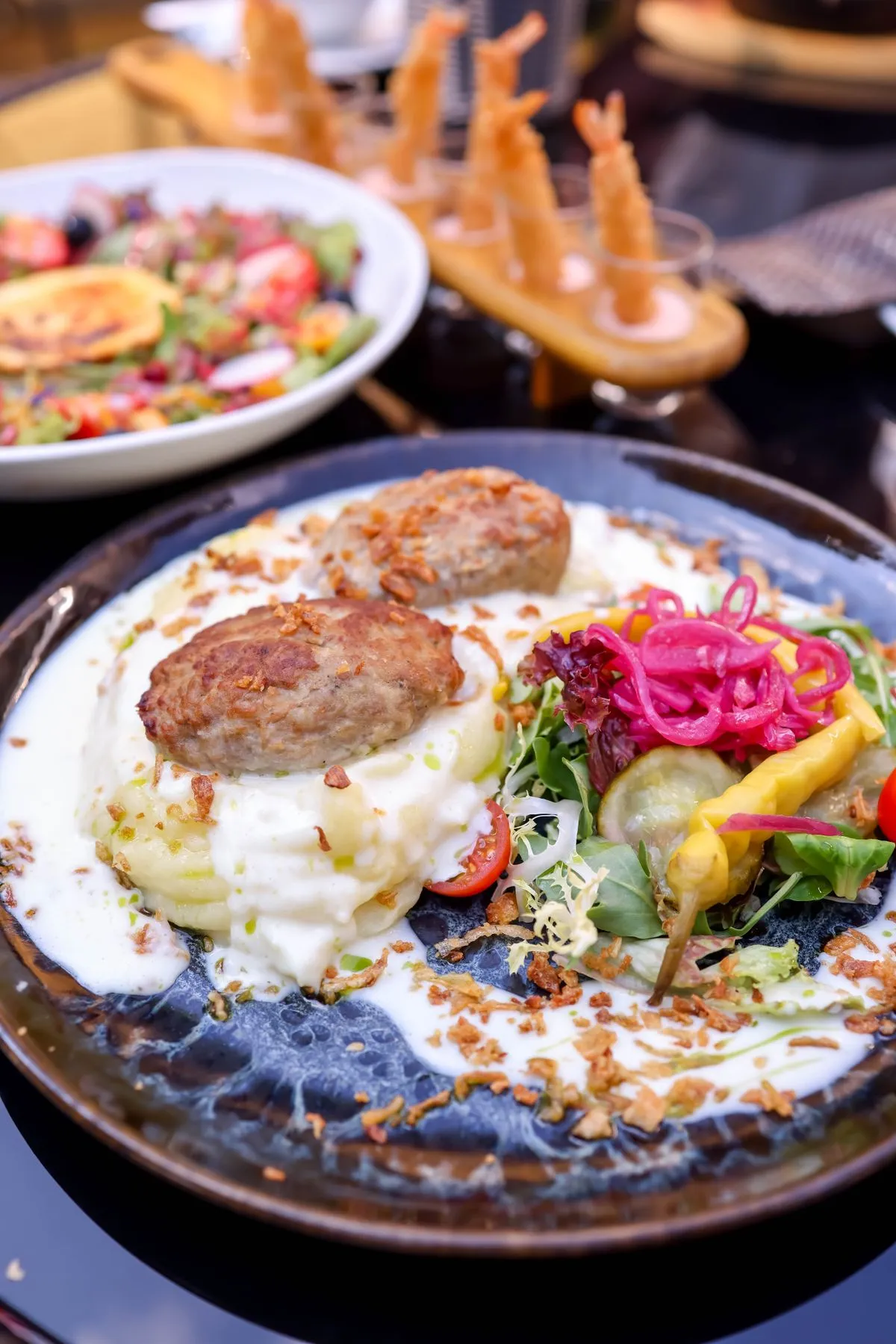
Tavuk köfte is Turkey’s lighter answer to classic beef köfte - ground chicken seasoned with cumin, paprika, and parsley, shaped into small oval patties, and pan-fried until golden. The name literally translates to “chicken meatball” (tavuk = chicken, köfte = meatball), and it is one of the most popular weeknight meals in Turkish homes.
Unlike beef köfte, which relies on fat for juiciness, tavuk köfte gets its tender texture from a baking soda and lemon juice trick that lightens the proteins. The result is a meatball that is springy, not dense, with a clean flavor that pairs beautifully with cool yogurt sauce.
How to Make Tavuk Köfte
- Grate onion on the fine side of a box grater. Wrap in a clean kitchen towel and squeeze dry to remove excess liquid.
- In a small bowl, stir baking soda with lemon juice. Let it foam for 10 seconds.
- In a large bowl, combine ground chicken, squeezed onion, breadcrumbs, egg, cornstarch, foaming baking soda mixture, parsley, cumin, paprika, pepper, and salt.
- Knead the mixture with your hands for 3 to 4 minutes until it feels tacky and well combined.
- Cover and refrigerate 30 minutes. This rest firms the texture and lets the spices bloom.
- Wet your hands with cold water. Shape into 14 to 16 small oval patties, about 2 inches long and 1/2 inch thick.
- Heat oil in a large skillet over medium heat. Cook tavuk köfte 3 to 4 minutes per side until golden brown and internal temperature reaches 165F (74C).
- Rest 3 minutes before serving. Serve with yogurt sauce, rice pilaf, grilled tomatoes, or tucked into flatbread.
Ingredients
- 1 lb (450 g) ground chicken thigh or breast
- 1 medium onion, grated and squeezed dry
- 1/2 cup (50 g) fine breadcrumbs
- 1 large egg
- 1 tbsp cornstarch or potato starch
- 1/4 tsp baking soda
- 1 tbsp fresh lemon juice
- 1 tbsp fresh parsley, finely chopped
- 1 tsp ground cumin
- 1/2 tsp paprika
- 1/2 tsp black pepper
- 1 tsp kosher salt
- 2 tbsp olive oil or vegetable oil for frying
Why Tavuk Köfte Uses Baking Soda
The baking soda and lemon juice trick is borrowed from the İnegöl köfte playbook, where it creates that signature springy, almost bouncy texture. In chicken meatballs, the effect is even more important. Ground chicken has less fat than beef, so it can turn rubbery when overcooked or dense when underworked.
The acid-base reaction between baking soda and lemon juice raises the pH of the meat surface, which loosens the protein structure. This allows the chicken to retain more moisture during cooking, producing a lighter, more tender meatball. The cornstarch adds a second layer of binding and helps create a slightly crisp exterior when pan-fried.
Thigh vs Breast for Tavuk Köfte
Chicken thigh is the better choice for tavuk köfte. Thigh meat has a higher fat content (about 10% vs 3% for breast), which keeps the meatballs juicy even when cooked well-done. The flavor is richer and more forgiving.
Chicken breast works in a pinch, but the meatballs will be leaner and slightly drier. If using breast, add an extra tablespoon of olive oil to the mixture and be careful not to overcook.
Pan-Fry, Grill, or Bake
Pan-fry (classic): Medium heat, 3 to 4 minutes per side. This gives the best golden crust and is the most common Turkish method. Use a nonstick or cast iron skillet.
Grill: Medium-high direct heat, 3 minutes per side. Brush the grates with oil to prevent sticking. Great for summer barbecues. Thread onto skewers for easier handling.
Bake: Spread on a lined sheet pan at 400F (200C) for 18 to 20 minutes, flipping once halfway. Less hands-on but you lose the crispy crust.
Serving Tavuk Köfte
Turkish tavuk köfte is traditionally served with:
- Yogurt sauce - plain yogurt mixed with grated garlic, a squeeze of lemon, and a pinch of salt. Cool and creamy against the warm, spiced meatballs.
- Rice pilaf - buttery Turkish-style rice with orzo or vermicelli.
- Grilled tomatoes and peppers - charred alongside the köfte on the same pan.
- Piyaz - Turkish white bean salad with parsley, onion, and a tahini-lemon dressing.
- Pide or lavash - wrap the köfte in flatbread with a smear of yogurt for a quick sandwich.
Make-Ahead and Freezing
Tavuk köfte freezes well. Shape the patties and arrange on a parchment-lined tray in a single layer. Freeze for 1 to 2 hours until firm, then transfer to a freezer bag. They keep for 3 months.
Cook directly from frozen - add 1 to 2 minutes per side to the pan-fry time. No need to thaw first.
For meal prep, cook a full batch and store in the fridge for up to 4 days. Reheat in a skillet over medium heat for 2 to 3 minutes per side, or microwave in 30-second bursts.
How Is Tavuk Köfte Different from Other Turkish Köfte?
Turkey has dozens of regional köfte styles. Tavuk köfte stands apart because:
- Protein: Chicken instead of beef or lamb, giving a milder, lighter flavor.
- Spice level: Moderate - cumin and paprika, not the heavy garlic and chili of Adana kofte.
- Texture: Softer and more springy than beef köfte, thanks to the baking soda treatment.
- Cooking speed: Cooks faster than beef because chicken is leaner and thinner patties are common.
If you enjoy the Turkish köfte style, try İnegöl köfte for the beef original, or Adana kofte for a spicier, grilled version.
FAQ
What is tavuk köfte? Tavuk köfte is a Turkish chicken meatball made from ground chicken, onion, breadcrumbs, egg, and spices like cumin and paprika. The name comes from the Turkish words tavuk (chicken) and köfte (meatball). It is lighter than beef köfte and commonly served with yogurt sauce.
Can I use ground turkey instead of chicken? Yes. Ground turkey works as a direct substitute with nearly identical results. Turkey thigh meat is preferred for the same reasons as chicken thigh - more fat and better flavor. The cooking time stays the same.
Why do Turkish köfte recipes use baking soda? Baking soda, especially when activated with lemon juice, raises the pH of the meat surface. This loosens the protein structure, allowing the meatballs to retain more moisture and creating a lighter, more springy texture. It is a traditional technique used across Turkish köfte recipes.
Do I need to refrigerate the mixture before cooking? A 30-minute rest is recommended but not strictly required. The rest firms the mixture, making it easier to shape, and allows the spices to meld. For the best texture, refrigerate overnight.
What is the best oil for frying tavuk köfte? Olive oil or a neutral vegetable oil like sunflower or canola both work well. Olive oil adds flavor but has a lower smoke point. Medium heat is key regardless of oil choice to prevent the outside from burning before the inside cooks through.
Can I bake tavuk köfte instead of pan-frying? Yes. Bake at 400F (200C) for 18 to 20 minutes on a parchment-lined sheet pan, flipping once. You lose the golden crust from pan-frying, but the hands-free method is convenient for large batches.
Sources: