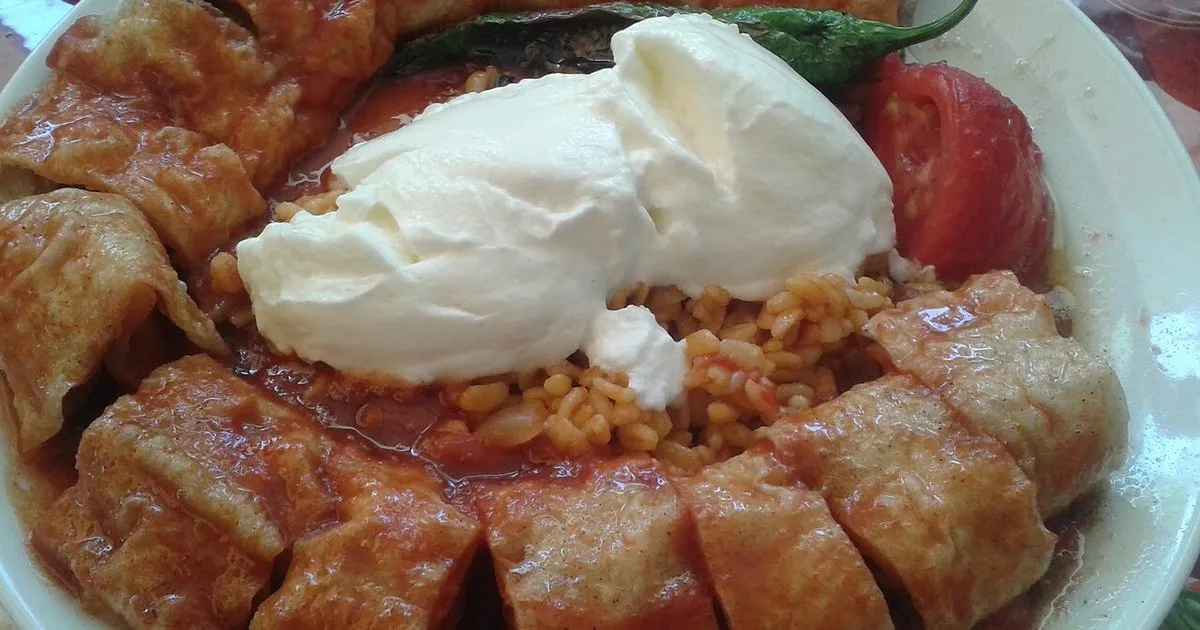
Beyti kebab is one of those Istanbul dishes that turns a simple plate of ground meat into a restaurant centerpiece. Spiced lamb is grilled on a skewer, rolled hot in thin lavash, then cut into bites and smothered in cool garlic yogurt and warm tomato sauce. The first time you eat it, the contrast between the crisp bread, juicy meat, and two sauces is what sticks with you.
This home version keeps the technique honest but the steps easy. You do not need a charcoal grill. A stovetop grill pan does the job, and the oven finish crisps the lavash so each piece holds together on the plate. If you already make Turkish İnegöl köfte or Turkish Adana köfte, this is the wrapped-and-sauced cousin worth adding to your rotation.
Key Takeaways
- Ground lamb is the classic choice; a half-beef blend softens the flavor for picky eaters.
- Lavash, not tortilla, is what gives the wrap its proper chew and crisp edge.
- Two sauces, one cold and one hot, are what make beyti kebab taste like beyti kebab.
- Serve it the minute it comes out of the oven, before the lavash softens.
How to Make Turkish Beyti Kebab
- Grate the onion on the fine side of a box grater. Wrap the pulp in a clean kitchen towel and squeeze dry to remove excess liquid.
- In a large bowl, combine 1 lb ground lamb, the squeezed onion, 2 minced garlic cloves, 1/4 cup parsley, 1 tsp cumin, 1 tsp paprika, 1/2 tsp red pepper flakes, 3/4 tsp salt, and 1/2 tsp black pepper. Mix gently with your hands until just combined.
- Shape the mixture into 4 long rolls around flat skewers, or 4 sausage shapes if you skip the skewers. Even thickness helps them cook at the same rate.
- Brush a grill pan with olive oil and heat over medium-high. Grill the kebabs 3 to 4 minutes per side until browned and cooked through, about 160F (71C) in the center.
- Lay each hot kebab on a lavash sheet and roll the bread tightly around it. Brush the outside of each wrap with melted butter so it crisps in the oven.
- Bake at 350F (180C) 10 to 12 minutes until the lavash is golden and slightly crisp at the edges.
- While the wraps bake, stir 1 cup yogurt with 1 minced garlic clove and a pinch of salt for the sauce.
- Warm 1 cup tomato sauce in a small pan with the optional tablespoon of butter until glossy. Keep both sauces ready.
- Slice each wrap into 2-inch pieces, arrange on a plate, drizzle with yogurt and tomato sauce, scatter with parsley, and serve right away.
Ingredients
- 1 lb (450 g) ground lamb, 80/20 (or use half ground beef for a milder mix)
- 1 small onion, finely grated and squeezed dry
- 3 cloves garlic, minced (2 for the meat, 1 for the yogurt sauce)
- 1/4 cup (15 g) fresh parsley, finely chopped
- 1 tsp ground cumin
- 1 tsp sweet paprika
- 1/2 tsp red pepper flakes (pul biber)
- 3/4 tsp salt
- 1/2 tsp black pepper
- 1 tbsp olive oil, for the grill
- 4 sheets thin lavash (store-bought, about 9 x 12 in)
- 2 tbsp butter, melted
- 1 cup (240 g) plain full-fat yogurt
- 1 clove garlic, minced
- Pinch of salt
- 1 cup (240 ml) tomato sauce, warmed
- 1 tbsp butter (optional, for the tomato sauce)
- Fresh parsley, for garnish
What Is Beyti Kebab
Beyti kebab is a Turkish dish of ground lamb or beef grilled on a skewer, wrapped in lavash, and topped with tomato sauce and yogurt. It is named after Beyti Güler, who ran the famous Beyti restaurant in Istanbul. His father opened the restaurant in 1945 on the shore of Lake Küçükçekmece; by the early 1960s Beyti Güler had built it into one of the city’s best-known grilled-meat houses.
The story goes that Güler created the dish in 1961 after watching a Swiss butcher named Möller wrap meat in a particular way during a trip to Switzerland. His original version used lamb fillets wrapped in strips of cutlet fat and grilled. The ground-meat roll sold in most kebab houses today is a more affordable take on that idea, and it is the version most home cooks make.
Why Yogurt and Tomato Sauce
The two-sauce finish is what separates beyti from a plain grilled kofte. The tomato sauce adds the savory, slightly sweet base you expect from a kebab. The garlic yogurt cools it down and adds the tangy dairy note that runs through so much Turkish cooking, from Turkish yogurt meatballs to kebabs served with a side of cacık.
Together they balance the richness of the lamb. Without the yogurt the dish feels heavy; without the tomato it loses its kebab identity. Use full-fat yogurt so the sauce stays smooth and does not break when it hits the warm meat.
Tips for the Best Beyti Kebab
Use fatty ground lamb. An 80/20 blend stays juicy through the grill and bake. Lean lamb dries out and the wrap gets tough.
Do not skip the grill step. Baking the meat inside the lavash alone steams it. A quick sear first builds the browned flavor that defines the dish.
Pick the right bread. Thin lavash is the right call. Thick tortillas or pita will not crisp the same way and can turn gummy. If your store sells only thick lavash, warm it briefly so it rolls without cracking.
Brush with butter before baking. The melted butter is what gives the wrap its golden, slightly crisp shell. Skip it and the bread stays pale and soft.
Slice and serve at once. Beyti kebab waits for no one. The longer it sits, the more the lavash soaks up sauce and loses its bite.
Optional Finishes
Turkish home cooks like to dress the plate a little further. A sprinkle of sumac adds a lemony sharpness that cuts the richness. A drizzle of brown butter (melted butter cooked until it smells nutty) over the top deepens the flavor. Crushed pistachios give a bit of crunch and a green fleck that looks great against the red sauce. None of these are required, but any one of them pushes the plate from good to dinner-party worthy.
What to Serve With Beyti Kebab
- Bulgur pilaf - the traditional side, nutty and filling
- Steamed rice - a neutral base that lets the sauces shine
- Grilled vegetables - peppers and tomatoes echo the kebab theme
- Simple shepherd’s salad - cucumber, tomato, and onion with lemon
- Pickled peppers or turnips - a sharp, acidic counterpoint
If you want a sandwich version, tuck the sliced wraps into a fluffy bun the way Turkish kofte ekmek does with plain kofte.
Storage
Store leftover wraps and sauces separately in airtight containers in the refrigerator for up to 3 days. Reheat the wraps in a 350F oven for 8 to 10 minutes so the lavash crisps back up. Warm the tomato sauce on the stove, but bring the yogurt sauce to room temperature rather than heating it. The assembled dish does not freeze well because the lavash goes soggy on thawing.
FAQ
Is beyti kebab the same as döner?
No. Döner is stacked, seasoned meat roasted on a vertical spit and shaved off in slices. Beyti kebab is ground meat shaped into rolls, grilled, and wrapped in lavash. Some restaurants call a döner-and-lavash plate “beyti,” but the home recipe and most kebab houses use ground meat.
Can I make beyti kebab with beef instead of lamb?
Yes. Use 1 lb ground beef (80/20) or a half-lamb, half-beef blend. The flavor is milder but still good. Lamb is traditional because its fat carries the spice mix, so keep some fat in the blend either way.
What can I use instead of lavash?
Thin yufka is the closest substitute and works the same way. A large, very thin flour tortilla can stand in a pinch, but warm it first so it rolls without tearing, and expect a softer edge than true lavash gives.
Can I cook beyti kebab without a grill?
Yes. Sear the rolls in a lightly oiled cast-iron skillet over medium-high heat, 3 to 4 minutes per side, then wrap and bake as written. You lose a little of the charred flavor but the result is still solid.
Why did my yogurt sauce turn grainy?
It likely met the hot meat too fast or the yogurt was low fat. Use full-fat yogurt and let the wrapped kebabs cool for a minute before saucing. Stir the yogurt with the garlic and salt ahead of time so it is ready to pour.
How do I know the meat is done?
An instant-read thermometer should read 160F (71C) in the center of a roll. The outside should be browned and the juices clear, not pink. At 3 to 4 minutes per side over medium-high, the rolls cook through before the lavash step.
Sources
- Beyti kebab - Wikipedia - History of the dish and the Beyti Güler origin story
- Turkish Foodie - Beyti Kebab - Restaurant background and traditional serving style
- Turkish Style Cooking - Beyti Kebabı Recipe - Home-style method and spice blend
Hero photo: “Beyti” by E4024, licensed CC BY-SA 4.0 via Wikimedia Commons.