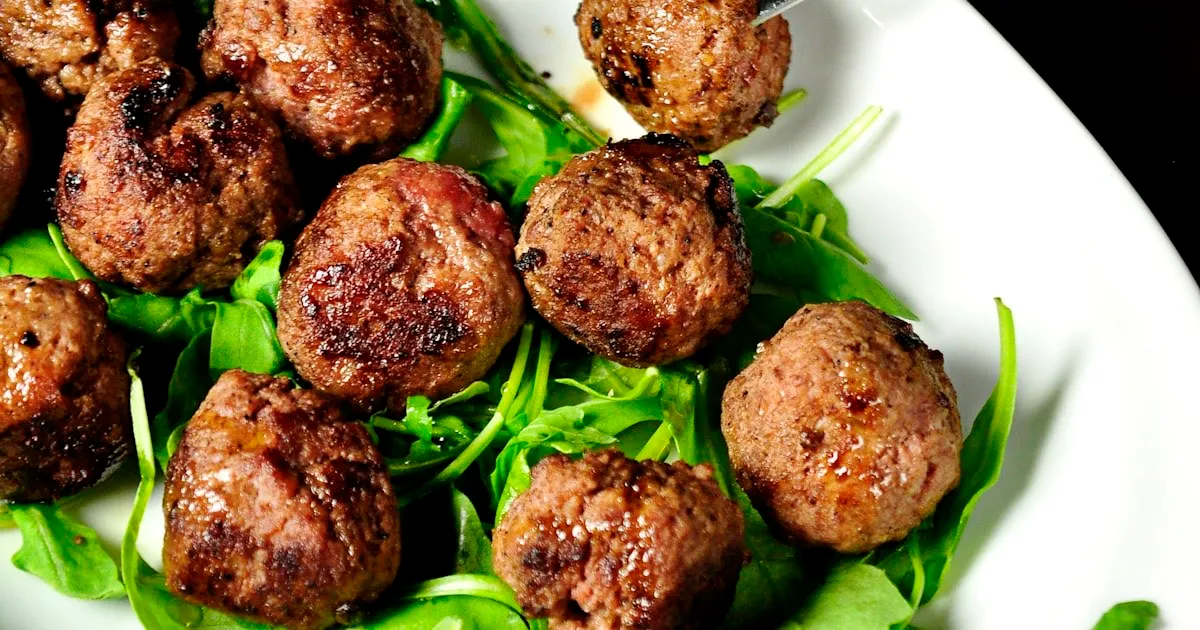
Armenian kyufta is not your average meatball. These are large, silky rounds of hand-pounded lamb and beef, poached gently in salted water until just cooked through, then optionally seared in butter for a golden exterior. The texture is delicate and smooth - more like a tender dumpling than a crumbly kofta.
The Etchmiadzin style, named for the holy city near Yerevan, is the most celebrated version. The meat is processed into a fine paste, shaped into tennis-ball-sized rounds, and poached rather than grilled. The result is a mild, subtly spiced dish where the quality of the meat shines through, especially when served with cool matzoon and fluffy rice pilaf.
Key Takeaways
- Texture is everything: The meat is processed into a smooth paste, not left coarse like regular kofta
- Poached, not grilled: Gentle simmering keeps kyufta moist and tender inside
- Rest the mixture: 30 minutes in the fridge lets proteins bind for a smoother result
- Allspice and cinnamon: The signature Armenian spice combination - warm but restrained
- Serve with matzoon: Cool yogurt balances the rich, warm meat perfectly
How to Make Armenian Kyufta
- Keep everything cold. Keep the ground lamb and ground beef refrigerator-cold until the moment you begin. Chill your mixing bowl as well if you have time. Warm fat makes the meat paste greasy and harder to work.
- Process until smooth. Place both meats in a food processor. Pulse for 30 seconds, then process continuously for 60 to 90 seconds until the mixture becomes a smooth paste. If you do not have a food processor, knead vigorously by hand on a cold surface for at least 5 minutes. The mixture should look uniform and feel tacky.
- Add aromatics and spices. Transfer the meat paste to a chilled bowl. Add the grated onion (squeezed dry - excess juice disrupts the texture), salt, pepper, allspice, cinnamon, parsley, egg white, and ice-cold water. Mix thoroughly with your hands until everything is evenly distributed. The mixture should hold its shape when pressed.
- Rest the mixture. Cover the bowl and refrigerate for 30 minutes. This rest allows the proteins to relax and bind, making the final texture smoother and easier to shape.
- Shape into balls. Wet your hands with cold water to prevent sticking. Divide the meat into 6 equal portions. Roll each portion between your palms into a smooth, dense ball. Press firmly as you roll to eliminate any air pockets. The surface should be perfectly smooth.
- Poach gently. Bring a wide pot of well-salted water to a gentle simmer, not a rolling boil. Carefully lower the kyufta balls into the water. Poach at a gentle simmer for 15 to 18 minutes, turning once about halfway through. The kyufta are done when they feel firm to a gentle press and are cooked through with no pink center.
- Optional butter sear. For extra richness and a golden exterior, melt butter in a wide skillet over medium-high heat until foaming. Add the poached kyufta and sear for 1 to 2 minutes per side until lightly browned. This step is optional but highly recommended.
- Serve immediately. Plate the kyufta hot with a generous spoonful of plain yogurt or matzoon on the side. Pair with Armenian rice pilaf and a simple salad of tomatoes, cucumbers, and fresh herbs.
Ingredients
For the Kyufta
| Ingredient | Amount | Notes |
|---|---|---|
| Ground lamb | 1 lb (450 g) | 80/20 fat ratio for best texture |
| Ground beef | 1/2 lb (225 g) | 80/20 fat ratio |
| Onion | 1 medium | Grated and squeezed very dry |
| Ice-cold water | 2 tbsp | Helps create the smooth paste |
| Salt | 1 tsp | |
| Black pepper | 1/2 tsp | |
| Ground allspice | 1/2 tsp | Signature Armenian spice |
| Ground cinnamon | 1/4 tsp | Warmth without overpowering |
| Fresh flat-leaf parsley | 2 tbsp, finely chopped | |
| Egg white | 1 | Binds the mixture |
| Unsalted butter | 2 tbsp | For optional finishing sear |
| Salted water | For poaching | A wide pot works best |
For Serving
| Ingredient | Amount | Notes |
|---|---|---|
| Plain yogurt or matzoon | For serving | Cool contrast to warm meat |
| Armenian rice pilaf | For serving | Classic pairing |
| Tomatoes and cucumbers | For salad | Simple, fresh side |
What Makes Kyufta Different from Kofta?
Both words come from the same Persian root meaning “pounded meat,” but Armenian kyufta stands apart in three key ways:
The texture. Kyufta meat is processed or pounded until it forms a smooth, cohesive paste. Regular kofta is typically ground coarser, mixed with more herbs, and shaped into smaller pieces. Kyufta has a delicate, almost dumpling-like interior.
The shape. Kyufta is shaped into large rounds, sometimes as big as a tennis ball. Kofta is usually formed into smaller oblong pieces for skewers or flat patties for pan-frying.
The cooking method. Kyufta is poached in gently simmering water, not grilled or fried. This keeps the texture moist and tender throughout. The optional butter sear at the end adds color without drying out the interior.
Tips for the Best Kyufta
Keep everything cold. Cold meat, cold bowl, cold hands. Warm fat equals greasy texture that will not hold together during poaching. If your kitchen is warm, chill the meat mixture for an extra 15 minutes before shaping.
Squeeze the onion dry. This is the most important step. Excess onion juice will make the mixture too wet to hold its shape. Grate the onion on a box grater, then press it firmly in a clean kitchen towel or cheesecloth to extract as much liquid as possible.
Process until smooth. The more thoroughly the meat is worked, the more silky and cohesive the final texture. Do not under-process. You want a sticky, uniform paste - not a loose crumble. If kneading by hand, work the meat on a cold surface for at least 5 minutes.
Do not overwork after adding the egg white. Once the egg white goes in, mix just enough to combine. Over-mixing after this point can make the texture rubbery rather than tender.
Poach at a simmer, never a boil. Hard boiling breaks apart the kyufta and makes the exterior tough. The water should have small, lazy bubbles - not a rolling boil. Turn the balls gently once during poaching for even cooking.
Serving Suggestions
The classic Armenian pairing is rice pilaf with a spoonful of plain matzoon or yogurt on the side. The cool tang of the dairy balances the richness of the meat perfectly.
A simple salad of tomatoes, cucumbers, and fresh herbs with a squeeze of lemon rounds out the plate. Eetch (Armenian bulgur salad with tomato paste and spices) or tabouleh are also great accompaniments.
Lavash bread is always welcome at the table for wrapping pieces of kyufta with herbs and a dip of yogurt.
Variations
All-Beef Kyufta: Use 1.5 lbs of 80/20 ground beef instead of the lamb-beef blend. The flavor will be slightly less complex but the technique and texture remain the same. This is a common variation outside of Armenia.
Baked Kyufta: For a hands-off approach, place shaped kyufta on a parchment-lined baking sheet and bake at 375F (190C) for 20 to 25 minutes. The texture will be slightly firmer with a browned exterior, but still tender inside.
Kyufta Soup (Kololak): Drop the shaped kyufta balls directly into simmering broth with diced vegetables and small pasta. Cook for 15 to 20 minutes until the kyufta float and are cooked through. A comforting one-pot Armenian meal.
Storage and Reheating
Refrigerator: Cooked kyufta keeps well in the fridge for up to 3 days. Store in an airtight container with a little of the poaching liquid to keep them moist.
Freezer: Freeze poached (un-seared) kyufta on a baking sheet in a single layer, then transfer to a freezer bag. They keep for up to 2 months. Thaw overnight in the fridge before reheating.
Reheating: Gently warm in simmering water for 5 to 7 minutes, or reheat in a covered skillet with a splash of broth. Avoid microwaving - it toughens the exterior. If you seared the kyufta before freezing, the butter sear will need to be redone after reheating.
Frequently Asked Questions
What is the difference between kyufta and kofta?
Both descend from the same ancient Persian word for pounded meat, but Armenian kyufta is distinctly smooth and silky. The meat is processed until it forms a paste, shaped into large rounds, and poached. Middle Eastern kofta is typically ground coarser, mixed with more herbs, and grilled on skewers. Kyufta has a more delicate, almost dumpling-like texture.
Can I bake kyufta instead of poaching it?
Yes. Baking at 375F for 20 to 25 minutes gives a slightly firmer result with a browned exterior. Traditional Etchmiadzin kyufta is poached, which keeps the texture moist and delicate. For the best of both, poach first and then finish with a quick sear in butter for color.
What does kyufta taste like?
Kyufta is mild, subtly spiced, and incredibly tender. The allspice and cinnamon give it a warmth that is distinctly Armenian without being overpowering. Served with cool matzoon or yogurt, the contrast of warm meat and tangy dairy is one of the great pleasures of the Armenian table.
Can I use all beef for kyufta?
Yes. All-beef kyufta is a common variation, especially outside of Armenia where good-quality lamb may be harder to find. Use 80/20 ground beef for the best fat content. The flavor will be slightly less complex than the lamb-beef combination, but the texture and technique are the same.
How do I serve kyufta?
Kyufta is traditionally served with Armenian rice pilaf, a generous spoonful of matzoon or plain yogurt on the side, and a simple salad of tomatoes and cucumbers. Lavash for wrapping is always welcome on the table.
Why do my kyufta fall apart during poaching?
The most common causes are: the meat was not processed enough (it needs to form a smooth, sticky paste), the onion was not squeezed dry enough (excess moisture weakens the structure), or the water was boiling too hard (gentle simmer only). Make sure the mixture feels tacky and holds its shape before shaping and poaching.
Related Posts
- Greek Youvarlakia Avgolemono - Poached meatballs in egg-lemon sauce, a similar gentle cooking approach
- Lebanese Kibbeh (Bulgur and Lamb Meatballs) - Another pounded-meat tradition from the Levant
- Egyptian Kofta Meshwi - Grilled spiced meatballs from North Africa
- Persian Kufteh Tabrizi - Giant stuffed meatballs from Iran, a related Persian kofta tradition
- Middle Eastern Meatball Recipes - More kofta and meatball styles from the region
Sources
- Support Armenian - Kyufta Recipe - Traditional Etchmiadzin-style kyufta with authentic technique and cultural context
- Fork and Salt - Armenian Kyufta - Recipe development and variation ideas
- Taste Atlas - Armenian Cuisine - Overview of Armenian food traditions and regional specialties