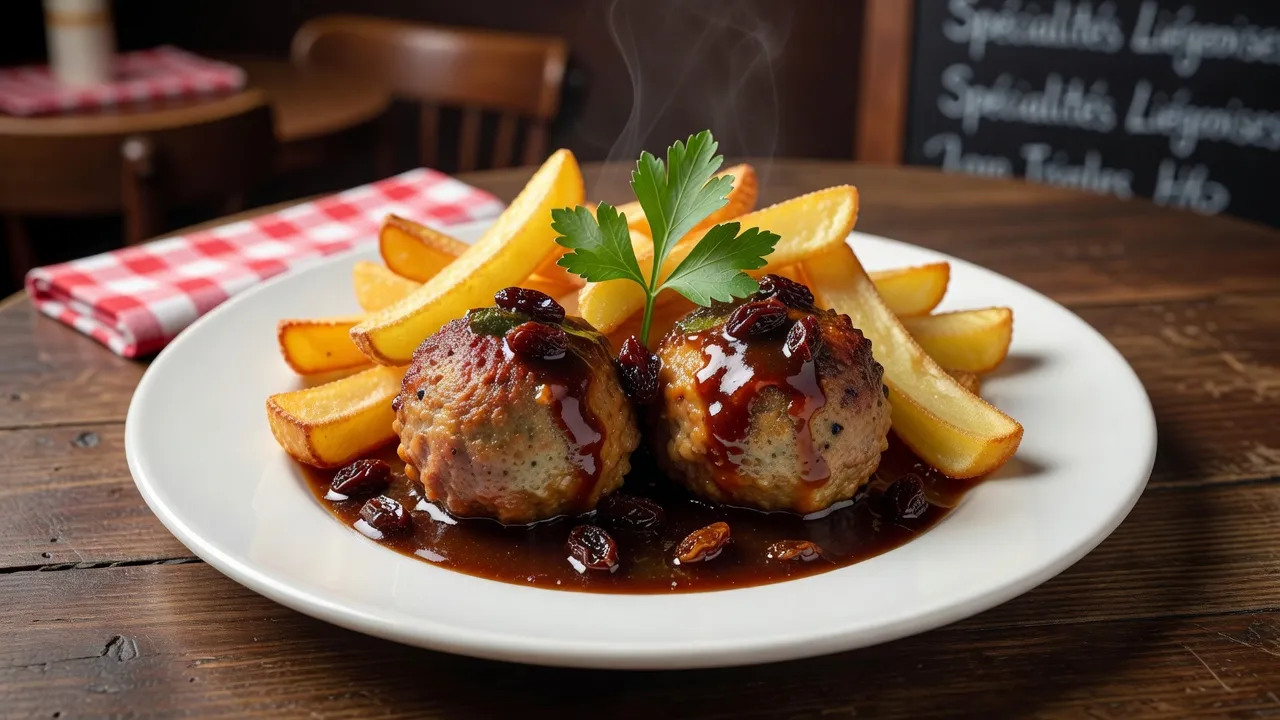
Belgian boulets a la liegeoise are the crown jewel of Liege street food - two oversized meatballs braised in a rich, sweet-sour sauce made with sirop de Liege, dark beer, raisins, and caramelized onions. This is not your average meatball dish. The sauce is glossy, tangy, and deeply complex, with the fruit syrup creating a flavor that is unlike anything in Italian or American cooking. Served with a pile of crispy Belgian frites, this is one of Europe’s most underrated comfort food traditions.
Boulets a la liegeoise comes from Liege, a city in eastern Belgium known for its bold food culture, waffles, and beer. The dish is a staple of Belgian friteries and brasseries, where the meatballs are typically served as a main course with a generous ladle of sauce. While it shares similarities with German frikadellen or Austrian faschierte laibchen, the sweet-sour sauce is what makes this dish unmistakably Belgian.
Key Takeaways
- Sirop de Liege is the secret ingredient - a slow-cooked Belgian apple and pear syrup that creates the signature sweet-sour glaze. Grape jelly works as a US substitute.
- Beef-pork blend produces the juiciest meatballs. Pure beef is too lean; the pork fat keeps them tender during braising.
- Dark beer (Belgian dubbel or similar) adds malty depth to the sauce. Use whatever dark beer you have on hand.
- Caramelized onions are the backbone of the sauce. Cook them slowly for 8 to 10 minutes until deeply golden - do not rush this step.
- 45 minutes total - 15 minutes prep, 30 minutes cooking. One pan for the whole dish.
How to Make Belgian Boulets a la Liegeoise
- Make the meatball mixture. Combine beef, pork, breadcrumbs, egg, grated onion, garlic, parsley, Dijon mustard, allspice, salt, and pepper in a large bowl. Mix until just combined - do not overwork the meat or the meatballs will be dense. (See prep hint: Mix Until Just Combined)
- Shape into meatballs. Divide the mixture into 8 equal portions. Roll each into a smooth ball about the size of a tennis ball. Wet your hands to prevent sticking. These are intentionally large - Belgian boulets are bigger than most meatballs.
- Sear the meatballs. Heat oil in a large heavy-bottomed skillet or Dutch oven over medium-high heat. Brown meatballs in batches for 3 to 4 minutes per side until a deep golden-brown crust forms. Transfer to a plate. (See prep hint: Deep Golden-Brown Crust)
- Cook the onions. In the same pan (do not wipe it out), add the sliced onions. Cook over medium heat for 8 to 10 minutes, stirring occasionally, until deeply caramelized and golden brown. The browned bits from the meatballs add flavor. (See prep hint: Caramelize the Onions Slowly)
- Build the sauce. Add sirop de Liege (or grape jelly), dark beer, beef broth, red wine vinegar, brown sugar, raisins, cloves, and bay leaf to the onions. Stir and bring to a simmer.
- Braise the meatballs. Return the meatballs to the pan, nestling them into the sauce. Reduce heat to medium-low, cover, and simmer for 15 to 18 minutes, turning once halfway, until the meatballs reach an internal temperature of 160F (71C) and the sauce has thickened into a glossy, dark glaze.
- Finish the sauce. Remove the meatballs to a serving plate. Remove the cloves and bay leaf from the sauce. Taste and adjust seasoning with salt, pepper, or an extra splash of vinegar for brightness.
- Serve. Spoon the sauce generously over the meatballs. Garnish with fresh parsley and serve with hot Belgian frites.
Ingredients
For the Meatballs
- 1 lb (450 g) ground beef, 80/20
- 1/2 lb (225 g) ground pork
- 1/2 cup fresh breadcrumbs
- 1 egg
- 1 small onion, finely grated
- 2 cloves garlic, minced
- 1 tbsp fresh parsley, finely chopped
- 1 tsp Dijon mustard
- 1/2 tsp ground allspice
- 1/2 tsp salt
- 1/4 tsp black pepper
For the Sauce
- 2 large onions, thinly sliced
- 1/2 cup sirop de Liege (or grape jelly)
- 1/4 cup dark beer (Belgian dubbel preferred)
- 1/4 cup beef broth
- 1/4 cup raisins
- 2 tbsp red wine vinegar
- 1 tbsp brown sugar
- 2 whole cloves
- 1 bay leaf
For Serving
- Belgian frites (thick-cut fries)
- Fresh parsley
What is Sirop de Liege?
Sirop de Liege is a thick, dark Belgian spread made from slow-cooked apples and pears. The fruit is simmered for hours until it breaks down completely, then reduced until it becomes a dense, jam-like syrup with a deep caramel flavor. It is the defining ingredient in boulets a la liegeoise and several other Liege dishes.
In the US, grape jelly is the most common substitute and works surprisingly well. The sweetness and gelatinous texture produce a similar glossy sauce. Some American recipes use currant jelly or apple butter as alternatives. None are exact matches, but they all capture the spirit of the dish.
If you can find sirop de Liege at a specialty store or online, it is worth the investment. The flavor is deeper and more complex than grape jelly, with notes of caramelized apple, pear, and subtle spice.
Tips for Perfect Belgian Meatballs
Use a Beef-Pork Blend
The traditional ratio is roughly 60% beef to 40% pork. The beef provides structure and beefy flavor; the pork fat keeps the meatballs tender during the braising step. If you use all beef, the meatballs will be denser and drier.
Do Not Skip the Allspice
Ground allspice is a distinctly Belgian and Dutch seasoning for ground meat. It adds a warm, slightly sweet note that pairs beautifully with the sweet-sour sauce. It is subtle but essential - without it, the meatballs taste flat.
Sear in Batches
Crowding the pan steams the meatballs instead of browning them. Work in two batches of four. The deep crust is not just for appearance - the Maillard reaction creates hundreds of flavor compounds that infuse the sauce during braising.
Braise, Do Not Boil
Once the meatballs are in the sauce, reduce the heat to a gentle simmer. A hard boil will break the meatballs apart and toughen the meat. The sauce should bubble lazily around the edges of the pan.
Taste the Sauce at the End
The balance of sweet and sour can shift depending on your sirop de Liege, beer, and vinegar. Taste before serving and adjust. A splash more vinegar brightens a too-sweet sauce. A pinch more sugar rounds out a too-tart one.
Variations
Chicken Boulets: Substitute ground chicken for the pork. The texture will be lighter but the sauce still shines.
Beer-Braised with Mustard: Add 1 tbsp whole-grain Dijon mustard to the sauce for a tangier, more complex flavor.
Spiced-Up Version: Add 1/2 tsp smoked paprika and a pinch of cayenne to the meatball mixture for a subtle kick.
Slow Cooker Method: Sear the meatballs, then transfer everything to a slow cooker. Cook on low for 4 to 5 hours. The sauce will be thinner - remove the lid for the last 30 minutes to reduce.
Storage and Reheating
Fridge: Store meatballs and sauce in an airtight container for up to 4 days. The flavor improves overnight as the sauce melds.
Freezer: Freeze meatballs and sauce together for up to 3 months. Thaw overnight in the refrigerator before reheating.
Reheat: Warm gently in a skillet over medium-low heat, adding a splash of beef broth if the sauce has thickened too much. The sauce will loosen as it heats.
Frequently Asked Questions
What is sirop de Liege and where can I find it?
Sirop de Liege is a thick Belgian syrup made from slow-cooked apples and pears. In the US, use grape jelly as the closest substitute - the sweetness and texture produce a very similar sauce. You can find sirop de Liege at Belgian specialty stores or online retailers.
Can I make these with just ground beef?
Yes, but the texture will be slightly denser. Use 80/20 ground beef to compensate for the missing pork fat. If possible, add 1 tbsp of softened butter to the mixture to boost moisture.
What is sauce lapin?
Sauce lapin (literally “rabbit sauce”) is the traditional name for the sweet-sour sauce used in boulets a la liegeoise. Despite the name, it has nothing to do with rabbit. The name likely refers to the sauce’s historical use as a condiment for rabbit dishes in the Liege region.
What beer should I use?
A Belgian dubbel is ideal - its malty sweetness and dark fruit notes complement the sauce perfectly. A brown ale, porter, or even a dark lager works well. Avoid hoppy beers like IPAs, as the bitterness clashes with the sweet-sour balance.
Can I make these ahead?
Absolutely. Prepare the meatballs and sauce, refrigerate for up to 2 days, and reheat together when ready to serve. The flavors actually deepen when made ahead. The sauce may thicken in the fridge - add a splash of broth when reheating.
What are Belgian frites?
Belgian frites are thick-cut, double-fried potatoes that are crispy on the outside and fluffy inside. They are the classic pairing for boulets a la liegeoise. If making your own, cut potatoes into thick sticks, fry once at 325F (160C), drain, then fry again at 375F (190C) until golden.
Sources
- Boulets a la Liegeoise - Wikipedia, Belgian Cuisine
- Sirop de Liege - Wikipedia
- Belgian Meatballs Recipe - Food.com
Related Posts
- Dutch Bitterballen (Crispy Fried Beef Ragout Balls) - Another iconic Belgian-Dutch snack with deep-fried beef ragout
- German Frikadellen: Pan-Fried Meat Patties - Central European pan-fried meatballs with a similar beef-pork blend
- French Meatballs in Dijon Cream Sauce - French boulettes de viande with a creamy Dijon sauce
- Austrian Faschierte Laibchen (Classic Viennese Meat Patties) - Another Central European meatball tradition
- Balkan Meatball Recipes - Grilled and pan-fried meatball recipes from Serbia, Bulgaria, and beyond