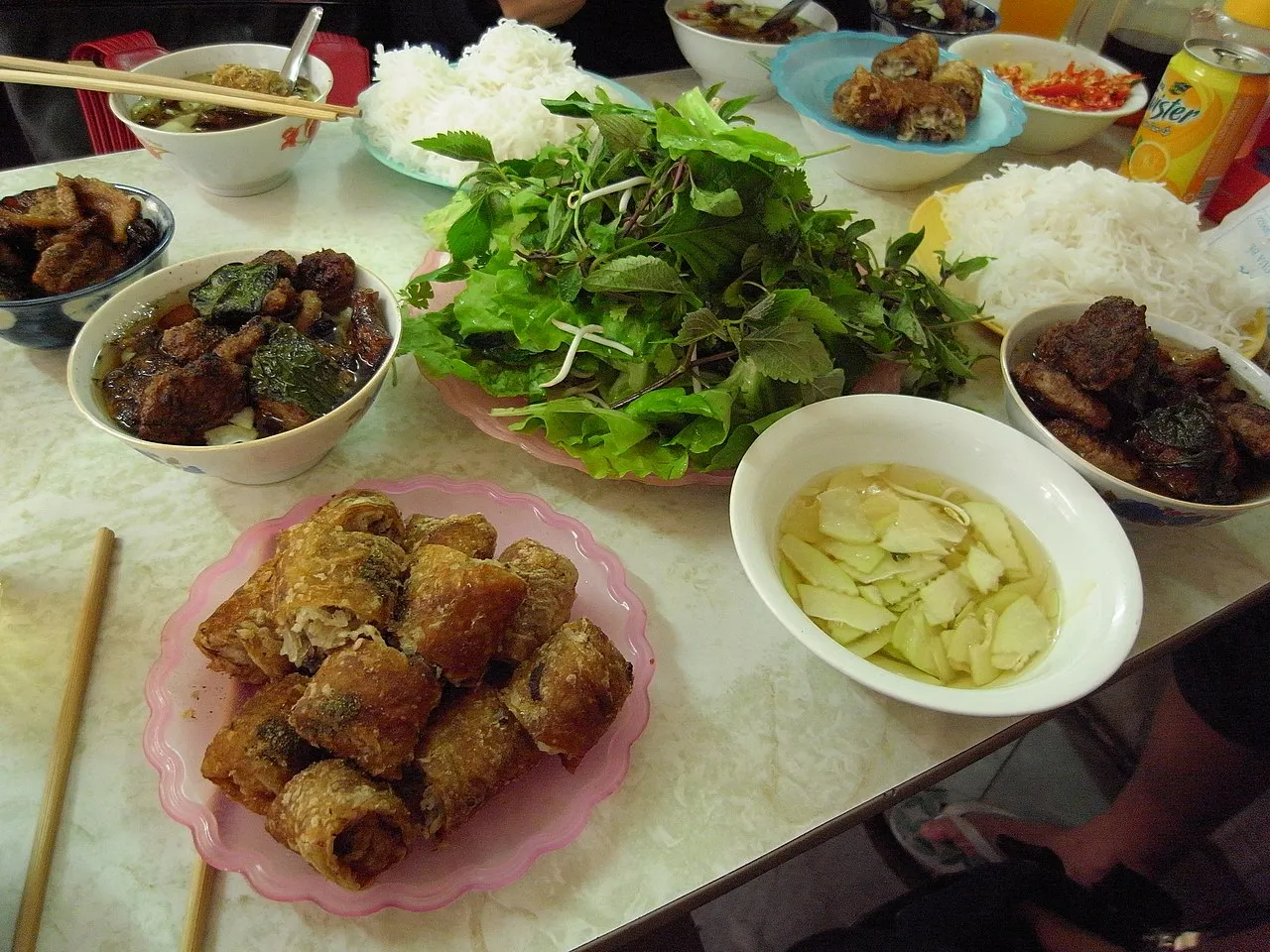
Bun cha is Hanoi’s most iconic street food - smoky grilled pork meatballs and caramelized pork belly slices served in a warm, sweet-savory fish sauce broth alongside cool rice vermicelli and a pile of fresh herbs. Unlike other Vietnamese noodle bowls where the sauce sits cold at the bottom, bun cha’s dipping broth arrives steaming hot, melting the fat off the grilled meat as you eat.
The dish has been a Hanoi staple since at least the 1950s, when food writer Vu Bang described the city as “transfixed by bun cha.” It shot to international fame in May 2016 when President Barack Obama and Anthony Bourdain shared a meal at Bun Cha Huong LIen in Hanoi’s Old Quarter - a moment that turned this humble street food into a global sensation.
Key Takeaways
- Use ground pork with at least 20% fat. Lean pork dries out over charcoal. The fat is what keeps the meatballs juicy and caramelized.
- Marinate at least 4 hours. The fish sauce, sugar, and aromatics need time to penetrate the meat. Overnight is even better.
- Serve the dipping sauce hot. This is what separates bun cha from other Vietnamese noodle bowls. The warm broth melts the fat off the grilled meat and keeps everything warm as you eat.
- A grilling basket is essential. The flattened patties and thin pork belly slices will fall through standard grill grates. A metal grilling basket solves this.
- Fresh herbs are not optional. Thai basil, mint, and perilla are integral to the dish, not garnish. They balance the rich, smoky pork with bright, aromatic freshness.
How to Make Bun Cha
-
Mix the meatball marinade. In a large bowl, combine ground pork, fish sauce, sugar, shallots, garlic, and black pepper. Mix well with your hands until evenly distributed. Cover and refrigerate for at least 4 hours, or overnight for deeper flavor.
-
Marinate the pork belly. Slice semi-frozen pork belly into 1/4-inch thick slices. In a separate bowl, toss the slices with fish sauce, sugar, vegetable oil, scallions, chopped shallots, garlic, and pepper. Cover and refrigerate for at least 4 hours.
-
Make the dipping sauce (nuoc cham). In a small saucepan, combine water, sugar, and fish sauce. Bring to a boil over medium-high heat, stirring until the sugar dissolves. Boil for 5 minutes. Taste and adjust - it should be lightly sweet and savory. Keep hot until serving.
-
Form the meatballs. Using oiled hands, shape the pork mixture into flattened patties about 2.5 inches wide and 1/2 inch thick. You should get about 16 to 20 patties.
-
Grill the meatballs. Heat a charcoal or gas grill to high. Brush the patties with oil and place them in a metal grilling basket. Grill over direct heat, turning every minute, until charred on the outside and cooked through, about 8 minutes total. Transfer to a platter.
-
Grill the pork belly. Place the marinated pork belly slices in the grilling basket. Grill over direct heat, turning every minute, until charred and cooked through, 5 to 6 minutes. Add to the platter with the meatballs.
-
Cook the vermicelli. Bring a pot of water to a boil. Cook the rice vermicelli according to package directions, usually 3 to 4 minutes. Drain, rinse under cold water, and set aside.
-
Assemble the bowls. Divide the grilled meatballs and pork belly among 4 serving bowls. Add a handful of pickled carrots. Ladle about 1 cup of hot dipping sauce into each bowl.
-
Serve immediately. Place the vermicelli, lettuce, fresh herbs, chopped garlic, and sliced bird’s eye chiles on a separate platter. Each diner dips noodles and meat into the warm broth, adding herbs and chiles to taste.
Ingredients
For the meatballs:
- 1 lb (450 g) ground pork, at least 20% fat
- 2 tbsp fish sauce
- 2 tbsp granulated sugar
- 2 shallots, finely chopped
- 3 cloves garlic, minced
- 1 tsp freshly ground black pepper
For the pork belly:
- 1 lb (450 g) pork belly, sliced 1/4 inch thick
- 2 tbsp fish sauce
- 2 tbsp sugar
- 2 tbsp vegetable oil
- 2 scallions, thinly sliced
- 1 shallot, roughly chopped
- 2 cloves garlic, roughly chopped
- 1/2 tsp black pepper
For the dipping sauce:
- 4 cups water
- 3/4 cup granulated sugar
- 1/2 cup fish sauce
For serving:
- 8 oz (225 g) rice vermicelli noodles
- 1 head butter lettuce, leaves separated
- 1 bunch Thai basil
- 1 bunch fresh mint
- 1/2 cup pickled carrots (see Tips)
- 2 cloves garlic, chopped
- 2 bird’s eye chiles, sliced
Tips for the Best Bun Cha
The dipping sauce makes or breaks the dish
In Hanoi, the dipping broth arrives boiling hot - not room temperature like the nuoc cham on summer rolls. The heat melts the rendered fat off the grilled meat and keeps everything warm as you eat. Make the sauce first and keep it simmering while you grill.
The ratio of fish sauce to sugar to water varies by brand. Boil the ingredients together, taste, and adjust. It should taste lightly sweet and savory on its own - the juices from the grilled meat will intensify the flavor in the bowl.
Charcoal is traditional, but a grill pan works
Authentic bun cha is grilled over charcoal in a metal basket. The fat dripping onto the coals creates the signature smoky aroma. At home, a gas grill or stovetop grill pan works. The key is high heat and frequent turning - every minute - to get char without burning.
Pickled carrots add the crunch
Thinly slice a carrot and soak it in a mixture of rice vinegar, sugar, and water for at least 2 hours. The tangy crunch cuts through the rich pork. Green papaya is the traditional Hanoi pickled vegetable, but carrots are easier to find and just as good.
Use a quality fish sauce
The dipping sauce is mostly fish sauce, so quality matters. Look for traditional Vietnamese fish sauce made from anchovies and salt, with no added hydrolyzed protein. Red Boat and Three Crabs are reliable brands. Check the protein degree (N) on the label - higher is better.
Mix herbs into the broth
Do not just garnish with herbs - tear the Thai basil and mint leaves and drop them directly into the warm dipping broth. The heat releases their aromatic oils and infuses the sauce with fresh, bright flavor.
Variations
Bun Cha with Lemongrass
Add 2 tablespoons of finely minced lemongrass (the tender inner core) to the meatball mixture. Lemongrass pork is a common variation in central and southern Vietnam, adding a citrusy, floral note to the charred meat.
Oven Broil Method
No grill? Line a baking sheet with foil and set the oven to broil. Place the meatballs and pork belly on a wire rack set over the sheet pan. Broil 4 to 5 inches from the element, flipping once, for 6 to 8 minutes. The char will not be as smoky, but the caramelization is close.
Skip the Pork Belly
If you cannot find pork belly or want a leaner version, double the meatballs. The dish still works - the dipping sauce and herbs carry the meal.
Bun Cha with Green Papaya
In Hanoi, the traditional pickled vegetable is green papaya, not carrots. Slice it paper-thin and pickle it the same way. Green papaya has a milder, more neutral crunch that lets the pork and sauce shine.
Storage and Reheating
- Meatballs and pork belly: Store grilled meat in an airtight container for up to 3 days. Reheat on a hot grill or under the broiler for 2 to 3 minutes per side to restore the char.
- Dipping sauce: Keeps in the fridge for up to 1 week. Reheat until steaming before serving.
- Vermicelli: Best cooked fresh. If making ahead, rinse with cold water after cooking, toss with a tiny bit of oil, and refrigerate. Reheat by dipping briefly in boiling water.
- Do not freeze the assembled bowls. The herbs wilt and the noodles turn mushy. Prep components separately and assemble when ready to eat.
FAQ
What is the difference between bun cha and bun thit nuong?
Bun cha is a Northern Vietnamese dish from Hanoi where grilled pork is served in a warm dipping broth. Bun thit nuong is a Southern Vietnamese dish where grilled pork sits on top of vermicelli with a cold nuoc cham poured over. The key difference: bun cha’s broth is warm and served separately for dipping, while bun thit nuong’s sauce is room temperature and poured on.
Can I make bun cha without a grill?
Yes. Use a stovetop grill pan over high heat, or broil the meatballs and pork belly in the oven on a wire rack. The smoky flavor will be less intense, but the caramelization from the sugar and fish sauce marinade still delivers excellent flavor.
Why is the dipping sauce served hot?
In Hanoi, the warm broth keeps the grilled meat from cooling too quickly and prevents the pork fat from solidifying on the surface. It also wilts the herbs slightly and releases their aromatic oils into the sauce. Room-temperature nuoc cham works for summer rolls, but bun cha needs the heat.
What herbs are traditional for bun cha?
The classic Hanoi herb plate includes Thai basil, perilla (tiá to), Vietnamese coriander (rau ram), rice paddy herb (ngo), and fish mint (dap ca). At home, use any combination of Thai basil, mint, and perilla that you can find. Cilantro works as a substitute for Vietnamese coriander.
How do I make pickled carrots for bun cha?
Thinly slice 1 carrot. Dissolve 2 tablespoons sugar and 2 tablespoons rice vinegar in 1/2 cup warm water. Pour over the carrots and let sit at room temperature for at least 2 hours. They keep in the fridge for up to 1 week.
Is bun cha gluten-free?
The meatballs and pork belly are naturally gluten-free. The dipping sauce uses fish sauce, which is gluten-free in most brands, but check the label. The rice vermicelli is gluten-free. Serve with gluten-free fish sauce to keep the entire dish safe.
Sources
- Bun Cha Hanoi Recipe - Serious Eats
- Bun Cha - Wikipedia
- What Is Bun Cha? - Michelin Guide
- Safe Minimum Internal Temperature Chart - USDA FSIS
Related: Vietnamese Xiu Mai Meatballs in Tomato Sauce | Vietnamese Meatball Banh Mi | Indonesian Bakso Meatball Soup | Thai Basil Meatballs (Pad Kra Pao) | Asian Meatball Recipes