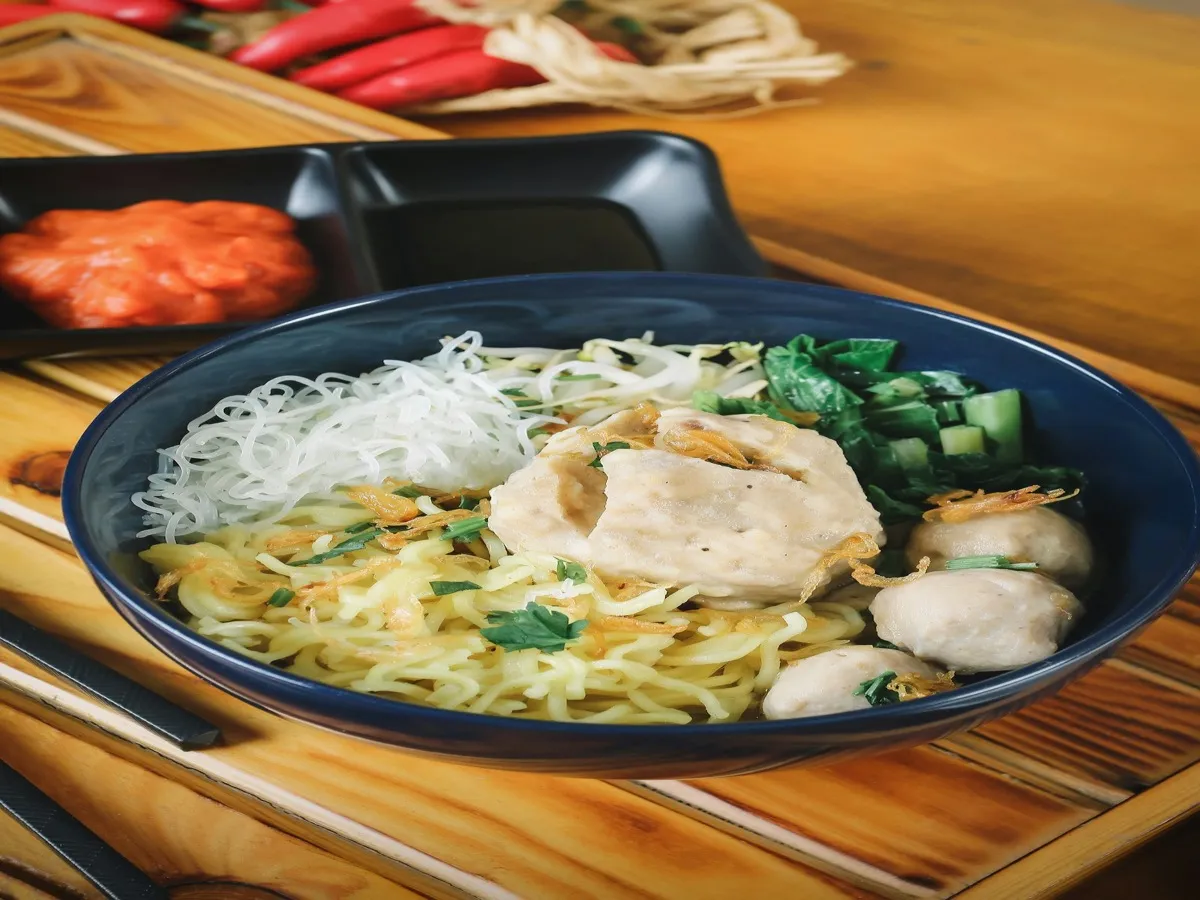
Indonesian bakso meatball soup is street-food comfort built on two things: springy beef meatballs and a clear, savory broth. Unlike Italian-American meatballs that stay tender and crumbly, bakso is blended with tapioca starch and ice until the mixture turns sticky and smooth. The balls bounce when you bite them.
In Indonesia, bakso carts ring a bell through neighborhoods from Malang to Jakarta. A bowl of mee bakso usually means meatballs, noodles, greens, fried shallots, and a table full of sambal and kecap manis so every diner seasons their own soup. CNN once listed bakso among the foods Indonesians cannot live without, and the dish shows up from kaki lima street stalls to hotel restaurants.
This home version keeps the bounce without a commercial meat grinder. A food processor, ice water, and starch get you most of the way there in about an hour. If you already love Mexican albondigas soup or Italian wedding soup, bakso is the Southeast Asian cousin that belongs in the same meatball soups rotation.
Key Takeaways
- Bounce comes from technique: cold lean beef + starch + ice water + food processor paste.
- Lean meat wins: 90/10 or leaner blends cleaner; fatty mince turns greasy under long processing.
- Simmer, do not thrash: a gentle simmer keeps balls intact; a hard boil can break the surface.
- Broth stays light: garlic, ginger, celery, green onion - clear soup, not heavy cream or tomato.
- Finish at the table: fried shallots, sambal, and kecap manis are part of the dish, not optional garnish.
How to Make Indonesian Bakso Meatball Soup
- Chill the beef if it is not already cold. Put ground beef, minced garlic, fried shallots, salt, white pepper, baking powder, bouillon powder, and egg white in a food processor. Pulse until the mixture looks sticky and starts to paste together.
- Add half the tapioca starch and half the ice water. Process briefly, then add the rest. Blitz until the paste is smooth and tacky, about 45 to 60 seconds total. Stop if the bowl warms; chill 10 minutes and continue if needed.
- Bring a large pot of water to a gentle simmer. With wet hands, squeeze ping-pong sized balls (1 to 1.25 inches) through the circle of your thumb and forefinger, scooping each with a spoon, or roll them between damp palms. You should get about 18 to 22 meatballs.
- Slide meatballs into the simmering water without crowding. Keep a soft bubble - not a rolling boil. Cook until they float and the centers reach 160F (71C), about 12 to 15 minutes. Transfer to a plate.
- In a second pot, combine beef broth, smashed garlic, ginger, celery, green onion pieces, lemongrass if using, and sugar. Bring to a boil, then simmer 10 to 15 minutes. Season with salt and white pepper. Strain for a clearer bowl if you prefer.
- Cook noodles per package directions (usually 3 to 5 minutes for dried egg noodles or rice vermicelli). Blanch bok choy or spinach in the hot broth for 30 to 60 seconds until bright green.
- Build bowls: noodles and greens first, 4 to 5 meatballs, then ladles of hot broth. Top with fried shallots and green onion. Pass kecap manis, sambal, and lime at the table.
Ingredients
Bakso meatballs
- 1 lb (450 g) lean ground beef, 90/10 or leaner
- 1/3 cup tapioca starch (or cornstarch)
- 1 large egg white (or 1 whole egg)
- 3 cloves garlic, minced or pounded
- 1 tbsp crispy fried shallots, plus more for serving
- 1 tsp kosher salt
- 1/2 tsp white pepper
- 1/2 tsp baking powder
- 1 tsp beef bouillon powder or stock powder (optional)
- 1/3 cup ice water or crushed ice
Broth
- 6 cups (1.4 L) beef broth or low-sodium stock
- 2 cloves garlic, smashed
- 1-inch piece ginger, sliced
- 1 celery stalk, cut into large pieces
- 2 green onions, cut into 2-inch pieces
- 1 stalk lemongrass, bruised (optional)
- 1/2 tsp sugar
- Salt and white pepper, to taste
Bowl fixings
- 8 oz (225 g) dried egg noodles, rice vermicelli, or bihun
- 2 cups bok choy, spinach, or mustard greens
- Kecap manis (sweet soy sauce), for serving
- Sambal oelek or chili paste, for serving
- Lime wedges and sliced green onion, optional
Why Bakso Meatballs Bounce
Western meatballs stay tender because binders (breadcrumbs, milk) trap fat and moisture without fully emulsifying the meat. Bakso goes the other direction. Processors and street vendors grind lean beef with ice so myofibrillar proteins form a cold gel. Starch and a little baking powder lock that gel into a springy ball.
Home cooks get close with a food processor:
| Factor | What it does | Home tip |
|---|---|---|
| Lean beef | Clean protein network | 90/10 or leaner |
| Ice / ice water | Keeps fat solid while mixing | Add gradually; keep bowl cold |
| Tapioca or cornstarch | Elastic bite | 1/3 cup per pound is a solid start |
| Baking powder | Light lift inside the gel | 1/2 tsp - do not overdo |
| Food processor | Surimi-like paste | 45 to 60 seconds, not 5 minutes |
Guides from WanderCooks, LinsFood, and So Yummy Recipes all stress cold processing and starch. Skip the processor and you still get tasty meatballs, but the signature snap softens.
Broth Notes (Keep It Clear)
Authentic bakso broth is light and beefy, not pho-spiced or creamy. Garlic, ginger, celery, and green onion are enough for a weeknight pot. Bone broth simmered longer tastes deeper if you have time; good store-bought beef stock works when dinner cannot wait three hours.
Indonesian cooks and commenters often push back on cinnamon-heavy or cardamom-forward versions. Those spices belong to other soups. For bakso, aim for clarity and salt balance, then let sambal and kecap manis finish the flavor at the table.
Serving Ideas
- Classic mee bakso: egg noodles or rice vermicelli, greens, fried shallots.
- Bakso kuah only: skip noodles for a lighter bowl; add extra greens.
- Party bakso: smaller balls on toothpicks with kecap manis for dipping.
- Rice side: steamed white rice for anyone who wants a second carb.
- Protein swaps: chicken bakso (bakso ayam) or a beef-chicken blend both work with the same starch method.
For more soup-forward meatball dinners, browse Italian wedding soup and Mexican albondigas. Sticky skillet dinners live in the Asian meatball recipes list if you want glaze instead of broth.
Make-Ahead, Storage, and Freezing
- Fridge: cooked meatballs and broth keep 3 to 4 days in separate containers.
- Freezer: cool meatballs fully, freeze on a tray, then bag up to 2 months.
- Reheat: simmer frozen or chilled meatballs in hot broth 8 to 10 minutes until heated through.
- Noodles: cook fresh when serving so they do not soak up the entire pot.
- Broth base: aromatics can simmer ahead; reheat and season just before plating.
Frequently Asked Questions
What is bakso?
Bakso is the Indonesian word for meatball. Served in clear broth with noodles and condiments, the full bowl is often called mee bakso. The meatballs are denser and springier than Italian meatballs because of starch and cold processing.
Can I make bakso without a food processor?
Yes, but texture will be softer. Mince the beef as fine as you can, then knead hard with salt, starch, and ice water until sticky. A stand mixer with a paddle on medium can help if you keep the bowl cold.
Is tapioca starch required?
Tapioca is traditional for bounce. Cornstarch is the common substitute and still works well. Potato starch is another backup. Breadcrumbs will not give the same snap.
How do I stop bakso from falling apart?
Keep the paste cold and sticky, do not overcrowd the pot, and hold a gentle simmer. A rolling boil agitates the surface before the proteins set. Let balls float fully before scooping.
What should I serve with bakso?
Noodles, blanched greens, fried shallots, sambal, and kecap manis are the core. Hard-boiled egg halves and fried tofu are common extras at street stalls.
Can I use frozen meatballs?
Commercial Asian-style beef or fish balls can stand in for a shortcut bowl, but they will not taste like homemade bakso. For true bounce, make the paste once and freeze the cooked balls.
Sources
- Bakso - Indonesian Meatball Soup - WanderCooks
- How to Make Bakso, Indonesian Meatballs - LinsFood
- Bakso: Indonesian Beef Meatballs - So Yummy Recipes
- Mee Bakso (Indonesian Meatball and Noodle Soup) - The Spruce Eats
- Bakso: Indonesian Meatball Soup (Beef) - Cook Me Indonesian
- Indonesian Meatball Soup (Bakso) - Flavelo