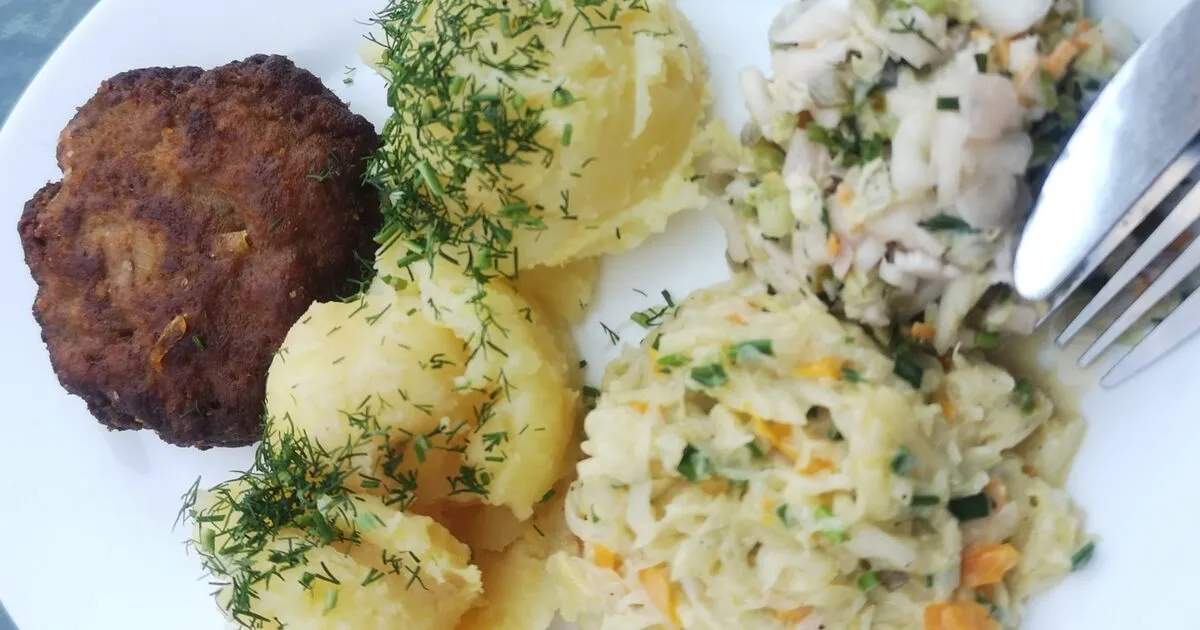
Danish frikadeller are the country’s everyday meatball: soft, pan-fried ovals of pork and veal bound with breadcrumbs and warm spice. They sit somewhere between a meatball and a flat patty, and they show up at weeknight dinners, smørrebrød lunches, and cold leftover sandwiches across Denmark.
The texture is the whole point. A milk-soaked breadcrumb panade and a short rest keep them light, while allspice and grated onion give them a savory depth you do not expect from five ingredients. Unlike Swedish meatballs in cream gravy, the classic Danish finish is a glossy brown sauce (brun sovs) with boiled potatoes.
Key Takeaways
- Frikadeller are Danish pan-fried meatballs, usually pork and veal, shaped into flat ovals
- A milk-soaked breadcrumb panade keeps them light instead of dense
- Allspice (or nutmeg) and grated onion are the signature seasonings
- They are fried in butter, not baked, and served with brown gravy and potatoes
- Leftovers make a great open-faced rye bread sandwich the next day
How to Make Danish Frikadeller
-
Soak the breadcrumbs in the milk in a small bowl for 5 minutes until soft and pasty. Grate the onion finely so its juice goes straight into the meat.
-
In a large bowl, combine the pork, veal, grated onion, egg, soaked breadcrumbs, flour, salt, pepper, and allspice. Mix with your hands just until combined, about 2 minutes, then cover and rest 15 minutes so the crumbs hydrate.
-
Heat the butter and oil in a large skillet over medium heat. Scoop heaping tablespoons, shape into flat ovals (not spheres) about 2 inches wide, and fry in batches for 3 to 4 minutes per side until deep golden and cooked through. Keep warm.
-
Pour off most of the fat, leaving about 2 tbsp. Whisk in the flour and cook 1 to 2 minutes until nutty, then add the stock slowly while whisking. Simmer 5 to 7 minutes until the gravy coats a spoon, season, and stir in the cold butter.
-
Serve the frikadeller with boiled potatoes, the brown gravy spooned over, and pickled beets or red cabbage on the side.
Ingredients
- 1/2 lb (225 g) ground pork
- 1/2 lb (225 g) ground veal (or extra pork / beef)
- 1 small yellow onion, grated
- 1 egg
- 1/3 cup (40 g) plain breadcrumbs
- 1/3 cup (80 ml) whole milk
- 2 tbsp all-purpose flour, plus more if the mix is loose
- 1 tsp salt
- 1/2 tsp black pepper
- 1/2 tsp ground allspice (or nutmeg)
- 2 tbsp butter, plus 1 tbsp oil, for frying
- Brown gravy: 2 tbsp butter, 2 tbsp flour, 2 cups (480 ml) beef or chicken stock, salt, pepper, 1 tbsp cold butter to finish
What Are Frikadeller
Frikadeller are a Danish national dish, closer to a flattened meatball than a hamburger. The base is minced pork, often blended with veal or beef, bound with breadcrumbs or flour and egg, and seasoned with salt, pepper, and allspice. Cooks shape the mixture into oval patties about the size of a small egg and fry them in butter until browned on both sides.
They differ from their Scandinavian cousins in a few ways. Finnish lihapullat and Estonian lihapallid are usually round and simmered or baked in sauce, while Swedish meatballs lean on a cream sauce. Danish frikadeller stay pan-fried and are finished with a darker, savory brown gravy rather than a pale cream one.
The Brown Gravy
Brun sovs is what turns a plate of fried meat into a meal. After the meatballs come out, you keep the browned bits in the pan, whisk in flour, and slowly add stock. The trick is patience: let it simmer until it thickens enough to coat a spoon, then mount a knob of cold butter at the end for shine and roundness.
A splash of cream or a few drops of soy sauce are common shortcuts for depth, but a good stock needs little help. If you want it thinner for pouring over potatoes, hold back a little stock; for a gravy that clings to the meat, let it reduce a minute longer.
Serving and Leftovers
The traditional plate is boiled potatoes, frikadeller, brown gravy, and a bright, sharp side to cut the richness: pickled beetroot, rødkål (sweet-and-sour red cabbage), or a cucumber salad. Rye bread (rugbrød) on the side is common too.
Cold frikadeller are not a compromise. Slap one on buttered rye with a little remoulade or mayo and you have a classic Danish smørrebrød. They keep in the fridge for three days and reheat well in a dry pan, though they rarely last that long.
Tips for Light, Fluffy Frikadeller
Grate the onion on the fine side of a box grater and let the juice run into the bowl. Squeeze it dry and you lose flavor and moisture the panade was supposed to carry. Mix gently and stop early. A wet, loose mix firms up during the rest, so resist the urge to add a lot of extra flour.
Use a wide skillet and do not crowd it. A single layer with space between each oval browns evenly; an overloaded pan steams. Medium heat is right. Too hot and the outside burns before the center sets, too low and they soak up fat and go sad.
FAQ
What is the difference between frikadeller and Swedish meatballs?
Both are European meatballs, but frikadeller are Danish, pan-fried into flat ovals, and served with a brown gravy and potatoes. Swedish meatballs are rounder, often baked or simmered, and finished with a cream-based sauce, which is the main difference most people notice at the table.
Can I use only pork or only beef?
Yes. A half-and-half pork and veal mix is traditional for tenderness, but all pork works and reads slightly richer. All beef is leaner and can turn firmer, so add an extra spoon of milk to the panade to keep the texture light.
Why are my frikadeller tough?
Usually from overmixing or too little binder. Mix only until the ingredients come together and let the breadcrumb soak do its job. Overworking the meat develops gluten-like toughness, the opposite of the soft bite you want.
Can I make frikadeller ahead of time?
You can shape the raw ovals and refrigerate them up to a day, or fry and reheat later. Cooked frikadeller keep three days in the fridge and reheat well in a skillet. The brown gravy is best made fresh but also reheats fine.
Are frikadeller gluten free?
The meatballs are not, because of the wheat breadcrumbs and flour. Swap in gluten-free breadcrumbs and a gluten-free flour blend and they work. Check that your stock is gluten free too, since some broths use wheat as a filler.
What do you eat with frikadeller besides potatoes?
Boiled potatoes are standard, but mashed potatoes, buttered noodles, or a simple green salad all work. For a lighter plate, serve them with cucumber salad and pickled beets, or use them cold on rye bread as an open-faced sandwich.
Sources
- Allrecipes: Frikadeller (Danish Meatballs) Recipe
- TasteAtlas: Frikadeller recipe and background
- The Nordic Dish: Fluffy Danish Meatballs (Frikadeller)
- Eating Europe: Frikadeller: a guide to Denmark’s beloved meatballs
- Hero photo: Frikadelle mit Gemüse und Kartoffeln, Wikimedia Commons (CC BY-SA 4.0, by Silar)
