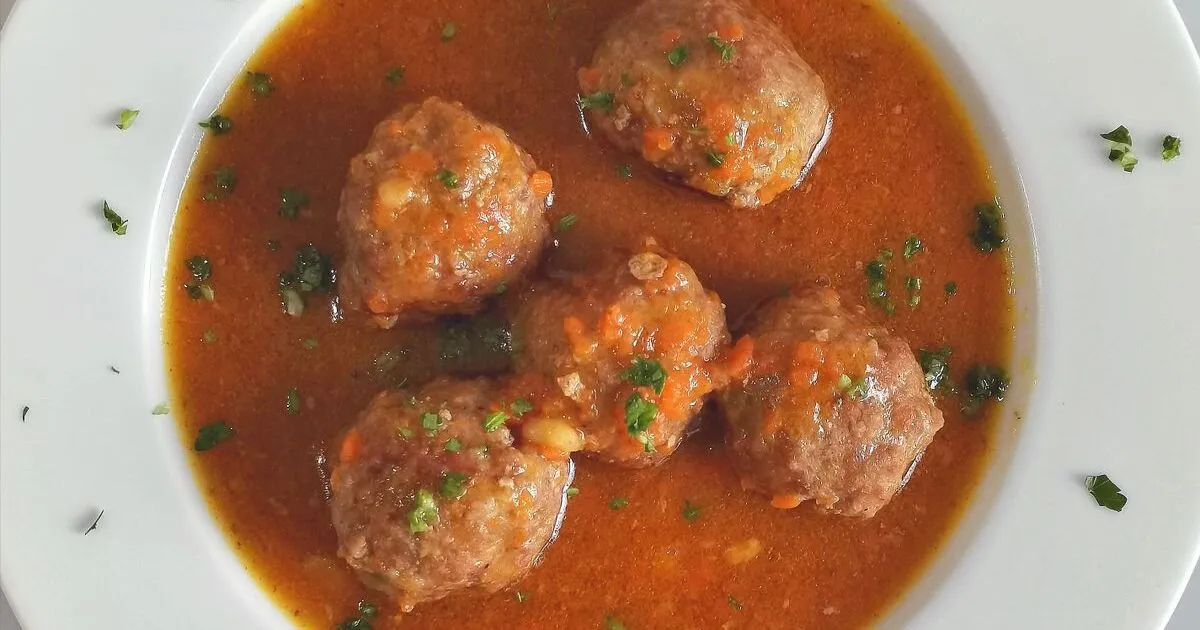
Youvarlakia is the Greek meatball soup that every family in Greece claims to make best. Tender beef and rice meatballs float in a light broth, then get finished with avgolemono - the silky egg-lemon sauce that transforms simple soup into something extraordinary.
This is not a heavy stew. The avgolemono gives the broth a creamy, tangy richness without any cream or cheese. It is comfort food that feels light enough for any night of the week.
Key Takeaways
- Youvarlakia means “small round balls” in Greek - the name for meatballs simmered directly in broth
- The rice inside the meatballs cooks in the broth, absorbing flavor and keeping the meatballs tender
- Avgolemono (egg-lemon sauce) is the signature Greek technique - eggs and lemon whisked into hot broth create a creamy, tangy finish
- Total time is about 55 minutes - 20 minutes prep, 35 minutes cook
- This soup is naturally gluten-free if you skip the flour dusting
How to Make Greek Youvarlakia Avgolemono
1. Mix the Meatball Mixture
Combine the ground beef, ground pork, grated onion, egg, rice, parsley, mint, olive oil, salt, and pepper in a large bowl. Mix gently with your hands until just combined - do not overwork the meat.
2. Roll and Dust the Meatballs
Roll the mixture into 30 small meatballs, about 1 inch (2.5 cm) each. Place the flour on a plate and dust each meatball, shaking off excess. The flour helps the meatballs hold together and thickens the broth slightly.
3. Sauté the Vegetables
Melt the butter in a large pot or Dutch oven over medium heat. Add the diced carrot and potato. Sauté for 3 to 4 minutes until the edges soften.
4. Build the Broth
Pour in the broth and bring to a gentle boil. Reduce heat to a simmer.
5. Simmer the Meatballs
Add the floured meatballs a few at a time. Simmer gently for 25 to 30 minutes until the rice inside is tender and the meatballs are cooked through. Avoid stirring - gently shake the pot instead to prevent breaking the meatballs.
6. Whisk the Egg Whites
While the meatballs simmer, prepare the avgolemono. Separate the eggs, placing whites in a medium bowl and yolks in a small bowl. Whisk the whites until thick and frothy.
7. Combine the Avgolemono
Add the lemon juice and egg yolks to the whites. Whisk vigorously until fully combined - the mixture will be thick and pale yellow.
8. Temper the Eggs
Ladle about 1 cup of hot broth into the egg mixture, whisking constantly. This tempers the eggs so they do not curdle when added to the pot.
9. Finish the Soup
Pour the tempered avgolemono back into the soup pot. Do not stir - gently shake the pot to distribute. Turn off the heat, cover, and let rest 5 minutes.
10. Serve
Serve immediately in warm bowls with crusty bread and crumbled feta. Squeeze extra lemon over the top if desired.
Ingredients
- 1 lb (450 g) ground beef (80/20)
- 1/2 lb (225 g) ground pork
- 1 medium onion, finely grated
- 1 large egg
- 1/3 cup (75 g) short-grain or medium-grain rice (uncooked)
- 1/4 cup flat-leaf parsley, finely chopped
- 2 tbsp fresh mint, finely chopped
- 2 tbsp extra virgin olive oil
- 1 tsp kosher salt
- 1/2 tsp black pepper
- 3 tbsp all-purpose flour (for dusting)
- 6 cups (1.4 L) chicken or beef broth
- 1 medium carrot, diced
- 1 medium potato, diced
- 1 tbsp butter
- 2 large eggs (room temperature)
- Juice of 2 lemons (about 1/3 cup)
- Crusty bread and crumbled feta for serving
What Is Avgolemono?
Avgolemono is a Greek sauce made from eggs and lemon juice. The name comes from two Greek words: avgo (egg) and lemono (lemon). It is used across Greek, Turkish, and Middle Eastern cooking - in soups, stews, and over vegetables.
The technique is simple but precise. You whisk eggs until frothy, then slowly add hot liquid while whisking constantly. This tempers the eggs, raising their temperature gradually so they thicken the broth without scrambling. The result is a silky, creamy sauce with a bright lemon tang - no dairy required.
In youvarlakia, the avgolemono transforms a clear meatball broth into a rich, comforting soup. It is the same sauce used in the classic chicken avgolemono soup, but paired with beef and rice meatballs instead.
Why Rice Instead of Breadcrumbs?
Traditional youvarlakia use uncooked short-grain rice inside the meatballs instead of breadcrumbs. The rice serves three purposes:
- It binds the meat - the starch in the rice holds the meatball together without needing a panade
- It absorbs broth - as the meatballs simmer, the rice soaks up the surrounding liquid, making each bite juicy and flavorful
- It thickens the soup - rice releases starch into the broth, giving the soup a slightly fuller body
Use short-grain or medium-grain rice (like Arborio or Carolina). Avoid long-grain rice like basmati - it does not absorb broth the same way and can turn mushy.
Tips for Perfect Avgolemono
The avgolemono is the most important part of this soup. Here is how to get it right every time:
- Use room temperature eggs - cold eggs are more likely to curdle when they hit hot broth
- Whisk the whites first - beating them to soft froth before adding yolks and lemon creates the airy texture
- Temper slowly - add hot broth one ladle at a time, whisking between each addition. If you add it too fast, the eggs will scramble
- Never boil after adding - once the avgolemono goes in, the heat should be off. The residual warmth is enough to thicken the sauce
- Shake, don’t stir - stirring with a spoon can break the delicate egg emulsion. Gently shake the pot back and forth instead
If your avgolemono does curdle slightly, don’t worry. The soup will still taste delicious - it just won’t be as silky smooth. You can strain it through a fine mesh sieve to remove any cooked egg bits.
What to Serve with Youvarlakia
This soup is a complete meal on its own - protein, carbs, and vegetables in one bowl. But these sides make it even better:
- Crusty bread - essential for soaking up the avgolemono broth
- Crumbled feta - a salty contrast to the lemony soup
- Greek salad - fresh tomatoes, cucumber, red onion, and olives dressed in olive oil
- Lemon wedges - an extra squeeze at the table brightens every bowl
- Rice on the side - some families serve the meatballs over plain rice instead of in soup
Storage and Reheating
Youvarlakia is best served fresh, but leftovers keep well:
- Refrigerator - store in an airtight container for up to 3 days. Reheat gently over low heat, stirring carefully. If the avgolemono thickens too much, add a splash of hot water or broth
- Freezer - the avgolemono may separate when thawed. For best results, freeze the meatballs and broth separately, then add the egg-lemon sauce fresh when serving
- Meal prep - cook the meatballs in broth without the avgolemono. Store in portions and make the egg-lemon sauce in small batches when ready to eat - it only takes a few minutes
Greek Youvarlakia vs Other Greek Meatballs
Greece has three major meatball traditions, each with a distinct preparation:
| Dish | Shape | Cooking Method | Sauce |
|---|---|---|---|
| Youvarlakia | Round, small | Simmered in broth | Avgolemono (egg-lemon) |
| Keftedes | Round or oval | Pan-fried or deep-fried | None (eaten with tzatziki) |
| Soutzoukakia | Oblong, elongated | Baked or fried, then braised | Tomato-cumin sauce |
Youvarlakia are the only Greek meatballs cooked entirely in broth. The simmering method keeps them incredibly tender, and the avgolemono gives the soup its signature creamy tang. For crispy fried Greek meatballs, see our Greek lamb keftedes recipe. For the oblong Smyrna-style meatballs in tomato sauce, try our soutzoukakia recipe.
Frequently Asked Questions
What does youvarlakia mean in Greek?
Youvarlakia (γιουβαρλάκια) comes from the Turkish word “yuvarlak,” meaning “round” or “circular.” It refers to the small, round shape of the meatballs. In Greece, youvarlakia always refers to meatballs simmered in broth and finished with avgolemono sauce.
Can I use ground turkey instead of beef?
Yes. Ground turkey or chicken makes a lighter version. The flavor will be milder, so consider adding an extra pinch of salt and a bit more lemon juice to compensate. Beef gives the deepest, most traditional flavor.
How do I prevent the avgolemono from curdling?
Temper the eggs slowly. Ladle hot broth into the egg mixture one scoop at a time, whisking constantly. Never pour cold eggs directly into boiling broth. After adding the avgolemono to the pot, turn off the heat immediately and do not stir - shake the pot gently instead.
Can I make this soup ahead of time?
You can cook the meatballs in broth up to 2 days ahead and refrigerate. When ready to serve, reheat gently and make the avgolemono fresh. The egg-lemon sauce only takes a few minutes and is best when prepared right before serving.
Is youvarlakia gluten-free?
The traditional recipe uses a small amount of flour for dusting the meatballs. You can skip the flour or substitute gluten-free flour to make the soup entirely gluten-free. The avgolemono sauce is naturally gluten-free.
What rice works best for youvarlakia?
Use short-grain or medium-grain white rice like Arborio, Carnaroli, or Carolina. These varieties absorb broth well and help bind the meatballs. Avoid long-grain rice like basmati - it does not soften properly during simmering.