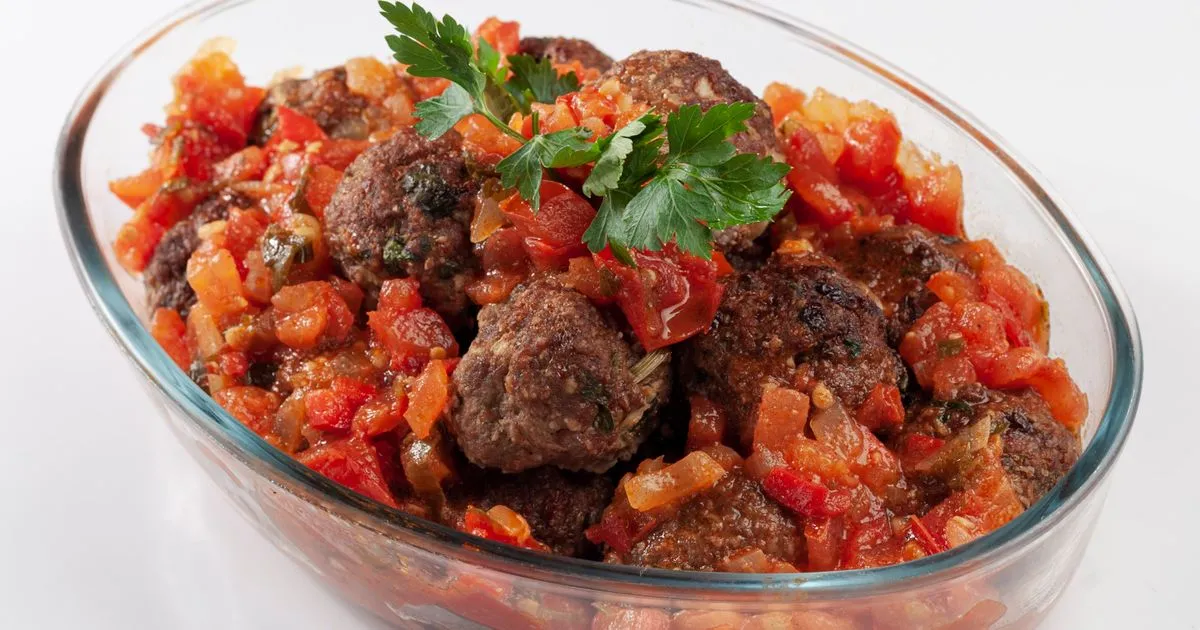
Soutzoukakia Smyrneika (pronounced soot-zoo-KAH-kee-ah smeer-NAY-kah) are oblong Greek meatballs spiced with cumin and baked in a rich tomato sauce. Unlike Greek lamb keftedes which are fried and served crispy, soutzoukakia are simmered until the sauce clings to every bite. This is the dish Greek families brought from Smyrna (modern-day Izmir, Turkey) in the early 20th century - and it is still one of the most comforting things you can put on a weeknight table.
The secret is cumin. Not oregano, not mint - cumin gives soutzoukakia their warm, earthy character that distinguishes them from every other Greek meatball. A splash of white wine in both the meat and the sauce adds depth, and the whole thing bakes in one dish with almost no active time.
Key Takeaways
- Cumin is non-negotiable - it defines soutzoukakia. Use 1 1/2 tsp in the meat and 1/2 tsp in the sauce for balanced flavor.
- Shape oblong, not round - the elongated form is traditional and increases surface area for browning and sauce absorption.
- Bake at 390F (200C) for 20 minutes, then add sauce and bake 25 minutes more. No frying needed.
- White wine matters - it goes in both the meat mixture and the tomato sauce for layered flavor.
- Rest before serving - 5 minutes lets the sauce thicken and the flavors settle.
How to Make Soutzoukakia Smyrneika
- Mix the meatball ingredients. Combine ground beef, garlic, breadcrumbs, cumin, cinnamon, salt, pepper, wine, olive oil, and egg in a bowl. Mix just combined - do not overwork. Refrigerate 30 minutes if time allows.
- Preheat oven to 390F (200C). Grease a deep baking dish with olive oil.
- Shape the soutzoukakia. Pinch off walnut-sized portions and shape into oblong meatballs about 2.5 inches long. Place in baking dish.
- Bake for 20 minutes until lightly browned.
- Make the sauce. Whisk crushed tomatoes, tomato paste, cumin, allspice, sugar, garlic, and wine in a bowl.
- Pour sauce over meatballs. Return to oven and bake 25 minutes more until sauce thickens.
- Rest 5 minutes before serving. Garnish with fresh parsley.
Ingredients
For the meatballs:
- 1 lb (450 g) ground beef (or 50% beef, 50% pork)
- 2 cloves garlic, minced
- 1 cup (100 g) panko breadcrumbs
- 1 1/2 tsp ground cumin
- 1/2 tsp ground cinnamon (optional)
- 1/2 tsp black pepper
- 1 tsp fine salt
- 1/2 cup (120 ml) white wine
- 3 tbsp extra virgin olive oil
- 1 large egg
For the tomato sauce:
- 2 cups (500 g) crushed tomatoes
- 1 tbsp tomato paste
- 1/2 tsp ground cumin
- 1/4 tsp ground allspice (optional)
- 1 tsp sugar
- 2 cloves garlic, smashed
- 3 tbsp white wine
- Fresh parsley for garnish
What Are Soutzoukakia?
Soutzoukakia are Greek meatballs from Smyrna - a city on the Aegean coast that was once home to a large Greek population. When refugees fled Smyrna in the early 1900s, they brought their food traditions to mainland Greece. Soutzoukakia became one of those dishes that every Greek grandmother made, with small variations passed down through families.
The name comes from the Turkish word “sucuk” (sausage), referring to the elongated shape. In Greece, they are also called Smyrneika ( Smyrna-style) to honor their origin.
Soutzoukakia vs Keftedes: What Is the Difference?
Both are Greek meatballs, but they are fundamentally different dishes:
| Feature | Soutzoukakia | Keftedes |
|---|---|---|
| Shape | Oblong, elongated | Round, bite-sized |
| Key spice | Cumin | Oregano, mint |
| Cooking method | Baked, then simmered in sauce | Fried until crispy |
| Sauce | Rich tomato sauce | Served dry or with tzatziki |
| Texture | Tender, sauce-soaked | Crispy exterior |
| Origin | Smyrna (Izmir) | Mainland Greece |
If you want crispy fried meatballs, make keftedes. If you want something tender that soaks up tomato sauce, soutzoukakia are your dish.
The Secret Is Cumin
Most Greek cooking uses oregano, mint, or dill. Soutzoukakia break that rule with cumin - a warm, earthy spice more common in Middle Eastern and North African cooking. This is the Smyrna influence: the city sat at the crossroads of Greek and Ottoman cuisine.
Use 1 1/2 teaspoons of ground cumin in the meat mixture and 1/2 teaspoon in the sauce. The double application creates layers of flavor without overwhelming the dish. If you are new to cumin, start with 1 teaspoon in the meat and taste before adding more.
Tip: Store ground cumin in the fridge in an airtight container. It loses potency quickly at room temperature.
Baking vs Frying
Traditional soutzoukakia are shallow-fried first, then simmered in sauce. Baking is easier and produces a lighter result with less oil:
- Fried: Crispier exterior, richer, more traditional. Use 1/4 inch of olive oil in a skillet.
- Baked: Less hands-on time, less mess, still flavorful. Brush meatballs with olive oil before baking.
Both methods finish with a 25-minute simmer in tomato sauce. The sauce is where the magic happens - the meatballs absorb the cumin-spiked tomato as it thickens.
Serving Soutzoukakia
In Greece, soutzoukakia are almost always served with fluffy white rice (called soutzoukakia me ryzi). Other options:
- Mashed potatoes - creamy base soaks up the sauce
- Crusty bread - for mopping every drop
- Pasta - spaghetti or orzo work well
- Greek salad - the freshness cuts through the richness
Storage and Reheating
- Fridge: Store in an airtight container for up to 4 days. The flavor improves overnight.
- Freezer: Freeze meatballs and sauce together for up to 3 months. Thaw in the fridge overnight.
- Reheat: Warm in a covered skillet over medium-low heat, adding a splash of water if the sauce has thickened too much. Microwaving works but the texture is better stovetop.
FAQ
What does soutzoukakia mean?
Soutzoukakia comes from the Turkish word “sucuk” (sausage), referring to the elongated, sausage-like shape of the meatballs. In Greece, they are also called Smyrneika to indicate their origin from the city of Smyrna.
Can I make soutzoukakia without wine?
Yes. Replace the wine with beef broth or chicken stock. The wine adds depth but the cumin and garlic provide enough flavor on their own. Use the same amount (1/2 cup for the meat, 3 tbsp for the sauce).
What is the best meat for soutzoukakia?
Ground beef is traditional. A 50/50 mix of beef and pork adds extra juiciness. Some recipes use lamb for a richer flavor. Avoid extra-lean beef - the fat keeps the meatballs moist during the long bake.
Do I have to refrigerate the meat mixture?
It is optional but recommended. 30 minutes in the fridge lets the breadcrumbs absorb the wine and the spices meld into the meat. If you are in a rush, shape and bake immediately - they will still taste good.
Can I fry soutzoukakia instead of baking?
Yes. Shallow-fry in 1/4 inch of olive oil over medium heat for 3 to 4 minutes per side until golden. Then transfer to the tomato sauce and simmer for 20 minutes. The fried version has a crispier exterior but takes more active time.
What makes soutzoukakia different from Italian meatballs?
Italian meatballs use oregano, basil, and sometimes Parmesan, and are typically round. Soutzoukia are oblong, use cumin as the primary spice, and are always simmered in a wine-enriched tomato sauce rather than served in marinara.
Sources
- My Greek Dish - Traditional Soutzoukakia Recipe
- The Mediterranean Dish - Greek Baked Meatballs Soutzoukakia
- America’s Test Kitchen - Soutzoukakia
- Diane Kochilas - Meatball Sausages Smyrna Style
Related Posts
- Greek Lamb Meatballs (Keftedes) - Crispy fried meatballs with mint and oregano
- Baked Feta Meatballs - One sheet pan with cherry tomatoes
- Italian Sunday Gravy Meatballs - Slow-simmered in marinara
- How to Make Meatballs: Complete Guide - Master the fundamentals