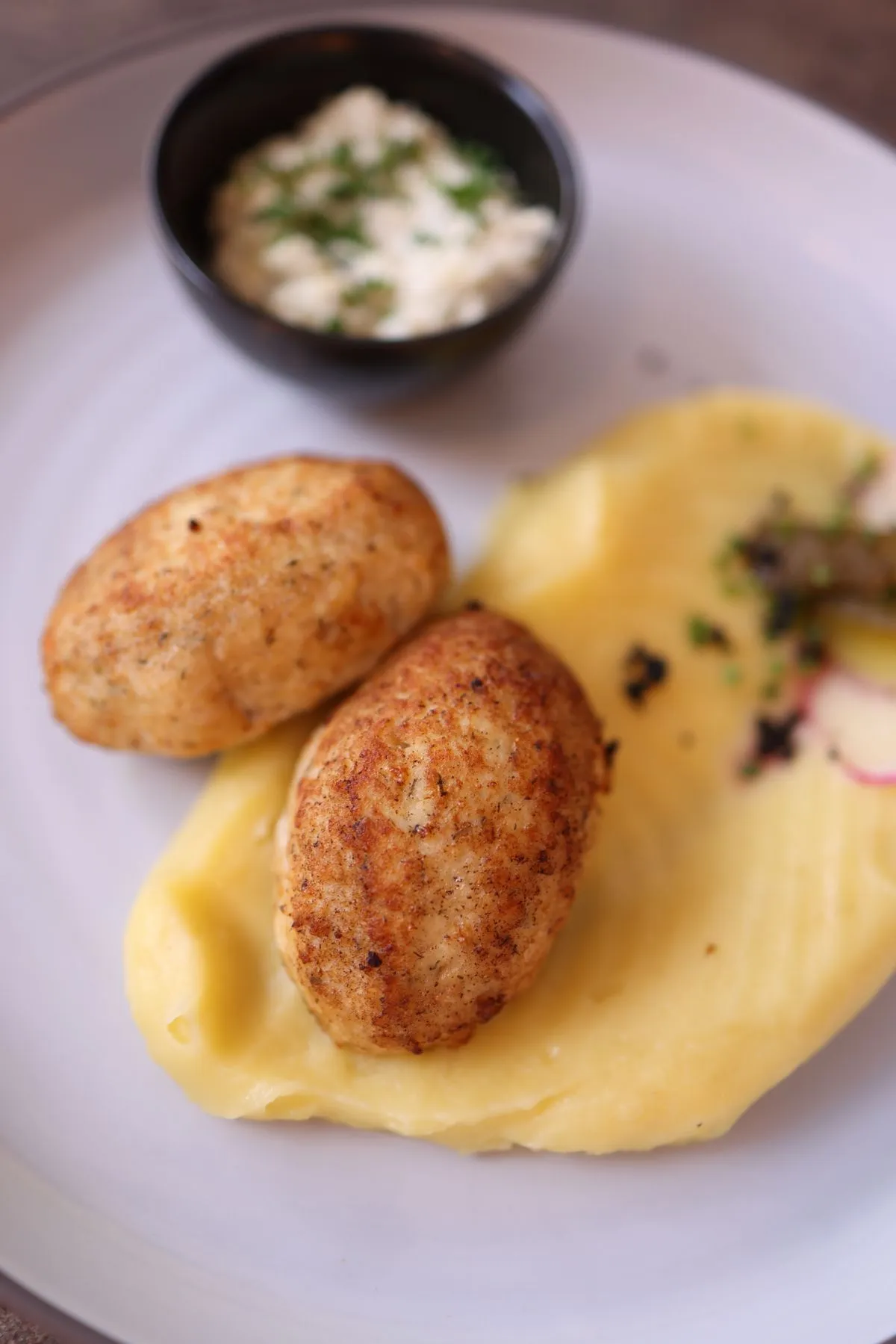
Greek spinach feta meatballs combine two classic Greek flavors - the salty tang of feta and the earthy depth of fresh spinach - into one juicy, oven-baked meatball. A garlicky lemon yogurt sauce ties it all together.
This is not the same as baked feta meatballs (which uses a whole block of feta on a sheet pan). Here the feta and spinach live inside the meatball, folded into a beef-pork blend with lemon zest and oregano.
How to Make Greek Spinach Feta Meatballs
-
Preheat the oven. Set oven to 400F (200C). Line a large sheet pan with parchment paper.
-
Squeeze the spinach dry. Place the finely chopped spinach in a clean kitchen towel or several paper towels. Twist and wring out as much moisture as possible. Wet spinach makes the meatball mixture too loose and causes the meatballs to steam instead of brown.
-
Make the panade. Mix panko breadcrumbs with the egg in a small bowl. Let sit 5 minutes. The crumbs absorb the egg and create a tender, moist meatball.
-
Combine the mixture. In a large bowl, add ground beef, ground pork, panade, squeezed spinach, crumbled feta, red onion, garlic, oregano, parsley, lemon zest, salt, and pepper. Mix gently with your hands until just combined. Do not over-mix - stop as soon as everything is evenly distributed.
-
Shape. Roll into 24 balls, about 1.5 inches across. Arrange on the sheet pan with space between each one.
-
Bake. Place in the oven and bake 18 to 20 minutes until golden brown on top and the internal temperature reaches 160F (71C).
-
Make the yogurt sauce. While meatballs bake, stir together Greek yogurt, grated garlic, lemon juice, dill, and a pinch of salt in a small bowl.
-
Serve. Plate the meatballs warm with a generous spoonful of yogurt sauce and warm pita or rice.
Ingredients
For the meatballs:
- 1 lb (450 g) ground beef, 85/15
- 1/2 lb (225 g) ground pork
- 1/3 cup panko breadcrumbs
- 1 large egg
- 2 cups fresh spinach, finely chopped
- 1/2 cup crumbled feta cheese (about 2 oz / 60 g)
- 1/4 cup finely minced red onion
- 2 cloves garlic, minced
- 1 tbsp fresh oregano, chopped (or 1 tsp dried)
- 1 tbsp fresh parsley, chopped
- 1 tsp lemon zest (about 1 lemon)
- 1/2 tsp kosher salt
- 1/4 tsp black pepper
For the yogurt sauce:
- 1 cup plain Greek yogurt
- 1 clove garlic, grated
- 1 tbsp lemon juice
- 1 tbsp fresh dill, chopped
- Pinch of salt
For serving:
- Warm pita bread
- Cooked rice or orzo
Why This Recipe Works
The beef-pork blend gives these meatballs the richness of a traditional Greek keftede while the pork adds moisture. Fresh spinach and feta folded into the mix create pockets of salty, earthy flavor in every bite.
Lemon zest in the meat and lemon juice in the yogurt sauce tie the dish together with a bright Mediterranean finish.
Tips for the Best Greek Meatballs
Use block feta, not pre-crumbled. Block feta has better flavor and texture. Crumble it yourself with a fork into chunky pieces. Pre-crumbled feta often contains anti-caking agents that dry it out.
Squeeze the spinach thoroughly. Fresh spinach is about 90% water. If you skip this step, the excess moisture makes the mixture too wet and the meatballs will spread on the pan instead of holding their shape.
Don’t skip the pork. A beef-only meatball can be dense. The pork fat keeps the interior tender and juicy during the 400F bake. If you only have beef, add 1 tablespoon of olive oil to compensate.
Bake, don’t fry. Baking gives you even browning on all sides without the mess of pan-frying. It also lets you cook 24 meatballs at once instead of working in batches.
Serving Ideas
- Meatball bowls: Serve over cooked orzo or rice with the yogurt sauce, diced cucumber, and a handful of Kalamata olives
- Pita wraps: Tuck warm meatballs into pita with the yogurt sauce, sliced tomato, and shredded lettuce
- Meal prep: Store meatballs and sauce separately in the fridge for up to 4 days. Reheat meatballs in the oven at 350F (175C) for 8 to 10 minutes
- Appetizer platter: Arrange meatballs on a plate with toothpicks, a bowl of yogurt sauce, and warm pita triangles
Storage and Freezing
Refrigerator: Store cooked meatballs in an airtight container for up to 4 days. Keep the yogurt sauce in a separate container.
Freezer: Place cooled meatballs on a sheet pan and freeze until solid, about 2 hours. Transfer to a freezer bag. They keep for up to 3 months. Reheat from frozen at 350F (175C) for 15 to 18 minutes.
How Greek Spinach Feta Meatballs Differ from Keftedes
Traditional Greek keftedes are pan-fried, seasoned with oregano and mint, and served with tzatziki. They rarely include feta or spinach inside the meatball.
This recipe borrows the herb profile of keftedes but adds spinach and feta for extra flavor and nutrition, then bakes instead of frying for a weeknight-friendly approach.
FAQ
Can I use ground turkey instead of beef and pork? Yes. Ground turkey works but produces a leaner meatball. Add 1 tablespoon olive oil to the mixture to keep it moist. Turkey meatballs reach 165F (74C) internal temperature, so check with a thermometer.
Can I freeze these meatballs before baking? Shape the meatballs and place them on a parchment-lined sheet pan. Freeze until solid, then transfer to a freezer bag. Bake from frozen at 400F (200C) for 22 to 25 minutes, adding 5 minutes to the original bake time.
What if I don’t have Greek yogurt for the sauce? Sour cream or plain regular yogurt both work. Greek yogurt is thicker and tangier, which pairs better with the rich meatballs, but the recipe is forgiving.
Can I add sun-dried tomatoes? Yes. Fold 2 tablespoons of chopped sun-dried tomatoes (drained if oil-packed) into the meatball mixture along with the spinach and feta. They add a sweet-tart note that complements the feta.
How do I keep the meatballs from falling apart? Three things matter: squeeze the spinach very dry, don’t skip the egg-panade binder, and mix the meat gently. Over-mixing or wet spinach are the most common causes of crumbling.