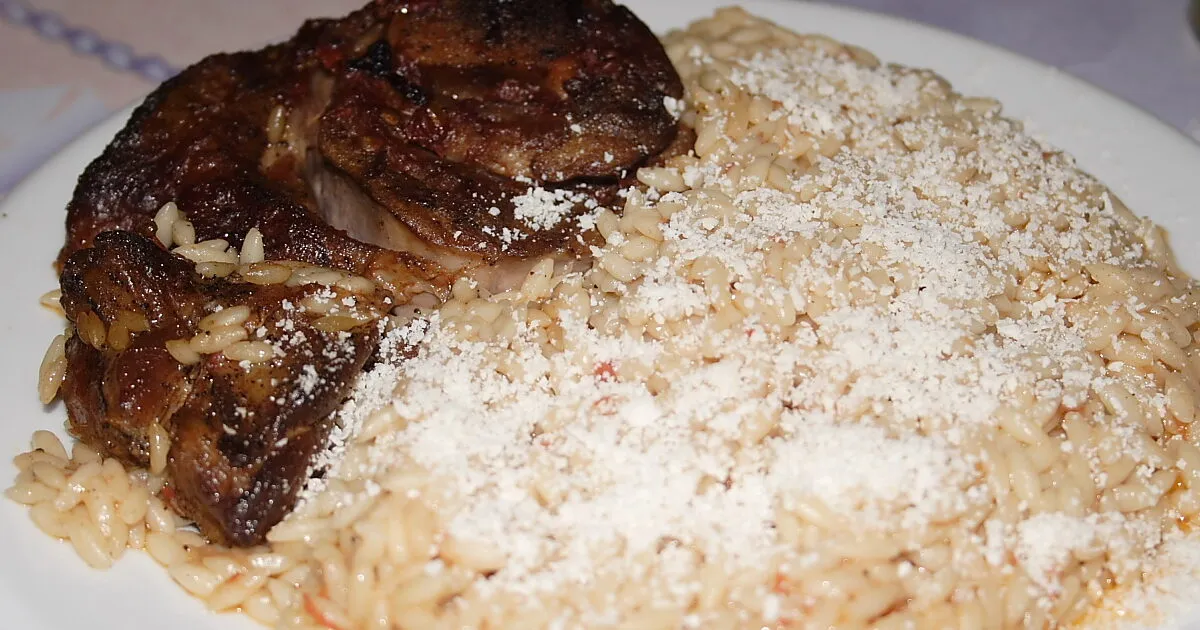
Giouvetsi meatballs (keftedes giouvetsi) are a Greek family-table classic: tender, herb-scented meatballs baked over orzo in a rich tomato sauce until the pasta drinks up every drop. Think of it as Greece’s answer to spaghetti and meatballs - one pan, one sauce, and a golden crust of cheese on top. It is the kind of dish made for Sunday lunch, but it is easy enough for a weeknight.
The name comes from güveç, the Turkish word for the clay pot the dish was traditionally baked in. Greeks took the vessel and made it their own, filling it with kritharaki (orzo), tomato, and whatever meat was on hand - lamb, beef, or in this version, juicy keftedes. The orzo soaks up the sauce as it bakes, so every spoonful tastes of tomato, oregano, and cinnamon.
Key Takeaways
- Soak the bread in milk to keep the meatballs soft and light
- Toast the orzo in the hot sauce before baking for extra flavor
- Bake uncovered so the orzo absorbs the sauce and turns glossy
- Rest the dish in the turned-off oven - the orzo finishes absorbing while you set the table
- Feta or kefalograviera on top is traditional, not optional
How to Make Giouvetsi Meatballs
-
Soak the bread and mix the meatballs. Tear the crustless bread into pieces and soak the bread in the milk for 5 minutes, then squeeze out the excess. In a large bowl, combine the beef, squeezed bread, grated onion, garlic, egg, parsley, oregano, cinnamon (if using), salt, and pepper. Mix gently with your hands until just combined - overworking makes the meatballs tough. Shape into about 20 meatballs and refrigerate for 15 minutes.
-
Brown the meatballs. Heat 1 tablespoon of olive oil in a large skillet over medium-high heat. Brown the meatballs in batches for 3 to 4 minutes per side until golden all over. They do not need to cook through - the oven finishes the job. Set them aside on a plate.
-
Start the sauce. Reduce the heat to medium and add the remaining 2 tablespoons of olive oil. Cook the chopped onion for 4 to 5 minutes until soft and translucent. Add the garlic and tomato paste and stir for 1 minute until the paste darkens and smells sweet.
-
Simmer the tomato sauce. Pour in the crushed tomatoes, oregano, cinnamon, bay leaf, and chicken broth. Bring to a simmer and cook for 5 minutes, then taste and season with salt and pepper. The sauce should be a little loose - the orzo will soak it up.
-
Combine and bake. Preheat the oven to 400 F (200 C). In an ovenproof baking dish, toast the orzo by stirring it into the hot sauce for 1 to 2 minutes until the edges turn golden. Nestle the meatballs into the orzo. Bake, uncovered, for 25 minutes.
-
Add the cheese and finish. Stir the orzo gently, scatter the crumbled feta or cubed kefalograviera over the top, and bake for 10 to 15 more minutes until the orzo is al dente and the liquid is nearly absorbed.
-
Rest and serve. Turn off the oven and let the giouvetsi rest in the oven for 10 to 15 minutes - the orzo keeps drinking up the sauce and turns glossy. Sprinkle with fresh parsley or dill and serve warm from the dish.
Ingredients
- 1 lb (450 g) ground beef, 80/20
- 2 slices day-old white bread, crusts removed
- 1/4 cup milk
- 1 small onion, grated (for the meatballs)
- 2 cloves garlic, minced (for the meatballs)
- 1 large egg, lightly beaten
- 2 tbsp chopped fresh parsley
- 1 tsp dried oregano
- 1/2 tsp ground cinnamon (optional)
- 1 tsp kosher salt
- 1/2 tsp black pepper
- 3 tbsp olive oil, divided
- 1 small onion, finely chopped (for the sauce)
- 2 cloves garlic, minced (for the sauce)
- 1 tbsp tomato paste
- 1 (14 oz / 400 g) can crushed tomatoes
- 1 tsp dried oregano
- 1/2 tsp ground cinnamon
- 1 small bay leaf
- 3 1/2 cups chicken broth or water
- 1 1/2 cups (300 g) orzo (kritharaki)
- 1/2 cup crumbled feta or cubed kefalograviera
- 2 tbsp chopped fresh parsley or dill, for serving
Why This Works: The Technique
The magic of giouvetsi is how the orzo cooks. Instead of boiling pasta separately, the raw orzo bakes directly in the tomato sauce, absorbing it like a sponge. Three things make that work: enough liquid, the right baking time, and the rest at the end.
Start with about 3 1/2 cups of broth for 1 1/2 cups of orzo. That ratio looks like too much sauce, but the orzo drinks nearly all of it during the bake. If the dish ever looks dry before the pasta is tender, splash in a little hot broth - different ovens run differently.
The rest matters just as much as the bake. Greek cooks leave giouvetsi in the switched-off oven for 10 to 15 minutes so the orzo finishes absorbing without scorching on the bottom. Check that the liquid is nearly gone before you turn the oven off; a little moisture left means glossy, saucy pasta, not mush.
Variations
- Soutzoukakia giouvetsi. Season the meatballs with cumin and garlic, skip the cinnamon, and you have the Smyrna-style version of this dish. Our soutzoukakia meatballs in tomato-cumin sauce show the spice profile.
- Lamb giouvetsi. Swap the ground beef for ground lamb and double the cinnamon and mint. This is the traditional meat for giouvetsi and pairs beautifully with the tomato sauce.
- Chilopites. Some Greek cooks use chilopites (small square egg noodles) instead of orzo, like this keftedes giouvetsi with Greek noodles version.
- Turkey or chicken. Leaner meats work, but add a tablespoon of olive oil to the meatball mix so they stay moist during the long bake.
- No cheese. Skip the feta for a dairy-free version; the sauce alone is rich enough.
Serving and Storage
Serve giouvetsi meatballs straight from the baking dish with a green salad and crusty bread. It reheats beautifully: store leftovers in the fridge for up to 3 days and rewarm in a 350 F oven with a splash of broth to loosen the sauce. It also freezes well for up to 2 months.
For more Greek meatball ideas, try our Greek meatball collection or the classic youvarlakia avgolemono soup.
FAQ
What is giouvetsi? Giouvetsi is a Greek baked dish of orzo (kritharaki) cooked in tomato sauce, traditionally in a clay pot. The word comes from the Turkish güveç, meaning earthenware pot. It is usually made with lamb or beef, and the meatball version, keftedes giouvetsi, is a popular family-style variation.
Is giouvetsi the same as youvetsi? Yes - giouvetsi, youvetsi, and yiouvetsi are all English spellings of the same Greek word (Γιουβέτσι). Recipe sites use the spellings interchangeably. On this page we use “giouvetsi” for the meatball version, which is how the dish is often labeled.
What pasta is used in giouvetsi? The classic pasta is kritharaki, the Greek word for orzo. The rice-shaped pasta is made from durum wheat semolina and bakes directly in the sauce. Some regions use chilopites, a small square egg noodle, instead.
Do you cook orzo before baking? No. The raw orzo bakes directly in the tomato sauce and absorbs it as it cooks. Toasting the orzo in the hot sauce for a minute before baking adds a nutty flavor. Do not boil it separately - that changes the texture of the finished dish.
What cheese goes on top? Kefalograviera is the traditional choice - a hard, salty Greek cheese that melts into golden patches. Feta is the easy supermarket substitute and crumbles over the top. Either is delicious; the cheese is what makes the crust so appealing.
Can I make giouvetsi ahead of time? Yes. The meatballs can be shaped and refrigerated a day ahead. The full baked dish also keeps for 3 days in the fridge and reheats well with a splash of broth. Freeze it for up to 2 months for a ready-made dinner.
Sources
- Keftedakia Giouvetsi - Baked Meatballs with Orzo (Argiro Barbarigou)
- Keftedes Youvetsi: One-Pan Baked Meatballs & Orzo (Dimitras Dishes)
- Keftedes Giouvetsi with Chilopites (My Greek Dish)
- Güveç - Wikipedia (origin of the name)
- Hero photo: Giouvetsi.JPG by Robert Kindermann, Wikimedia Commons, CC BY-SA 2.5
