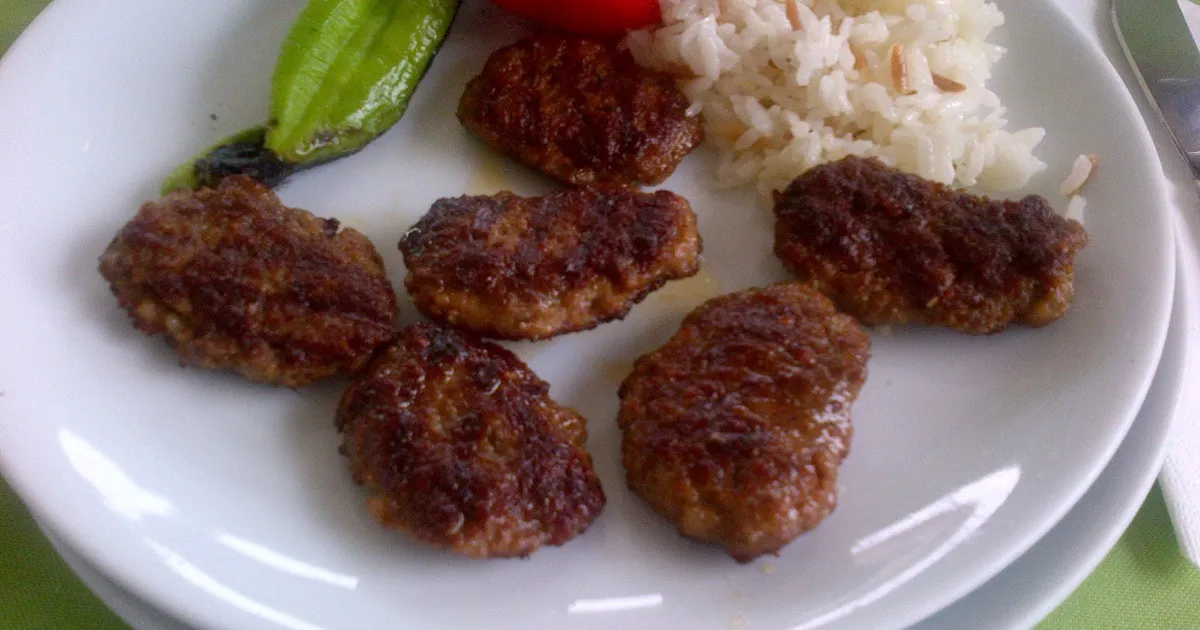
Kuru köfte (koo-roo KOF-tay) is the humble Turkish meatball every home kitchen knows. The name means “dry meatball,” and that is the whole point: no gravy, no tomato sauce, no simmering liquid. Just well-seasoned ground meat shaped into fingers or patties, fried golden in a pan, and served with pillowy rice and a squeeze of lemon.
It is the everyday counterpoint to the saucier Turkish meatballs you might already know. Where sulu köfte simmers in broth and İzmir köfte bakes under tomatoes, kuru köfte cooks flat in a skillet and lets the crust do the talking. Soaked bread and grated onion keep it tender, cumin and paprika give it warmth, and a quick dusting of flour makes each patty crackly on the outside and soft in the center.
The recipe comes together in about 35 minutes with simple ingredients, works on a stovetop or over a barbecue, and makes a fast weeknight dinner or a party platter. Serve it over pilaf with a bowl of cold cacık. Let’s get cooking.
Key Takeaways
- Kuru means dry. These Turkish meatballs are fried with no sauce, so good browning and a light flour coat are what set them apart.
- Grated onion and soaked bread keep the köfte tender - squeeze both dry first so the mixture stays firm.
- Cumin and paprika carry the flavor, with salt and pepper on top of the ground meat.
- Fry in butter and oil over medium-high heat for a crisp, golden crust in about 8 to 10 minutes.
- Serve over rice pilaf with lemon and cacık, or stuff them into a sandwich like the kofte ekmek.
How to Make Kuru Köfte
- Grate the onion and garlic, then wrap them in a towel and squeeze dry. Soak the crustless bread in water for a few seconds, squeeze it dry too, and tear it into small pieces.
- In a large bowl, combine the ground beef, chopped bread, egg, grated onion and garlic, cumin, paprika, salt, and pepper. Knead gently for 2 to 3 minutes until the mixture is sticky and cohesive.
- Shape the mixture into about 18 small, round finger-style köfte. Lightly dust each one in flour until it is coated in flour.
- Heat the butter and olive oil in a large skillet over medium-high heat. Fry the köfte in batches for 4 to 5 minutes on the first side until golden brown, then flip and cook 4 to 5 minutes more until cooked through to 165°F.
- Transfer to a plate and rest 1 to 2 minutes. Serve over rice pilaf with lemon, cacık, and a scatter of chopped parsley and chili flakes.
Ingredients
- 1 lb (450 g) ground beef, or half beef and half lamb
- 1 small onion, grated
- 1 clove garlic, grated
- 2 slices crustless white bread
- 1 large egg
- 1 tsp ground cumin
- 1 tsp paprika
- 3/4 tsp salt
- 1/2 tsp black pepper
- 1/2 cup all-purpose flour, for coating
- 2 tbsp butter plus 2 tbsp olive oil, for frying (or 4 tbsp neutral oil)
- Lemon wedges, flat-leaf parsley, and red pepper flakes, for serving
What Is Kuru Köfte?
Kuru köfte (kur-KOF-tay) is the everyday Turkish meatball, and the name translates to “dry meatball.” Unlike sulu köfte (which simmers in broth) or izmir köfte (baked with potatoes and tomatoes), kuru köfte is cooked without a sauce. The word kuru describes the method: the meatballs are fried or grilled until golden and eaten as they are.
The mixture stays simple: ground meat, grated onion (maybe garlic), a little soaked bread or breadcrumb to bind, egg, cumin, and black pepper. Cumin is the thread that runs through the Turkish meatball family, and this kuru version leans on it. The onion is grated rather than chopped so it disappears into the mix and keeps the texture even and tender.
Kuru köfte is the universal köfte of Turkish home cooking. It turns up on lunch plates, on kofta menus across the region, and stuffed into bread for street food. Make it your own: beef, lamb, or the two mixed, hot out of the pan with grilled vegetables, sumac onion, or cool garlic yogurt.
Tips for the Best Kuru Köfte
- Use meat with a little fat. A standard-ground 80/20 beef keeps the köfte moist as it browns. Too lean and they dry out before they turn golden.
- Really squeeze the onion and bread dry. This one step separates a good köfte from a soggy one. Extra liquid makes the patties fall apart and softens the crust.
- Rest the mixture if you have time. Letting it sit 15 to 20 minutes in the fridge before shaping makes the pan easier to manage and deepens the flavor. The cold also stops the fat from leaving too early.
- Do not crowd the pan. Leave room between each köfte so the temperature stays high. A losing pan steams the meat instead of crisping it.
- Grill for a charcoal version. The same köfte mixture is the base of Adana kebab - form it onto skewers and cook over medium heat if you want the smokier route.
Variations
- Beef and lamb blend. Replace half the beef with ground lamb for a richer, slightly gamey köfte. The mix of beef and lamb is the traditional combo (see the classic İnegöl köfte).
- Gluten-free. Swap the soaked bread for gluten-free bread crumbs, and use a gluten-free flour for the coating. The binding works the same.
- Spicy version. Add a minced chili or a pinch of chili flakes to the mixture, or dust the cooked köfte with Aleppo pepper for a mild heat.
- Sandwich style. Slide the hot köfte into a half loaf of Turkish bread with tomato, sumac onion, and a spoon of garlic yogurt - the street-food way to eat kofte ekmek.
- Barbecue night. Shape the köfte onto flat metal skewers and grill over medium coals until charred at the edges. Great with a cold bowl of cacık on the side.
Storage and Reheating
- Fridge: Keep kuru köfte in a covered container for up to 4 days.
- Freeze: Layer the cooled köfte between sheets of parchment in a freezer bag and freeze up to 3 months. Thaw overnight.
- Reheat: Pan-fry over medium heat for 2 to 3 minutes per side, or warm in a 350°F oven for 8 to 10 minutes. The oven keeps the crust crisp better than the microwave.
FAQ
What does kuru köfte mean? Kuru köfte is Turkish for “dry meatball.” Kuru means dry, and the name says it is cooked without sauce, unlike sulu köfte which simmers in broth. The focus is the golden, crisp crust and the tender center.
Is kuru köfte the same as kofta? Kind of. “Köfte” is the Turkish spelling of spiced meatballs, “kofta” is the wider Middle Eastern and South Asian term, explored in the kofta glossary. Kuru köfte is one dry, pan-fried Turkish version of that family.
What do you eat with kuru köfte? In Turkey they are served with rice pilaf, a simple salad, and a cold bowl of cacık (yogurt and cucumber). A wedge of lemon and a few grilled peppers on the side are standard.
Can I grill or bake kuru köfte? Yes. The same mixture can be baked in a 350°F oven, or grilled on a charcoal or over medium heat. You lose a little of the crisp, but the flavor shines either way.
Can I make them with turkey? Turkey makes a lighter meatball. Add a spoon of olive oil to the mixture to keep it juicy - the same trick used in the baked turkey meatballs - and still cook to 165°F.
Do I really need the soaked bread? The soaked bread is the secret ingredient. It acts as a panade, holding moisture so the köfte stays soft and tender. Skip it and the patties turn tight and crumbly the longer they fry.
