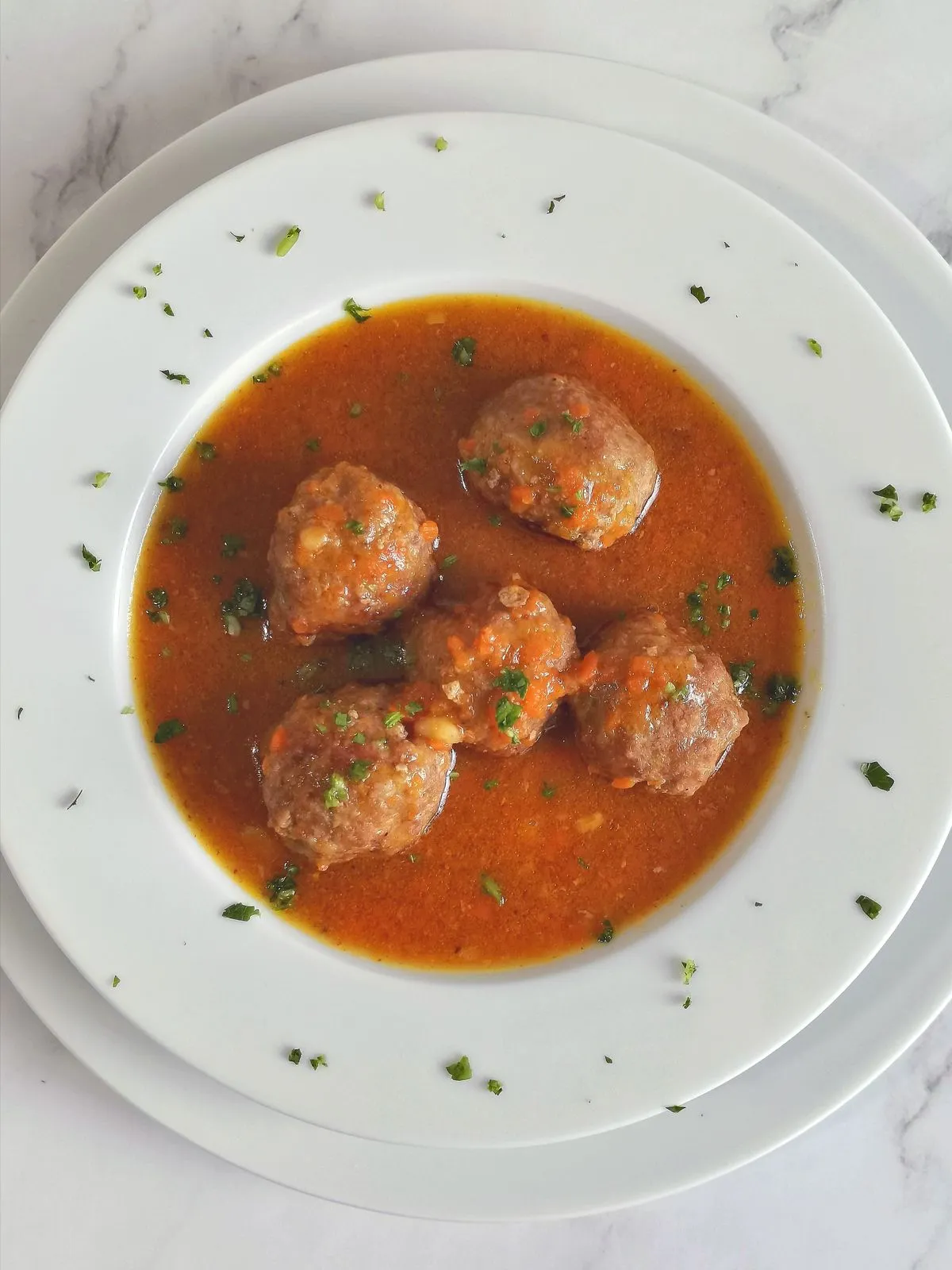
Sulu köfte is Turkey’s answer to the question every home cook asks on a cold evening: how do I turn a pound of ground beef into something that tastes like a hug? The answer is small bulgur-studded meatballs, potatoes, and carrots simmered in a tomato-tinged broth, then finished with a silky lemon-egg thickening called terbiye.
Unlike heavier stews, sulu köfte stays light enough for a weeknight but satisfying enough to replace dinner entirely. The lemon-egg broth is the same technique behind Greek avgolemono and Turkish yogurt soups - a slow temper that thickens without curdling.
How to Make Sulu Köfte (Turkish Meatball Soup)
- Place fine bulgur in a small bowl, cover with warm water, and soak 10 minutes. Drain and squeeze out excess water.
- In a large bowl, combine ground beef, soaked bulgur, grated onion, egg, chopped parsley, salt, cumin, and pepper. Mix gently with your hands until just combined.
- Pinch off walnut-sized pieces and roll into small meatballs, about 1 inch (2.5 cm) across. You should get 25 to 30 meatballs. Set aside on a plate.
- Heat olive oil in a large pot or Dutch oven over medium heat. Add diced onion and cook 5 to 6 minutes until softened and translucent.
- Add garlic and cook 1 minute until fragrant. Stir in tomato paste and paprika, cooking 2 minutes to caramelize the paste.
- Pour in broth and bring to a boil. Add potatoes, carrot, bell pepper, and tomato. Reduce heat and simmer 15 minutes until vegetables are nearly tender.
- Gently drop meatballs into the simmering soup one at a time. Do not stir for the first 5 minutes so they set. Continue simmering 12 to 15 minutes until meatballs are cooked through and vegetables are tender.
- In a small bowl, whisk egg yolks with lemon juice. Slowly ladle 1 cup of hot broth into the egg mixture, whisking constantly to temper.
- Pour the tempered egg mixture back into the pot, stirring gently. Cook 2 to 3 minutes over low heat until the broth thickens slightly. Do not boil.
- Taste and adjust salt and lemon. Ladle into bowls, garnish with fresh parsley, and serve hot with crusty bread.
Ingredients
For the Meatballs (Köfte)
- 1 lb (450 g) ground beef, 80/20
- 1/3 cup (50 g) fine bulgur, soaked in warm water 10 minutes
- 1 small onion, finely grated
- 1 large egg
- 2 tbsp fresh parsley, finely chopped
- 1 tsp kosher salt
- 1/2 tsp ground cumin
- 1/4 tsp black pepper
For the Soup
- 2 tbsp olive oil
- 1 medium onion, diced
- 2 cloves garlic, minced
- 2 tbsp tomato paste
- 1 tsp sweet paprika
- 6 cups (1.4 L) chicken or beef broth
- 2 medium potatoes, peeled and cut into 1/2-inch cubes
- 1 large carrot, peeled and diced
- 1 green bell pepper, diced
- 1 medium tomato, diced, or 1/2 cup canned diced tomatoes
For the Lemon-Egg Broth (Terbiye)
- 1/4 cup (60 ml) fresh lemon juice, about 2 lemons
- 2 large egg yolks
- Fresh parsley for garnish
Why the Lemon-Egg Broth Matters
The terbiye is what separates sulu köfte from every other meatball soup. This technique - whisking egg yolks with lemon juice and tempering with hot broth - creates a velvety, slightly thickened liquid that coats each meatball without weighing the soup down.
The key is patience. Pour hot broth into the egg mixture a little at a time, whisking constantly. If you add cold eggs directly to boiling soup, you get scrambled egg soup instead. The gradual temperature increase lets the proteins in the yolks relax into the broth rather than seize into lumps.
This same principle appears across Mediterranean and Middle Eastern cooking. Greek avgolemono uses it for chicken soup. Turkish yogurt soups use a similar temper with yogurt instead of eggs. Once you master tempering, you unlock a whole family of silky broths.
What Makes Sulu Köfte Different from Other Turkish Soups
Turkey has an enormous soup tradition - mercimek (lentil), ezogelin (red lentil with bulgur), yayla (yogurt with rice), and many more. Sulu köfte sits in a category of its own because it is a complete meal in a bowl.
The meatballs provide protein. The bulgur inside them adds complex carbs. The potatoes, carrots, and peppers deliver vegetables. And the broth ties everything together with bright lemon acidity. In Turkish homes, sulu köfte often replaces a full dinner, served with nothing more than crusty bread for dipping.
The name literally translates to “meatballs in water” or “watery meatballs” - a humble name for a dish that delivers far more depth than its name suggests.
Tips for Perfect Sulu Köfte
Keep meatballs small. Traditional sulu köfte meatballs are walnut-sized, about 1 inch across. They cook faster, stay tender, and distribute evenly through the bowl. Large meatballs take longer to cook and crowd the pot.
Soak the bulgur, do not cook it. Fine bulgur softens in 10 minutes of warm water. If you cook it beforehand, it turns to mush inside the meatball. Soaking gives it just enough hydration to bind without losing texture.
Caramelize the tomato paste. Stirring tomato paste into hot oil for 2 minutes before adding broth deepens the flavor enormously. Raw tomato paste tastes tinny and flat. This quick caramelization is the difference between a good soup and a great one.
Do not skip the temper. The lemon-egg mixture is not optional. It is the soul of sulu köfte. Without it, you have a perfectly fine meatball stew. With it, you have something distinctly Turkish.
Adjust lemon at the end. Lemon intensity varies by fruit. Start with the juice of 2 lemons, taste after adding the egg mixture, and add more if needed. The broth should be bright but not puckeringly sour.
Variations
With rice instead of bulgur. Some Turkish families substitute short-grain rice for the bulgur. Soak the rice for 20 minutes instead of 10. The texture changes slightly - rice gives a softer, more dumpling-like bite.
Yogurt version (Terbiyeli Yoğurtlu Köfte). Replace the egg-lemon thickening with a yogurt-egg mixture. Whisk 1 cup plain yogurt with 1 egg yolk and temper as directed. This creates a tangier, creamier broth.
Spicier. Add 1/2 teaspoon red pepper flakes or a diced Turkish pepper (sivri biber) to the soup base. Some regions in southeastern Turkey make their sulu köfte with Aleppo pepper for a gentle, fruity heat.
With chickpeas. Add 1 cup cooked chickpeas along with the potatoes for extra protein and a nutty texture. This variation is common in central Anatolia.
Storage and Meal Prep
Sulu köfte keeps well in the refrigerator for 3 to 4 days. The flavors deepen overnight, making it an excellent meal prep option. Reheat gently over medium-low heat - the egg-thickened broth can separate if boiled aggressively.
For freezing, cool completely and freeze without the egg-lemon mixture. When reheating, bring the soup to a gentle simmer, then add freshly tempered terbiye. This preserves the silky texture that makes the dish special.
The meatballs can be shaped and frozen raw on a sheet pan, then transferred to a freezer bag for up to 3 months. Drop them frozen directly into simmering broth - add 3 to 4 minutes to the cooking time.
What to Serve with Sulu Köfte
In Turkey, sulu köfte is almost always served with:
- Crusty white bread (ekmek) for soaking up the lemon broth
- Bulgur pilaf on the side for a heartier meal
- Turkish yogurt (cacik) as a cooling contrast
- Pickled vegetables (turşu) for acidity and crunch
The soup is substantial enough to stand alone, but bread is non-negotiable. You will want something to capture every last drop of that lemon-egg broth.
Frequently Asked Questions
What is sulu köfte?
Sulu köfte is a Turkish meatball soup made with small bulgur-studded meatballs, potatoes, carrots, and a tomato-tinged broth thickened with a lemon-egg mixture called terbiye. It is a complete one-pot meal popular across Turkey.
Can I use ground lamb instead of beef?
Yes. Ground lamb gives a richer, more traditional flavor. Some recipes use a half-beef, half-lamb blend for balance. Adjust salt slightly since lamb can be saltier depending on the cut.
Why do my meatballs fall apart in the soup?
The most common reasons are over-mixing the meatball mixture (which makes them dense and fragile), not soaking the bulgur long enough, or stirring the soup too vigorously right after adding the meatballs. Drop them in gently and resist stirring for the first 5 minutes.
Is the lemon-egg broth necessary?
It is the defining feature of sulu köfte. Without it, you have a standard meatball stew. The terbiye adds a silky texture and bright acidity that makes the dish distinctly Turkish. If you are uncomfortable with egg tempering, you can substitute a cornstarch slurry, but the flavor and texture will be different.
How small should the meatballs be?
Traditional sulu köfte meatballs are walnut-sized, roughly 1 inch (2.5 cm) in diameter. They should be small enough to eat in one or two bites with a spoon. This size also ensures they cook through in 12 to 15 minutes of simmering.
Can I make this in a slow cooker?
Yes. Cook the soup base (steps 4 through 6) on the stovetop, then transfer to a slow cooker. Add the raw meatballs and cook on low for 4 to 5 hours. Add the egg-lemon mixture in the last 15 minutes with the cooker on high.
Sources
- Sulu Kofte - Turkish Meatball Soup - Cristina’s Kitchen
- Turkish Meatball Soup Recipe - Easy GF Recipes
- Turkish Meatball Soup (Sulu Köfte) - Vidar Bergum