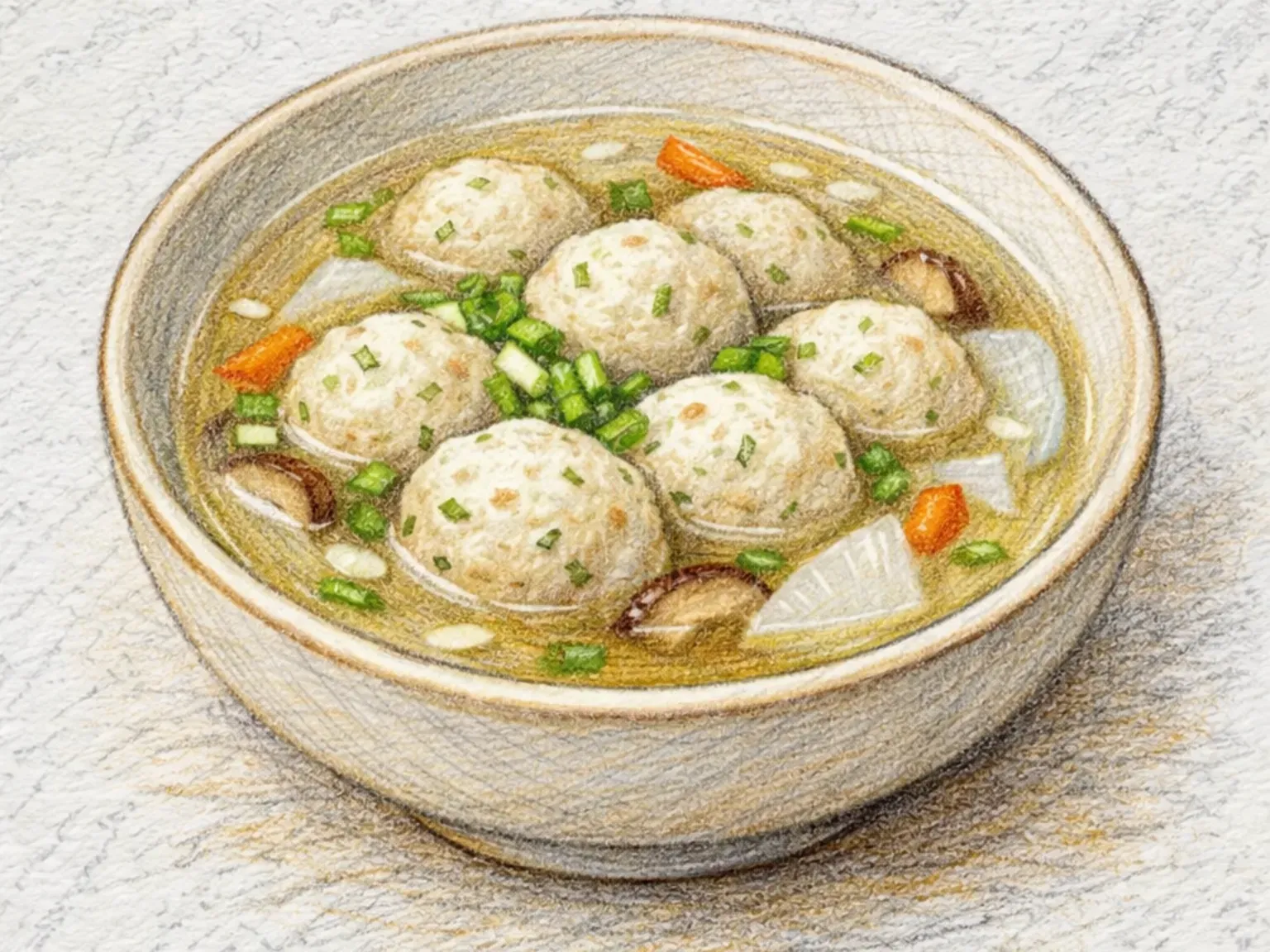
Korean meatball soup (wanjakuk) is one of Korea’s most comforting clear soups - handmade beef and tofu meatballs floating in a clean, savory anchovy broth with zucchini and egg garnish. Unlike rich stews or spicy jjigae, wanjakuk is light, delicate, and deeply warming. The tofu mixed into the ground beef creates meatballs that are tender and moist without being heavy. Ready in 45 minutes, this is the kind of soup Korean families turn to on cold nights or when someone needs gentle nourishment.
The name wanjakuk (완자국) comes from wanja (완자), meaning a small, round meatball, and guk (국), meaning soup. The dish appears in Korean royal court cuisine and home kitchens alike, prized for its clean flavor and simple preparation. The broth is built on anchovy-kelp stock - the backbone of Korean soup cooking - and seasoned with soup soy sauce to keep it transparent and light.
This recipe is different from kimchi meatballs - those are bold, tangy, and gochujang-forward. Wanjakuk is the opposite: subtle, clear, and delicate. Think of it as Korean comfort food in its purest form.
How to Make Korean Meatball Soup (Wanjakuk)
- Press the tofu firmly to remove as much water as possible. Wrap in a clean kitchen towel and squeeze. Crumble it very finely into a bowl. (See prep hint: Knead Until Sticky)
- Add ground beef to the tofu. Then add the egg, garlic, half the green onions, soy sauce, sesame oil, sesame seeds, and ginger. Knead by hand for 2 minutes until the mixture feels sticky and holds together without loose tofu pieces.
- Shape the meatballs. Pinch off bite-size portions and roll into smooth, round wanja. Coat lightly in flour, shaking off excess. The thin coating helps them hold shape during boiling.
- Bring 6 cups of anchovy-kelp broth to a full boil in a pot over medium-high heat.
- Drop the meatballs in one by one, leaving space between them. When they float to the surface (about 2 to 3 minutes), reduce heat to medium.
- Add Korean radish if using. Cook for 8 to 10 minutes until meatballs are cooked through and the radish is tender.
- Add zucchini slices. Cook for 3 to 4 minutes until just tender.
- Season the broth with soup soy sauce, salt, and white pepper. Taste and adjust - the broth should be clean and savory, not overly salty.
- Drizzle beaten egg in a thin stream across the surface. Let it set for 30 seconds without stirring.
- Garnish with remaining green onions. Serve hot with steamed rice.
Ingredients
- 1/2 lb (225 g) ground beef, lean - lean beef keeps the broth clear; fatty beef creates too much scum
- 6 oz (170 g) firm tofu - pressed and crumbled; the tofu lightens the meatballs and keeps them tender
- 1 large egg - binds the beef and tofu into a cohesive mixture
- 2 cloves garlic, minced - aromatic backbone of the meatball
- 3 green onions - divided; half goes into the meatballs, half for garnish
- 1 tbsp soy sauce - seasons the meatball mixture
- 1 tsp sesame oil + 1 tsp sesame seeds - nutty depth in the meatball
- 1 tsp freshly grated ginger - warmth and freshness
- 2 tbsp all-purpose flour - light coating to help meatballs hold shape
- 6 cups anchovy-kelp broth - the foundation of Korean soup cooking; see Tips
- 1 tbsp soup soy sauce (guk-ganjang) - lighter in color than regular soy sauce; seasons the broth without darkening it
- 1 small zucchini - halved and sliced; classic wanjakuk vegetable
- Korean radish (mu) - optional but traditional; adds natural sweetness to the broth
- 1 egg, beaten - drizzled on top for egg garnish (jidan-style)
Tips for the Best Wanjakuk
Make Anchovy-Kelp Broth from Scratch
The broth is the soul of this soup. To make it: rinse 10 to 12 dried anchovies and remove their heads and guts. Toast them in a dry pot for 1 to 2 minutes until fragrant. Add 6 cups cold water and a 2-inch strip of dried kelp (dashima). Bring to a boil, then reduce heat and simmer for 15 to 20 minutes. Strain out the anchovies and kelp. This stock is clean, mineral-rich, and forms the base of most Korean soups. If you are short on time, high-quality chicken stock works in a pinch.
Knead the Mixture Thoroughly
This is the most important step. Knead the beef-tofu mixture by hand for a full 2 minutes until it becomes sticky and cohesive. Undermixed meatballs will crumble and dissolve when dropped into boiling broth. The mixture should hold together when pressed between your fingers without crumbling.
Use Soup Soy Sauce, Not Regular Soy Sauce
Soup soy sauce (guk-ganjang, 국간장) is lighter in color and saltier than regular soy sauce. It seasons the broth without turning it dark. If you only have regular soy sauce, use half the amount and taste before adding more - it can overpower the delicate broth.
Drop Meatballs into Boiling Broth
Always add the wanja to actively boiling broth, not simmering liquid. The high heat immediately sets the outer surface of the meatball, helping it hold its shape. If the broth is only simmering, the meatballs may break apart before they firm up.
Do Not Overcrowd the Pot
Drop the meatballs in one by one with space between them. If they touch while the outer surface is setting, they will stick together. Work in batches if your pot is small.
Variations
Wanjakuk with Noodles (Somyeon)
Add cooked somyeon (thin wheat noodles) to each bowl before ladling the soup over them. This turns wanjakuk into a complete one-bowl meal. The thin noodles soak up the clear broth beautifully. This variation is similar to janchi guksu (banquet noodles) but with meatballs instead of just broth and garnish.
Chicken Wanjakuk
Swap ground beef for ground chicken. Chicken creates a lighter, milder meatball that pairs well with the clean broth. The tofu ratio stays the same. Reduce cooking time by 2 to 3 minutes since chicken cooks faster.
Wanjakuk with Kimchi
Add 1 cup of chopped aged kimchi to the broth along with the radish. The kimchi adds tangy depth and a hint of spice, transforming the clear soup into something closer to a kimchi jjigae with meatballs. Use well-fermented kimchi (at least 2 weeks old) for the best sour flavor.
Add Glass Noodles (Dangmyeon)
Soak a handful of sweet potato glass noodles (dangmyeon) in warm water for 10 minutes, then add them to the broth with the zucchini. The chewy noodles add texture and make the soup more substantial.
Storage and Reheating
Refrigerator: Store meatballs and broth in an airtight container for up to 3 days. The broth flavors deepen overnight.
Freezer: Freeze the meatballs and broth separately for up to 2 months. Thaw overnight in the refrigerator before reheating.
Reheat: Warm gently in a pot over medium heat. Add a splash of water if the broth has reduced. The meatballs hold their shape well when reheated.
Frequently Asked Questions
What Is Wanjakuk?
Wanjakuk (완자국) is a traditional Korean clear soup featuring handmade meatballs made from ground beef mixed with crumbled tofu, egg, garlic, and green onions. The meatballs are simmered in anchovy-kelp broth with vegetables like zucchini and Korean radish, then garnished with beaten egg. The name combines wanja (완자, small round meatball) and guk (국, soup).
Can I Use Store-Bought Broth?
Yes. High-quality chicken stock or beef broth works as a shortcut. For the most authentic flavor, make anchovy-kelp broth from scratch - it takes 20 minutes and the difference is significant. Korean grocery stores also sell pre-made anchovy stock packets.
Why Mix Tofu with the Beef?
Tofu lightens the meatballs and keeps them tender without making them mushy. The combination creates a softer, more delicate texture than pure beef meatballs. This is a traditional Korean technique also used in sundubu jjigae (soft tofu stew) and budae jjigae (army stew).
What Is Soup Soy Sauce?
Soup soy sauce (guk-ganjang) is lighter in color, saltier, and less sweet than regular soy sauce. It is specifically designed for Korean soups and stews where you want umami seasoning without darkening the broth. You can find it at Korean grocery stores. If unavailable, use regular soy sauce at half the amount.
Can I Make This Ahead?
Yes. Prepare the meatballs and store them uncooked in the refrigerator for up to 24 hours. When ready to cook, bring the broth to a boil and add the meatballs directly. The soup also reheats well for up to 3 days - the flavors actually improve overnight.
What Rice Pairs Best?
Short-grain Korean rice (bap) is traditional. The sticky, slightly sweet rice complements the clean, savory broth. Serve the soup in a separate bowl with rice on the side, or ladle the soup directly over rice in a single bowl for a heartier meal.
Sources
- Wanja-tang (Korean Meatball Soup) - Charim
- Wanjakuk (Korean Meatball Soup) - Food.com
- Korean Meatball Soup (Wanjakuk) - Hanguk Umsik
- Korean Anchovy-Kelp Broth - Maangchi
Related Posts
- Kimchi Meatballs - Bold, tangy Korean meatballs with gochujang
- Korean BBQ Bulgogi Meatballs - Sticky soy-honey glazed meatballs
- Indonesian Bakso Meatball Soup - Another Asian meatball soup with springy beef meatballs
- Greek Youvarlakia Avgolemono - Poached meatballs in lemon-egg broth
- Thai Boat Noodles with Pork Meatballs - Southeast Asian meatball noodle soup