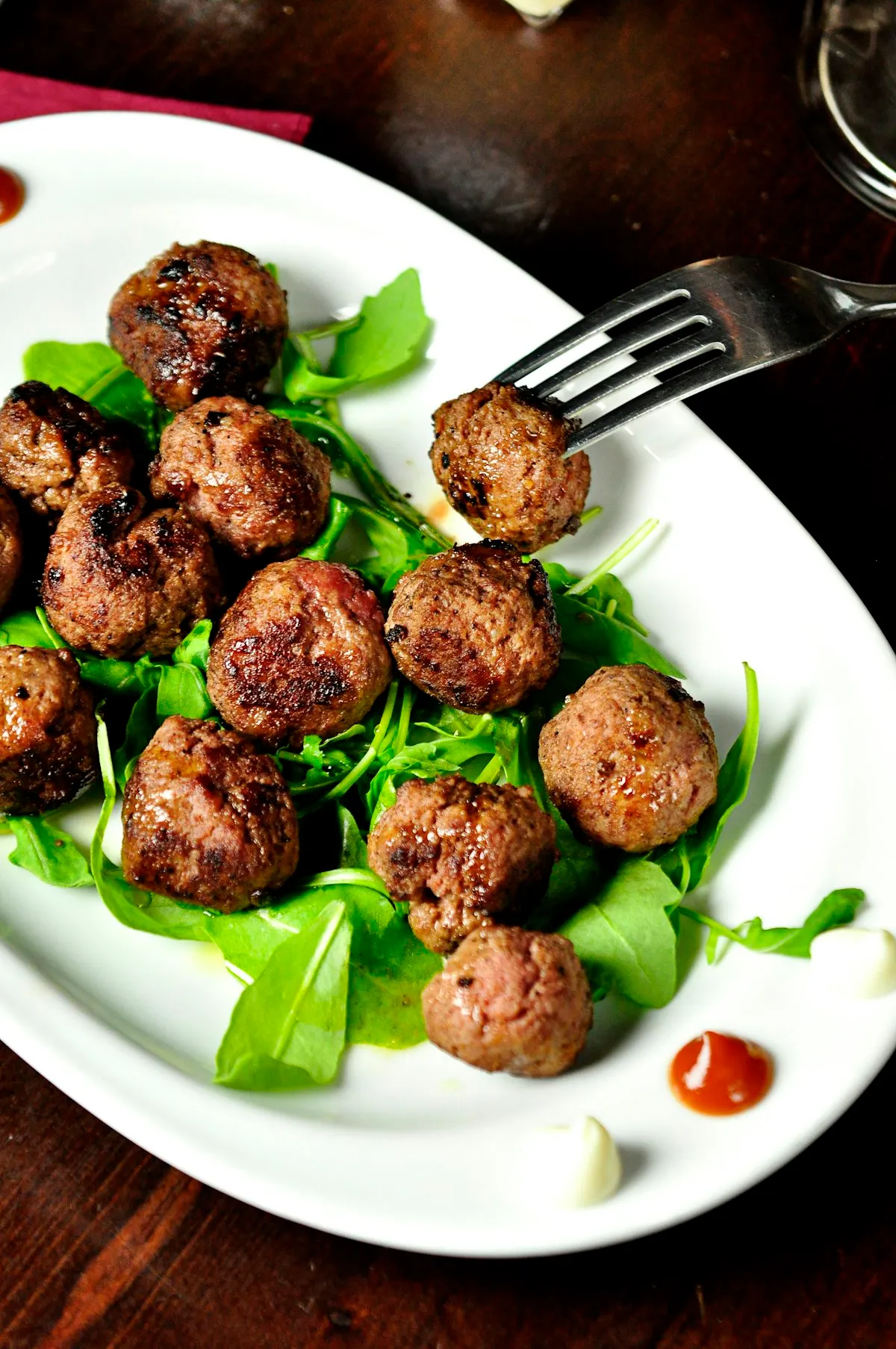
Kimchi meatballs pack the tangy, fermented funk of kimchi directly into the meatball itself - not just on top. Mixed into seasoned beef with ginger, garlic, and a splash of soy sauce, the chopped kimchi adds umami depth and a subtle sour bite that sets these apart from every other Korean meatball recipe.
The glaze ties it all together: gochujang, kimchi brine, brown sugar, and rice vinegar simmered into a sticky, glossy coating. The whole dish takes about 30 minutes, making it a realistic weeknight dinner that tastes like it took much longer.
Key Takeaways
- Chopped kimchi goes inside the meatball for tangy, fermented flavor in every bite - not just a garnish.
- Squeeze the kimchi dry before mixing. Too much brine makes the mixture soggy and hard to shape.
- Kimchi brine in the glaze adds an extra layer of fermented tang that balances the sweet-spicy gochujang.
- Bake at 400F (200C) for 15 to 18 minutes until internal temperature reaches 160F (71C), per USDA guidelines.
- Serve over steamed rice with extra kimchi, scallions, and sesame seeds for a complete Korean comfort meal.
How to Make Kimchi Meatballs
- Make the panade. Stir the panko and 2 tbsp water in a large bowl. Let it sit for 5 minutes until the liquid is absorbed. This paste keeps the meatballs tender - the same technique used in Korean gochujang meatballs.
- Mix the meatballs. Add the beef, chopped kimchi, egg, garlic, ginger, soy sauce, sesame oil, and pepper to the panade. Mix gently with your hands until just combined. Do not overmix.
- Shape. Roll into 20 meatballs, about 1.25 inches across. Place on a parchment-lined sheet pan.
- Bake. Oven at 400F (200C) for 15 to 18 minutes, until the internal temperature reaches 160F (71C). Use an instant-read thermometer.
- Make the glaze. While meatballs bake, whisk the gochujang, kimchi brine, brown sugar, rice vinegar, soy sauce, and sesame oil in a small saucepan over medium heat. Stir in the cornstarch slurry. Simmer 2 to 3 minutes until thick and glossy.
- Coat and serve. Toss the hot meatballs in the glaze until evenly coated. Serve over steamed rice with sliced scallions, sesame seeds, and extra kimchi on the side.
Ingredients
For the meatballs:
- 1 lb (450 g) ground beef, 80/20
- 1/2 cup kimchi, finely chopped (squeeze out excess liquid)
- 1/3 cup panko breadcrumbs
- 1 large egg
- 2 cloves garlic, minced
- 1 tbsp fresh ginger, grated
- 1 tbsp soy sauce
- 1 tsp sesame oil
- 1/2 tsp black pepper
For the gochujang-kimchi glaze:
- 2 tbsp gochujang (Korean chili paste)
- 1 tbsp kimchi brine (from the jar)
- 1 tbsp brown sugar
- 1 tbsp rice vinegar
- 1 tbsp soy sauce
- 1 tsp sesame oil
- 1 tsp cornstarch + 2 tbsp water (slurry)
To serve:
- Steamed rice
- Sliced scallions
- Toasted sesame seeds
- Extra kimchi on the side
What Makes Kimchi Meatballs Different?
Most Korean meatball recipes put the flavor in the glaze and keep the meatball itself plain. Kimchi meatballs flip that approach. Chopped kimchi mixed into the beef adds three things at once:
- Tang from the lactic acid fermentation
- Umami from the aged fish sauce or shrimp paste in the kimchi
- Texture from the crunchy napa cabbage pieces
The result is a meatball with more complexity than a standard gochujang-glazed version. The glaze adds heat and sweetness, but the meatball itself carries a sour, funky depth that makes each bite more interesting.
Kimchi as a Meatball Ingredient
| Component | What It Does |
|---|---|
| Fermented cabbage | Adds tangy sourness and crunchy texture |
| Fish sauce / shrimp paste (in kimchi) | Boosts umami without adding more soy sauce |
| Gochugaru (Korean chili flakes) | Mild heat inside the meatball itself |
| Kimchi brine | Used in the glaze for extra fermented depth |
Not all kimchi works equally well. Well-fermented, sour kimchi (the kind that has been sitting in your fridge for a week or two) gives the best flavor. Fresh, barely fermented kimchi is too mild and crunchy - it will not add enough tang to the meatball.
Baking vs Pan-Frying Kimchi Meatballs
| Method | Pros | Cons | Time |
|---|---|---|---|
| Baking (400F) | Hands-off, even cooking, full batch at once | No crispy crust | 15 to 18 min |
| Pan-frying | Crispy caramelized crust, more Maillard flavor | Greasy, batch cooking, splatter | 8 to 10 min |
| Air fryer (380F) | Fast, crisp outside, less oil | Small batch capacity, needs flipping | 12 min |
Baking is the easiest approach for a full batch. If you want a crispier exterior, pan-fry the meatballs in a thin layer of oil for 3 to 4 minutes per side before adding the glaze. For more details on cooking methods, see our air fryer meatballs guide.
Tips for the Best Kimchi Meatballs
- Use well-fermented kimchi. The sourer, the better. Fresh kimchi from the store is too mild. Look for kimchi that has been fermenting for at least a week - it should smell tangy and taste noticeably sour.
- Squeeze the kimchi dry. Excess brine makes the meatball mixture soggy. Wring chopped kimchi in a clean kitchen towel or paper towels. Save the brine for the glaze.
- Do not skip the kimchi brine in the glaze. It adds a fermented tang that balances the sweet gochujang. If you do not have enough brine, substitute with 1 tsp rice vinegar plus a pinch of salt.
- Gochujang brands matter. CJ Haechandle is the most widely available and consistent. Mother In Law’s Kimchi is a good US-made alternative. The paste should be thick, deep red, and smell slightly sweet and fermented.
- Glaze while hot. The sauce clings best to meatballs straight from the oven. Let them cool even 5 minutes and the glaze will slide off.
- Mix gently. Overworking ground beef activates the proteins and produces dense, rubbery meatballs. Fold the ingredients together until just combined - a few visible streaks of fat are fine.
Serving Ideas
- Rice bowl: Spoon glazed meatballs over steamed jasmine or short-grain rice with a side of pickled vegetables and extra kimchi. This is the classic Korean comfort meal.
- Lettuce wraps: Wrap meatballs in butter lettuce with rice, kimchi, and a drizzle of gochujang mayo. The cool lettuce contrasts the warm, spicy meatball.
- Appetizer platter: Serve on a platter with toothpicks. The sticky glaze makes them easy to eat at parties. Pair with a dipping sauce of soy sauce, rice vinegar, and sesame oil.
- Korean meatball sub: Pile glazed meatballs onto a toasted hoagie roll with shredded cabbage and kimchi for a fusion twist on the classic meatball sub.
- Meal prep: Pair with roasted sweet potatoes and steamed broccoli. Meatballs keep 4 days in the fridge and reheat well in a skillet.
Storage and Reheating
- Fridge: Cooked meatballs with glaze keep in an airtight container for up to 4 days.
- Freezer: Freeze unglazed meatballs for up to 3 months. Freeze flat on a sheet pan, then transfer to a bag. Thaw in the fridge overnight and reheat in the glaze.
- Reheat: Warm in a skillet over medium heat for 3 to 4 minutes, or microwave in 30-second intervals. Add a splash of water if the glaze has thickened too much.
FAQ
What kind of kimchi should I use for meatballs?
Use well-fermented, sour kimchi - the kind that has been fermenting for at least a week. Fresh kimchi is too mild and crunchy to add meaningful flavor. The tangy, funky taste of aged kimchi is what gives these meatballs their distinctive character. Napa cabbage kimchi (baechu-kimchi) is the standard choice.
Can I use ground turkey or chicken instead of beef?
Yes. Ground turkey and chicken work but are leaner, so they dry out faster. Use 93/7 ground turkey or add 1 tsp of sesame oil to the mixture for extra moisture. Bake until the internal temperature reaches 165F (74C) instead of 160F, per USDA guidelines for poultry.
Do I need to squeeze the kimchi before mixing it in?
Yes. Excess brine makes the meatball mixture soggy and hard to shape. Wring the chopped kimchi in a clean kitchen towel or paper towels. The squeezed brine is not wasted - use it in the glaze for extra fermented depth.
How spicy are kimchi meatballs?
The heat comes from two sources: the gochugaru (chili flakes) inside the kimchi and the gochujang in the glaze. With the amounts in this recipe, they are medium-spicy - warm and flavorful without being overwhelming. The brown sugar and rice vinegar balance the heat. Reduce the gochujang to 1 tbsp for mild, or increase to 3 tbsp for extra spice.
Can I make the glaze ahead of time?
Yes. The gochujang-kimchi glaze keeps in the fridge for up to 1 week. Reheat gently in a saucepan and stir before using. It will thicken as it cools, so add a splash of water to loosen it when reheating.
What is the difference between kimchi meatballs and regular Korean meatballs?
Regular Korean meatballs (like gochujang-glazed or bulgogi-style) keep the meatball plain and put all the flavor in the sauce. Kimchi meatballs mix chopped, fermented kimchi directly into the meat, adding tangy, funky depth to every bite. The glaze then adds heat and sweetness on top of that fermented base.
Sources
- Safe Minimum Internal Temperature Chart - USDA FSIS
- Kimchi Meatballs - Kraut Source
- Traditional Korean Meatballs (Wanja) - Maangchi
- What is Gochujang - Serious Eats
- Kimchi Meatballs - The Candida Diet
Related: Korean Meatballs with Gochujang Glaze | Korean BBQ Bulgogi Meatballs | Thai Basil Meatballs (Pad Kra Pao) | Sweet and Sour Meatballs with Pineapple