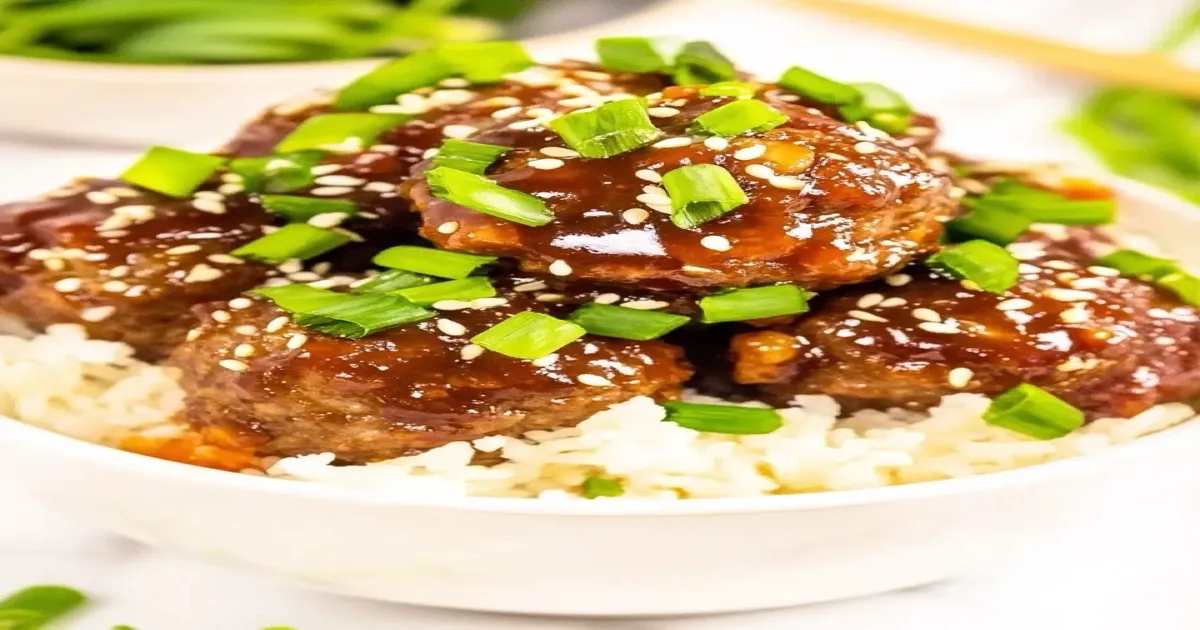
Korean bulgogi meatballs capture the sweet-savory flavor of bulgogi beef in a faster, weeknight-friendly format. Instead of slicing and marinating ribeye, you mix ground beef with the same core ingredients - soy sauce, brown sugar, garlic, ginger, and sesame oil - shape into meatballs, bake, and toss in a sticky glaze.
The glaze is where bulgogi flavor lives. Soy sauce and brown sugar create the signature sweet-salty base. Rice vinegar adds brightness. Garlic and ginger bring the warm aromatic depth. A quick cornstarch slurry thickens everything into a glossy coating that clings to each meatball without sliding off.
Ready in about 30 minutes with one baking sheet, these work as a weeknight dinner over steamed rice, a party appetizer with toothpicks, or a meal prep protein for the week. If you enjoy Korean flavors, try gochujang meatballs or kimchi meatballs next.
Key Takeaways
- Bulgogi flavor comes from the glaze, not just the meat. The ground beef gets a light seasoning, but the sticky soy-sugar glaze is where the bulgogi character shows up.
- 80/20 ground beef. Lean beef produces dry meatballs. The fat keeps them juicy through the bake.
- Bake at 400F (200C) for 18 to 20 minutes. Use an instant-read thermometer - target 160F (71C) internal temperature.
- Cornstarch slurry thickens the glaze. Without it, the sauce stays thin and runs off the meatballs. Mix cornstarch with cold water first to avoid lumps.
- Serve over steamed rice with sesame seeds and sliced scallions for a complete Korean-style meal.
How to Make Korean Bulgogi Meatballs
- Preheat oven to 400F (200C). Line a baking sheet with parchment paper.
- Make the meatball mixture. In a large bowl, combine the ground beef, panko, egg, sliced scallions, minced garlic, soy sauce, brown sugar, sesame oil, and black pepper. Mix gently with your hands until just combined. Do not overwork.
- Shape into 24 meatballs, about 1.25 inches across. Place on the prepared baking sheet with at least 1 inch of space between each.
- Bake 18 to 20 minutes until golden brown and the internal temperature reaches 160F (71C).
- Make the bulgogi glaze while the meatballs bake. In a small saucepan over medium heat, whisk together the soy sauce, brown sugar, rice vinegar, sesame oil, minced garlic, and grated ginger. Stir in the cornstarch slurry. Simmer 2 to 3 minutes until the glaze thickens and becomes glossy.
- Coat and serve. Transfer the baked meatballs to the saucepan with the glaze and toss until evenly coated. Serve immediately over steamed rice with sesame seeds and sliced scallions.
Ingredients
For the meatballs:
- 1 lb (450 g) ground beef, 80/20
- 1/3 cup panko breadcrumbs
- 1 large egg
- 3 scallions, finely sliced (white and light green parts)
- 2 cloves garlic, minced
- 1 tbsp soy sauce
- 1 tbsp brown sugar
- 1 tsp sesame oil
- 1/2 tsp black pepper
For the bulgogi glaze:
- 1/4 cup soy sauce
- 3 tbsp brown sugar
- 1 tbsp rice vinegar
- 1 tbsp sesame oil
- 2 cloves garlic, minced
- 1 tsp fresh ginger, grated
- 1 tsp cornstarch mixed with 2 tbsp cold water
For serving:
- Steamed rice
- Sesame seeds
- Sliced scallions
What Makes Bulgogi Different From Other Korean Meatballs
Bulgogi literally means “fire meat” in Korean. Traditionally, it refers to thinly sliced beef marinated in soy sauce, sugar, sesame oil, garlic, and sometimes pear juice, then grilled over an open flame. The marinade caramelizes on the meat, creating a sweet, smoky, slightly charred flavor.
These meatballs follow the same flavor blueprint. The brown sugar and soy sauce in the glaze mimic the caramelization you get from grilling. The garlic and ginger provide the aromatic backbone. Sesame oil ties everything together with its nutty richness.
The difference between bulgogi meatballs and other Korean styles:
| Style | Key Flavor | Sauce |
|---|---|---|
| Bulgogi | Sweet-savory, caramelized | Soy-sugar-sesame glaze |
| Gochujang | Spicy-fermented | Chili paste glaze |
| Galbi | Sweet-tangy, charred | Soy-pear-garlic marinade |
| Dakgangjeong | Crispy-sweet | Sticky fried sauce |
Tips for the Best Bulgogi Meatballs
Do not overmix the meat. Mix until the ingredients just come together. Overworked beef develops excess protein strands that make the meatballs dense and rubbery. You want a loose, slightly sticky mixture that holds its shape when rolled.
Use a thermometer. Ground beef is safe at 160F (71C). Without a thermometer, you risk either undercooking (safety issue) or overcooking (dry meatballs). An instant-read thermometer takes the guesswork out.
Make the glaze while the meatballs bake. The glaze takes about 5 minutes to prepare. Start it when the meatballs have about 10 minutes left in the oven. The timing lines up so the glaze is ready the moment the meatballs come out.
Toss, do not simmer, in the glaze. The meatballs are already cooked. Tossing them in the warm glaze for 30 to 60 seconds is enough to coat each one. Simmering them in the sauce will overcook the exterior and make them soggy.
Double the glaze for more sauce. If you like your meatballs extra saucy or want extra glaze to drizzle over rice, double the glaze ingredients. The cornstarch slurry scales linearly.
Variations
Bulgogi meatballs with vegetables. Add 1/2 cup finely diced onion or grated carrot to the meatball mixture for extra moisture and sweetness. The vegetables release water during baking, keeping the meatballs tender.
Spicy bulgogi. Add 1 to 2 tbsp gochujang to the meatball mixture and 1 tsp gochugaru (Korean chili flakes) to the glaze for a spicy-sweet version. This bridges the gap between bulgogi and gochujang meatballs.
Bulgogi meatball lettuce wraps. Skip the rice and serve the glazed meatballs in butter lettuce cups with pickled daikon, sliced cucumber, and a drizzle of gochujang mayo. A lighter option that works well for appetizers.
Ground pork or a beef-pork blend. Swap up to half the beef for ground pork. Pork adds sweetness and tenderness. A 50/50 blend gives a richer, more complex flavor than beef alone.
Storage and Meal Prep
Fridge: Store leftover meatballs in an airtight container for up to 4 days. Keep the glaze separate if possible - the meatballs absorb sauce over time and can become soggy.
Freezer: Place cooled, unglazed meatballs on a baking sheet and freeze until solid, about 2 hours. Transfer to a freezer bag. Freeze for up to 3 months. Thaw in the fridge overnight before reheating.
Reheat: Warm in a skillet over medium heat with a splash of water or extra glaze, 3 to 4 minutes. Microwave works too - 60 to 90 seconds at full power, stirring halfway.
Meal prep bowls: Divide steamed rice among 4 containers. Top each with 5 to 6 meatballs, a drizzle of glaze, sesame seeds, and sliced scallions. Store up to 4 days in the fridge.
Frequently Asked Questions
Can I use ground turkey or chicken instead of beef? Yes, but the flavor will be milder. Turkey and chicken lack the fat content of 80/20 beef, so the meatballs may be drier. Add 1 tbsp of sesame oil or a tablespoon of grated onion to the mixture to compensate. The glaze carries most of the bulgogi flavor, so the swap still works.
What is the best beef-to-fat ratio for bulgogi meatballs? 80/20 ground beef is ideal. The 20% fat keeps the meatballs juicy during baking and adds richness that complements the sweet glaze. Leaner beef (90/10 or 93/7) produces noticeably drier results.
Can I make these without panko breadcrumbs? Yes. Substitute with 1/3 cup of any plain breadcrumbs, crushed saltine crackers, or 2 tbsp of cornstarch. The binder prevents the meatballs from falling apart. Without any binder, the mixture may crack during baking.
How do I know when the glaze is thick enough? The glaze is ready when it coats the back of a spoon and leaves a trail when you drag your finger through it. It should be thick enough to cling to the meatballs without pooling at the bottom of the pan. If it is too thin, simmer another minute. If too thick, add a splash of water.
Can I grill these instead of baking? Yes. Form the meatballs slightly larger (about 1.5 inches) and grill over medium-high heat for 3 to 4 minutes per side. Brush with glaze during the last minute of grilling. Grill marks add a nice char that mimics traditional bulgogi.
What rice works best with bulgogi meatballs? Short-grain Korean rice (bap) is the traditional choice - its sticky texture holds up well under the glaze. Jasmine rice or basmati work too, but they are less sticky. Cauliflower rice is a lower-carb option that pairs nicely with the bold glaze.