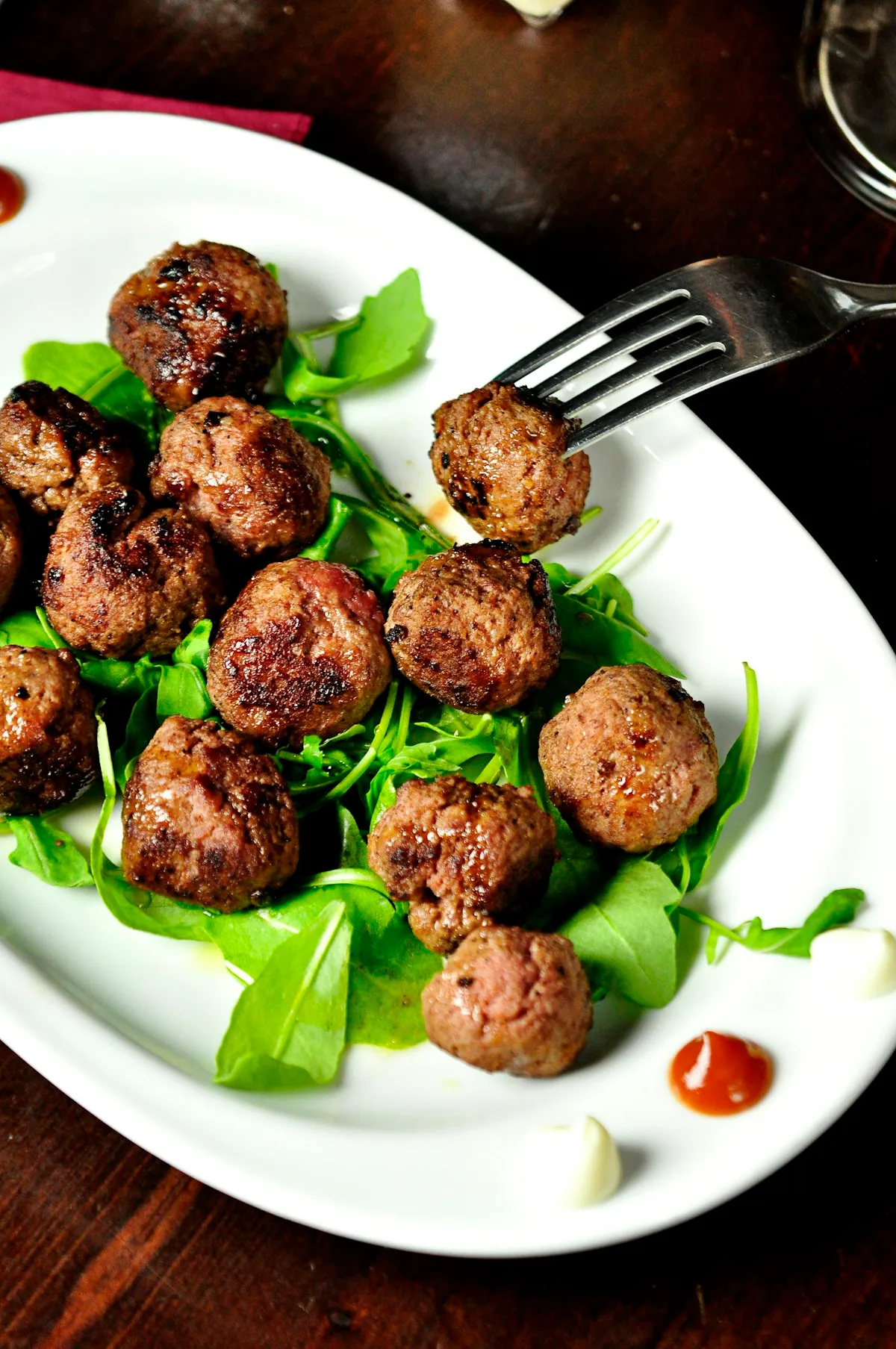
Brazilian almondegas are juicy beef meatballs simmered in a garlicky tomato sauce - one of the most popular comfort foods in Brazilian home cooking. The name comes from the Portuguese word for meatball, which traces back to the Arabic al-bunduq (hazelnut), a reference to the small round shape. In Brazil, almondegas are weeknight dinner staples, served over fluffy white rice with farofa (toasted cassava flour) on the side.
What sets Brazilian meatballs apart is the sauce. It is not a long-simmered marinara or a cream gravy. It is a quick, bright tomato sauce built on onion, garlic, and red bell pepper - simple enough to come together while the meatballs brown, and flavorful enough to soak into every grain of rice. If you enjoy Latin meatball dishes, our Spanish albondigas in tomato sofrito takes a similar approach with a different spice profile. This is a 40-minute dinner that tastes like it took all afternoon.
Key Takeaways
- Use a panade. Soaking panko in milk for 5 minutes keeps the beef tender and juicy during cooking.
- Garlic is non-negotiable. Brazilian almondegas use more garlic than most meatball recipes - 7 cloves total between the meat and the sauce.
- Brown first, simmer second. Searing the meatballs builds flavor and texture before they finish in the sauce.
- Red bell pepper in the sauce adds sweetness and body that distinguishes the Brazilian version from a basic tomato sauce.
- Serve with white rice and farofa for the authentic Brazilian experience.
How to Make Brazilian Almondegas
- Make the panade. Stir the panko and milk together in a small bowl. Let it sit for 5 minutes until the crumbs absorb the liquid and turn soft. This is the secret to tender meatballs.
- Mix the meatball mixture. In a large bowl, combine the ground beef, soaked panade, egg, diced onion, 3 cloves minced garlic, parsley, salt, and pepper. Mix gently with your hands until just combined. Stop as soon as everything is evenly distributed. Overmixing makes dense, rubbery meatballs.
- Shape the meatballs. Roll the mixture into 20 meatballs, about 1.5 inches across. Wet your hands with cold water between rolls to prevent the meat from sticking.
- Brown the meatballs. Heat olive oil in a large deep skillet or Dutch oven over medium-high heat. Add the meatballs in a single layer, working in batches if needed. Brown for 8 to 10 minutes total, turning every 2 minutes until a golden crust forms on all sides. Remove to a plate.
- Build the sauce. Reduce heat to medium. Add the diced onion and red bell pepper to the same skillet. Cook for 5 to 6 minutes until softened and lightly golden. Add the remaining 4 cloves minced garlic and the tomato paste. Stir and cook for 1 minute until fragrant.
- Add the tomatoes. Pour in the crushed tomatoes and water. Stir in the sugar to balance the acidity. Season with salt and pepper. Let the sauce simmer for 3 to 4 minutes until it thickens slightly.
- Simmer the meatballs. Nestle the browned meatballs back into the sauce in a single layer. Cover the skillet and simmer for 10 to 12 minutes until the meatballs reach an internal temperature of 160F (71C).
- Serve. Taste the sauce and adjust seasoning. Serve the meatballs and sauce over white rice with farofa and a sprinkle of fresh parsley.
Ingredients
For the Meatballs
- 1 lb (450 g) ground beef, 85/15
- 1/3 cup panko breadcrumbs
- 1/4 cup whole milk
- 1 large egg
- 1/4 cup finely diced white onion
- 3 cloves garlic, minced
- 2 tbsp fresh parsley, finely chopped
- 1 tsp kosher salt
- 1/2 tsp black pepper
For the Tomato Sauce
- 2 tbsp olive oil
- 1 medium yellow onion, finely diced
- 1 red bell pepper, finely diced
- 4 cloves garlic, minced
- 1 tbsp tomato paste
- 1 can (14 oz / 400 g) crushed tomatoes
- 1/2 cup water
- 1 tsp sugar
- Salt and pepper to taste
For Serving
- Cooked white rice
- Farofa (toasted cassava flour)
- Fresh parsley, chopped
Why This Recipe Works
The panade is everything. Soaking panko in milk before adding it to the beef does two things: it keeps the meatballs moist during cooking, and it creates a lighter, more tender texture. Without it, ground beef meatballs turn dense and dry. This technique works across Italian Sunday Gravy meatballs, Greek keftedes, and Ethiopian berbere meatballs - it is universal.
Brown before simmering. Searing the meatballs first creates a caramelized crust that adds flavor and helps the meatballs hold their shape in the sauce. Dropping raw meatballs straight into tomato sauce works for some recipes, but the texture is softer and the flavor is flatter. The extra 10 minutes of browning are worth it.
Red bell pepper changes the sauce. A standard tomato-onion-garlic sauce is fine, but the diced red bell pepper adds sweetness and a subtle smoky depth that makes the sauce taste distinctly Brazilian. It also gives the sauce more body without needing to simmer for hours.
Tips for the Best Brazilian Almondegas
Use 85/15 ground beef. Leaner beef dries out during the simmer. The extra fat from 85/15 keeps the meatballs juicy and adds flavor to the sauce.
Do not skip the sugar. One teaspoon of sugar balances the acidity of the crushed tomatoes without making the sauce taste sweet. It is a small addition that makes a noticeable difference.
Make the meatballs uniform. Roll them to the same size so they cook evenly. A 1.5-inch meatball is the sweet spot - large enough to stay juicy, small enough to cook through in the simmer.
Use a deep skillet or Dutch oven. You need enough depth to hold the sauce and the meatballs without overflowing. A 12-inch skillet with high sides or a 4-quart Dutch oven works well.
Serve immediately. Almondegas are best hot, straight from the skillet. The sauce is loose enough to spoon generously over rice, and the meatballs are tenderest right after cooking.
Variations
| Variation | What to change |
|---|---|
| Almondegas with hard-boiled eggs | Tuck halved hard-boiled eggs into the sauce during the last 5 minutes of simmering. A classic Brazilian touch. |
| Almondegas with olives | Add 1/2 cup sliced green olives to the sauce along with the crushed tomatoes. |
| Baked almondegas | Shape the meatballs, place on a baking sheet, and bake at 400F (200C) for 15 to 18 minutes. Add to the sauce and simmer 5 minutes. See our Air Fryer Meatballs for a similar hands-off method. |
| Almondegas de frango (chicken) | Swap ground beef for ground chicken. Add 1 tbsp olive oil to the meatball mix for moisture. Bake or pan-fry as directed. |
| Spicy almondegas | Add 1/2 tsp red pepper flakes or 1 tbsp diced jalapeno to the sauce with the garlic. |
What to Serve With Brazilian Almondegas
The classic Brazilian plate is almondegas over white rice with farofa on the side. Here are more pairing ideas:
- White rice - the standard base, fluffy and neutral to soak up the tomato sauce
- Farofa - toasted cassava flour mixed with butter, garlic, and sometimes bacon; adds a nutty crunch
- Polenta - creamy cornmeal polenta works like mashed potatoes as a bed for the saucy meatballs
- Simple green salad - lettuce, tomato, and a light vinaigrette to cut through the richness
- Crusty bread - for mopping up every last drop of tomato sauce
Storage and Reheating
- Fridge: Store meatballs and sauce in an airtight container for up to 4 days. The flavor improves overnight.
- Reheat: Warm gently in a skillet over medium-low heat, or microwave individual portions for 1 to 2 minutes. Add a splash of water if the sauce has thickened.
- Freezer: Freeze the meatballs and sauce together for up to 3 months. Thaw overnight in the fridge and reheat on the stovetop.
Frequently Asked Questions
What does almondega mean in Portuguese?
Almondega is the Portuguese word for meatball. The word traces back to the Arabic al-bunduq, meaning hazelnut - a reference to the small round shape of the meatball. The same Arabic root gives us the Spanish albondiga and appears across Mediterranean and Latin American cuisines.
What makes Brazilian meatballs different from Italian meatballs?
Brazilian almondegas are typically simpler in the meatball itself (beef, garlic, parsley, breadcrumbs) and rely on the tomato sauce for complexity. The sauce uses red bell pepper and more garlic than a standard Italian marinara. Italian meatballs often include Parmesan, oregano, and basil, while Brazilian versions lean on parsley and the sweet pepper in the sauce.
Can I use ground turkey or chicken instead of beef?
Yes. Ground turkey (93/7 lean) or ground chicken work well. Add 1 tablespoon of olive oil to the meatball mixture to compensate for the lower fat content. The cooking time stays the same.
Do I need farofa to serve with almondegas?
Farofa is traditional but not required. The meatballs and sauce are delicious over white rice alone. If you want to try farofa, you can find cassava flour at Latin American grocery stores or online. Toast it in butter with garlic for a quick side.
Can I make almondegas ahead of time?
Yes. Shape the meatballs and refrigerate them (uncooked) for up to 24 hours, or freeze them on a baking sheet and transfer to a bag for up to 3 months. Brown and simmer from frozen, adding 3 to 5 extra minutes to the simmer time.
What is the best tomato to use for the sauce?
Canned crushed tomatoes work best for a consistent, smooth sauce. San Marzano tomatoes are ideal if you can find them. Avoid diced tomatoes, which leave the sauce too chunky, or tomato sauce alone, which lacks texture.