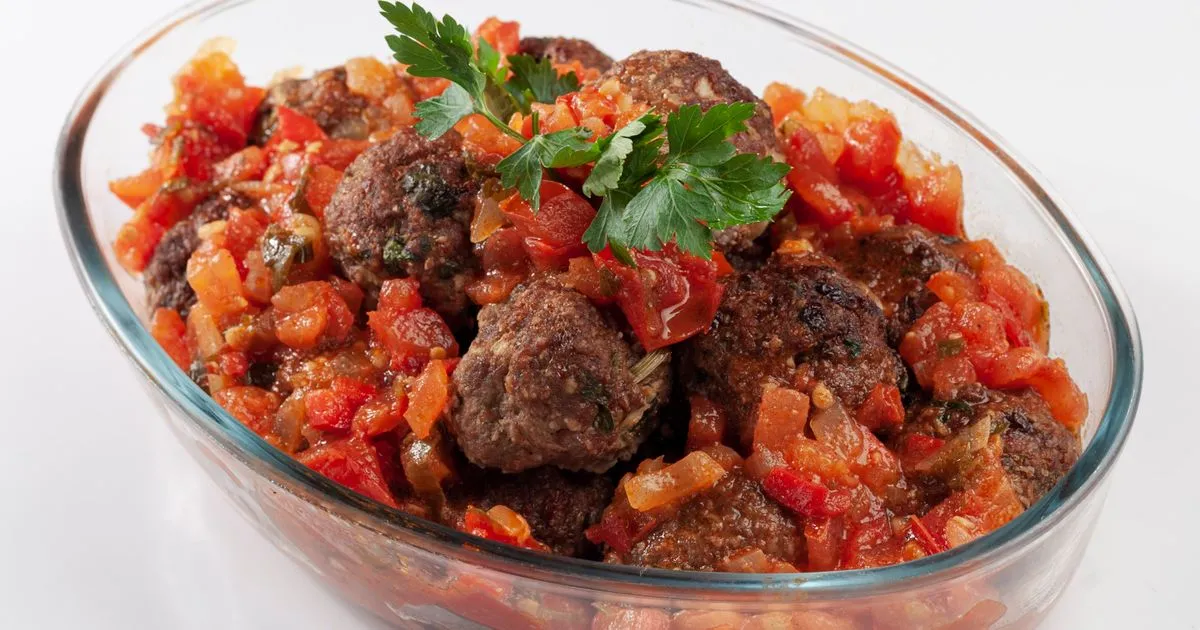
Cuban albondigas are oversized, boldly seasoned meatballs simmered in a cumin-and-oregano tomato sauce with dry white wine - a cornerstone of Cuban home cooking. Unlike the small soup meatballs of Mexican albondigas, Cuban-style albondigas are large (about 2 inches across), pan-seared until deep golden, then finished in a rich creole-style sauce known as salsa criolla.
What makes Cuban albondigas distinctive is the combination of beef and pork in the meatball, a touch of yellow mustard in the binder (a Cuban signature), and the sauce’s backbone of cumin, oregano, bay leaf, and dry white wine. The result is a meatball that holds its own against the sauce rather than disappearing into it. Served over fluffy white rice with fried sweet plantains on the side, this is the kind of Sunday dinner that fills the house with aroma and brings the family to the table.
If you enjoy Latin American meatball dishes, our Spanish albondigas in tomato sofrito and Brazilian almondegas take different but equally delicious approaches to the meatball-and-sauce format.
Key Takeaways
- Beef and pork blend gives the meatballs a richer flavor and more tender texture than beef alone.
- Yellow mustard in the meatball is a classic Cuban touch - it adds tang and helps bind without tasting mustardy in the finished dish.
- Dry white wine in the sauce (vino seco) adds acidity and depth that balances the cumin and oregano.
- Large format matters - 12 meatballs per batch instead of 20 means each one stays juicier during the simmer.
- Serve over rice, not pasta - Cuban albondigas always go with white rice, often with maduros (fried sweet plantains) on the side.
How to Make Cuban Albondigas
-
Make the panade. Stir the cracker crumbs and milk together in a small bowl. Let sit for 5 minutes until the crumbs absorb the liquid and soften. This keeps the meatballs tender.
-
Mix the meatball mixture. In a large bowl, combine the ground beef, ground pork, soaked crumbs, beaten eggs, yellow mustard, 2 teaspoons cumin, 1 teaspoon oregano, salt, pepper, diced onion, and minced garlic. Mix gently with your hands until just combined. Stop as soon as everything is evenly distributed. Overmixing makes dense meatballs.
-
Shape and dust. Divide the mixture into 12 large meatballs, about 2 inches across. Roll each one lightly in flour and shake off the excess. The thin dusting of flour helps the meatballs brown and thickens the sauce later.
-
Brown the meatballs. Heat olive oil in a large deep skillet or Dutch oven over medium-high heat. Add the meatballs in batches in a single layer with space between each one. Brown for 8 to 10 minutes total, turning every 2 to 3 minutes, until deeply golden on all sides. Remove to a plate.
-
Build the sauce. Reduce heat to medium. Add the diced onion and green bell pepper to the same skillet. Cook for 5 to 6 minutes until softened and lightly golden. Add the minced garlic and cook 30 seconds until fragrant.
-
Simmer the sauce. Pour in the tomato sauce and dry white wine. Stir in 1 teaspoon cumin, 1 teaspoon oregano, the bay leaf, sugar, and a pinch of salt and pepper. Let the sauce simmer for 5 minutes to meld the flavors.
-
Finish the meatballs. Nestle the browned meatballs back into the sauce in a single layer. Cover, reduce heat to low, and simmer for 15 to 20 minutes until the meatballs reach an internal temperature of 165F (74C) and the sauce has thickened slightly. Discard the bay leaf.
-
Serve. Spoon the meatballs and sauce over white rice. Garnish with fresh cilantro or parsley. Serve with fried sweet plantains (maduros) on the side for the full Cuban experience.
Ingredients
For the Meatballs
- 1 lb (450 g) ground beef, 80/20
- 1/2 lb (225 g) ground pork
- 1 cup cracker crumbs (or 2 slices white bread, crusts removed, processed into crumbs)
- 1/4 cup whole milk
- 2 large eggs
- 1 tsp dry yellow mustard
- 2 tsp cumin
- 1 tsp dried oregano
- 1 tsp kosher salt
- 1/2 tsp black pepper
- 1/2 medium yellow onion, finely diced
- 2 cloves garlic, minced
- 2 tbsp olive oil, for frying
- 2 tbsp all-purpose flour, for dusting
For the Sauce (Salsa Criolla)
- 1 medium yellow onion, finely diced
- 1/2 green bell pepper, finely diced
- 4 cloves garlic, minced
- 1 can (15 oz / 425 g) tomato sauce
- 1/4 cup dry white wine (vino seco)
- 1 tsp cumin
- 1 tsp dried oregano
- 1 bay leaf
- 1 tsp sugar
- Salt and pepper to taste
For Serving
- Cooked white rice
- Fresh cilantro or parsley, chopped
- Fried sweet plantains (maduros), optional
What Makes Cuban Albondigas Different
The size. Cuban albondigas are noticeably larger than most meatballs. Where Italian polpette or Swedish kottbullar are formed into 1-inch balls, Cuban recipes call for 2-inch giants. The larger size means the meatball stays pink and juicy inside after the simmer, with a higher ratio of tender interior to browned exterior.
The mustard. Dry yellow mustard in the meatball mixture is the sleeper hit of Cuban albondigas. It does not make the meatball taste like a hot dog. It adds a subtle tang and helps the eggs and crumbs bind the meat without making the texture pasty. This trick appears in many Cuban meatball recipes passed down through generations.
The sauce. Cuban salsa criolla is not a slow-simmered Italian marinara. It is a quicker sauce built on tomato sauce (not crushed tomatoes), green bell pepper (not red), dry white wine, and a heavy hand with cumin and oregano. The green bell pepper gives the sauce a distinctly Cuban character that sets it apart from other Latin meatball dishes.
The serving style. Cuban albondigas are always served over white rice, never pasta. The rice soaks up the spiced tomato sauce in a way that spaghetti cannot match. Fried sweet plantains on the side add a caramelized sweetness that balances the savory, tangy sauce.
Tips for the Best Cuban Albondigas
Use 80/20 beef and add pork. The extra fat from 80/20 ground beef plus the pork creates meatballs that stay moist through the simmer. If you use only lean ground beef, the meatballs will turn dry and crumbly.
Do not skip the flour dusting. Rolling the raw meatballs in flour before frying does two things: it promotes deep, even browning, and the flour on the surface helps thicken the tomato sauce during the final simmer. Just shake off the excess - a thin coating is all you need.
Make them uniform. Size the meatballs evenly so they cook at the same rate. A 2-inch meatball is roughly the size of a tennis ball. Wet your hands with cold water between shaping to prevent sticking.
Use a real dry white wine. Vino seco (Cuban cooking wine) is ideal, but any dry white wine like Sauvignon Blanc or Pinot Grigio works. The alcohol cooks off and leaves acidity and depth. Skip sweet wines - they will throw off the balance.
Simmer covered and low. Low heat and a covered skillet ensure the meatballs cook through gently without the sauce reducing too fast. If the sauce looks thick before the meatballs are done, add a splash of water.
Variations
| Variation | What to change |
|---|---|
| Cuban fried albondigas | Skip the sauce. Deep-fry the flour-dusted meatballs at 350F (175C) for 5 to 6 minutes until golden and cooked through. Serve with mojo sauce for dipping. |
| Albondigas with olives | Add 1/2 cup sliced Spanish green olives (stuffed with pimentos) to the sauce with the tomato sauce. The briny olives add a salty counterpoint. |
| Baked albondigas | Place the shaped meatballs on a baking sheet and bake at 400F (200C) for 15 to 18 minutes. Add to the prepared sauce and simmer 5 minutes. See our Air Fryer Meatballs for a similar method. |
| Turkey albondigas | Substitute ground turkey (93/7) for both beef and pork. Add 1 tablespoon olive oil to the mixture for moisture. |
| Spicy albondigas | Add 1/2 teaspoon cayenne pepper or 1 minced jalapeno to the meatball mixture. |
What to Serve With Cuban Albondigas
The classic plate is albondigas over white rice with maduros. Here are more ideas:
- White rice - the essential base. Long-grain white rice steamed fluffy, ready to soak up the salsa criolla.
- Maduros (fried sweet plantains) - sliced ripe plantains fried until caramelized and tender. The sweetness cuts through the savory sauce.
- Black beans - Cuban-style black beans (frijoles negros) simmered with garlic, cumin, and oregano. Spoon them next to the rice.
- Cuban bread or crusty rolls - for mopping up every drop of sauce from the plate.
- Simple avocado salad - sliced avocado with lime juice, salt, and a drizzle of olive oil.
Storage and Reheating
- Fridge: Store meatballs and sauce together in an airtight container for up to 4 days. The flavors meld and improve overnight.
- Reheat: Warm gently in a covered skillet over medium-low heat, about 8 to 10 minutes. Add a splash of water if the sauce has thickened. Microwave individual portions for 1 to 2 minutes.
- Freezer: Freeze the meatballs and sauce together for up to 3 months. Thaw overnight in the fridge and reheat on the stovetop.
Frequently Asked Questions
What does albondiga mean in Spanish?
Albondiga is the Spanish word for meatball. It comes from the Arabic al-bunduq, meaning hazelnut - a reference to the small round shape. The same Arabic root appears across Mediterranean cuisines, from Spanish albondigas to Portuguese almondegas.
How are Cuban albondigas different from Mexican albondigas?
Cuban albondigas are larger (2 inches vs 1 inch), made with a beef-pork blend, pan-seared, and simmered in a tomato sauce (salsa criolla) with white wine and cumin. Mexican albondigas are smaller, often include rice in the meatball, and are served in a broth-based soup with vegetables.
Can I make albondigas without pork?
Yes. Use 1.5 lbs (680 g) of ground beef (80/20) and skip the pork. The meatballs will be slightly less tender but still delicious. Add 1 tablespoon olive oil to the mixture for extra moisture.
Why is there yellow mustard in the recipe?
Dry yellow mustard is a traditional Cuban meatball ingredient. It adds subtle tang and helps bind the meat without making the texture pasty. The mustard flavor mellows during cooking and does not taste prominent in the finished dish - it just makes the meatballs taste more complex.
What is vino seco?
Vino seco translates to “dry wine” in Spanish. In Cuban cooking, it refers to a specific cooking wine used for sofritos and sauces. Any dry white wine works as a substitute - Sauvignon Blanc, Pinot Grigio, or dry vermouth. Avoid sweet wines like Moscato.
Can I use store-bought tomato sauce?
Yes. A standard 15-ounce can of tomato sauce is exactly what you need. Do not use crushed tomatoes or diced tomatoes - tomato sauce gives the right smooth consistency. San Marzano tomato sauce is ideal if you can find it.