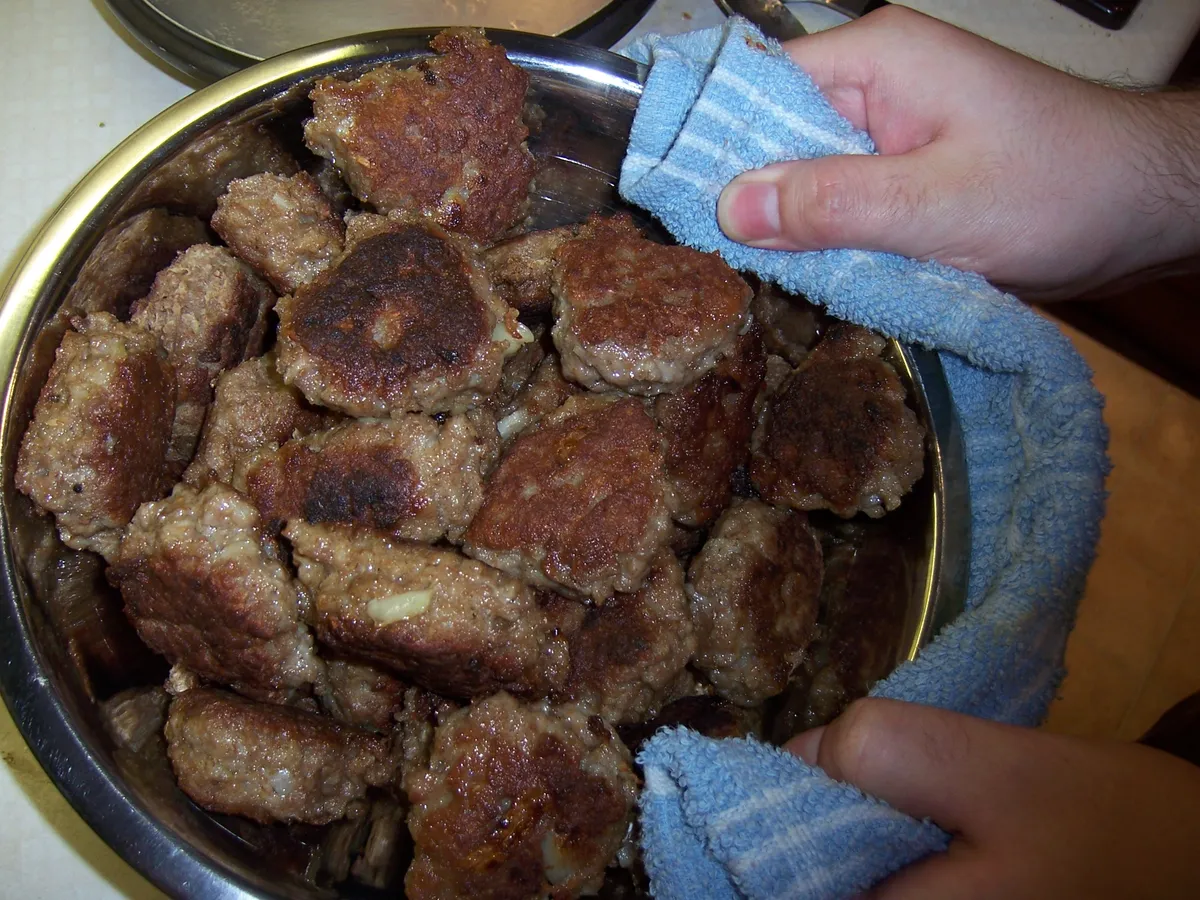
Danish frikadeller are pan-fried meatballs that sit somewhere between a patty and a classic meatball. They use a sticky pork mixture, two spoons for shaping, and plenty of butter for a crisp, caramelized crust.
Unlike Swedish meatballs (small, round, cream-gravy), frikadeller are larger, oval, and served with simple sides or on rye bread. The technique is pure comfort: grate the onion, mix until tacky, rest, then fry in foaming butter.
Key Takeaways
- Grated onion + milk keeps them juicy; flour and vigorous mixing create the signature sticky texture.
- Two-spoon shaping in hot fat gives the classic oval with a flat side for even browning.
- Medium heat and butter are non-negotiable for golden crust without burning.
- Rest the mixture 10-15 minutes before frying so the patties hold together.
- Serve with boiled potatoes and pickled beets, or turn leftovers into smørrebrød on rye.
How to Make Danish Frikadeller
- Mix the meat: In a large bowl, combine ground pork, grated onion, egg, flour, milk, salt, allspice, and pepper. Stir vigorously 1 to 2 minutes until the mixture feels sticky and cohesive.
- Rest the mixture: Cover and refrigerate 10 to 15 minutes. This firms the texture so the patties hold their shape.
- Heat the pan: Place a large skillet over medium heat. Add butter and oil; wait until the butter foams and just begins to brown.
- Shape with two spoons: Dip a tablespoon into the hot fat, scoop a portion of meat, then use a second spoon to shape into a slightly flattened oval. Slide directly into the pan.
- Fry 4 to 5 minutes per side: Cook until deep golden brown and cooked through. Work in batches so the pan is never crowded.
- Rest and serve: Drain briefly on paper towels. Serve hot with boiled potatoes, pickled beets, or on rye bread as smørrebrød.
Ingredients
For the meatballs:
- 1 lb (450 g) ground pork (or 50/50 pork and veal for lighter texture)
- 1 small yellow onion, finely grated on the fine side of a box grater
- 1 large egg
- 1/3 cup (40 g) all-purpose flour
- 1/3 cup (80 ml) whole milk, room temperature
- 1 tsp kosher salt
- 1/2 tsp ground allspice (optional but traditional)
- 1/4 tsp freshly ground black pepper
For frying:
- 2 tbsp butter
- 1 tbsp neutral oil (grapeseed or vegetable)
To serve (traditional sides):
- Boiled new potatoes
- Pickled beets or red cabbage
- Rye bread and Danish mustard (for smørrebrød)
Why This Recipe Works
The grated onion releases moisture and sweetness that keeps the meatballs tender. Vigorous mixing develops a sticky protein network so the patties do not fall apart in the pan. Resting the mixture lets the flour hydrate, which firms everything for clean shaping.
Butter is the flavor carrier. The milk solids brown and perfume the crust while the oil raises the smoke point. Medium heat is critical: too hot and the butter burns before the centers cook; too low and the meatballs steam instead of fry.
Common Variations
- All-pork vs. pork-veal: Pure pork gives richer flavor and darker crust. Half veal lightens the color and softens the texture.
- Oatmeal version: Replace 2-3 tbsp flour with quick oats for a heartier, slightly nutty bite (common in older Danish homes).
- Curry sauce: Some families serve frikadeller with a mild curry gravy made from the pan drippings, cream, and a spoonful of curry powder.
- Baked option: For a lighter weeknight version, shape and bake at 400 F (200 C) for 18-20 minutes, flipping halfway. The crust will be less dramatic but still good.
Storage and Leftovers
- Fridge: Cooked frikadeller keep 3-4 days in an airtight container.
- Freezer: Freeze raw shaped patties on a tray, then bag. Thaw overnight in the fridge before frying. Cooked leftovers freeze well up to 2 months.
- Reheating: Warm gently in a covered skillet with a splash of water or broth to restore moisture. Avoid the microwave if you want to keep the crust.
Leftovers make excellent smørrebrød: slice cold frikadeller onto rye bread, add pickled cucumber, a dab of Danish mustard, and a sprinkle of chopped chives.
FAQ
What makes frikadeller different from Swedish meatballs? Frikadeller are larger, oval, and pan-fried in butter for a crisp crust. Swedish meatballs are smaller, round, and usually served in cream gravy. The meat mixture is similar but the cooking method and serving style differ.
Can I use all beef? Traditional recipes favor pork or pork-veal. All-beef works but produces a denser, less juicy result. If using beef, add an extra tablespoon of milk to compensate.
Why do I need to mix so vigorously? The stirring develops myosin, the sticky protein that binds the mixture. Without it, the patties fall apart during shaping and frying.
Do I really need two spoons? The spoon-in-hot-fat trick prevents sticking and creates the signature oval with a flat bottom. You can use wet hands, but the spoon method is faster once you practice.
What if my mixture feels too loose? Add 1-2 tablespoons more flour and let it rest another 10 minutes. The goal is a thick, sticky paste that holds its shape when scooped.
Can I make these ahead for a party? Yes. Shape and refrigerate up to 24 hours, or freeze raw. Fry just before serving so the crust stays crisp.
Sources
- Denmark.dk official recipe: https://denmark.dk/people-and-culture/recipes/danish-meat-balls
- BBC Travel on frikadeller tradition: https://www.bbc.com/travel/article/20231228-frikadeller-the-classic-danish-comfort-food-dish
- Allrecipes Danish Frikadeller: https://www.allrecipes.com/recipe/111291/frikadeller-danish-meatballs/
- Nordic Food Living traditional version: https://nordicfoodliving.com/danish-pork-meatballs-frikadeller/
- ScandiKitchen Lena’s recipe: https://www.scandikitchen.co.uk/lenas-danish-meatballs-frikadeller/
- The Nordic Dish fluffy technique: https://thenordicdish.com/danish-meatballs-frikadeller/
Related Recipes
- Swedish Meatballs with Cream Gravy - Smaller, round, and simmered in gravy.
- Königsberger Klopse (German Meatballs) - Poached in broth with tangy caper sauce.
- Greek Lamb Meatballs (Keftedes) - Mediterranean herbs and lemon instead of Nordic spices.