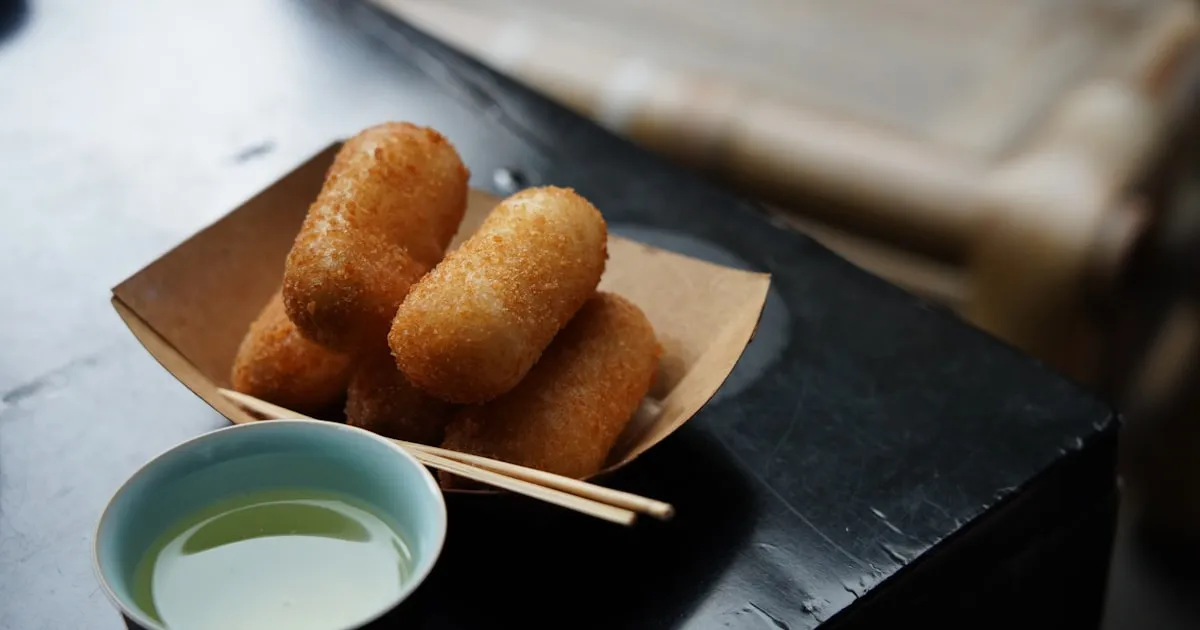
Dutch bitterballen are deep-fried beef ragout balls - the Netherlands’ most iconic bar snack. A thick, creamy beef stew is chilled until firm, rolled into balls, breaded, and fried until the outside is shatteringly crisp while the center stays molten and savory. They are served hot with sharp mustard, usually alongside beer at a Dutch borrel (drinking gathering).
The technique is closer to making a croquette than a traditional meatball. Instead of ground meat, you braise beef until tender, shred it, fold it into a buttery roux-thickened ragout, chill the mixture until solid, then bread and fry. The result is a crispy golden shell giving way to a rich, creamy beef filling - something no standard meatball can match.
Key Takeaways
- Make the ragout ahead. The filling needs at least 2 hours to chill until firm - overnight is better. This is a natural make-ahead appetizer.
- Double bread for crunch. Two rounds of egg and breadcrumbs create the thick, sturdy shell that keeps the molten center from leaking during frying.
- Oil temperature matters. Keep the oil at 355F (180C). Too low and the balls absorb grease; too high and the crust burns before the center heats through.
- Serve immediately. Bitterballen are best straight from the fryer - the contrast between crispy shell and creamy filling is the whole point.
- Pair with Dijon mustard. The sharp, tangy mustard cuts through the richness of the beef ragout. It is the traditional and non-negotiable accompaniment.
How to Make Dutch Bitterballen
- Braise the beef. Put the beef and beef stock in a large pot. Bring to a gentle simmer, then cover and cook for 75 to 90 minutes until the beef shreds easily with a fork.
- Shred the beef. Lift the beef out of the pot and shred it finely with two forks. Reserve the cooking liquid - you will need it for the ragout.
- Make the roux. In a saucepan over medium heat, melt the butter. Whisk in the flour and cook for 2 to 3 minutes until the roux smells biscuity but has not browned.
- Build the ragout. Gradually whisk 2 1/2 cups of the reserved beef cooking liquid into the roux, then whisk in the milk. Cook over medium-low heat, whisking often, for 8 to 12 minutes until very thick and pulling away from the sides of the pan.
- Combine and season. Stir the shredded beef, nutmeg, salt, and pepper into the ragout. Cook 2 minutes more. The mixture should be thick enough to hold a spoon upright.
- Chill. Scrape the ragout into a shallow dish, spread it out, and cover. Refrigerate until completely firm, at least 2 hours or overnight.
- Shape and bread. Beat the eggs in a bowl. Put the breadcrumbs in a second bowl. With lightly damp hands, roll the chilled ragout into walnut-sized balls. Coat each ball in egg, then breadcrumbs, then repeat for a double coating.
- Fry. Heat the oil to 355F (180C) in a deep pot. Fry the bitterballen in batches for 3 to 4 minutes until deep golden and crisp. Drain on paper towels.
Ingredients
For the ragout:
- 1 lb (450 g) beef stew meat
- 3 cups (750 ml) beef stock
- 6 tbsp (85 g) unsalted butter
- 3/4 cup (90 g) all-purpose flour
- 1 cup (250 ml) whole milk
- 1/2 tsp ground nutmeg
- 1 1/2 tsp fine sea salt
- 1 tsp black pepper
For breading and frying:
- 2 large eggs
- 2 cups (200 g) plain breadcrumbs
- 3 cups (750 ml) sunflower oil for frying
To serve:
- Dijon mustard
What Are Bitterballen?
Bitterballen are a Dutch deep-fried snack made from beef ragout - a thick, roux-based stew of shredded beef. The name comes from the Dutch word “bitter,” which historically referred to the jenever (gin) drinks these snacks were served alongside. Despite the name, they are not bitter at all.
The dish belongs to the Dutch borrel tradition - casual drinking gatherings where savory fried snacks are shared. Bitterballen are found in virtually every bar, cafe, and snack shop in the Netherlands. They are typically served in portions of 6 to 10, piled on a plate with a ramekin of sharp mustard for dipping.
Bitterballen vs Croquettes
| Feature | Bitterballen | Kroket (Croquette) |
|---|---|---|
| Shape | Round balls (walnut-sized) | Cylindrical, log-shaped |
| Size | Small, 1 to 1.5 inches | Larger, 4 to 5 inches |
| Filling | Beef ragout | Beef ragout (same base) |
| Serving | Shared appetizer with mustard | Single portion, often in bread |
| Texture | Extra crispy (small = more surface) | Crispy exterior, softer center |
The filling is essentially the same - a thick, roux-bound beef stew. The difference is shape and serving context. Bitterballen are the bite-sized party version; krokets are the full-size lunch snack often eaten in a bread roll.
Tips for the Best Bitterballen
- Keep the ragout very thick. If the mixture is loose or runny before chilling, the balls will be impossible to shape and will burst in the oil. It should hold a spoon upright when you stop stirring.
- Chill overnight when possible. Two hours is the minimum, but overnight chilling gives the cleanest, firmest balls. The colder the ragout, the easier it is to roll and bread without cracking.
- Fry a test ball first. If the first ball cracks or leaks, the oil is too hot or the ragout is too soft. Chill the remaining balls for 20 minutes and check that the oil is at 355F (180C) before continuing.
- Do not overcrowd the pot. Fry in batches of 5 to 6 balls. Too many at once drops the oil temperature and causes greasy, unevenly cooked bitterballen.
- Use a thermometer. Oil temperature is critical. At 355F (180C), the coating crisps in 3 to 4 minutes without burning. Below 325F (165C), the balls absorb oil and turn soggy.
- Serve immediately. The contrast between the shatteringly crisp shell and the molten beef center is the whole point. Bitterballen lose their magic as they cool.
Make-Ahead and Freezing
- Make the ragout up to 2 days ahead. Store the chilled ragout in an airtight container. It firms up further in the fridge, making it even easier to shape.
- Bread and freeze before frying. Place breaded, unfried bitterballen on a sheet pan in a single layer. Freeze until solid, then transfer to a zip-top bag. Fry directly from frozen at 345F (175C) for 5 to 6 minutes.
- Reheat cooked bitterballen. Spread on a baking sheet and heat at 390F (200C) for 10 to 12 minutes until piping hot and the coating has crisped again. Do not microwave - it destroys the crust.
Serving Ideas
- Classic Dutch borrel: Pile bitterballen on a plate with a generous ramekin of sharp Dijon mustard and a cold beer. This is how they are served in every Dutch bar.
- Party platter: Arrange 20 to 30 bitterballen on a large board with toothpicks, mustard, and a second dipping sauce like spicy sriracha mayo or garlic aioli.
- With fries: Serve alongside crispy frites for a full Dutch snack-bar experience. This is a classic combination in the Netherlands.
- Appetizer course: Serve 3 to 4 bitterballen per person as a starter before a main course of stamppot, erwtensoep, or Dutch-style meatballs.
FAQ
What are bitterballen made of?
Bitterballen are made from beef ragout - beef braised until tender, shredded, and folded into a thick roux of butter, flour, and beef stock. The mixture is chilled until firm, rolled into balls, breaded with egg and breadcrumbs, and deep-fried until golden and crispy. The filling is creamy and savory, similar to the inside of a croquette.
Are bitterballen the same as meatballs?
Not exactly. Traditional meatballs are made from ground meat mixed with binders and seasonings, then baked, fried, or simmered. Bitterballen use a pre-cooked beef ragout - braised beef in a thick, roux-bound sauce - that is chilled, shaped, breaded, and deep-fried. The texture is creamy inside (like a croquette) rather than dense and meaty like a standard meatball.
Can I bake bitterballen instead of frying them?
You can, but the result will be less crispy. Preheat the oven to 400F (200C), place the breaded bitterballen on a wire rack over a sheet pan, spray with oil, and bake for 15 to 20 minutes, turning halfway. The coating will be crisp but not as shatteringly crunchy as deep-fried. An air fryer at 375F (190C) for 10 to 12 minutes gives a better result than the oven.
What mustard should I serve with bitterballen?
Sharp Dijon mustard is the traditional and best choice. The tangy, slightly spicy flavor cuts through the richness of the beef ragout and fried coating. Some Dutch snack bars also offer sweet mustard or peanut sauce, but Dijon is the classic pairing.
Can I use ground beef instead of stew meat?
You can use ground beef as a shortcut. Brown 1 lb of ground beef, drain the fat, and proceed with making the roux and combining. The texture will be slightly different - less shredded and more uniform - but still delicious. Some Dutch home cooks use ground beef exclusively for a faster version.
How far in advance can I make bitterballen?
The ragout can be made up to 2 days ahead and kept chilled. Breaded, unfried bitterballen freeze well for up to 3 months. Cooked bitterballen keep in the fridge for up to 3 days and reheat well in a 390F (200C) oven for 10 to 12 minutes.
Sources
- Bitterballen (Dutch Beef Ragout Balls) - JustRecipes
- Dutch Classic Beef Bitterballen Recipe - The Spruce Eats
- Dutch Meatballs (Bitterballen) - Taste of Home
- Bitterballen - Andy Cooks
- Bitterballen: Favorite Dutch Meat Snack - Toine’s Kitchen
Related: Danish Frikadeller Meatballs (Pan-Fried Classic) | Norwegian Kjottkaker: Meatballs in Brown Gravy | Swedish Meatballs with Cream Gravy | Finnish Meatballs (Lihapullat)