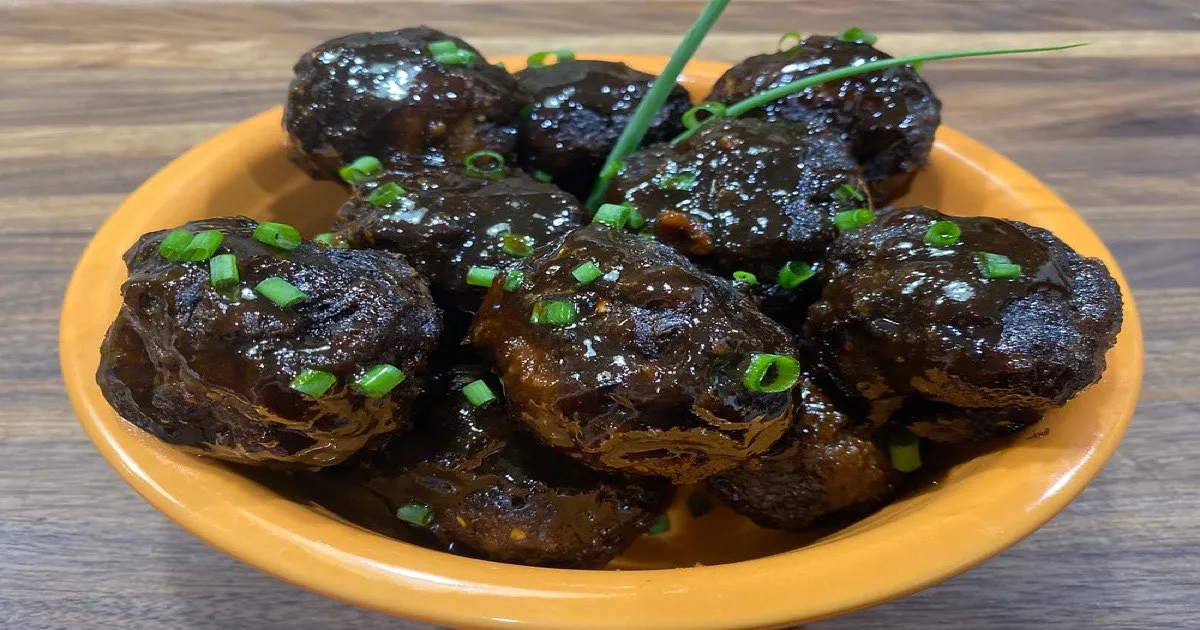
General Tso meatballs are the takeout favorite in meatball form - juicy beef balls simmered in a glossy sweet and spicy sauce that coats every bite. The sauce is the whole point: soy, vinegar, honey, and hoisin balanced with garlic, ginger, and a whisper of chili heat, thickened until it clings like a glaze.
The trick that sets this apart from drive-through Chinese food is the cornstarch coating. A light dusting gives the seared surface a crispy golden crust, and once those meatballs hit the sauce, the coating helps the glaze stick instead of sliding off. Everything comes together in one skillet in about 35 minutes, no deep fryer required.
How to Make General Tso Meatballs
- In a large bowl, combine ground beef, panko, half the scallions, egg, garlic, ginger, sesame oil, and red pepper flakes. Mix until just combined - overworking the meat makes tough meatballs.
- Roll into 18 to 20 meatballs, about 1 heaping tablespoon each. Coat each ball lightly in cornstarch, tapping off the excess.
- Heat vegetable oil in a large skillet over medium-high heat. Sear the meatballs for 3 to 4 minutes per side, working in batches if needed, until browned on all sides. Remove to a plate.
- In the same skillet, whisk chicken broth, soy sauce, apple cider vinegar, hoisin, honey, and brown sugar. Bring to a simmer and cook 1 to 2 minutes until slightly thickened.
- Return the meatballs to the sauce and simmer for 6 to 8 minutes until cooked through and the sauce turns glossy and clings to each ball.
- Serve over steamed jasmine rice with broccoli. Garnish with the remaining scallions and sesame seeds.
Ingredients
- 1 lb (450 g) ground beef, 80/20
- 1/2 cup (60 g) panko breadcrumbs
- 4 scallions, thinly sliced, divided
- 1 large egg, lightly beaten
- 2 cloves garlic, minced
- 1 tsp fresh ginger, finely grated
- 1 tsp toasted sesame oil
- 1/4 tsp red pepper flakes
- 1/4 cup (30 g) cornstarch, for coating
- 2 tbsp vegetable oil, for searing
- 1/2 cup (120 ml) low-sodium chicken broth
- 1/4 cup (60 ml) soy sauce
- 2 tbsp apple cider vinegar
- 2 tbsp hoisin sauce
- 1 tbsp honey
- 1 tbsp brown sugar
- 1 tsp toasted sesame seeds, for garnish
- Steamed jasmine rice and broccoli, for serving
Ingredient Notes and Substitutions
- Ground beef - 80/20 gives the best balance of flavor and juiciness. Leaner blends (93/7) work but lean dry; add 1 tablespoon of oil or a splash of milk to the mix if you go that way.
- Panko vs regular breadcrumbs - panko stays lighter and gives the balls a softer interior. Regular breadcrumbs also work, just with a denser bite.
- Hoisin sauce - the secret ingredient for depth. If you only have soy and honey, the sauce still tastes good, just less rounded. A pinch of five-spice powder fills some of the same gap.
- Apple cider vinegar - use rice vinegar if you have it. The swap is nearly identical; cider has slightly more fruitiness.
- Red pepper flakes - start with a quarter teaspoon. The sauce gets hotter as it reduces, so taste before adding more.
What Is General Tso’s Sauce Made Of?
General Tso’s sauce is a Chinese-American pantry staple built from five ingredients: soy sauce for salt and umami, rice vinegar or apple cider vinegar for tang, sugar (here honey and brown sugar) for sweetness, chili for heat, and a starch thickener so the sauce clings. Garlic and ginger round out the aromatics, and most home versions add hoisin for depth.
The balance matters more than any single ingredient. Taste the sauce before it goes in with the meatballs - it should be bold and slightly sharp, because the beef dials the salt and the rice soaks up the sweetness. If it tastes perfect in the pan, it will taste right on the plate. It is a close cousin of the glaze on our Mongolian meatballs and the sticky coating on char siu meatballs, so if you like one, you will like all three.
History of General Tso’s Chicken
General Tso’s chicken is named for Zuo Zongtang, a Qing dynasty general who had nothing to do with the dish. It was invented in Taiwan in the 1970s by chef Peng Chang-kuei, a Hunan-born chef who adapted a Hunan-style chicken dish into the sweet, deep-fried version that became a staple of American Chinese restaurants. The meatball version keeps the iconic sauce and drops the deep fryer, which makes it the fastest weeknight path to that same flavor.
The Cornstarch Coating Replaces the Deep Fryer
Traditional General Tso’s chicken is battered and deep-fried before it hits the sauce. The meatball shortcut gets 80 percent of that texture with much less oil and cleanup:
- Crisp edges - cornstarch fries up shatteringly crisp at the surface, exactly like the lacy exterior of fried chicken pieces
- Sauce adhesion - the starchy coating grabs the glaze so every ball comes out fully lacquered
- Less oil - a shallow sear in 2 tablespoons of oil instead of a full fry bath
The same principle does the work in our sweet and sour meatballs and teriyaki meatballs, where a cornstarch or flour dusting keeps the balls jammy with sauce.
General Tso Meatballs vs Other Takeout Meatballs
| Dish | Protein | Heat source | Sweetener | What makes it different |
|---|---|---|---|---|
| General Tso | Beef or chicken | Dried chilies, red pepper flakes | Honey, brown sugar | Hoisin makes it rounder and deeper |
| Kung Pao | Chicken | Sichuan peppercorns, chilies | Sugar | Numbing heat, roasted peanuts crunch |
| Mongolian | Beef | Ginger, garlic | Brown sugar | Sauce is more savory, less chili |
| Teriyaki | Chicken or pork | None (mild) | Mirin, sugar | Sweet-salty, no vinegar tang |
Variations Worth Trying
- Chicken version - swap the beef for ground chicken and reduce the sear to 3 minutes per side. Chicken cooks fast, so keep the final simmer at the shorter end. See our teriyaki meatballs for the same swap done with a lighter sauce
- Spicier version - add 1 teaspoon gochujang or sriracha to the sauce, or double the red pepper flakes. The Sichuan meatballs show how chili-forward heat plays against pork
- Crockpot version - brown the meatballs, whisk the sauce in the slow cooker, and cook on low for 3 to 4 hours. The glaze will be glossy, just not as thick
- Gluten-free version - use tamari instead of soy sauce, a gluten-free hoisin, and 1 tablespoon cornstarch already in the recipe. Skip the panko or use crushed rice crackers
What to Serve with General Tso Meatballs
Jasmine rice and steamed broccoli are the classic pair, but the sauce works with almost anything neutral: egg noodles, fried rice, or cauliflower rice for a lighter meal. For a party, serve the meatballs straight from the skillet with toothpicks and skip the rice entirely - they hold the glaze beautifully and stay sticky for over an hour.
If you are meal prepping, this recipe fits the pattern of our meal prep meatball collection - cook the meatballs and sauce separately, then combine at serving time so the balls do not soften.
Storage and Reheating
Store leftovers in an airtight container in the fridge for up to 4 days. Reheat in a skillet over medium heat with a splash of water or broth to loosen the glaze, or microwave in 30-second bursts. The sauce keeps its cling, but the crispy cornstarch edges soften once refrigerated - re-searing briefly in a dry pan restores some crunch.
The meatballs alone freeze well for up to 3 months. Freeze them after searing, before adding the sauce; thaw in the fridge overnight and finish in the sauce when ready. Sauce made ahead keeps in the fridge for a week.
FAQ
Is General Tso’s sauce spicy? Mild to medium. Traditional versions keep the heat moderate so the sweetness leads. Our recipe uses a pinch of red pepper flakes and dried chilies in the pan; add more or a spoonful of gochujang if you want real heat.
Can I use ground turkey instead of beef? Yes. Ground turkey and chicken both work - expect slightly shorter cook times and a leaner-tasting meatball. Add a tablespoon of oil to the mix if you want extra moisture.
Why coat meatballs in cornstarch? The cornstarch creates a crisp golden crust on sear and helps the sauce cling. Without it, the glaze slides off and pools in the pan.
Do I have to use hoisin sauce? No - a mix of extra soy, a dot of molasses or ketchup, and a pinch of five spice approximates it. Hoisin is easy to find in most grocery stores though, and it is what gives the sauce its deep, rounded sweetness.
How do I get the sauce thicker? Mix 2 teaspoons of cornstarch with 2 tablespoons of cold water and stir it into the simmering sauce. It thickens in about 30 seconds. Add it slowly - the sauce is done when it coats the back of a spoon.
Can I make a big batch for a party? Yes - double everything and use a wide Dutch oven. Sear in batches so the pan stays hot, then simmer all the meatballs together in the sauce.
Sources
- General Tso’s Meatballs | Delish, recipe reference for the sauce ratios
- General Tso’s Chicken Meatballs | Little Spice Jar, technique for five-spice chicken meatballs and finishing in the sauce
- General Tso’s chicken | Wikipedia, history and origin of the dish