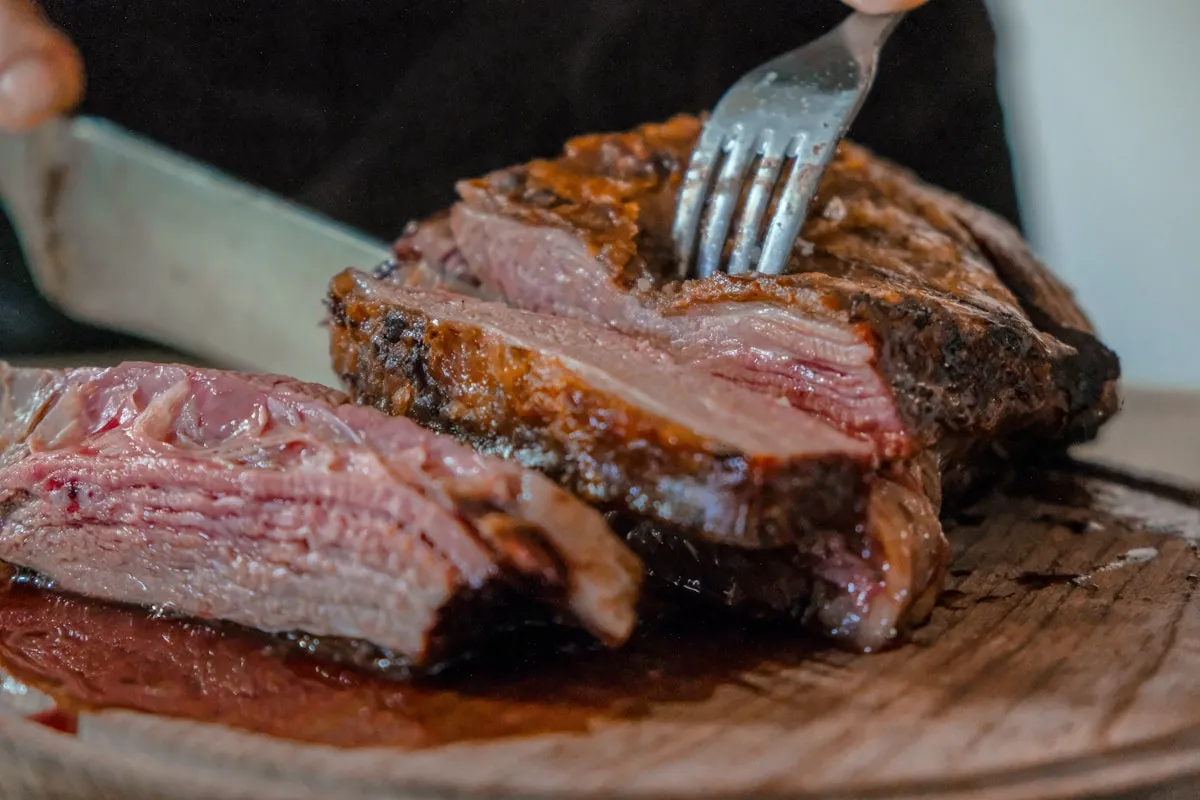
German Frikadellen (also called Buletten in Berlin or Fleischpflanzerl in Bavaria) are pan-fried meat patties seasoned with marjoram, mustard, and parsley. Unlike the poached, caper-sauced Königsberger Klopse, these are cooked in a skillet until the outside is deeply browned and the inside stays tender and juicy.
Frikadellen are a staple of German home cooking. They appear in lunchboxes, on cold buffet tables, and as the centerpiece of a hearty dinner with potato salad or sauerkraut. The name comes from the Italian frittadella (little fried thing), brought north and adopted into German cuisine. They are also sometimes called German hamburgers for good reason-they share the same pan-fried patty DNA as the American burger.
How to Make German Frikadellen
-
Soak the bread. Crumble stale white bread into a bowl. Pour warm milk over it and let sit 5 minutes until completely soft. Mash with a fork into a paste. This panade binds the patties and keeps them moist during frying.
-
Sauté the onion. Cook finely diced onion in 2 tbsp butter over medium heat for 3 to 4 minutes until softened. Set aside to cool slightly. Raw onion releases water during cooking and can make the patties crumble.
-
Mix the meat. In a large bowl, combine ground beef, ground pork, soaked bread paste, cooled onion, egg, parsley, Dijon mustard, marjoram, salt, pepper, and nutmeg. Use your hands and mix only until everything is evenly distributed. Over-mixing makes the texture dense and tough.
-
Shape into patties. Divide into 8 equal portions. Shape each into a flat oval patty about 3/4 inch thick. Place on a plate and refrigerate at least 10 minutes. Chilling firms the fat and helps the patties hold their shape in the pan.
-
Pan-fry. Heat oil in a large heavy skillet over medium-high heat. Lay patties in a single layer without crowding. Cook 4 to 5 minutes per side until deep golden brown with a crisp crust. Work in two batches if your skillet is not large enough.
-
Rest and serve. Transfer to a wire rack or paper towel-lined plate for 2 minutes. Serve hot with potato salad, sauerkraut, or crusty bread.
Ingredients
- 1/2 lb (225 g) ground beef, 80/20
- 1/2 lb (225 g) ground pork
- 1 small onion, finely diced
- 2 tbsp butter (for onion)
- 2 slices stale white bread (about 1.5 cups fresh breadcrumbs)
- 1/4 cup warm milk
- 1 large egg
- 2 tbsp fresh parsley, chopped
- 1 tsp Dijon mustard
- 1 tsp dried marjoram (or 2 tsp fresh marjoram leaves)
- 1 tsp kosher salt
- 1/2 tsp black pepper
- 1/4 tsp ground nutmeg
- 3 tbsp neutral oil (for frying)
Marjoram is the Key Spice
Frikadellen get their signature German flavor from marjoram. It is earthy, slightly floral, and herbaceous. Oregano is the closest substitute but it is more pungent. If you have never cooked with dried marjoram before, this is the recipe to try it. Marjoram pairs well with pork and adds the aroma found in traditional German sausage.
Frikadellen vs Frikadeller vs Buletten
The same dish goes by different names across Germany and Scandinavia:
- Frikadellen (or Frikadelle) - the standard German name, used across most of the country.
- Buletten - the Berlin name, from French boulette (little ball). Slightly larger and rounder.
- Fleischpflanzerl - the Bavarian name, often made fattier and served with potato salad.
- Frikadeller - the Danish and Scandinavian version, made with pork or veal, no marjoram, often with allspice instead (see our Danish Frikadeller Meatballs).
Serving Suggestions
- Classic: With warm potato salad (Kartoffelsalat) and a cucumber side.
- Cold: On dark rye bread with pickles and mustard as a packed lunch.
- With gravy: Serve with pan gravy made from the drippings and a dollop of lingonberry jam.
Refrigerate leftovers up to 4 days. Frikadellen also freeze well after cooking-tightly wrap individually and freeze up to 3 months. Reheat in a dry skillet over medium.
Key Takeaways
- Marjoram is the defining spice. Do not skip it if you can help it.
- The panade (soaked bread) is essential. It keeps the lean protein juicy.
- Chill shaped patties 10 minutes before frying for better structure.
- Serve hot, cold, or packed in a lunchbox. Frikadellen are versatile at any temperature.
FAQ
What is the difference between Frikadellen and Königsberger Klopse?
Frikadellen are pan-fried flat patties seasoned with marjoram and mustard, served hot or cold. Königsberger Klopse are larger, rounder, gently poached in broth, and finished with a lemon-caper cream sauce. They are two distinct German meatball traditions with different cooking methods and flavor profiles. See our Königsberger Klopse recipe for the poached version.
Can I use only beef or only pork?
Yes. All-beef Frikadellen work well with 85/15 or 80/20 ground beef. All-pork works too. The traditional blend is half and half for the best balance of flavor and moisture.
Why did my Frikadellen fall apart?
Most likely the panade was too dry or the onion was not cooked first. Ensure the bread is fully soaked and mashed to a paste. Sautéing the onion removes raw moisture that would prevent binding. Chilling also helps.
How do I know when they are cooked through?
A 3/4 inch thick patty needs about 4 to 5 minutes per side over medium-high heat. The internal temperature should reach 160F (71C) for pork blends. Cut one open to check if you are unsure.
Can I make these gluten-free?
Use gluten-free bread for the panade and ensure your mustard is gluten-free. The rest of the ingredients are naturally gluten-free.
Sources
- https://www.thegutsy-gourmet.com/traditional-german-frikadellen-recipe/
- https://www.allrecipes.com/recipe/233096/frikadellen-german-meat-patties/
- https://www.daringgourmet.com/frikadeller-frikadellen/
- https://www.germanyfoodguide.com/frikadellen/
Related Posts
- Königsberger Klopse: German Meatballs in Creamy Caper Sauce - The poached German meatball with lemon-caper sauce.
- Danish Frikadeller Meatballs - The Scandinavian cousin with allspice and dill.
- Swedish Meatballs with Cream Gravy - Pan-fried Swedish-style spiced with allspice and nutmeg.
- German Meatball Recipes - All German-style meatball recipes in one place.