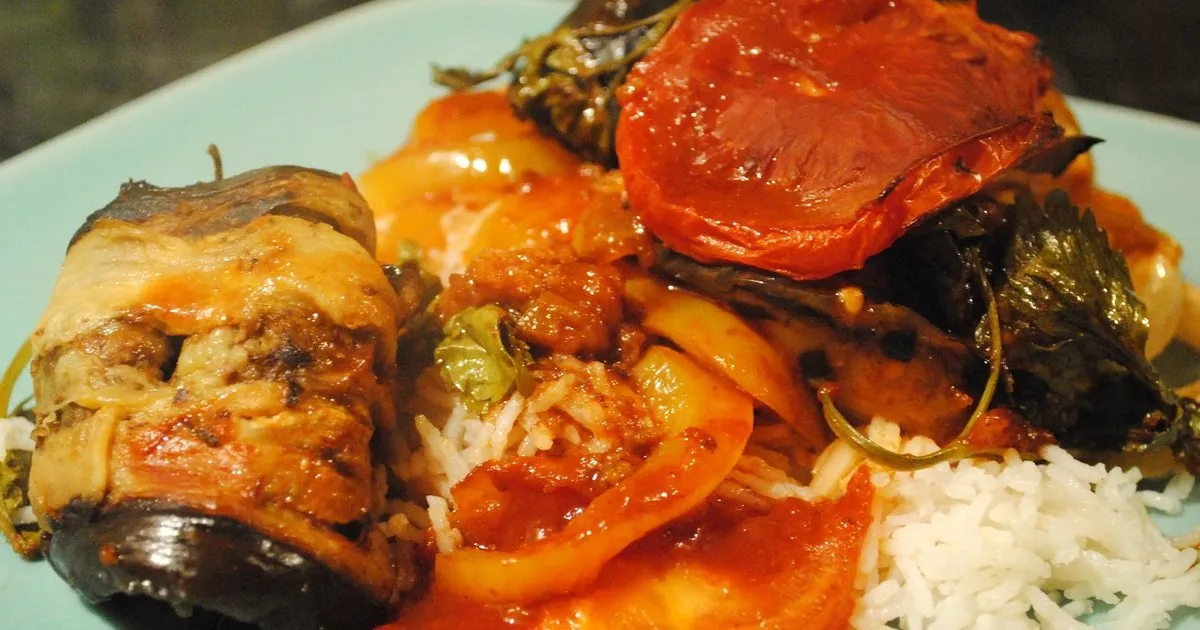
Kafta bil sanieh is the Lebanese answer to “what do I do with a pound of ground meat and some potatoes.” Kafta patties seasoned with allspice and cinnamon are layered with potatoes, tomatoes, and onion, then baked slowly in a spiced tomato sauce until everything melds into one pan of comfort food.
The name says it all: sanieh means “tray” in Arabic, so this is quite literally kofta baked in a tray. It is a weeknight staple across Lebanon and the wider Levant, the kind of dish that sits in the oven while you do something else. If you have made Lebanese kofta bil tahini or Dawood Basha, this is the layered, potato-heavy cousin.
The hands-on work is short. You mix the kafta, slice a few vegetables, and let the oven do the rest. The result is tender potatoes soaked in tomato sauce, kafta that stays juicy under the lid, and a browned top that begs for rice to catch it.
Key Takeaways
- One pan, mostly hands-off: mix the kafta, layer, and bake. The oven carries it for over an hour.
- Allspice and cinnamon are the signature Levantine kafta spices, not cumin or coriander.
- Par-boil the potatoes first so they turn tender in the same time the meat cooks.
- Squeeze the onion dry or the kafta mix gets too loose to shape.
- Serve with rice or pita to soak up the tomato sauce.
How to Make Kafta bil Sanieh
- Grate 1 medium onion, then squeeze dry. In a bowl, combine it with the 1 lb ground lamb, parsley, garlic, allspice, cinnamon, salt, and pepper. Mix with your hands until the mixture is sticky and holds together.
- Shape the mixture into 8 to 10 flat oval patties, about 1/2 inch thick. Set aside.
- Slice the potatoes into 1/4-inch rounds. Par-boil them in salted water for 8 to 10 minutes until barely tender, then drain.
- Heat the oven to 350F (180C). Oil a 9x13-inch baking dish and lay the potato slices across the bottom.
- Set the kafta patties over the potatoes. Top with the tomato and onion slices, overlapping them.
- Whisk the crushed tomatoes, tomato paste, water, olive oil, the remaining 1/4 tsp allspice, salt, pepper, and sugar. Pour over the dish so the sauce comes partway up the layers.
- Cover with foil and bake for 60 to 70 minutes, until the potatoes are tender and the kafta reach 160F (71C) at the center.
- Uncover and bake 15 more minutes to brown the top. Rest 5 minutes, then serve with rice or warm pita.
Ingredients
For the kafta
- 1 lb (450 g) ground lamb, or a beef-lamb blend (80/20)
- 1 medium yellow onion, grated
- 1/2 cup fresh parsley, finely chopped
- 3 cloves garlic, minced
- 1 tsp ground allspice
- 1/2 tsp ground cinnamon
- 3/4 tsp salt
- 1/2 tsp black pepper
- 2 tbsp pine nuts (optional)
For the layers and sauce
- 2 to 3 russet or Yukon gold potatoes (about 1.5 lb), peeled
- 2 to 3 Roma tomatoes, sliced
- 1 yellow onion, sliced into thin rings
- 1 can (15 oz / 425 g) crushed tomatoes
- 2 tbsp tomato paste
- 1 cup (240 ml) water
- 2 tbsp olive oil, plus more for the dish
- 1/4 tsp sugar (optional)
What Is Kafta bil Sanieh
Kafta (also spelled kofta, kefta, or kyafta) is spiced ground meat found all over the Middle East, South Asia, and the Balkans, with each region shaping it differently. In Lebanon the mix is lamb or beef with onion, parsley, garlic, and warm spices, formed into fingers or patties and grilled, fried, or baked.
Bil sanieh means “in the tray.” The baked tray version trades the grill for a layering of potatoes, tomatoes, and onion under a tomato sauce, then a long, gentle bake. It is closer to a casserole than to the skewer-grilled kafta most people picture, and it is the version Levantine home cooks reach for on a busy night. Lamb kofta with mint yogurt shows the grilled side of the same family; this is the oven, potato-forward side.
Tips for the Best Result
Squeeze the onion dry. Grated onion adds moisture and flavor, but the liquid loosens the mix. Press it in a clean towel so the patties hold their shape through the bake.
Par-boil the potatoes. Raw potato rounds rarely soften in the time the kafta needs. A short 8 to 10 minute par-boil in salted water guarantees tender slices without overbaking the meat.
Do not drown the dish. Pour the sauce so it comes partway up the layers, not over the top. Too much liquid steams the kafta instead of letting the top brown.
Use a thermometer. Ground lamb and beef are safe at 160F (71C). The sauce should be bubbling and the potatoes pierced easily with a knife when it is done.
Rest before serving. Five minutes off the heat lets the sauce thicken slightly and the layers settle, so portions come out clean.
Variations
Beef version: Use ground beef instead of lamb for a milder, more familiar flavor. An 80/20 blend keeps the patties juicy; lean beef works but reads drier.
Add eggplant: Slip sliced, salted eggplant rounds between the potato and kafta layers. It turns the dish toward the Iraqi Tepsi Baytinijan style and soaks up the sauce beautifully.
Spice it up: Add 1/2 tsp Aleppo pepper or a pinch of cayenne to the kafta for gentle heat. Levantine food leans mild, but a little warmth is welcome.
Pine nut kafta: Fold the optional pine nuts into the meat mixture for little bursts of crunch, a common touch in Lebanese home cooking.
What to Serve With It
Rice is the classic partner. Plain basmati or vermicelli rice (rice toasted in butter with broken vermicelli) catches the tomato sauce and turns the tray into a full meal. Warm pita for scooping works just as well.
Round out the table with a bright salad: chopped tomato, cucumber, and onion with lemon and olive oil, or a handful of pickled turnips for contrast. Keep the rest simple; the tray is already hearty.
Storage
Leftovers keep in the fridge for 3 to 4 days in a sealed container. The sauce thickens overnight and most people say it tastes better on day two. Reheat covered in a 350F (180C) oven for 15 minutes so the top re-browns instead of drying out. The dish also freezes well for up to 2 months; thaw in the fridge before reheating.
FAQ
Can I use ground beef instead of lamb?
Yes. Ground beef, or a half-and-half beef-lamb blend, is common in Lebanese homes. Use 80/20 for moisture. Pure lamb gives the more traditional flavor, but beef is perfectly at home in this dish.
Why par-boil the potatoes first?
Raw potato slices rarely soften in the time it takes the kafta to cook through. A short 8 to 10 minute par-boil means the potatoes finish tender in the oven without overbaking the meat or adding more sauce liquid.
What does “sanieh” mean?
Sanieh is Arabic for “tray” or “pan.” Kafta bil sanieh is literally kafta baked in a tray, layered with potatoes and vegetables under tomato sauce, rather than grilled on skewers.
Can I make this ahead?
You can. Shape the kafta and par-boil the potatoes a day ahead, then layer and bake when ready. The assembled, unbaked tray also freezes well; add 15 to 20 minutes to the covered bake time if it goes in frozen.
Is kafta bil sanieh the same as kofta bil tahini?
No. Both are Lebanese baked kofta, but kofta bil tahini uses a lemony tahini sauce instead of tomato, and usually skips the potato layer. Kafta bil sanieh is the potato-and-tomato tray bake.
How do I know when it is done?
The potatoes should pierce easily with a knife and the sauce should be bubbling at the edges. Check the center of the thickest patty with a thermometer: 160F (71C) for lamb or beef.
Sources
- Kafta bil Sanieh - ButFirstChai - a Lebanese home version with layered meat, potatoes, and tomatoes in seasoned tomato sauce.
- Lebanese Baked Kafta with Potatoes and Tomatoes - Milk Street - explains why this meatball casserole is Lebanese comfort food.
- Baked Kofta with Potatoes (Kofta Bil Sanieh) - Cosette’s Kitchen - notes broiling the kafta first to release excess fat.
- Hero photo: “Tepsi-Baytinijan” by Peteravivangel, CC BY-SA 4.0 via Wikimedia Commons.
If you like this, try the saucy Lebanese Dawood Basha or the creamy Kofta bil Tahini for two more takes on Lebanese kofta. For the full set, browse our Lebanese recipes roundup.