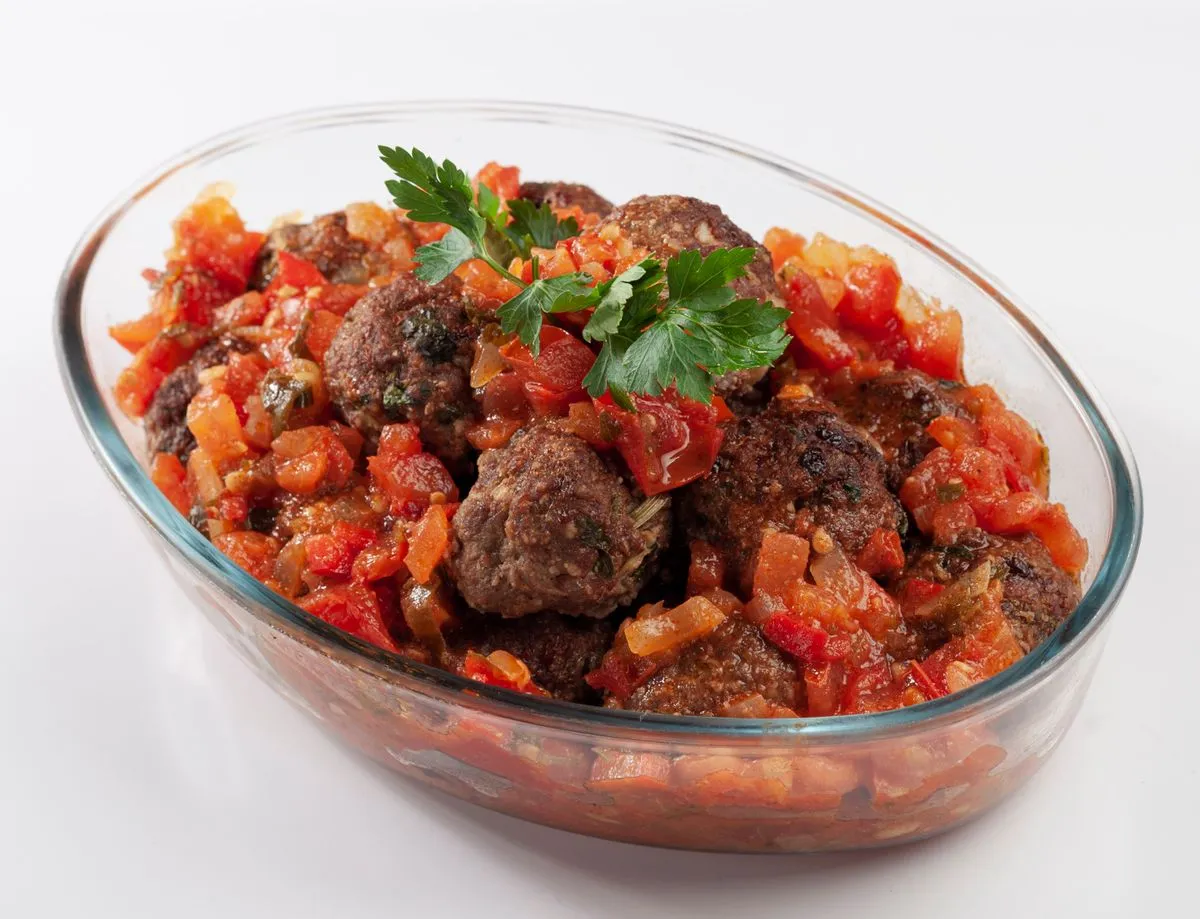
Lebanese meatballs - known as dawood basha - are the Middle Eastern answer to Italian meatballs in marinara. Tender beef meatballs spiced with warm allspice and cinnamon, simmered in a rich tomato sauce and finished with toasted pine nuts. The name comes from a powerful Ottoman-era governor of Lebanon who loved this dish so much it became his legacy.
This is not an Italian meatball. There is no marinara, no mozzarella, no pasta. The spice profile is entirely different - warm, aromatic, and subtly sweet from allspice and cinnamon rather than oregano and basil. The tomato sauce is simpler but deeper, built on crushed tomatoes, tomato paste, and a hint of pomegranate molasses for a sweet-sour finish.
If you enjoy Indian kofta curry or Moroccan kefta mkaouara, this Lebanese version sits in the same family of spiced meatballs simmered directly in sauce - but the flavor is distinctly Levantine.
Key Takeaways
- The spice blend: allspice, cinnamon, and optional cardamom give these meatballs their signature Lebanese flavor.
- The sauce: crushed tomatoes, tomato paste, and a touch of pomegranate molasses for sweet-sour depth.
- The texture: a breadcrumb panade (bread soaked in milk) keeps the meatballs tender and juicy.
- The finish: toasted pine nuts and fresh parsley add crunch and color.
- Serve with: Lebanese vermicelli rice, warm pita, or a simple fattoush salad.
How to Make Lebanese Meatballs (Dawood Basha)
- Soak breadcrumbs in milk for 3 minutes until soft. In a large bowl, combine beef, soaked breadcrumbs, egg, grated onion, garlic, parsley, 1 tsp allspice, 1/2 tsp cinnamon, cardamom, salt, and pepper. Mix gently until just combined.
- Shape into about 20 meatballs, 1.5 inches across. Set aside on a plate.
- Heat olive oil in a large deep skillet or Dutch oven over medium-high heat. Brown meatballs in batches for 2 to 3 minutes per side until golden. Remove and set aside.
- Reduce heat to medium. Add diced onion to the same skillet and cook for 4 to 5 minutes until softened and lightly golden. Add garlic and cook 30 seconds until fragrant.
- Stir in crushed tomatoes, water, tomato paste, 1 tsp allspice, 1/2 tsp cinnamon, and bay leaf. Bring to a simmer and cook for 5 minutes.
- Return meatballs to the skillet. Reduce heat to medium-low, cover, and simmer for 20 to 25 minutes until meatballs reach 160F (71C) internally.
- Stir in pomegranate molasses if using. Taste and adjust seasoning. Garnish with toasted pine nuts and fresh parsley. Serve over rice or with warm pita.
Ingredients
Meatballs
- 1 lb (450 g) ground beef, 85/15
- 1/2 cup fresh breadcrumbs (from day-old bread)
- 1/4 cup whole milk
- 1 large egg
- 1 small onion, finely grated and squeezed dry
- 2 cloves garlic, minced
- 1/4 cup fresh parsley, finely chopped
- 1 tsp ground allspice
- 1/2 tsp ground cinnamon
- 1/4 tsp ground cardamom (optional)
- 1/2 tsp kosher salt
- 1/4 tsp black pepper
Tomato Sauce
- 2 tbsp olive oil
- 1 medium onion, finely diced
- 2 cloves garlic, minced
- 1 (14.5 oz) can crushed tomatoes
- 1/2 cup water
- 1 tbsp tomato paste
- 1 tsp ground allspice
- 1/2 tsp ground cinnamon
- 1 bay leaf
- 1 tbsp pomegranate molasses (optional)
For Serving
- 1/3 cup pine nuts, toasted
- Fresh parsley, chopped
- Lebanese vermicelli rice, warm pita, or crusty bread
The Spice Profile
The flavor of dawood basha comes down to two spices: allspice and cinnamon. Together they create the warm, aromatic backbone that defines Lebanese and broader Levantine cooking.
Allspice is not a blend - it is a single berry from the Pimenta dioica tree, native to the Caribbean but adopted heavily in Middle Eastern kitchens. It tastes like a combination of cinnamon, nutmeg, and cloves, which is where the name comes from. In Lebanese cooking, allspice appears in everything from kafta to rice dishes to pickles.
Cinnamon adds warmth and a subtle sweetness that balances the acidity of the tomato sauce. Use ground Ceylon cinnamon if you can find it - it is more delicate than the common cassia variety. Either works, but Ceylon gives a more authentic Lebanese flavor.
Cardamom is optional but adds a floral, slightly menthol note that lifts the dish. If you have it, use it. If not, the recipe works fine without.
Some versions of dawood basha use seven spice (sabaa baharat), a Lebanese spice blend that typically includes allspice, black pepper, cinnamon, cloves, cumin, nutmeg, and coriander. If you have seven spice, substitute 1.5 tsp for the individual allspice and cinnamon in the meatballs.
The Tomato Sauce
The sauce for dawood basha is simpler than Italian marinara but has its own depth. Three things make it Lebanese rather than generic:
Tomato paste concentrates the tomato flavor and adds a slight caramel sweetness when cooked briefly in the oil before the crushed tomatoes go in. This step - frying the paste for 30 seconds - is the same technique used in Lebanese rice dishes and stews.
Pomegranate molasses is the secret ingredient. A tablespoon adds a sweet-sour tang that brightens the entire dish. It is made from reduced pomegranate juice and is a staple in Lebanese, Syrian, and Iranian kitchens. If you cannot find it, a squeeze of lemon juice plus a pinch of sugar gets close.
The bay leaf adds a subtle herbal depth during the simmer. Remove it before serving.
The sauce should be brothy enough to coat the rice or soak into pita, but not so thin that it runs off the plate. If it reduces too much during the simmer, add a splash of water.
Pine Nuts: Toast Them First
Toasted pine nuts are the traditional garnish for dawood basha. They add a buttery crunch that contrasts with the soft meatballs and silky sauce.
To toast pine nuts: place them in a dry skillet over medium heat. Stir or shake the pan constantly for 2 to 3 minutes until golden and fragrant. Watch them closely - pine nuts go from golden to burnt in seconds. Transfer to a plate immediately to stop the cooking.
If pine nuts are too expensive (they often are), substitute slivered almonds or skip the garnish entirely. The dish is still delicious without it.
Serving Ideas
With Lebanese vermicelli rice
The classic pairing. Toast vermicelli noodles in butter until golden, then cook with basmati rice. The buttery, nutty rice absorbs the tomato sauce perfectly. This is how dawood basha is served in Lebanese homes and restaurants.
With warm pita
Split a warm pita, spoon meatballs and sauce inside, and eat it like an open-faced sandwich. The bread catches every drop of sauce. This is the fast-casual version - no rice cooking required.
With fattoush salad
A crisp fattoush salad with radishes, cucumber, tomatoes, and sumac dressing cuts through the richness of the meatballs. The acid and crunch balance the warm spices beautifully.
As an appetizer
Make the meatballs smaller (about 1 inch), reduce the simmer time by a few minutes, and serve with toothpicks and extra sauce in a small bowl. They pair well with meatball sliders on a party spread.
Storage and Reheating
| Stage | Fridge | Freezer | Reheat |
|---|---|---|---|
| Cooked meatballs in sauce | 3 to 4 days airtight | Up to 3 months | Reheat gently in a skillet over medium-low |
| Raw shaped meatballs | Up to 24 hours covered | Up to 2 months on a tray, then bagged | Brown from thawed, add 2 minutes to simmer |
The flavors actually improve overnight. Make a double batch on Sunday and eat well through midweek. The sauce may thicken in the fridge - add a splash of water when reheating.
Common Mistakes
- Overmixing the meat. Treat it like biscuit dough - stop as soon as ingredients combine. Overworked meat makes dense, rubbery meatballs.
- Skipping the browning step. Browning builds flavor through the Maillard reaction. Dropping raw meatballs directly into sauce gives you boiled-tasting results.
- Crowding the pan when browning. Work in two batches. Crowded meatballs steam instead of searing.
- Using regular cinnamon instead of checking your spice freshness. Old, stale spices have half the flavor. If your allspice has been in the pantry for two years, buy a new jar.
- Skipping the pomegranate molasses. It transforms the sauce from good to authentic. A tablespoon makes a noticeable difference.
FAQ
What is dawood basha?
Dawood basha (also spelled daoud basha) is a Lebanese dish of ground beef meatballs spiced with allspice and cinnamon, simmered in a rich tomato sauce. The name refers to Dawood Pasha, a powerful Ottoman-era governor of Lebanon who was famously fond of the dish. It is popular across Lebanon, Syria, and Egypt.
Can I use lamb instead of beef?
Yes. Ground lamb works well and is traditional in some versions. You can also use a 50/50 beef-lamb blend for richer flavor. Lamb has a stronger taste than beef, so the spices may need a slight increase. If using lamb, choose a leaner grind (90/10 or leaner) since lamb fat can make the sauce greasy.
What is seven spice and can I substitute it?
Seven spice (sabaa baharat) is a Lebanese spice blend typically containing allspice, black pepper, cinnamon, cloves, cumin, nutmeg, and coriander. If you have it, use 1.5 tsp in the meatballs in place of the individual allspice and cinnamon. If you do not have it, the recipe as written with separate spices works perfectly.
Can I make this ahead for meal prep?
Yes. Cook the meatballs in sauce, cool completely, and store in the fridge for 3 to 4 days. The flavors improve overnight. Reheat gently in a skillet with a splash of water if the sauce has thickened. It also freezes well for up to 3 months.
What can I serve with Lebanese meatballs?
The traditional pairing is Lebanese vermicelli rice. Other options include warm pita bread, crusty baguette, mashed potatoes, or a fresh fattoush salad. For a lighter meal, serve over couscous or bulgur wheat.
Is this dish spicy?
No. Dawood basha is warm and aromatic, not hot. The allspice and cinnamon provide warmth without chili heat. If you want spice, add a pinch of cayenne pepper to the meatball mixture or a drizzle of hot sauce at the table.