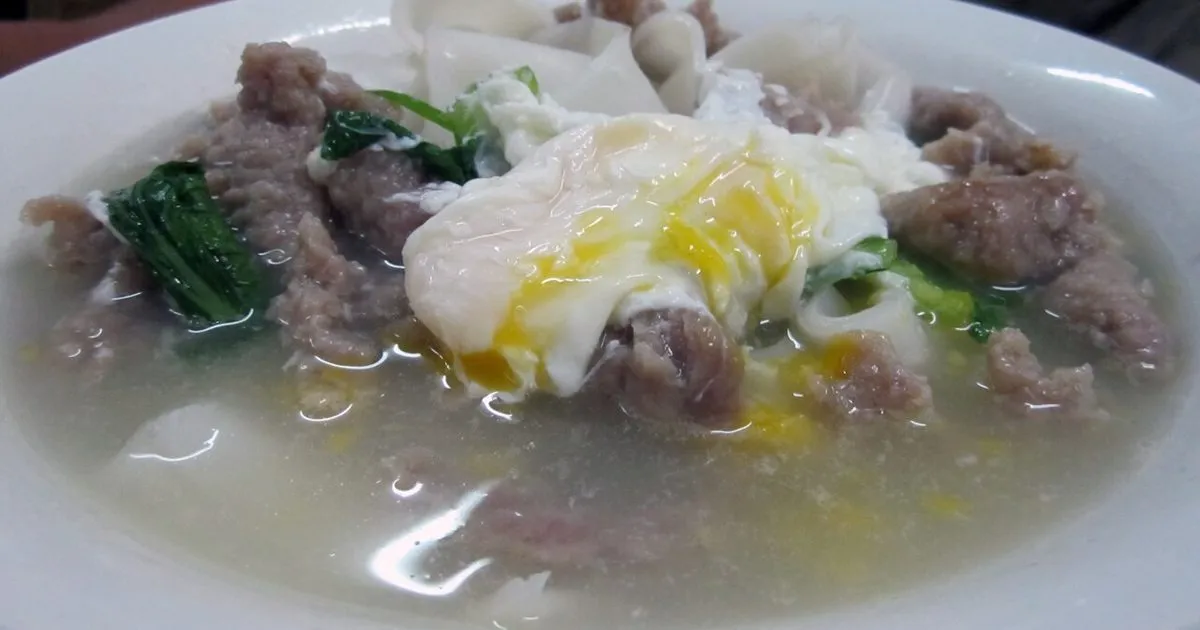
Kyay oh (pronounced roughly “cheh-oh”, from the Burmese for copper pot) is the noodle soup of Yangon Chinatown. A clear pork bone broth, peppered with white pepper instead of heat, holds slim rice noodles, marble-size pork meatballs, slices of loin, wilted greens, and one barely set egg with a yolk that runs into the broth when you break it. A spoonful of garlic oil on top and a dip of tomato and green chili on the side, and you have one of Southeast Asia’s most satisfying bowls.
The dish built its fame in the tea shops and night stalls of Rangoon. The first dedicated kyay oh restaurant, Kyay Oh Bayin, opened in 1968, and the YKKO chain followed in 1988. Today YKKO runs dozens of outlets and the bowl is a national comfort food, eaten for breakfast, lunch, or a late night cure. Most Burmese cooks agree it tastes best from a professional pot, but a patient home cook can get remarkably close.
This version stays true to the street style: clean bones, a bare simmer, white pepper as the only heat, and an egg poached in the broth at the very end. Nothing about it is complicated. It just asks for two hours and a little restraint.
Key Takeaways
- Clarity is the goal: blanch the bones and keep a bare simmer so the broth stays clean and peppery.
- White pepper, not black: the gentle, warm heat of white pepper is the signature of the dish.
- Small meatballs: marble-size pork meatballs poach right in the broth, no browning needed.
- The egg goes last: one barely set egg per bowl, cooked in the hot broth until the yolk jiggles.
- Two condiments matter: garlic oil on top, tomato and green chili dip on the side.
How to Make Kyay Oh
-
Make the garlic oil. Warm 1/3 cup (80 ml) neutral oil in a small pan over low heat. Add the minced garlic and fry, stirring, until it turns the palest gold, about 3 to 4 minutes. The garlic keeps cooking in the hot oil, so pull it off the heat a shade early. Brown garlic turns bitter, and this oil is the soul of the bowl.
-
Blanch the bones. Blanch the bones first: put them in a large pot, cover with cold water, and bring to a boil. Let them roll for 3 minutes, then drain and rinse them well under cold water. This forces out the blood and scum that would cloud the broth.
-
Simmer the broth. Return the bones to the pot with 2.5 qt (2.5 L) fresh water, the smashed garlic, ginger, onion, and cracked white peppercorns. Bring to a boil, then drop to a bare simmer, a lazy bubble or two per second. Cook for 90 minutes, skimming foam now and then. Stir in the soy sauce and salt, strain the broth, and keep it warm over low heat.
-
Season the pork. Mix the ground pork with the cornstarch, ground white pepper, and 1 tbsp of the soy sauce. Roll the mixture into marble-size meatballs, about 1 inch (2.5 cm) across. Toss the sliced pork loin with the remaining half tablespoon of soy sauce and leave it at room temperature.
-
Poach the meat. Bring the strained broth to a gentle simmer and slide in the meatballs. Cook for 4 minutes, then add the sliced pork loin and cook 2 minutes more. The slices are thin enough to turn opaque in moments.
-
Poach the eggs. Lower the heat until the broth is barely moving. Crack an egg into each serving bowl area of the pot, or poach them directly in the broth. Cover and cook about 3 minutes, until the whites are set and the yolks still jiggle when the pot moves.
-
Assemble and serve. Bring a separate pot of water to a boil and blanch the rice vermicelli until just tender, about 1 minute (4 to 5 minutes for flat rice noodles). Drain and divide among 4 bowls. Drop the greens into the hot broth for about 30 seconds until they wilt, then nestle them in the bowls. Ladle the broth, meatballs, and pork over the noodles. Top each bowl with one egg, a spoonful of garlic oil, sliced scallions, and a pinch of white pepper. Serve with fish sauce, chili flakes, and the tomato-green chili dip on the side.
Ingredients
Broth
- 1.5 lb (700 g) pork neck or leg bones, cracked
- 2.5 qt (2.5 L) cold water, plus more for blanching
- 6 garlic cloves, smashed, skins on
- 1 (2-inch / 5 cm) piece fresh ginger, sliced
- 1 small onion, halved, unpeeled
- 1 tbsp whole white peppercorns, lightly cracked
- 2 tbsp soy sauce
- 1 tsp kosher salt, plus more to taste
Pork and meatballs
- 1 lb (450 g) ground pork
- 8 oz (225 g) pork loin, sliced paper thin
- 2 tsp cornstarch
- 1 tsp ground white pepper
- 1.5 tbsp soy sauce, divided
Noodles and assembly
- 12 oz (340 g) rice vermicelli or flat rice noodles
- 4 large eggs
- 4 leaves bok choy or other leafy green, halved
- 4 garlic cloves, minced, for the garlic oil
- 1/3 cup (80 ml) neutral oil
- 4 scallions, sliced thin
- Ground white pepper, chili flakes, and fish sauce, for the table
- 1 roma tomato and 1 green chili, diced with a pinch of salt (optional dip)
What Is Kyay Oh?
Kyay oh (ကြေးအိုး) literally means “copper pot”, a nod to the traditional copper vessels the soup was cooked and served in. It is a noodle soup of pork, egg, and rice noodles in a clear broth, and it sits at the heart of Burmese street food alongside mohinga and Shan noodles.
What sets it apart from other Southeast Asian noodle soups is restraint. There is no lemongrass and no heavy spice paste. The broth is built from pork bones, garlic, ginger, onion, and a serious amount of white pepper, and it stays clean because the bones are blanched first and the pot never boils hard. The toppings do the work: small tender meatballs, thin slices of pork loin, a barely set egg, and a drizzle of garlic oil.
The dish is also inseparable from its condiments. Every table gets a dip of diced tomato, green chili, and salt, plus garlic oil, chili flakes, and fish sauce so each eater can season their own bowl. Ordering kyay oh in Yangon means a hot copper pot, a basket of condiments, and a lot of decisions.
The dry version: kyay oh si chat
Kyay oh also comes “dry”. Kyay oh si chat (sometimes written si chet) swaps the broth for a toss of noodles, meatballs, and greens in garlic oil, finished with fried garlic and spring onion. It is essentially the same pork and egg pairing on a plate instead of in a bowl. Dry versions of dishes show up all over the region, and this one is worth a try if you want the flavors without the long simmer.
How it relates to other meatball noodle soups
Kyay oh belongs to a family of Southeast Asian bowls built on meatballs and clear broth. Vietnamese beef pho with meatballs shares the noodle-and-meatball backbone, and Thai boat noodles with pork meatballs lean on the same pork-heavy, peppery broth idea. For another Indonesian-style meatball soup with a completely different personality, try bakso. And if you want more Burmese, the turmeric-heavy athar lone hin curry shows how differently the country treats pork meatballs in a sauce.
Tips for a Clean, Peppery Broth
- Blanch, then rinse. The 3-minute boil and rinse removes the scum that clouds the broth. Skipping it is the one shortcut that visibly hurts the final bowl.
- White pepper is non-negotiable. Black pepper brings a different, sharper heat. White pepper gives kyay oh its warm, woody signature. Crack whole white peppercorns for the broth and use ground white pepper in the meatballs.
- Never let it roll. A bare simmer keeps the fat emulsified out of the liquid. If the broth boils hard, it turns milky and greasy.
- Stop the egg early. The yolk should jiggle when you pull the pot off. It finishes cooking in the hot broth in the bowl. Overcooked yolks are the most common home mistake.
- Garlic oil, made fresh. Make it the same day. Stored garlic oil turns stale, and stale oil is a whole different bowl.
Variations
- Chicken kyay oh. Swap the pork bones for chicken carcass and wings, and the pork for chicken thighs. The broth simmers in about 45 minutes and tastes lighter. Ground chicken needs a touch more cornstarch to hold its meatballs.
- Fish kyay oh. A coastal Burmese version uses fish balls and a fish-based broth. If you have access to good fish balls, this is a 30-minute bowl.
- Weeknight shortcut. Use 2 qt (2 L) of good store-bought chicken stock, skip the bone simmer, and poach the meatballs right in the stock. You lose some depth, but the white pepper, egg, and garlic oil carry most of the dish.
- Kyay oh si chat (dry). Toss cooked noodles, meatballs, and greens in warm garlic oil with a splash of soy sauce and fish sauce. Top with fried garlic and scallions. No broth, same soul.
Storage
Kyay oh is best eaten the day it is made, but the parts keep separately. Strain and cool the broth, then refrigerate it up to 4 days or freeze it up to 3 months. Store the meatballs and pork in their own container and the noodles dry in the fridge. Reheat the broth gently and assemble fresh bowls as needed. Noodles and eggs do not reheat well, so only cook what you plan to eat.
FAQ
What does kyay oh mean?
Kyay oh (ကြေးအိုး) means “copper pot” in Burmese, named for the copper pots the soup is traditionally cooked and served in.
Is kyay oh spicy?
Not by default. The heat comes from white pepper, which is warm rather than fiery. Chili flakes, green chili dip, and fish sauce are served on the side for eaters to add their own.
Can I use black peppercorns instead of white?
You can, but the character changes. White pepper is the signature of kyay oh, giving it a gentle, woody heat that black pepper cannot match. Seek it out; it is cheap and widely available.
What is kyay oh si chat?
It is the dry version of kyay oh: noodles, meatballs, and greens tossed in garlic oil with soy and fish sauce, topped with fried garlic and spring onion. No broth.
Can I make kyay oh with chicken?
Yes. Chicken kyay oh is a common version, with a lighter broth from chicken bones and ground chicken meatballs with a bit more cornstarch to bind them.
Why is the egg poached in the broth?
The egg is the finish. Poaching it in the hot broth leaves the white set and the yolk runny, so breaking it over the noodles turns the broth rich and golden. That moment is the entire point of the bowl.
Sources
- Kyay oh - Wikipedia
- Kyay oh - TasteAtlas
- Kyay Oh, the Copper-Pot Soup - The Burmese Cookbook
- Kyay Oh - Recipe Roots
Hero photo: Kyay Oh soup by Hintha, CC BY-SA 3.0, via Wikimedia Commons.