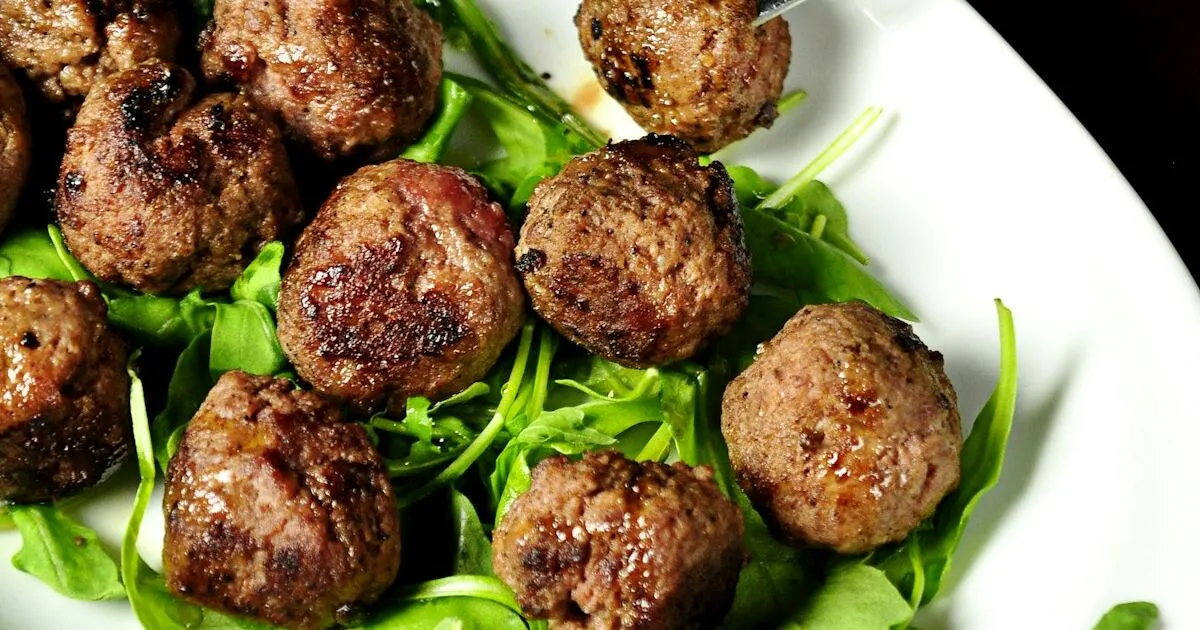
Latvian kotletes are soft, pan-fried meat patties with a golden crust and a tender center. A mixture of beef and pork is loosened with bread soaked in cold broth, then cooked gently under a lid so the patties stay juicy.
This is a traditional Latvian preparation, but not a single fixed formula. Families vary the meat blend, onion, binder, coating, and sauce. This version follows the practical pattern shared by Latvian recipe sources: use soaked bread for a soft texture, fry the kotletes until browned, then finish them covered over low heat.
Serve them as a Baltic-style family dinner with boiled potatoes, dill, sour cream, and a crisp cucumber salad. The recipe makes 12 substantial patties and takes about 45 minutes from start to finish.
Key Takeaways
- Soaked bread gives kotletes a softer interior than dry breadcrumbs alone.
- A beef-and-pork blend adds both structure and richness, though family recipes vary.
- Shape kotletes as thick, flattened ovals, not thin burgers.
- Fry for a golden crust, then finish covered over low heat so the centers cook gently.
- Serve with boiled potatoes, dill, sour cream, and fresh or pickled vegetables.
How to Make Latvian Kotletes
- Soak the bread. Pour the cold beef broth over the crustless bread and let it stand for 5 minutes until the bread falls apart. Mash it into a paste.
- Soften the onion. Cook the diced onion in 1 tablespoon of butter over medium heat for 5 to 6 minutes until soft. Cool for 5 minutes before adding it to the meat.
- Mix gently. In a large bowl, combine the ground pork, ground beef, cooled onion, soaked bread, eggs, salt, and black pepper. Mix just until evenly combined.
- Shape the patties. Divide the mixture into 12 portions. Form each into flattened patties, about 3 inches long and 3/4 inch thick. Wet your hands if the mixture sticks.
- Brown in batches. Heat the remaining butter and oil in a heavy skillet over medium-high heat. Fry the kotletes in batches for 4 to 5 minutes on the first side and 3 to 4 minutes on the second side, until golden brown. Transfer them to a plate.
- Cover and cook. Reduce the heat to low, add 1 cup of water, and cover and cook for 12 to 15 minutes until the centers reach 160 F (71 C).
- Serve. Transfer the kotletes to a serving plate. Spoon over the pan juices and serve with boiled potatoes, fresh dill, sour cream, and cucumber salad.
Ingredients
For the Kotletes
- 1 lb (450 g) ground pork
- 1 lb (450 g) ground beef
- 1 medium yellow onion, finely diced
- 3 to 4 slices crustless white bread
- 1 cup (240 ml) cold low-sodium beef broth
- 2 large eggs
- 1 tsp kosher salt
- 1/2 tsp freshly ground black pepper
- 2 tbsp butter, divided
- 2 tbsp neutral oil, for frying
- 1 cup (240 ml) water, for the covered finish
For Serving
- Boiled potatoes
- Fresh dill
- Sour cream
- Cucumber salad or pickled vegetables
- Rye bread, optional
What Are Latvian Kotletes?
Kotletes are Latvian minced-meat patties, also called Latvian rissoles. They are closer to a thick, tender meat patty than to a small round meatball. Traditional Latvian cooking references describe using soaked white bread, liquid such as milk, broth, or water, egg, and onion to keep ground meat dishes tender and cohesive.
The cooking method matters as much as the ingredients. Kotletes are browned in hot fat, then cooked more gently under a lid. This gives them a seared exterior while the trapped steam and a splash of water help the center finish without drying out.
There is plenty of room for family preference. Latvian sources describe beef, pork, veal, or lamb versions, and variations that use grated potato, oats, flour, bacon, herbs, or a breadcrumb coating. Treat this recipe as a reliable home version, not the only correct one.
Latvian Kotletes vs Other Baltic Meatballs
Latvian kotletes can look similar to Lithuanian kotletai or Estonian lihapallid, but the preparations are not interchangeable.
| Dish | Typical shape | Defining technique or flavor | Common serving style |
|---|---|---|---|
| Latvian kotletes | Thick, flattened oval patties | Soaked bread and a covered finish | Potatoes, sour cream, salad |
| Lithuanian kotletai | Slightly flattened ovals | Milk-soaked bread and an optional braise | Mashed potatoes, buckwheat, sauerkraut |
| Estonian lihapallid | Small round meatballs | Allspice, marjoram, and mushroom gravy | Boiled potatoes and lingonberry jam |
For another Baltic recipe using a milk-soaked bread panade, try these Lithuanian kotletai. Our Estonian lihapallid take the dish in a smaller, allspice-seasoned direction.
Tips for Tender Kotletes
- Do not overmix. Stop when the ingredients are evenly distributed. Heavy mixing can make the patties dense.
- Use cold broth. Cold liquid keeps the mixture manageable and prevents the eggs from beginning to set before cooking.
- Do not make them too thin. A thin patty loses moisture quickly. Aim for about 3/4 inch thickness.
- Leave the pan alone while the first side browns. Moving the kotletes too early can tear the crust and make flipping difficult.
- Do not crowd the skillet. Work in two or three batches so the patties fry instead of steam.
- Keep the sauce simple. A spoonful of sour cream on the side is enough. A mushroom cream sauce is a good optional variation, not a requirement for every Latvian kotlete.
- Check the center. Ground meat should reach 160 F (71 C). Test the thickest patty with an instant-read thermometer.
Variations
Beef or Pork Kotletes
Use all pork for a richer, softer patty, or all beef for a firmer result. A beef-and-pork blend is a practical middle ground. Fat content varies, so adjust the amount of broth only if the bread mixture is unusually wet.
Sour Cream Pan Sauce
After transferring the cooked kotletes to a plate, add a splash of water or broth to the skillet and scrape up the browned bits. Remove the pan from the heat, stir a little of the liquid into sour cream, then return it to the skillet and warm gently. Do not boil the sour cream.
Mushroom Gravy
Sauté sliced mushrooms in the same skillet, add broth, and thicken the liquid with a small flour or cornstarch slurry. Finish with cream or sour cream. The mushroom version is a useful family-style variation when you want extra sauce for potatoes.
Breadcrumb-Coated Kotletes
Roll the shaped patties in fine breadcrumbs before frying for a crisper exterior. This changes the texture but fits the wider family of Latvian kotletes variations documented by Latvian cooks.
What to Serve with Latvian Kotletes
The classic plate is deliberately simple:
- Boiled potatoes with butter and fresh dill
- Sour cream for a cool, tangy contrast
- Cucumber salad with dill, or pickled vegetables
- Rye bread for catching the pan juices
- Mushroom cream sauce when you want a more substantial gravy
The combination of hot kotletes, creamy sour cream, potatoes, and something crisp or pickled gives the meal contrast without masking the meat and onion flavor. For more allspice-seasoned comfort food, compare it with Finnish lihapullat or Polish klopsiki in dill sauce.
Storage and Reheating
Store cooked kotletes in an airtight container in the refrigerator for 3 to 4 days. Keep any sour cream or salad separate.
To reheat, place the patties in a covered skillet with a splash of water or broth and warm over medium-low heat for 5 to 7 minutes. The covered pan restores moisture better than high microwave heat.
To freeze, arrange cooled kotletes in a single layer until firm, then transfer them to a freezer container. Freeze for up to 3 months. Reheat from frozen in a covered pan with a splash of water, or thaw overnight in the refrigerator first.
Frequently Asked Questions
What are Latvian kotletes?
Latvian kotletes are seasoned minced-meat patties made with ingredients such as beef or pork, onion, egg, and soaked bread. They are usually shaped into thick ovals, pan-fried until browned, and finished gently under a lid. They are commonly served with potatoes, sour cream, and vegetables.
Are kotletes meatballs or meat patties?
Both descriptions are understandable, but meat patties is more precise. Kotletes are generally larger and flatter than round meatballs. Their soaked bread panade and covered cooking finish create a soft, juicy texture that is different from a thin hamburger patty.
What meat is used in Latvian kotletes?
Beef and pork are both used, either separately or in a blend. Family recipes vary, and Latvian cooking sources also describe veal and lamb versions. Pork adds richness, while beef gives the patties a firmer bite. Choose ground meat with enough fat to stay moist.
Why do you soak bread for kotletes?
Soaked bread distributes moisture through the meat mixture and helps keep the patties tender as they cook. It also acts as a binder with the egg. Mash the soaked bread into a paste and mix gently so the finished kotletes stay soft rather than dense.
What do you serve with Latvian kotletes?
Serve kotletes with boiled potatoes, fresh dill, sour cream, cucumber salad, pickled vegetables, or rye bread. A mushroom cream sauce is an optional variation. The best sides add coolness, acidity, or starch without competing with the browned meat patties.
Can I bake Latvian kotletes?
Yes, but baking gives them less crust than pan-frying. Shape the patties on a lightly oiled sheet and bake at 400 F (200 C) until the centers reach 160 F (71 C), turning once for more even browning. The covered skillet method gives the softest traditional-style result.
Sources
- Latvian Eats: Latvian Rissoles (Kotletes)
- Latvians.com: Authentic Kotletes (Latvian Ground Meat Patties)
- The Lavender Apron: Traditional Latvian Kotletes Recipe
- USDA FSIS: Safe Minimum Internal Temperature for Ground Meat
- Latvian Kotletes - Juicy Pork Meat Patties
Related Recipes
- Lithuanian Kotletai - Milk-soaked pork meatballs with allspice
- Estonian Lihapallid - Small meatballs with marjoram and mushroom gravy
- Finnish Lihapullat - Allspice-seasoned meatballs with brown sauce
- Polish Klopsiki in Dill Sauce - Tender meatballs in a creamy dill sauce
- Balkan Meatball Recipes - Grilled and pan-fried meatballs from the region