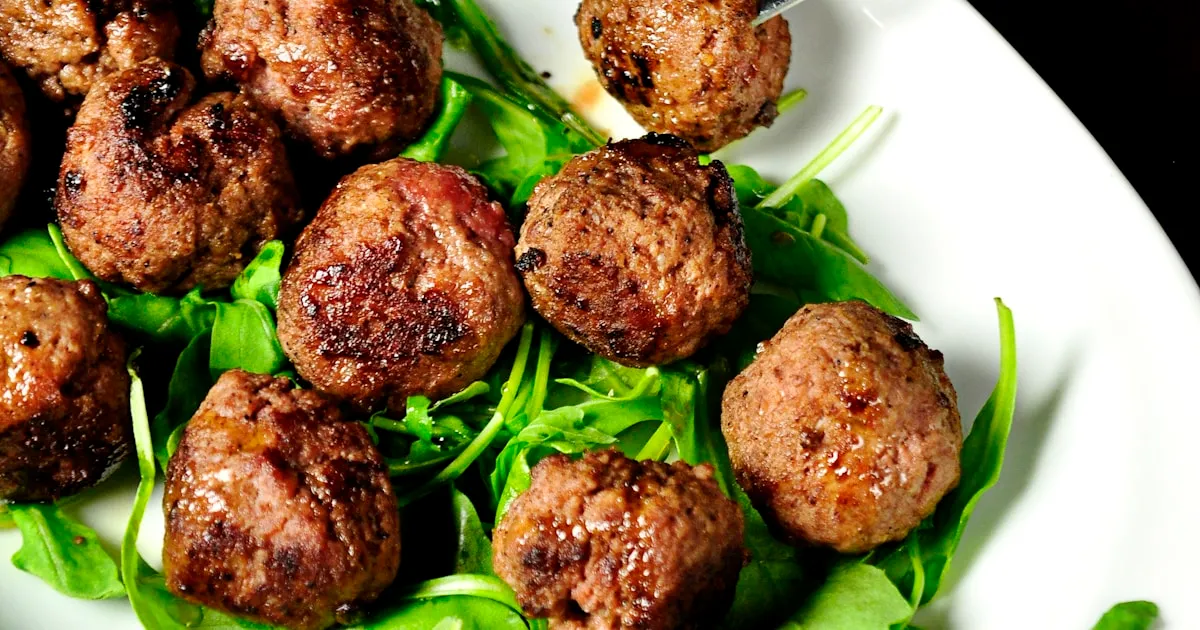
Czech Karbanátky (singular: karbanátek) are pan-fried meatballs made from a blend of ground beef and pork, seasoned with marjoram and caraway seeds, coated in breadcrumbs, and fried in pork lard until golden and crispy. They are one of the most iconic dishes in Czech home cooking - the Central European answer to the hamburger, rooted in Bohemian pub culture since the 19th century.
Unlike Italian meatballs simmered in sauce or Swedish meatballs served in cream gravy, karbanátky are cooked entirely in a skillet and served dry with a sharp mustard on the side. The flavor profile is distinctly Central European: earthy marjoram, warm caraway, plenty of garlic, and a breadcrumb crust that shatters on the first bite.
How to Make Czech Karbanátky
-
Soak the bread. Place stale white bread cubes in a bowl. Pour cold milk over them and press down until fully submerged. Let soak 5 minutes until soft. Squeeze out excess milk and mash into a paste with a fork. This panade binds the patties and keeps them moist during frying.
-
Cook the onion. Heat 1 tbsp pork lard in a small skillet over medium heat. Sauté finely diced onion for 3 to 4 minutes until softened and translucent. Set aside to cool slightly. Raw onion releases moisture during cooking and can cause the patties to crumble.
-
Mix the meat. In a large bowl, combine ground beef, ground pork, soaked bread paste, cooled onion, egg, Dijon mustard, marjoram, caraway seeds, salt, and pepper. Use your hands and mix only until everything is evenly distributed. Do not over-mix - over-working the meat develops myosin and makes the patties dense and rubbery.
-
Shape into patties. Divide the mixture into 12 to 14 equal portions. Shape each into a flat oval patty about 1/2 inch thick. Place on a plate and coat all sides in breadcrumbs, pressing gently to adhere. The breadcrumb crust is the signature texture of karbanátky.
-
Pan-fry. Heat 2 tbsp pork lard or vegetable oil in a large heavy skillet over medium heat. Lay patties in a single layer without crowding. Cook 3 to 4 minutes per side until deep golden brown with a crisp crust. Work in two batches if your skillet is not large enough.
-
Rest and serve. Transfer to a wire rack or paper towel-lined plate for 2 minutes. Serve hot with boiled potatoes, a dollop of mustard, and a side of pickled cucumber.
Ingredients
- 1/2 lb (225 g) ground beef, 80/20
- 1/2 lb (225 g) ground pork
- 1 cup cold whole milk
- 3 slices stale white bread, cut into 1-inch cubes
- 1 medium onion, finely diced
- 3 cloves garlic, minced
- 1 large egg
- 1 tbsp Dijon mustard
- 1 tbsp dried marjoram (or 2 tbsp fresh marjoram leaves, chopped)
- 1/2 tsp caraway seeds, lightly crushed
- 1 tsp kosher salt
- 1/2 tsp black pepper
- 1 cup plain breadcrumbs (for coating)
- 3 tbsp pork lard or vegetable oil (for frying)
Marjoram and Caraway: The Czech Flavor Signature
What makes karbanátky taste distinctly Czech rather than German or Scandinavian is the combination of marjoram and caraway. Marjoram is the defining herb - earthy, slightly floral, and herbaceous. It is the spice that separates Czech meat dishes from their neighbors. Caraway seeds add a warm, anise-like undertone that is common in Czech cuisine but less prominent in German or Austrian cooking.
If you have never cooked with dried marjoram before, this is the recipe to try it. It pairs beautifully with pork and adds the aroma found in traditional Czech sausage and sekaná (meatloaf).
Karbanátky vs Frikadellen vs Cevapcici
The same basic concept - seasoned ground meat, shaped and pan-fried - appears across Central and Eastern Europe:
- Karbanátky (Czech) - beef-pork blend, marjoram and caraway, breadcrumb coating, pan-fried.
- Frikadellen (German) - beef-pork blend, marjoram and parsley, breadcrumb coating, pan-fried. See our German Frikadellen recipe for the closely related German version.
- Cevapcici (Balkan) - beef-lamb blend, no breadcrumb coating, formed into finger-length sausages, grilled. See our Serbian Cevapi recipe.
- Frikadeller (Danish) - pork-veal blend, allspice and dill, no breadcrumb coating, pan-fried. See our Danish Frikadeller recipe.
Karbanátky are most similar to German Frikadellen. The main differences: karbanátky always include caraway seeds, and the breadcrumb coating is pressed onto the outside rather than mixed into the meat.
Serving Suggestions
- Classic Czech: With boiled potatoes (vařené brambory), a dollop of sharp yellow mustard, and a pickled cucumber (kvašená okurka).
- Pub style: With Czech potato salát (potato salad with pickles, onion, and a creamy dressing).
- Cold lunch: Leftover karbanátky on dark rye bread with mustard and sliced pickles - a classic Czech packed lunch.
- Beer pairing: Serve with a cold Czech pilsner (Pilsner Urquell, Staropramen, or Kozel) for the full Bohemian experience.
Refrigerate leftovers up to 4 days. Karbanátky freeze well after cooking - wrap individually in plastic, then place in a freezer bag. Freeze up to 3 months. Reheat in a dry skillet over medium heat to preserve the crispy crust.
Key Takeaways
- Marjoram is the defining spice. Do not skip it - it is what makes karbanátky taste Czech.
- The bread-and-milk panade is essential. It keeps the lean meat juicy during frying.
- Keep the mixture cold throughout preparation. Warm fat separates from the lean meat and causes patties to fall apart.
- Coat the outside in breadcrumbs for the signature crispy crust.
- Serve hot with boiled potatoes and mustard. Leftovers make excellent sandwich fillings.
FAQ
What is the difference between karbanátky and frikadellen?
Karbanátky and frikadellen are nearly identical - both are pan-fried beef-pork patties with marjoram. The key differences: karbanátky always include caraway seeds, while frikadellen use nutmeg and parsley. Karbanátky coat the outside in breadcrumbs, while frikadellen sometimes mix breadcrumbs into the meat. See our German Frikadellen recipe for comparison.
Can I use only beef or only pork?
All-beef karbanátky work well with 80/20 ground beef. All-pork works too. The traditional blend is half and half for the best balance of flavor and moisture. Pure beef will be drier; pure pork will be fattier. The 1:1 ratio is the sweet spot.
Why did my karbanátky fall apart in the pan?
Most likely the panade was too dry, the onion was not cooked first, or the mixture warmed up during preparation. Ensure the bread is fully soaked and mashed to a paste. Sautéing the onion removes raw moisture. Keep the mixture cold and chill shaped patties 10 minutes before frying if your kitchen is warm.
What is pork lard and can I substitute it?
Pork lard (sádlo) is rendered pork fat, the traditional Czech frying medium. It adds flavor and produces a crispier crust than oil. If you do not have lard, use butter mixed with a neutral oil, or just vegetable oil. The flavor will be slightly different but still good.
How do I know when they are cooked through?
A 1/2 inch thick patty needs about 3 to 4 minutes per side over medium heat. The internal temperature should reach 160F (71C) for the beef-pork blend. Cut one open to check if you are unsure.
Sources
- https://www.cooklikeczechs.com/karbanatek-recipe/
- https://czechcookbook.com/fried-meatballs-karbanatky/
- https://www.196flavors.com/czech-republic-karbanatky/
- https://praguehints.com/karbanatek-czech-meat-patty/
- https://www.tasteatlas.com/karbanatky
Related Posts
- German Frikadellen: Pan-Fried Meat Patties - The closest German cousin, with marjoram and mustard.
- Danish Frikadeller Meatballs - The Scandinavian version with allspice and dill.
- Austrian Faschierte Laibchen - Viennese meat patties with marjoram and breadcrumb coating.
- Hungarian Paprika Meatballs - Creamy paprika sour cream sauce, Central European comfort.
- Central European Meatball Recipes - All Central European-style meatball recipes.