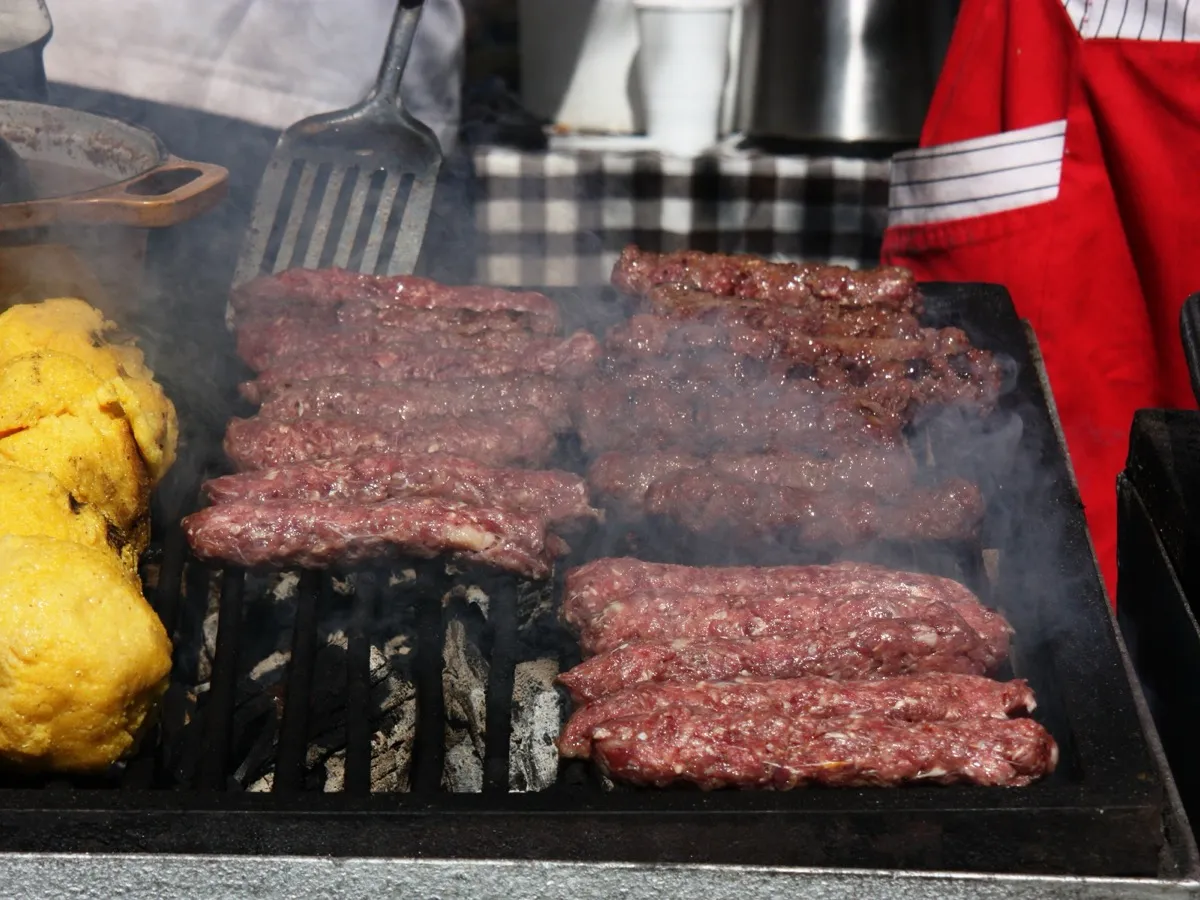
Romanian mititei (also called mici) are grilled skinless sausages made from a blend of ground beef, pork, and lamb, seasoned with garlic and warm spices, then cooked over high heat until charred and juicy. They are Romania’s most beloved street food - found at every backyard barbecue, festival, and corner grill stand across the country.
If you enjoy Balkan grilled meats, you already know Serbian cevapi and Bulgarian kufteta. Mititei share the same DNA - skinless, spiced, grilled over high heat - but stand apart with their bouncy texture from baking soda and a warm spice blend heavy on anise and coriander. The name means “little ones” in Romanian, and the recipe is simpler than you think - no casings, no special equipment, just ground meat, spices, and a hot grill.
Key Takeaways
- Baking soda is the secret. It creates the springy, bouncy texture that separates real mititei from plain meatballs. Skip it and you lose the defining characteristic.
- Three meats, not one. The classic blend is beef, pork, and lamb. Beef gives structure, pork adds fat and moisture, lamb brings depth. Use all beef if lamb is unavailable.
- Rest the mixture overnight. The baking soda needs time to work. A minimum of 1 hour; overnight in the fridge is best for texture.
- Grill hot and fast. 4 to 5 minutes per side over medium-high heat. The char is essential to the flavor.
- Serve with mustard and bread. Yellow mustard is the traditional accompaniment. No sauce, no sides needed.
How to Make Romanian Mititei (Mici)
- Combine the meat and spices. In a large bowl, add the ground beef, pork, and lamb (if using). Add the minced garlic, baking soda, sparkling water, paprika, thyme, coriander, anise, black pepper, and salt.
Ingredients
-
- “1 lb (450 g) ground beef, 80/20”
- “1/2 lb (225 g) ground pork”
- “1/2 lb (225 g) ground lamb (optional - substitute more beef or pork)”
- “4 cloves garlic, minced”
- “1 tsp baking soda”
- “2 tbsp sparkling water or cold beef broth”
- “1 tsp sweet paprika”
- “1 tsp dried thyme”
- “1 tsp ground coriander”
- “1/2 tsp ground anise”
- “1 tsp freshly ground black pepper”
- “1 1/2 tsp kosher salt”
- “1 tbsp vegetable oil, for grilling”
- “Yellow mustard, for serving”
- “Crusty bread, for serving”
- Mix until sticky. Work the mixture with your hands for 2 to 3 minutes until it becomes cohesive and pulls away from the bowl. The baking soda and mixing time develop the springy texture. (See prep hint: Mix until sticky)
- Refrigerate. Cover the bowl and rest for at least 1 hour, or overnight. The baking soda needs time to tenderize the meat and create the bouncy bite. (See prep hint: Baking soda)
- Shape the mititei. Wet your hands lightly and roll the mixture into short cylindrical rolls about 3 inches (7 cm) long and 3/4 inch (2 cm) thick. You should get about 20 pieces.
- Grill over high heat. Preheat a grill or cast iron skillet to medium-high. Brush with oil. Grill the mititei for 4 to 5 minutes per side, turning once, until deeply browned with char marks and cooked through to 160F (71C). Work in batches to avoid crowding.
- Serve immediately. Plate with plenty of yellow mustard and crusty bread. A cold beer completes the experience.
Why Baking Soda Makes Mititei Different
Most meatball traditions rely on binders like eggs, breadcrumbs, or panade to hold the mixture together. Mititei take a different approach. Baking soda raises the pH of the meat surface, which loosens the protein bonds just enough to create a springy, almost snappy texture when cooked. This is the same principle behind Chinese lion’s head meatballs and Japanese tsukune - the alkaline environment changes how proteins set during cooking.
Without the baking soda, mititei taste fine but feel like regular meatballs. With it, they develop the bouncy, juicy bite that Romanians recognize instantly. The sparkling water adds carbonation that helps distribute the baking soda evenly and creates tiny air pockets for a lighter texture.
The Spice Blend
Mititei use a specific combination of warm spices that sets them apart from other Balkan grilled meats:
- Garlic - generous, always fresh, never powdered
- Thyme - earthy and slightly floral
- Coriander - warm and citrusy
- Anise - subtle licorice note that rounds out the flavor
- Sweet paprika - color and mild sweetness
- Black pepper - sharp heat
Some families add a pinch of cumin or savory (cimbru), but the core blend above is standard across Romania. The spices are mixed directly into the meat, not toasted or bloomed - simplicity is the point.
Serving Mititei the Traditional Way
In Romania, mititei are never served alone. The non-negotiable accompaniments are:
- Yellow mustard - a generous squeeze on top or on the side
- Crusty bread - for soaking up juices and making impromptu sandwiches
- Cold beer - the only acceptable drink pairing
At street food stands and festivals, you will see mititei piled on paper plates with mustard smeared across the top. At backyard barbecues, they come off the grill straight into waiting hands. No fancy plating, no garnishes - just meat, mustard, and bread.
Mititei vs Cevapi vs Kufteta
These three Balkan grilled meat traditions share DNA but differ in key ways:
| Feature | Mititei (Romanian) | Cevapi (Bosnian/Serbian) | Kufteta (Bulgarian) |
|---|---|---|---|
| Shape | Short cylinders | Finger-length sausages | Flat patties |
| Meat | Beef, pork, lamb | Beef, lamb | Pork or pork-beef |
| Texture secret | Baking soda | Baking soda + mixing | Egg binder |
| Shape | Thick rolls | Thin, elongated | Flat, round |
| Key spice | Anise, coriander | Paprika | Cumin, chubritsa |
| Serving | Mustard + bread | Somun + onions + ajvar | Shopska salad + bread |
The baking soda connection between mititei and cevapi is no coincidence - both traditions share Ottoman roots and centuries of culinary exchange across the Balkans. For more Balkan grilled meat traditions, explore the Balkan meatballs curation.
Tips for Perfect Mititei
- Use fresh garlic. Powdered garlic does not deliver the same punch. Mince it fine or press it.
- Do not skip the rest. Even 1 hour makes a difference. Overnight is better. The baking soda needs time to work on the proteins.
- Wet your hands when shaping. The mixture is sticky. Wet hands prevent it from clinging to your fingers.
- Grill in batches. Crowding the pan drops the temperature and steams the meat instead of charring it. Leave space between each mititei.
- Do not press them down. Like burgers, pressing squeezes out juices and dries the meat.
- Serve hot off the grill. Mititei are best immediately. They firm up as they cool and lose their bouncy texture.
Storage and Reheating
Mititei freeze well. Shape the raw mixture into rolls, freeze on a baking sheet, then transfer to a freezer bag. They keep for up to 3 months. Grill directly from frozen, adding 2 to 3 minutes per side.
For leftover cooked mititei, reheat in a skillet over medium heat for 2 to 3 minutes per side. The microwave works in a pinch but softens the char.
For more on meatball technique - mixing, binding, internal temperature - see the how to make meatballs guide.
FAQ
What does mititei mean in English?
Mititei means “little ones” in Romanian. The name refers to the small, short shape of the grilled meat rolls. They are also called mici, which means “small” - both names describe the same dish.
Are mititei the same as cevapi?
Mititei and cevapi share Ottoman roots and both use baking soda for texture, but they differ in shape, spice blend, and serving style. Mititei are thicker, shorter cylinders spiced with anise and coriander, served with mustard. Cevapi are thinner, longer sausages spiced with paprika, served in somun bread with onions and ajvar.
Can I make mititei without lamb?
Yes. The classic recipe uses beef, pork, and lamb, but many Romanians use just beef and pork. Lamb adds depth but is not essential. Use a 60/40 beef-to-pork ratio for the best balance of flavor and fat.
Why are my mititei not bouncy?
The most common reason is skipping the baking soda or not resting the mixture long enough. Baking soda needs at least 1 hour to work on the proteins. Also, mix the meat thoroughly for 2 to 3 minutes - this develops the myosin that gives mititei their snappy bite.
What do Romanians serve with mititei?
Yellow mustard and crusty bread are the mandatory accompaniments. At barbecues, you will also see raw onions, pickled peppers, and a cold beer. No sauce or dipping required.
Can I cook mititei without a grill?
Yes. A cast iron skillet over medium-high heat works well. Preheat the pan until very hot, add a thin layer of oil, and cook the mititei for 4 to 5 minutes per side. You will not get the smoky charcoal flavor, but the char and texture will be close.