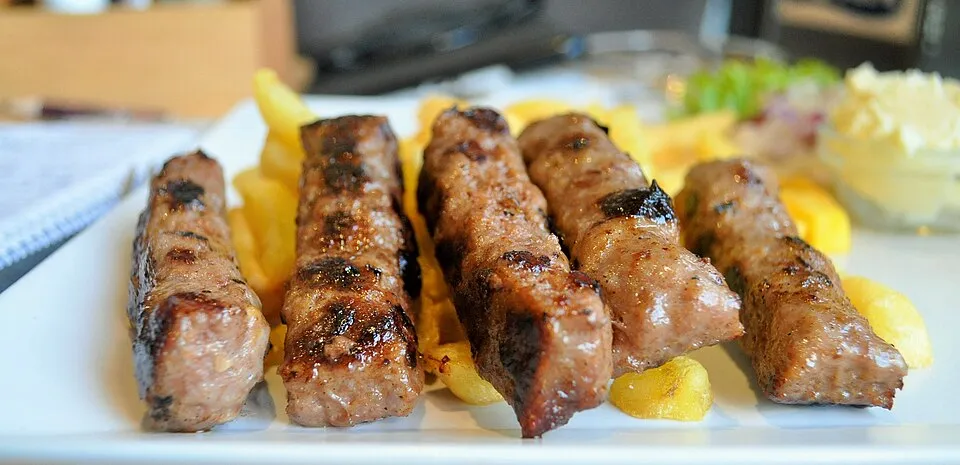
Cevapi (pronounced CHAE-vap) are the Balkans’ greatest grilled meat tradition - skinless, finger-length sausages made from just a few ingredients and cooked over fierce charcoal heat. Found everywhere from Sarajevo’s old bazaar to Belgrade’s backyard grills, these simple meat packs deliver more flavor per bite than almost any other ground meat dish on the planet.
Prep time: 15 minutes. Cook time: 10 minutes. Resting time: 1 hour minimum. Servings: 4 (about 20 cevapi).
Key Takeaways
- Baking soda is the secret. It creates the springy, bouncy texture that separates real cevapi from generic mini-kebabs. Skip it and you get a burger-like texture.
- Beef and lamb is the classic blend. Bosnian versions use all beef; Serbian styles often add lamb or pork. The beef-lamb combo gives the richest flavor.
- Rest the meat overnight. The baking soda and cold rest allow proteins to bind, producing that signature snappy bite. At minimum, rest 1 hour.
- Grill hot and fast. 3 to 4 minutes per side over medium-high heat. Do not press them down - you will squeeze out the juices.
- Serve in bread, not on a plate. Traditional cevapi go inside warm somun or pita with raw onions, kajmak (clotted cream), and ajvar (roasted pepper relish).
How to Make Serbian Cevapi
- Combine the meat. In a large bowl, mix the ground beef, ground lamb, grated onion, garlic, salt, pepper, paprika, and baking soda. Add the sparkling water and mix thoroughly with your hands for 2 to 3 minutes until the mixture becomes cohesive and sticky.
- Rest the mixture. Cover the bowl and refrigerate for at least 1 hour or up to overnight. The baking soda and rest time create the signature springy texture.
- Shape the cevapi. Wet your hands lightly to prevent sticking. Form the mixture into finger-length sausages about 3/4 inch (2 cm) thick and 3 to 4 inches (8 to 10 cm) long. You should get about 20 cevapi.
- Grill. Preheat a grill or cast-iron skillet to medium-high heat. Oil the grates lightly. Grill the cevapi for 3 to 4 minutes per side, turning once, until deeply browned on the outside and cooked through.
- Serve immediately. Pile the hot cevapi into warm somun or pita bread. Top with chopped raw onions, a smear of kajmak, and a spoonful of ajvar.
Ingredients
- 3/4 lb (340 g) ground beef, 80/20
- 3/4 lb (340 g) ground lamb
- 1 small onion, finely grated
- 3 cloves garlic, minced
- 1 1/2 tsp kosher salt
- 1 tsp freshly ground black pepper
- 1 tsp sweet paprika
- 3/4 tsp baking soda
- 2 tbsp sparkling water
What Are Cevapi?
Cevapi (also spelled cevapcici or ćevapčići) are hand-shaped, case-less sausages that originated in the Balkans during Ottoman rule. The name comes from the Turkish kebab, and the dish spread across Serbia, Bosnia-Herzegovina, Croatia, and North Macedonia over centuries.
Every region has its own version. Sarajevo serves them in portions of 10 inside a split somun flatbread. Banja Luka fuses them in slabs of 4 or 5, pressed together on the grill. Leskovac in southern Serbia adds more pork. But the core idea stays the same: simple ground meat, fierce heat, fresh bread, and sharp raw onion.
The ćevabdžinica (cevapi grill shop) is the Balkan equivalent of a burger joint. Walk through Sarajevo’s Baščaršija old bazaar and the smoke tells you where they are - dozens of shops grilling little finger-length sausages over charcoal, stuffing them into warm bread with a spoonful of kajmak.
Cevapi vs Other Balkan Meatballs
The Balkans have several ground meat traditions. Here is how cevapi compare:
| Dish | Shape | Cooking | Meat | Region |
|---|---|---|---|---|
| Cevapi | Finger-length sausage | Grilled | Beef, lamb, or mix | Serbia, Bosnia |
| Kufteta (Bulgaria) | Flat patty | Grilled | Pork or pork-beef | Bulgaria |
| Kofta (India) | Round ball | Simmered in curry | Beef, lamb, or chicken | South Asia |
| Ćufte (Serbia) | Round ball | Baked in sauce | Beef or pork-beef | Serbia |
The key difference is texture. Cevapi are mixed until sticky and springy (thanks to baking soda and vigorous mixing), while kofta and cufte stay loose and tender. Cevapi are also always grilled, never simmered or baked in sauce.
Tips for Perfect Cevapi
- Use cold meat. Keep the ground beef and lamb in the fridge until you are ready to mix. Cold meat binds better and holds its shape on the grill.
- Grate, do not chop, the onion. You want a wet onion pulp that melts into the meat, not chunky pieces that fall off on the grill.
- Mix longer than you think. The 2 to 3 minutes of hand-mixing develops the protein structure that gives cevapi their snap. Stop when the mixture feels tacky and pulls away from the bowl.
- Do not skip the rest. Even 1 hour in the fridge makes a noticeable difference. Overnight is better. The baking soda needs time to work.
- Oil the grill, not the meat. Brush the grates with a thin layer of oil before adding the cevapi. Brushing oil on the meat can cause flare-ups.
- Turn only once. Let the cevapi develop a crust on one side before flipping. Moving them too early tears the crust and sticks to the grate.
Serving Suggestions
Traditional cevapi are never served alone. The bread, onions, and condiments are part of the dish:
- Somun or lepinje bread. A soft, fluffy Balkan flatbread similar to pita. Warm it on the grill for 30 seconds before stuffing. Pita bread works as a substitute.
- Raw onion. Finely diced white onion, piled on top. The sharp bite cuts through the rich meat.
- Kajmak. A creamy Balkan clotted cream. Sour cream or cream cheese mixed with a little butter is a close substitute.
- Ajvar. A smoky relish made from roasted red peppers and eggplant. Store-bought ajvar is widely available and perfectly fine.
- French fries. In some regions, cevapi are served over a bed of crispy fries inside the bread.
Storage and Make-Ahead
- Fridge: Shape the cevapi and refrigerate uncooked for up to 24 hours before grilling. They actually improve with the longer rest.
- Freezer: Shape, freeze flat on a sheet pan, then bag for up to 3 months. Grill from frozen, adding 1 to 2 minutes per side.
- Leftovers: Cooked cevapi keep in the fridge for 3 to 4 days. Reheat in a hot skillet for 2 minutes per side.
FAQ
What is the difference between cevapi and cevapcici? They are the same dish. Cevapcici is the diminutive form of cevapi, meaning “little cevapi.” The terms are used interchangeably across the Balkans, though some regions prefer one spelling over the other.
Can I make cevapi with beef only? Yes. Bosnian-style cevapi are traditionally made with all beef. Use 80/20 ground beef for the best results. The lamb adds richness but is not required.
Why is baking soda used in cevapi? Baking soda raises the pH of the meat, which helps proteins bind more loosely and creates a springy, bouncy texture. It is the same technique used in Chinese meatballs and Japanese tsukune. Without it, cevapi have a coarser, burger-like texture.
What bread is traditionally served with cevapi? Somun (also called lepinje) is the traditional Bosnian flatbread. It is soft, fluffy, and slightly chewy - perfect for soaking up juices. Warm pita or naan works as a substitute.
How do you pronounce cevapi? CHAE-vap (singular) or CHAE-vap-ee (plural). The C with an accent (ć) sounds like the “ch” in “church.”