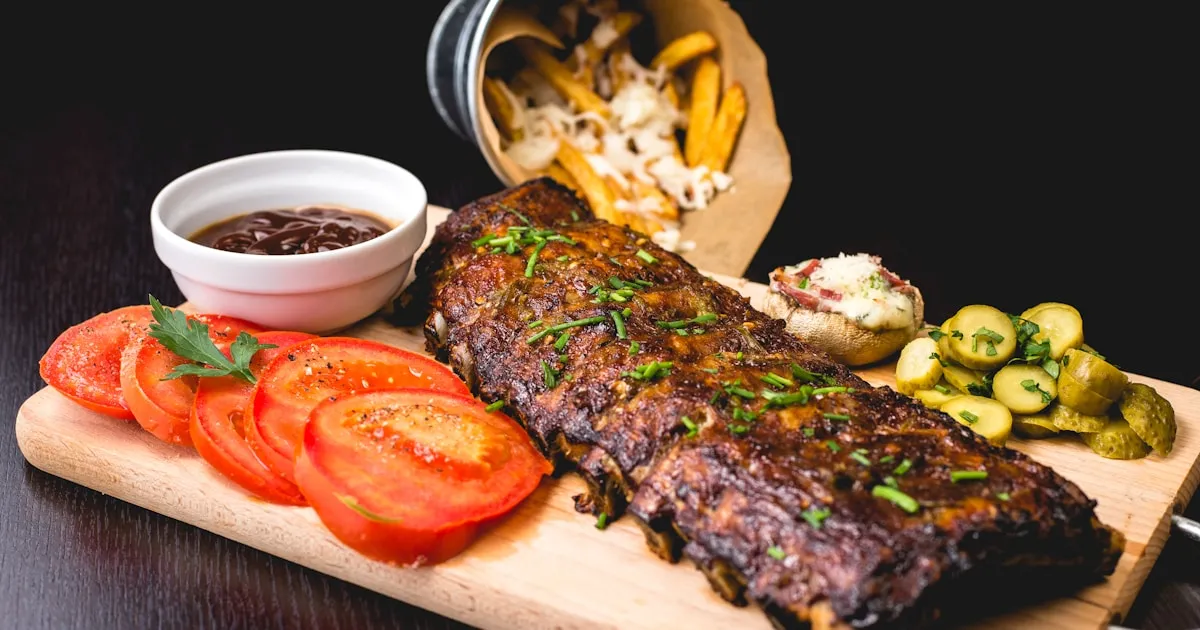
Pljeskavica (pleh-SKAH-vee-tsah) is Serbia’s answer to the hamburger - a wide, flat disc of mixed ground meat grilled over charcoal until the outside is crusted and the inside stays juicy. Found everywhere from Belgrade’s kafanas to roadside grill stalls across the Balkans, this is street food that measures its patties in centimeters, not ounces.
In Leskovac, southern Serbia, the annual Grill Festival features pljeskavica measured in meters. But the home version is simpler: mixed ground meat, a handful of spices, and a screaming-hot grill.
Prep time: 30 minutes (plus 12 hours resting). Cook time: 10 minutes. Servings: 4 large patties.
Key Takeaways
- Three meats, one purpose. Beef gives structure and mineral depth, pork adds fat and sweetness, and a small amount of lamb adds a subtle funk. Two hundred grams of lamb across a kilo is enough to be felt without being identified.
- Coarse grind matters. Ask your butcher for a coarse grind (6 to 8 mm plate), or buy chuck and shoulder and grind it yourself. Fine supermarket mince produces a paste-like texture instead of the juicy, crumbly interior pljeskavica should have.
- Rest overnight. The baking soda and cold rest allow proteins to bind properly. Twelve hours is the minimum; 24 hours is better. Skip the rest and you get a dense, burger-like patty.
- Grill hot and fast. High heat creates the dark crust that defines pljeskavica. Three to 4 minutes per side, then rest for 4 minutes before serving.
How to Make Serbian Pljeskavica
- Prepare the onion. Grate onion on the coarse side of a box grater. Squeeze it hard in a clean kitchen towel over the sink until no more liquid comes out. Discard the liquid and keep the dry pulp.
- Mix the meat. In a wide bowl, combine the ground beef, pork, and lamb. Add the salt, baking soda, black pepper, paprika, onion pulp, and garlic paste. Mix with your hands for 3 to 4 minutes until the mixture becomes cohesive and sticky.
- Add sparkling water. Pour in the chilled sparkling water in three additions, mixing fully between each. The mixture will loosen and turn glossy.
- Rest the meat. Slap the whole mass down into the bowl to knock out air pockets. Cover the surface directly with plastic wrap and refrigerate for at least 12 hours or up to 24.
- Shape the patties. Divide into 4 equal portions of about 250 g each. Wet your hands with cold water and flatten each into a disc 7 to 8 inches (18 to 20 cm) across and no more than 1/2 inch (1 cm) thick. Make the center very slightly thinner than the edge.
- Grill. Preheat a charcoal grill or heavy cast-iron skillet to high heat for 5 minutes. Oil the grates with a cloth. Lay the patties on and leave them alone for 3 to 4 minutes. Turn once with a wide spatula and cook 3 to 4 minutes on the second side, until the surface is crusted dark brown and the center reads 160 F (71 C).
- Rest. Move the patties to a warm plate and rest for 4 minutes. Warm the flatbreads on the cooling grill for 30 seconds per side.
- Serve. Split each flatbread, spread with kajmak, lay the patty inside, and top with diced raw onion and a spoonful of ajvar.
Ingredients
- 1 lb (450 g) ground beef, 20% fat, coarsely ground
- 10 oz (280 g) ground pork shoulder, 25% fat
- 7 oz (200 g) ground lamb shoulder
- 1 medium onion, grated and squeezed dry
- 4 cloves garlic, crushed to a paste with 1/2 tsp salt
- 1 1/2 tsp kosher salt
- 1 tsp baking soda
- 1 tsp coarsely ground black pepper
- 3/4 tsp sweet paprika
- 3 tbsp sparkling water, chilled
- 1 tbsp sunflower oil, for the grill
- 4 lepinja or large pita flatbreads
- 1 large onion, finely diced, for serving
- 4 tbsp ajvar, for serving
- 4 tbsp kajmak or sour cream, for serving
What Makes Pljeskavica Different from a Burger
A pljeskavica looks like a burger but behaves differently. The three-meat blend, coarse grind, baking soda, and overnight rest create a texture that is springy and bouncy rather than dense and crumbly. The wide, thin shape maximizes crust while keeping the center juicy.
The serving style is also distinct. Pljeskavica go inside lepinja - a soft, slightly chewy Balkan flatbread - with kajmak (a creamy clotted cream), ajvar (smoky roasted pepper relish), and raw diced onion. No lettuce, no tomato, no ketchup - just meat, bread, and condiments.
| Feature | Pljeskavica | American Burger |
|---|---|---|
| Meat | Beef, pork, lamb blend | Usually single protein |
| Grind | Coarse (6-8 mm) | Fine to medium |
| Shape | Wide, thin disc | Thick patty |
| Binder | Baking soda + protein development | None or breadcrumbs |
| Rest | 12-24 hours | None to 30 minutes |
| Bread | Lepinja or pita | Bun |
| Toppings | Kajmak, ajvar, raw onion | Lettuce, tomato, cheese |
Tips for Perfect Pljeskavica
- Use cold meat. Keep the ground meat in the fridge until you are ready to mix. Cold fat stays distinct and renders in place during grilling, creating juicy channels inside the patty.
- Squeeze the onion completely. Wet onion liquid makes the mixture too loose. You want dry pulp that melts into the meat during grilling.
- Do not skip the rest. Twelve hours is the minimum. The baking soda needs time to work on the proteins, and the flavors meld during the cold rest.
- Grill over real heat. Pljeskavica need high, direct heat to develop the dark crust. A charcoal grill is ideal. If using a cast-iron skillet, preheat it for 5 minutes on the highest setting.
- Turn only once. Let the patty develop a full crust on the first side before flipping. Moving it too early tears the crust and sticks to the grate.
- Rest before serving. Four minutes of rest allows the juices to redistribute. Cut into it immediately and the juices run out onto the plate.
Pljeskavica Variations
- Leskovac style. From southern Serbia, this version uses more pork and is often stuffed with kajmak or cheese before grilling. The stuffed version is called punjena pljeskavica.
- Gurmanska pljeskavica. The “gourmet” version, typically larger and served with more generous toppings. Some recipes add hot paprika or chili flakes for heat.
- Ćevapi style. Some grill shops shape the same meat mixture into finger-length sausages instead of large patties. The flavor is identical; only the shape changes.
Serving Suggestions
- Classic: Inside warm lepinja with kajmak, ajvar, and raw diced onion.
- With fries: Serve the patty over a bed of crispy fries inside the bread, a popular variation at Balkan grill shops.
- Salad plate: Skip the bread and serve the patty over a dressed salad with sliced tomatoes, cucumbers, and white cheese.
- With urnebes: Add a spoonful of urnebes - a spicy cheese and chili spread - for extra heat.
Storage and Make-Ahead
- Fridge: Shape the patties and refrigerate uncooked for up to 24 hours. They improve with the longer rest.
- Freezer: Shape, freeze flat on a sheet pan, then bag for up to 3 months. Grill from frozen, adding 1 to 2 minutes per side.
- Leftovers: Cooked patties keep in the fridge for 3 to 4 days. Reheat in a hot skillet for 2 minutes per side.
FAQ
What is the difference between pljeskavica and cevapi? Pljeskavica are large, flat patties (7 to 8 inches across) made from a beef-pork-lamb blend. Cevapi are finger-length sausages made from beef and lamb. Both are Balkan grilled meat dishes, but the shape, meat blend, and serving style differ. See our Serbian Cevapi recipe for the sausage version.
Can I make pljeskavica with beef only? Yes. Use 80/20 ground beef for the best results. The pork and lamb add complexity, but a single-meat version still works. Reduce the resting time to 4 to 6 hours since there is less protein diversity to develop.
Why is baking soda used in pljeskavica? Baking soda raises the pH of the meat surface, which helps proteins bind more loosely and creates a springy, bouncy texture. It is the same technique used in Chinese meatballs and Japanese tsukune. Without it, the patty has a denser, burger-like texture.
What bread is traditionally served with pljeskavica? Lepinja (also called lepinja) is the traditional Balkan flatbread - soft, slightly chewy, and perfect for soaking up juices. Warm pita or naan works as a substitute if you cannot find lepinja.
How do you pronounce pljeskavica? Pleh-SKAH-vee-tsah. The “j” sounds like the “y” in “yes,” and the “c” sounds like the “ts” in “tsunami.”
Is pljeskavica the same as a Serbian burger? Pljeskavica is sometimes called the Serbian burger, but the two are different. A pljeskavica uses a specific three-meat blend, coarse grind, baking soda, and overnight rest. A Serbian burger (leskovacka pljeskavica) is a regional variation stuffed with cheese and kajmak.
Related Posts
- Serbian Cevapi: Grilled Balkan Meatballs - Finger-length sausages from the same culinary tradition
- Bulgarian Kufteta: Grilled Meatballs - Flat grilled patties from neighboring Bulgaria
- Albanian Qofte: Grilled Herb Meatballs - Herb-packed grilled meatballs from across the border
- Croatian Cufte: Meatballs in Tomato Sauce - Baked meatballs in tomato sauce
- Best Balkan Meatball Recipes - Our collection of Balkan grilled and baked meat dishes