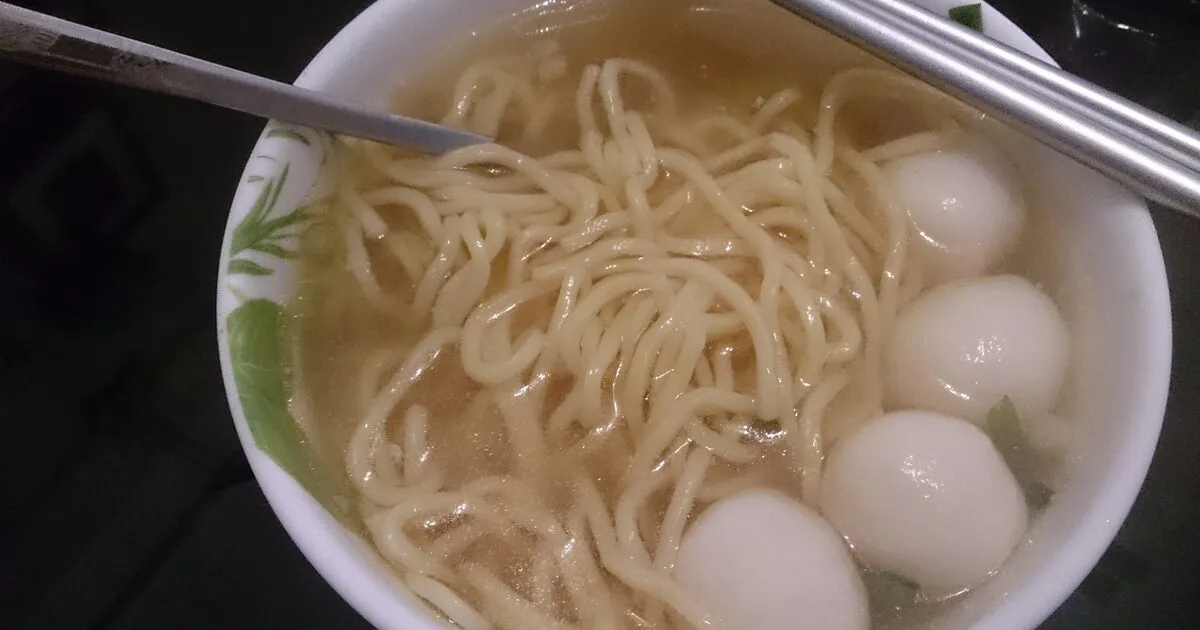
Singapore fish ball noodle soup is a hawker staple built on two things: a clean umami broth and bouncy fish balls. The soup version, called yu wan mian, keeps the noodles in the broth instead of tossing them in a dry chili sauce. It is light, restorative, and ready in about 35 minutes.
The broth is the soul of the bowl. In Singapore it is usually made from dried anchovies (ikan bilis) and dried soy beans, simmered until the water tastes savory without needing much salt. Store-bought fish balls keep the recipe weeknight-fast, and you can upgrade to homemade fish paste when you have time.
Key Takeaways
- Build the broth from ikan bilis. Dried anchovies and soy beans make a clean, savory stock in 20 minutes with almost no effort.
- Blanch noodles separately. Cooking mee pok in the broth turns it cloudy and soft. A quick dip in plain boiling water keeps it springy.
- Float test for fish balls. They are done when they rise to the surface, usually after 5 minutes of simmering.
- Finish with texture. Crispy fried shallots and raw scallions are what make the bowl taste like a hawker stall.
- Use mee pok or any thin noodle. Flat egg noodles are traditional, but wheat, rice, or even udon all work.
How to Make Singapore Fish Ball Noodle Soup
- Make the broth. Bring 8 cups water to a boil with the dried anchovies and soy beans. Lower to a simmer and cook 20 minutes so the stock turns savory and light.
- Season the broth. Strain out the anchovies and beans, then stir in salt, fish sauce, white pepper, and sugar. Keep it at a gentle simmer.
- Cook the fish balls. Drop the fish balls into the broth and simmer 5 minutes, until they float and heat through.
- Blanch the noodles. In a separate pot of boiling water, cook the mee pok 1 to 2 minutes until just tender, then drain.
- Blanch the greens. Add the leafy greens to the noodle water for 30 seconds, then drain with the noodles.
- Assemble the bowls. Divide the noodles and greens among 4 bowls, ladle the hot broth and fish balls on top, and finish with crispy shallots and scallions.
Ingredients
The broth needs only pantry items. Fish balls and mee pok come from the refrigerated section of most Asian grocery stores.
- 8 cups water
- 1 cup dried anchovies (ikan bilis), heads removed
- 1/4 cup dried soy beans (or 2 dried shiitake mushrooms)
- 1 tsp salt, plus more to taste
- 1 tbsp fish sauce
- 1/2 tsp white pepper
- 1 tsp sugar
- 12 store-bought fish balls (about 10 oz / 280 g)
- 4 slices fish cake (optional)
- 9 oz (250 g) fresh mee pok (flat egg noodles) or thin wheat noodles
- 2 cups leafy greens (lettuce, bok choy, or gai lan)
- 2 tbsp crispy fried shallots
- 2 tbsp chopped scallions
- Optional: 1 tsp sesame oil, 1/2 tsp chili oil
The broth: ikan bilis and soy beans
Dried anchovies are the backbone of many Southeast Asian soups, not just this one. They give a clean fish umami that powdered stock cannot match. Removing the heads and bitter guts before simmering keeps the broth mild.
Soy beans (or dried shiitake) add a round, almost meaty depth. Simmer them with the anchovies for the full 20 minutes, then strain. You are left with a pale, fragrant stock that needs only a little fish sauce and white pepper to taste like a hawker bowl.
Choosing the noodles
Mee pok are flat, springy egg noodles. They are the default for fish ball soup in Singapore, but you are not locked in. Thin wheat noodles, rice vermicelli, or even udon all make a good bowl. The only rule is to blanch them in separate water so the broth stays clear.
If you want the dry version, that is a different dish (mee pok tah): the noodles get tossed in chili, soy, and lard, with the soup served on the side. This recipe is the soupy one, which is easier and more forgiving for a weeknight.
Toppings and finishing
Fish balls are the headliner, but fish cake slices, a handful of greens, and crunchy bits take the bowl further. Crispy fried shallots are worth buying or making once, because they carry the hawker flavor. A few drops of sesame oil or chili oil at the end add aroma without weight.
This soup is close cousins with other noodle bowls on the site. If you like this, try Thai boat noodles with pork meatballs for a darker, spiced broth, or Hong Kong curry fish balls for the skewered street snack version.
Storage
The broth and fish balls keep well. Store the strained broth and cooked fish balls together in the fridge for up to 3 days, and keep the blanched noodles separate so they do not turn mushy. Reheat the broth to a simmer, then pour it over fresh or reheated noodles. The soup also freezes for about a month; thaw and simmer before serving.
FAQ
Can I use homemade fish balls instead of store-bought?
Yes. Homemade fish balls are bouncier and let you control the salt, but they add 20 to 30 minutes of prep. Store-bought ones are fine for a weeknight and still taste right in this broth.
What kind of fish are fish balls made from?
In Singapore they are usually made from wolf herring or similar white fish, blended with starch and seasoning into a paste, then shaped and poached. The starch is what gives them their signature springy bite.
Is fish ball noodle soup spicy?
Not by default. The soup is mild and savory. Heat comes only from optional chili oil or a spoon of sambal at the table, so you can keep it gentle or turn it up.
Can I make this without dried anchovies?
You can, but the broth loses its signature taste. A light chicken or vegetable stock works as a stand-in, and a splash of fish sauce at the end helps recover some of the umami.
What is the difference between mee pok and mee pok tah?
Mee pok is the soupy version with noodles in the broth. Mee pok tah is the dry version, where the noodles are tossed in a chili-soy sauce and the soup is served alongside in a separate bowl.
Sources
- Fish Ball Mee Pok Noodle (Mee Pok Tah) - What To Cook Today
- Fishball Mee Pok (Dry) - Delishar
- Teochew Fish Ball Noodle Soup Recipe - Noob Cook
- Hero photo: “Fish ball soup noodle” by ProjectManhattan, CC BY-SA 3.0 via Wikimedia Commons
