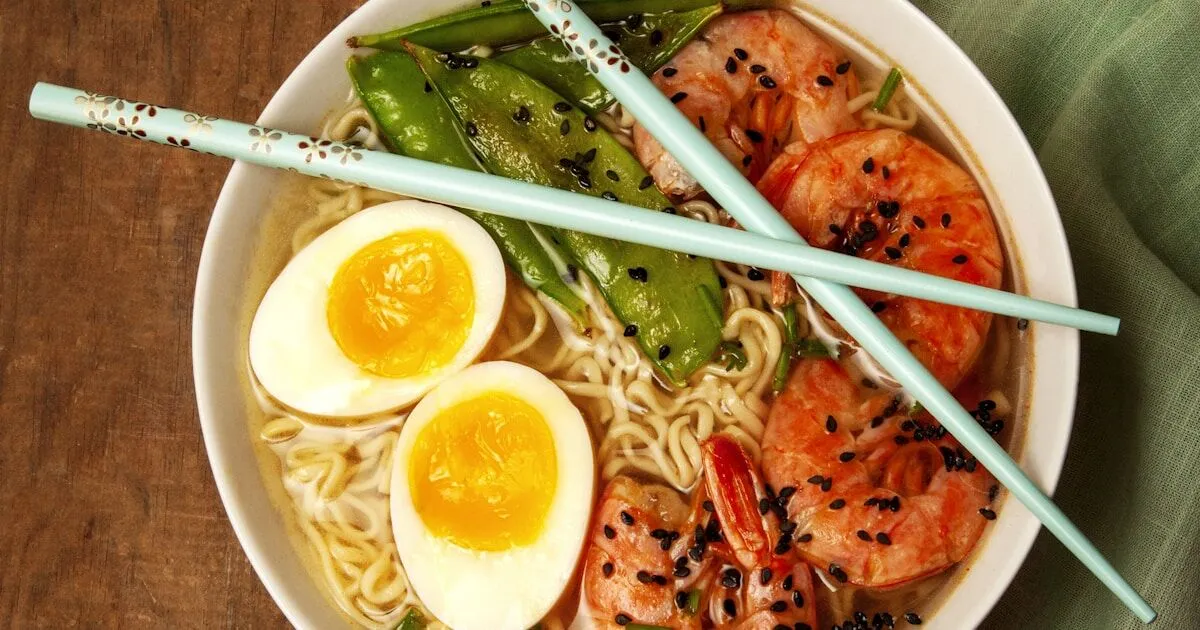
Curry laksa is one of Malaysia’s most beloved street foods - a spicy coconut curry noodle soup loaded with herbs, tofu, and whatever protein the vendor feels like adding. This version swaps the usual chicken or shrimp for bouncy beef meatballs that soak up the rich, lemongrass-scented broth.
The broth is the star. It builds on a laksa paste of dried chilies, lemongrass, galangal, and shrimp paste, fried in coconut cream until the oil separates, then simmered with stock and coconut milk. The result is spicy, aromatic, and nothing like a generic curry.
Key Takeaways
- Tapioca starch gives the meatballs a bouncy texture, different from Western-style meatballs
- Fry the laksa paste in coconut cream first to bloom the spices before adding liquid
- Simmer the broth 10 minutes before adding meatballs so the lemongrass and pandan have time to infuse
- Rice vermicelli is traditional, but thick rice noodles or even egg noodles work
How to Make Curry Laksa Meatballs
-
Make the meatballs. Mix the ground beef, tapioca starch, salt, and white pepper in a bowl. Knead for 1 to 2 minutes until the mixture feels sticky and springy. Roll into 16 to 20 meatballs, about 1 inch wide.
-
Brown the meatballs. Heat 1 tbsp neutral oil in a wide pot or Dutch oven over medium-high heat. Fry the meatballs in batches for 2 to 3 minutes per side until browned. They do not need to cook through. Set aside on a plate.
-
Bloom the spice paste. Spoon 2 to 3 tbsp of the thick coconut cream from the top of the can into the same pot. Add the laksa paste and fry over medium heat for 3 to 4 minutes until fragrant and the oil starts to separate.
-
Build the broth. Pour in the remaining coconut milk and the stock. Add the fish sauce, sugar, lemongrass, and pandan leaf. Bring to a gentle boil, then reduce heat and simmer for 10 minutes to let the flavors meld.
-
Cook the meatballs in the broth. Gently drop the browned meatballs into the simmering broth. Cook for 8 to 10 minutes until cooked through. The internal temperature should reach 160°F (71°C).
-
Assemble the bowls. Divide the cooked noodles among 4 bowls. Ladle the hot broth and meatballs over the noodles. Top with bean sprouts, fried tofu, fresh herbs, a spoonful of sambal, and a lime wedge. Serve immediately.
Ingredients
| Ingredient | Amount | Notes |
|---|---|---|
| Ground beef (80/20) | 1 lb (450 g) | Fat keeps meatballs juicy |
| Tapioca starch | 2 tbsp | Creates bouncy texture; cornstarch works in a pinch |
| Kosher salt | 1 tsp | |
| White pepper | 1 tsp | Black pepper works but changes the look |
| Laksa paste | 3 tbsp | Store-bought (Asian aisle) or homemade |
| Coconut milk | 1 can (13.5 oz) | Full-fat, shaken well |
| Chicken or beef stock | 2 cups (480 ml) | |
| Fish sauce | 1 tbsp | |
| Sugar | 1 tsp | Balances the heat |
| Lemongrass | 2 stalks | Bottom 4 inches only, smashed |
| Pandan leaf | 1 | Optional but traditional |
| Rice vermicelli | 8 oz (225 g) | Cook per package directions |
| Bean sprouts | 1 cup | |
| Firm tofu | 4 oz (115 g) | Cubed and fried until golden (optional) |
| Fresh herbs | Handful | Cilantro, Chinese celery, or laksa leaf |
| Sambal oelek | To taste | |
| Lime wedges | 4 |
Laksa Paste from Scratch
If you cannot find store-bought laksa paste, blend these into a rough paste:
- 8 to 10 dried red chilies (soaked in hot water 10 minutes)
- 3 shallots
- 3 cloves garlic
- 2 stalks lemongrass (bottom 4 inches, sliced)
- 1 inch galangal (or ginger)
- 1 inch fresh turmeric (or 1 tsp ground)
- 1 tbsp dried shrimp paste (belacan)
- 1 tsp coriander seeds
- 1 tsp candlenuts (or macadamia nuts)
Fry this paste in coconut cream for 5 to 6 minutes until the oil separates and it smells fragrant. The extra time is worth it.
Tips for the Best Curry Laksa
The meatball texture. Traditional bakso-style meatballs use tapioca starch and vigorous kneading to develop the myosin protein, creating that springy, bouncy bite. Do not skip the kneading - mix until the paste feels sticky and pulls away from the bowl. This is what separates laksa meatballs from ordinary ones.
Coconut cream trick. Open the can and spoon off the thick cream that rises to the top. Fry the paste in this cream first - it has more fat and less water, so the paste fries properly instead of steaming. Add the thinner coconut milk liquid after.
Lemongrass prep. Use only the bottom 4 inches of the stalk - the top part is too fibrous. Smash it flat with the back of a knife before adding to the broth. This releases the oils without chopping it into pieces you will pick out later.
Pandan leaf. If you can find it at an Asian grocery store, add a knotted pandan leaf to the broth. It adds a sweet, floral aroma that is hard to replicate. If you cannot find it, the laksa still tastes great without it.
Noodle choice. Rice vermicelli (thin, translucent noodles) is the most common in Malaysian laksa. Thick rice noodles (laksa noodles) are also traditional. In a pinch, egg noodles or even ramen work - the broth is the star regardless.
Variations
- Curry Laksa with Shrimp: Replace the meatballs with 1 lb large shrimp, peeled and deveined. Add them to the broth for the last 2 to 3 minutes of cooking.
- Chicken Laksa: Use ground chicken instead of beef. The meatballs will be lighter but still absorb the broth well.
- Vegetarian Laksa: Skip the meatballs and add extra fried tofu, mushrooms, and cabbage. Use vegetable stock and omit the fish sauce (substitute soy sauce).
- Extra Spicy: Add a tablespoon of sambal oelek to the broth along with the laksa paste. Serve more sambal on the side.
Storage and Reheating
The broth keeps in the refrigerator for up to 4 days. Store the noodles and toppings separately to prevent them from getting soggy. Reheat the broth and meatballs together over medium heat until simmering. Cook fresh noodles and assemble when ready to eat.
The meatballs freeze well before cooking. Shape them, place on a parchment-lined tray, freeze until solid, then transfer to a zip-top bag. Cook from frozen - add 2 to 3 extra minutes to the simmering time.
FAQ
What makes laksa different from other curry noodle soups? Laksa uses a specific spice paste built on lemongrass, galangal, dried chilies, and shrimp paste, fried in coconut cream. The broth is richer and more aromatic than Thai curry noodles, with a distinct Malaysian flavor from the belacan and pandan.
Can I use frozen meatballs for curry laksa? Yes, but homemade meatballs with tapioca starch have a bouncy texture that frozen meatballs lack. If using frozen, add them directly to the simmering broth and cook until heated through, about 5 to 6 minutes.
Is laksa very spicy? It can be, depending on the laksa paste and how many dried chilies you use. Most store-bought pastes are medium-hot. Control the heat by adjusting the sambal served on the side.
What is the best noodle for curry laksa? Rice vermicelli is traditional and the most common. Thick rice noodles (sometimes labeled “laksa noodles”) are also authentic. Egg noodles work in a pinch but change the texture.
Can I make curry laksa ahead of time? The broth and meatballs keep well for 3 to 4 days refrigerated. Cook the noodles fresh when serving - they turn mushy if stored in the broth.
What is laksa leaf? Laksa leaf (daun kesum or Vietnamese coriander) is a herb with a peppery, citrusy flavor that is essential to authentic laksa. If you cannot find it, use Thai basil or a mix of cilantro and mint.
Sources
Related Posts
- Malaysian Sambal Meatballs - Spicy chili-glazed beef meatballs
- Malaysian Meatballs in Spicy Coconut Curry - Another coconut curry variation
- Thai Red Curry Meatballs - Similar coconut curry noodle concept
- Indonesian Bakso Meatball Soup - The bouncy meatball tradition from next door
- Thai Boat Noodles with Pork Meatballs - Another SE Asian noodle soup with meatballs