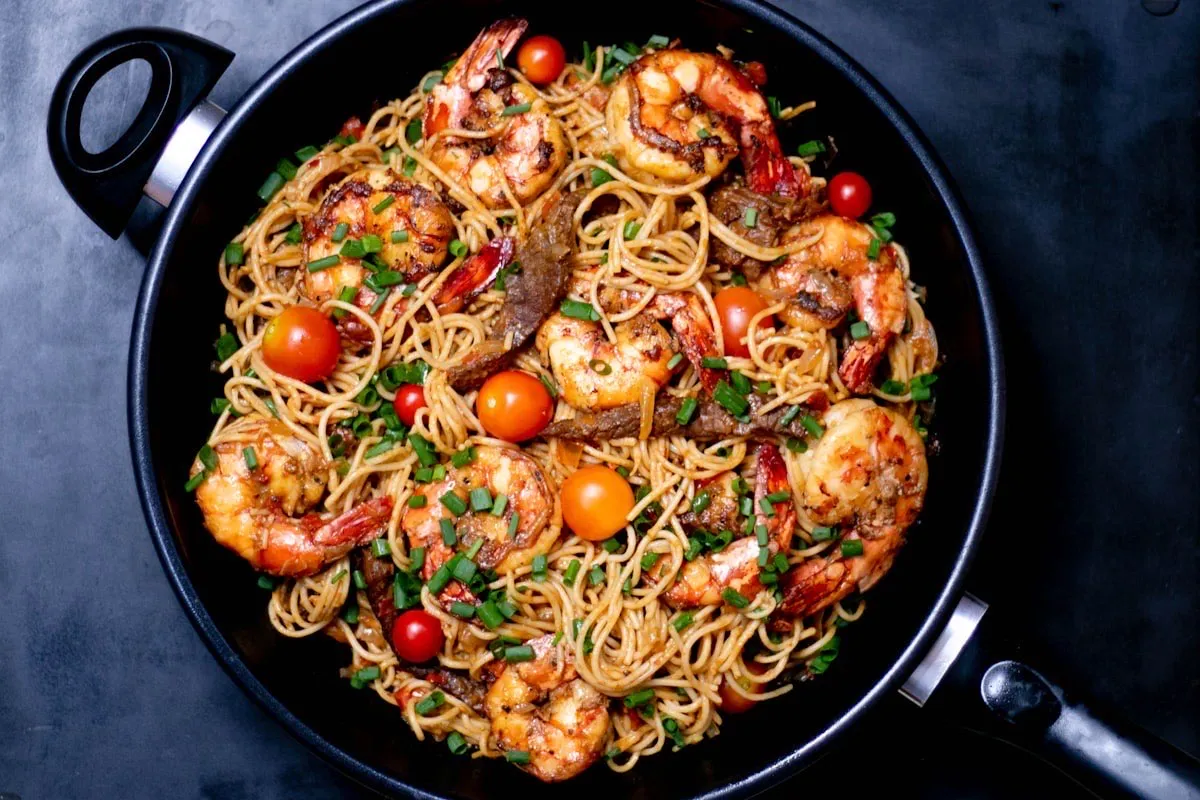
Sambal is the backbone of Malaysian and Indonesian cooking - a chili-based condiment that shows up at nearly every meal, from breakfast nasi lemak to late-night satay. Every household has its own version, and the arguments over whose grandmother makes the best sambal are a national sport.
This recipe takes that everyday sambal and turns it into a weeknight dinner by pairing it with meatballs. The fresh sambal - made from chilies, shallots, garlic, and shrimp paste - cooks down into a thick, spicy coating that clings to each meatball. It is fast and bold, and the heat makes you reach for more rice.
The technique borrows from Malaysian home cooking, where sambal is fried in oil until fragrant before anything else goes into the pan. That step is what transforms raw chili paste into something deeper and more complex. The shrimp paste adds umami, the lime juice cuts the richness, and the sugar rounds out the edges.
How to Make Malaysian Sambal Meatballs
- Make the sambal. Pound or blend the chilies, shallots, garlic, shrimp paste, sugar, and a pinch of salt into a rough paste. Set aside.
- Shape the meatballs. Mix the ground beef, breadcrumbs, egg, and salt in a bowl. Knead for 1 to 2 minutes until the mixture feels sticky, then roll into 16 meatballs about 1 inch wide.
- Brown the meatballs. Heat 2 tbsp oil in a wide skillet over medium-high heat. Fry the meatballs in batches for 3 to 4 minutes per side until browned all over. They do not need to cook through. Set aside on a plate.
- Cook the sambal. In the same skillet, add the sambal paste and fry over medium heat for 2 to 3 minutes until fragrant and the oil starts to separate.
- Toss the meatballs. Return the meatballs to the skillet and toss to coat in the sambal. Cook for 3 to 4 minutes, stirring often, until the meatballs are cooked through and the sauce clings to them.
- Finish with lime. Squeeze the lime juice over the meatballs and toss. Taste and adjust salt. Serve hot with steamed rice.
Ingredients
For the meatballs
- 1 lb (450 g) ground beef, 80/20
- 2 tbsp panko breadcrumbs
- 1 large egg, lightly beaten
- 1 tsp kosher salt
- 2 tbsp neutral oil, for frying
For the sambal
- 8 to 10 fresh red chilies (bird’s eye for heat, long red for color), roughly chopped
- 4 shallots, roughly chopped
- 3 cloves garlic
- 1 tbsp shrimp paste (belacan)
- 1 tsp sugar
- 2 tbsp neutral oil
- 1 tbsp lime juice
- Salt to taste
What Is Sambal?
Sambal is a broad term for chili-based condiments across Malaysia, Indonesia, Singapore, and Brunei. At its simplest, it is fresh chilies pounded with salt. At its most complex, it includes shrimp paste, tamarind, sugar, and a dozen other ingredients depending on the region and the cook.
In Malaysia, sambal is not a side dish. It is a main character. Nasi lemak comes with sambal. Satay is dipped in sambal. Fried fish is plated with sambal. The condiment is so central that Malaysian households often keep two or three versions on hand: a fresh one for today, a cooked one for the week, and a dried one for later.
The version in this recipe is a sambal tumis, a cooked sambal where the paste is fried in oil until the raw chili flavor mellows and the shrimp paste deepens. This is the sambal you find at Malay stalls and hawker centers, spooned over rice or used as a dipping sauce. Frying it in oil is the step that separates a good sambal from a great one - the heat transforms the raw bite into something rounder and more savory.
For more Malaysian meatball recipes, check out the beef rendang meatballs and the spicy coconut curry meatballs.
Tips for the Best Sambal
- Use a mortar and pestle when you can. A blender makes the paste too smooth. The rough, chunky texture from pounding is what lets the sambal cling to the meatballs instead of sliding off.
- Do not skip the shrimp paste. Belacan is the umami backbone of Malaysian sambal. If you cannot find it at an Asian grocery store, fish sauce is the closest substitute, though the flavor will be different.
- Adjust the heat to your taste. Bird’s eye chilies are intensely hot. Use 3 to 4 for mild, 6 to 8 for medium, and all 10 if you like it fiery. Long red chilies add color and body without much heat.
- Fry the sambal properly. The paste should sizzle when it hits the oil and the raw smell should fade within 2 to 3 minutes. If it starts to stick or burn, lower the heat.
- Serve with plain rice. The sambal is rich and spicy enough that you want something neutral to balance it. Steamed jasmine rice is the standard pairing.
Variations
- Chicken sambal meatballs. Swap the ground beef for ground chicken. Because chicken is leaner, add 1 tbsp of oil to the meatball mixture and reduce the final cooking time to 2 to 3 minutes so the balls stay juicy.
- Shrimp paste meatballs. Fold 1 tsp of toasted shrimp paste directly into the meatball mixture for extra umami. This is a common Malaysian hawker trick.
- Sambal matah topping. Instead of cooking the sambal, make a raw sambal matah with finely sliced shallots, lemongrass, chilies, and lime juice, then spoon it over the cooked meatballs. The fresh, crunchy topping contrasts with the warm, savory meat.
- Baked version. If you want less hands-on browning, bake the meatballs at 400 F (200 C) for 12 to 15 minutes while you cook the sambal on the stove, then toss them together.
Storage
Refrigerate leftover meatballs in an airtight container for up to 4 days. The sambal keeps well and the flavors improve overnight. Reheat in a skillet with a splash of water to loosen the sauce. These meatballs freeze well for up to 2 months; thaw in the fridge before reheating.
FAQ
What is sambal made of? At its base, sambal is fresh chilies pounded with salt. Most versions add shallots, garlic, and shrimp paste (belacan) for depth. Some include tamarind for acidity, sugar for balance, or lime juice for brightness. The ingredients vary by region and family recipe, but fresh chilies and some form of umami are always present.
Is sambal the same as chili sauce? Not exactly. Chili sauce is usually smooth, vinegar-based, and bottled. Sambal is fresh, often chunky, and made from pounded or ground ingredients. It has more complexity because of the shrimp paste and the cooking process that mellows the raw chili heat into something deeper.
Can I use store-bought sambal? Yes. Use about 3 to 4 tbsp of a good brand and still fry it in oil for 2 to 3 minutes until fragrant before adding the meatballs. The homemade version takes about 5 minutes in a mortar and pestle, and the fresh flavor is noticeably better.
How spicy are sambal meatballs? It depends on your chili choice. Bird’s eye chilies are very hot (around 50,000 to 100,000 Scoville units). Long red milder chilies bring the heat down to around 1,000 to 5,000 units. A mix of both gives you color and moderate heat.
What do I serve with sambal meatballs? Steamed jasmine rice is the standard pairing. A side of stir-fried greens like kangkung (water spinach) or bok choy completes the plate. For a more complete spread, add a small bowl of cucumber slices and a fried egg on top of the rice.
Sources
- Rasa Malaysia, Sambal Belacan Recipe - sambal tumis technique and shrimp paste reference
- The Woks of Life, Sambal Oelek vs Sambal Belacan - sambal types and regional differences
- Serious Eats, What Is Shrimp Paste? - belacan ingredient deep dive
- Malaysian Women’s Weekly, How to Make Sambal - home cooking sambal techniques
- Hero photo: “Sambal” by Takeshi Hongo, Wikimedia Commons, CC BY 2.0