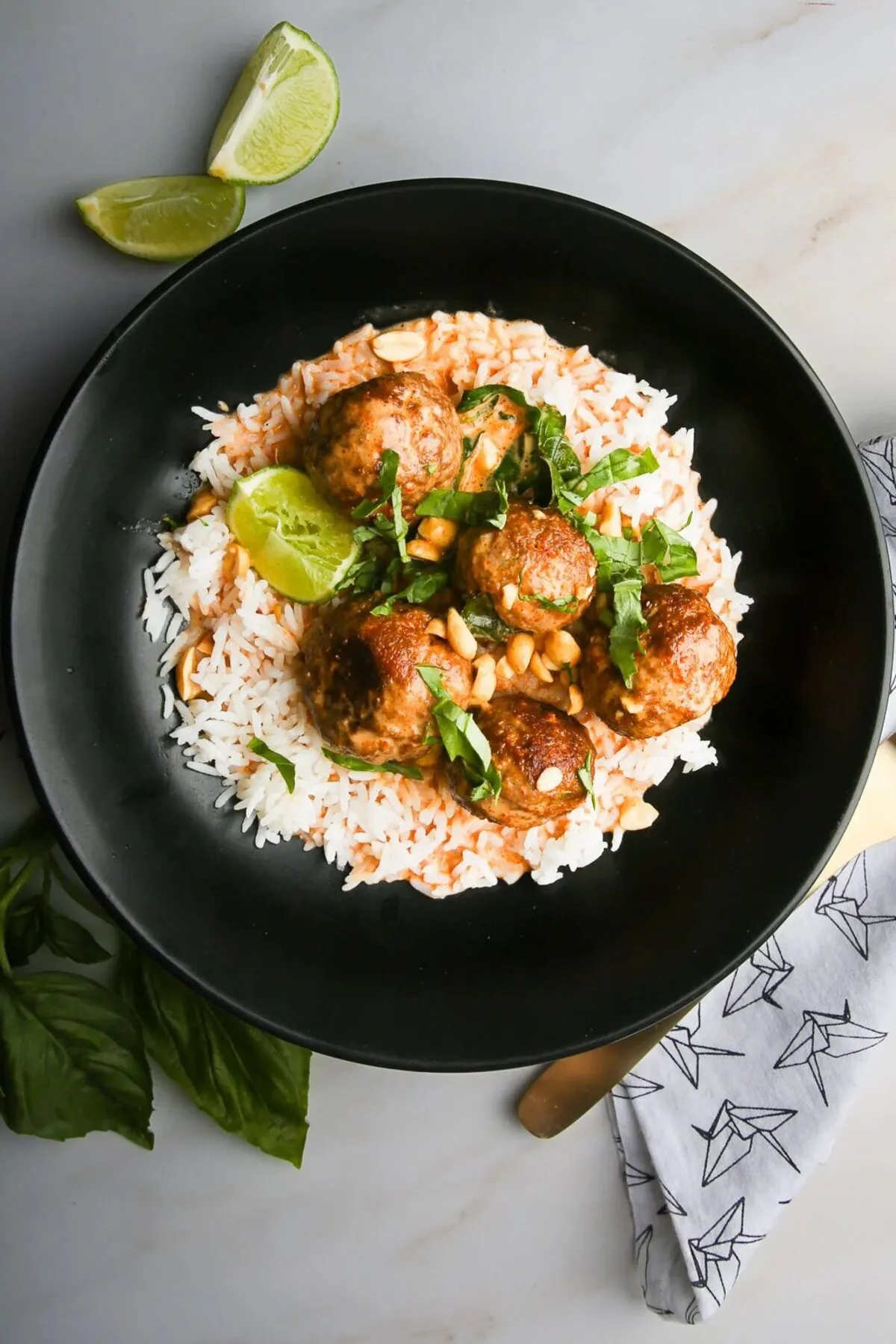
Thai red curry meatballs bring the creamy, spicy warmth of Thailand’s most beloved curry into an easy weeknight dinner. Ground chicken meatballs are pan-seared until golden, then simmered in a rich coconut milk sauce with red curry paste, garlic, ginger, and a squeeze of lime. Ready in 30 minutes, this one-pan meal delivers bold Thai flavor with minimal effort.
This recipe is different from Thai basil meatballs (pad kra pao style) - those are a dry stir-fry with holy basil and bird’s eye chilies. These red curry meatballs are saucy, creamy, and designed for soaking into jasmine rice.
Key Takeaways
- Thai red curry paste is the flavor engine - bloom it in oil for 30 seconds before adding coconut milk to unlock the deep, aromatic base.
- Full-fat coconut milk creates the rich, creamy sauce. Light coconut milk works but produces a thinner result.
- Fish sauce + lime juice at the end balances the richness with salt and bright acidity. Taste and adjust before serving.
- 30 minutes total - 10 minutes prep, 20 minutes cooking. One skillet for everything.
- Versatile protein - ground chicken, pork, or turkey all work. Chicken stays juiciest in the curry sauce.
How to Make Thai Red Curry Meatballs
- Make the meatball mixture. Combine chicken, panko, cilantro, garlic, ginger, fish sauce, soy sauce, and egg in a bowl. Mix until just combined - do not overwork or the meatballs will be dense. (See prep hint: Mix Until Just Combined)
- Shape into meatballs. Wet your hands and roll into 24 meatballs, about 1.25 inches across. A medium cookie scoop keeps them uniform.
- Sear the meatballs. Heat oil in a large skillet over medium-high heat. Brown meatballs in batches for 2 to 3 minutes per side until golden on the outside. They do not need to be cooked through yet. Transfer to a plate.
- Fry the aromatics. In the same pan (do not wipe it out), add chopped garlic and ginger. Stir-fry for 30 seconds until fragrant. The browned bits from the meatballs add flavor.
- Bloom the curry paste. Add red curry paste and cook for 30 seconds, stirring constantly, until the paste is fragrant and slightly darkened. This step releases the aromatics and deepens the flavor. (See prep hint: Bloom the Curry Paste)
- Build the sauce. Pour in coconut milk, fish sauce, soy sauce, and brown sugar. Stir to combine and bring to a gentle simmer.
- Add vegetables. Toss in bamboo shoots and bell pepper if using. Simmer for 2 to 3 minutes until slightly softened.
- Return meatballs to the pan. Nestle them into the sauce and cook for 5 to 6 minutes until cooked through to 165F (74C).
- Finish with lime. Stir in lime juice, taste, and adjust seasoning. Garnish with Thai basil or cilantro. (See prep hint: Fish Sauce)
- Serve. Spoon jasmine rice into bowls. Top with meatballs and plenty of sauce.
Ingredients
- 1 lb (450 g) ground chicken or pork - 80/20 fat ratio keeps meatballs juicy in the sauce
- 1/3 cup panko breadcrumbs - binds without making meatballs heavy
- 2 tbsp fresh cilantro, finely chopped - adds herbal brightness to the meatball itself
- 2 cloves garlic + 1 tbsp ginger, grated - aromatics in both the meatball and sauce
- 1 tbsp fish sauce + 1 tsp soy sauce - umami seasoning for the meatball mixture
- 1 egg - binds the mixture together
- 2 to 3 tbsp Thai red curry paste - the star ingredient; start with 2 tbsp for medium heat
- 1 can (13.5 oz) full-fat coconut milk - creates the rich, creamy sauce base
- 1 tbsp fish sauce + 1 tbsp soy sauce - seasoning for the sauce (yes, double dose)
- 1 tbsp brown sugar - balances the heat and salt
- 1 tbsp lime juice - bright acidity to finish
- Bamboo shoots and bell pepper - optional vegetables that add texture
- Jasmine rice - essential for soaking up the sauce
Tips for the Best Thai Red Curry Meatballs
Use Full-Fat Coconut Milk
Light coconut milk produces a thinner, less creamy sauce. Full-fat coconut milk has the fat content needed to carry the curry paste flavor and create that signature rich, velvety texture. If you only have light coconut milk, add a tablespoon of coconut oil to compensate.
Bloom the Curry Paste
Cooking red curry paste in oil before adding liquid is not optional. The brief saute releases volatile aromatics locked in the paste - lemongrass, galangal, kaffir lime, and dried chilies. Skipping this step results in a flat, one-dimensional sauce.
Adjust the Heat
Thai red curry paste varies wildly between brands. Mae Ploy and Thai Kitchen are milder; Maesri and Arrowhead Mills run hotter. Start with 2 tbsp, taste the sauce, and add more if you want genuine Thai-level heat. A teaspoon of sambal oelek works as a backup heat source.
Do Not Overcook the Meatballs
Ground chicken cooks faster than beef or pork. The meatballs go back into the simmering sauce for just 5 to 6 minutes. Overcooking makes them dry and rubbery. Use an instant-read thermometer - 165F (74C) is the target.
Variations
Shrimp Paste Version
Replace fish sauce with 1 tsp shrimp paste (kapi) for a deeper, funkier Thai flavor. This is more authentic but harder to find outside Asian grocery stores.
Peanut Curry
Add 2 tbsp smooth peanut butter to the sauce for a richer, nuttier curry. This leans toward a massaman-style flavor profile and pairs especially well with chicken.
Vegetarian
Swap meatballs for firm tofu cubes or canned chickpeas (drained and patted dry). Sear them the same way and simmer in the curry sauce. Use mushroom sauce instead of fish sauce for a fully plant-based version.
Extra Vegetables
Add baby corn, water chestnuts, or Thai eggplant to the curry. Add delicate vegetables (like snap peas) in the last 2 minutes so they stay crisp.
Storage and Reheating
Refrigerator: Store meatballs and sauce in an airtight container for up to 4 days. The flavor improves overnight as the curry paste melds with the coconut milk.
Freezer: Freeze meatballs and sauce together for up to 3 months. Thaw overnight in the refrigerator before reheating.
Reheat: Warm gently in a skillet over medium-low heat, adding a splash of coconut milk if the sauce has thickened too much. Microwaving works but can make the coconut milk separate.
Frequently Asked Questions
Can I Use Store-Bought Meatballs?
Yes, but the flavor won’t be the same. Pre-made meatballs often contain fillers that dilute the Thai seasonings. If you’re short on time, use frozen meatballs and skip step 1-2 - just sear them briefly and proceed with the sauce.
What Is the Best Red Curry Paste?
Mae Ploy and Maesri are the most popular brands in Thai households. Mae Ploy runs slightly milder with a balanced sweetness; Maesri is punchier and more assertive. Thai Kitchen is widely available in US supermarkets but tastes sweeter and less authentic.
Can I Make This Ahead?
Yes. Prepare the meatballs and sauce separately, refrigerate for up to 2 days, and reheat together when ready to serve. The meatballs actually absorb more curry flavor when made ahead.
What Rice Works Best?
Jasmine rice is traditional and its fragrant, slightly sticky texture is perfect for catching the curry sauce. Basmati works in a pinch but its fluffy, separate grains don’t hold the sauce as well.
How Do I Make It Less Spicy?
Use less curry paste (start with 1 tbsp) and add an extra tablespoon of brown sugar to balance. You can also add a splash of coconut cream at the end to mellow the heat without diluting the flavor.
Is This the Same as Thai Meatball Curry?
Yes - red curry meatballs, Thai meatball curry, and Thai coconut meatballs all refer to the same general dish. The key elements are ground meat meatballs simmered in a coconut milk-based red curry sauce.
Sources
- Thai Red Curry Meatballs - Alecooks
- Thai Meatballs with Red Curry Coconut Sauce - Food52
- Thai Red Curry Meatballs Recipe - SBS
- Thai Curry Meatballs with Creamy Red Curry Sauce - I Heart Umami
Related Posts
- Thai Basil Meatballs (Pad Kra Pao Style) - A dry stir-fry version with holy basil and bird’s eye chilies
- Thai Luk Chin Pork Meatballs - Bouncy street food meatballs served on skewers
- Indian Meatball Curry (Kofta) - A South Asian take on meatballs in creamy sauce
- Sweet and Sour Meatballs with Pineapple - Another Asian-inspired meatball dinner
- Asian Meatball Recipes - Our full collection of Asian-inspired meatball recipes