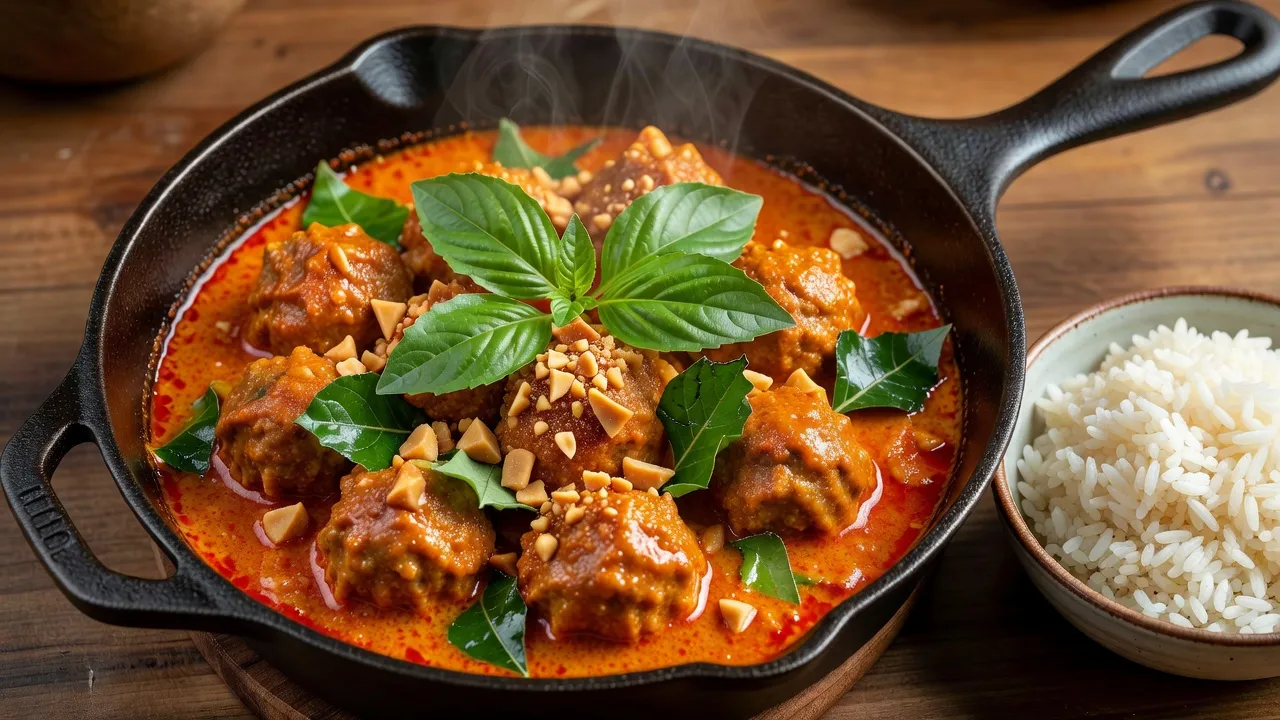
Panang curry meatballs bring the rich, nutty warmth of Thailand’s most luxurious curry into an easy weeknight dinner. Ground chicken meatballs are pan-seared until golden, then simmered in a thick coconut sauce spiked with panang curry paste, peanut butter, and kaffir lime leaves. Ready in 35 minutes, this one-pan meal delivers the deep, concentrated flavor that makes panang curry one of Thailand’s most beloved dishes.
Panang curry is thicker and richer than Thai red curry meatballs - it uses coconut cream instead of milk, and ground peanuts give it a signature nutty depth that red curry does not have. If you love Thai green curry meatballs but want something bolder and more concentrated, this is the recipe.
Key Takeaways
- Panang curry paste is the flavor engine - bloom it in oil for 1 to 2 minutes before adding coconut milk to unlock the deep, aromatic base.
- Peanut butter + crushed peanuts create the signature nutty richness that distinguishes panang from regular red curry.
- Coconut cream (the thick part of the can) makes the sauce cling to meatballs instead of pooling like a soup.
- Kaffir lime leaves add an earthy citrus note that no substitute can replicate. Tear them to release the oils.
- 35 minutes total - 15 minutes prep, 20 minutes cooking. One skillet for everything.
How to Make Thai Panang Curry Meatballs
- Make the meatball mixture. Combine chicken, panko, cilantro, garlic, ginger, fish sauce, and egg in a bowl. Mix until just combined - do not overwork or the meatballs will be dense.
Ingredients
-
- “1 lb (450 g) ground chicken, thigh preferred”
- “1/3 cup panko breadcrumbs”
- “2 tbsp fresh cilantro, finely chopped”
- “2 cloves garlic, minced”
- “1 tbsp fresh ginger, grated”
- “1 tbsp fish sauce”
- “1 egg, lightly beaten”
- “1 tbsp neutral oil, for searing”
- “3 tbsp Thai panang curry paste (store-bought or homemade)”
- “1 can (13.5 oz / 400 ml) full-fat coconut milk”
- “2 tbsp natural peanut butter, unsweetened”
- “1 tbsp fish sauce”
- “1 tbsp brown sugar or palm sugar”
- “1/2 cup roasted peanuts, roughly chopped”
- “4 to 5 kaffir lime leaves, torn”
- “Fresh Thai basil leaves, for garnish”
- “Jasmine rice, for serving”
-
Shape into meatballs. Roll into 24 meatballs, about 1.25 inches across. Wet your hands to prevent sticking.
-
Sear the meatballs. Heat oil in a large deep skillet over medium-high heat. Brown in batches for 2 to 3 minutes per side until golden all over. Transfer to a plate.
-
Bloom the curry paste. Add panang curry paste to the same pan. Cook for 1 to 2 minutes, stirring constantly, until darkened and fragrant. (See prep hint: Bloom the Curry Paste)
-
Build the sauce. Pour in coconut milk, peanut butter, fish sauce, and brown sugar. Stir until the peanut butter melts and the sauce is smooth. Bring to a gentle simmer.
-
Add kaffir lime leaves. Toss in torn kaffir lime leaves and half the chopped peanuts. Simmer for 2 minutes until the sauce thickens.
-
Return meatballs to the pan. Nestle them into the sauce and cook for 5 to 6 minutes until cooked through to 165F (74C).
-
Finish and serve. Garnish with Thai basil, remaining peanuts, and a torn kaffir lime leaf. Spoon over jasmine rice.
What Makes Panang Curry Different from Red Curry?
Panang curry and Thai red curry share the same base - dried red chilies, lemongrass, galangal, and shrimp paste. But panang is thicker, richer, sweeter, and slightly nutty. The key differences:
- Coconut cream vs coconut milk. Panang uses the thick cream from the top of the can, creating a sauce that clings to meat rather than pooling.
- Ground peanuts. Crushed or ground peanuts are blended into the paste, giving panang its signature nutty depth.
- Less liquid. Panang is a “dry curry” - the sauce coats the ingredients rather than submerging them.
- More concentrated. The paste is cooked longer in oil before liquid is added, intensifying the flavor.
The result is a curry that tastes like a more intense, luxurious version of red curry. In Thailand, panang is considered a step up from everyday red curry - richer, more special, and worth the extra attention.
Tips for the Best Panang Curry Meatballs
Use ground chicken thigh. Thigh meat stays juicest in the curry sauce. Breast works but can dry out. Ground pork is the traditional choice in Thailand and works beautifully here too.
Do not skip the bloom. Cooking the curry paste in oil for 1 to 2 minutes before adding liquid is the single most important step. Raw curry paste tastes flat and sharp. Bloomed paste tastes deep, rounded, and aromatic.
Tear the kaffir lime leaves. Tearing releases the essential oils better than chopping. If you cannot find fresh kaffir lime leaves, use 1 tsp of kaffir lime zest as a substitute - it is not the same, but it is close.
Peanut butter matters. Use natural, unsweetened peanut butter. The kind that separates in the jar is ideal. Sweetened commercial peanut butter will make the sauce too sweet.
Taste and balance at the end. Panang curry should lean savory and slightly sweet, with a moderate kick of heat. Add more fish sauce for salt, sugar for sweetness, or a squeeze of lime for brightness.
Storage and Reheating
Fridge: Store leftover meatballs and sauce in an airtight container for up to 4 days. The sauce thickens as it cools - add a splash of coconut milk when reheating.
Freezer: Freeze meatballs and sauce together for up to 3 months. Thaw overnight in the fridge, then reheat gently in a skillet over medium heat.
Meal prep: Make a double batch on Sunday. Portion into containers with jasmine rice and steamed vegetables for 4 ready-to-go lunches.
What to Serve with Panang Curry Meatballs
- Jasmine rice - the classic pairing. The fluffy, slightly sticky rice soaks up the rich sauce.
- Steamed jasmine rice with a squeeze of lime - adds brightness against the rich curry.
- Rice noodles - for a panang curry noodle bowl, toss cooked rice noodles directly into the sauce.
- Steamed vegetables - bok choy, green beans, or broccolini on the side.
- Cucumber relish - a quick Thai-style cucumber salad with vinegar and sugar cuts through the richness.
FAQ
What is panang curry made of?
Panang curry paste is made from dried red chilies, lemongrass, galangal, shallots, garlic, kaffir lime leaves, shrimp paste, and ground peanuts. The curry itself uses coconut cream, fish sauce, and sugar. The peanuts and thick coconut cream distinguish it from regular Thai red curry.
Is panang curry spicy?
Panang curry is moderately spicy - about 7 out of 10 on a Western spice scale. Thais consider it “medium.” The chilies are essential for both color and flavor, so reducing them weakens the dish. If you prefer milder food, try Thai massaman meatballs instead.
Can I use store-bought panang curry paste?
Yes. Maesri and Maeploy are reliable Thai brands available at most Asian grocery stores and many supermarkets. Use 3 to 4 tablespoons for a rich sauce. Homemade paste is better, but good store-bought paste delivers 80% of the flavor with none of the prep work.
What meat works best for panang curry meatballs?
Ground chicken thigh is ideal - it stays juicy and absorbs the curry flavors well. Ground pork is the traditional Thai choice. Ground turkey or beef also work, though beef will make the sauce darker and richer.
How is panang curry different from red curry?
Panang is thicker, richer, sweeter, and nuttier than red curry. It uses coconut cream instead of milk, ground peanuts in the paste, and less liquid overall. The result is a concentrated sauce that coats the ingredients rather than submerging them.
Can I make panang curry meatballs in advance?
Yes. Cook the meatballs and sauce, cool completely, and refrigerate for up to 4 days or freeze for up to 3 months. Reheat gently in a skillet, adding a splash of coconut milk if the sauce has thickened too much.