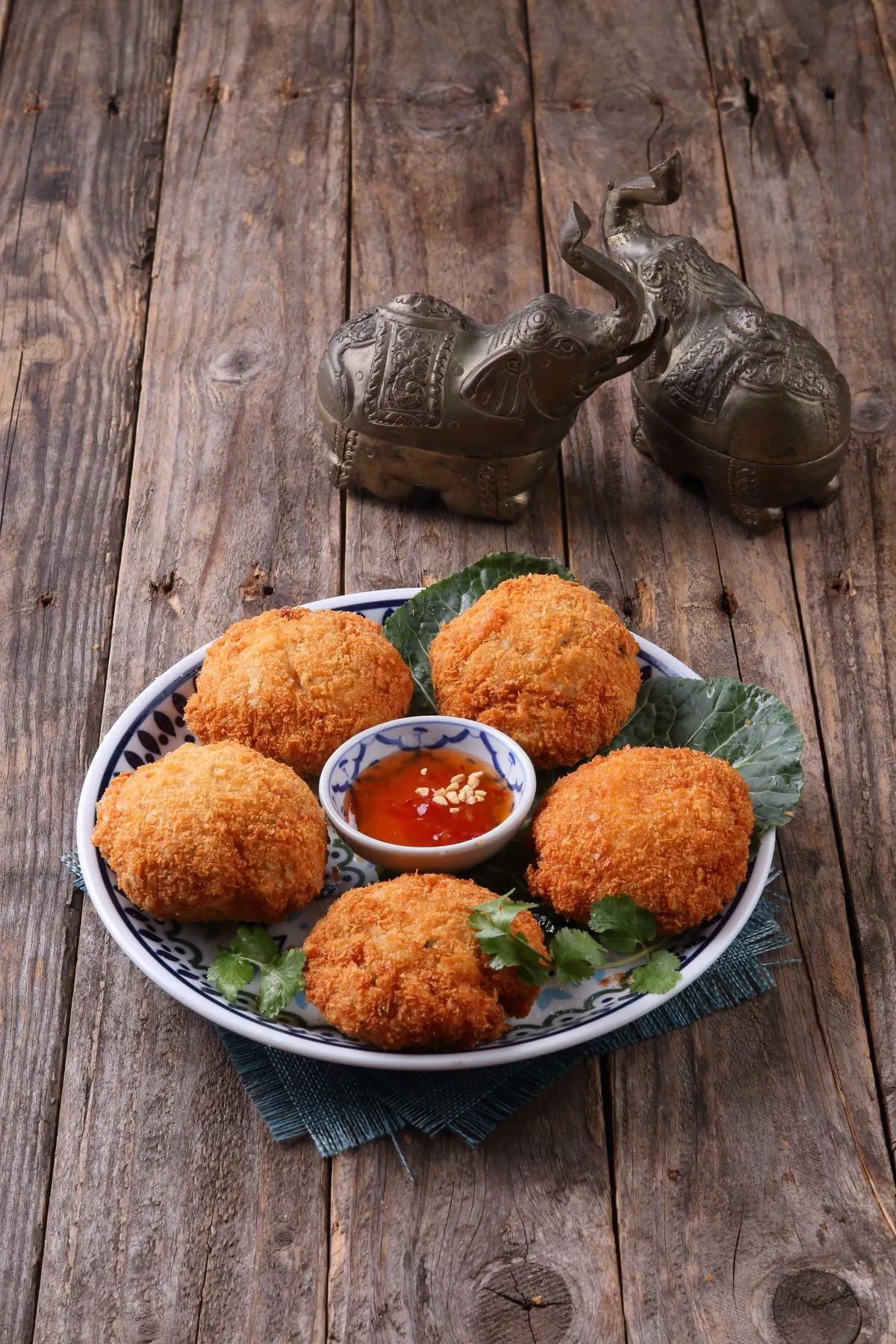
Thai fish cakes - known as tod mun pla in Thai - are one of Bangkok’s most iconic street food snacks. Golden-fried patties of white fish blended with red curry paste, kaffir lime leaves, and Thai basil, they deliver a crispy exterior and a bouncy, springy interior that you will not find in any frozen fish cake at the grocery store. The sweet chili dipping sauce alongside is not optional - it completes the dish.
This recipe stays true to the street vendor technique: process the fish until the proteins break down and become sticky, fold in fresh herbs, and pan-fry in a thin layer of oil. The whole process takes about 35 minutes, and the result tastes like something you would queue for at a Bangkok market.
Key Takeaways
- Tod mun pla means “deep-fried fish” in Thai - the patties are flat, not round like Western fish cakes
- Use tender white fish (basa, catfish, or tilapia) - firm fish makes tough cakes
- Process the fish paste for 2 to 3 minutes until sticky and elastic - this creates the bouncy texture
- Kaffir lime leaves and long beans are non-negotiable for authentic flavor
- The sweet chili dipping sauce is homemade and takes 5 minutes - far better than bottled
- Pan-fry in a thin layer of oil, not deep-fry - easier and just as crispy
How to Make Thai Fish Cakes (Tod Mun Pla)
Make the Sweet Chili Dipping Sauce
Blend 3 cloves garlic, 1 spur chili (or large red chili), 1/2 cup sugar, 1/2 tsp salt, 1/3 cup white vinegar, and 3 tbsp water in a blender until smooth. Pour into a small pot and bring to a simmer. Cook for 3 to 5 minutes until it thickens to a thin syrup consistency. The sauce thickens more as it cools - if it becomes too thick, thin with a splash of water. Set aside.
Process the Fish Paste
Pat 1 lb white fish fillet extremely dry with paper towels - this is critical. Add the fish, 2 to 3 tbsp red curry paste, 1 egg yolk, and 1 tsp sugar to a food processor. Process for 2 to 3 minutes, scraping down the sides halfway, until the mixture is smooth, sticky, and holds its shape when spooned. Taste a small cooked piece and adjust: add more curry paste for heat, or fish sauce for salt.
Fold in the Herbs
Transfer the fish paste to a mixing bowl. Fold in 1/2 cup finely chopped long beans, 1/3 cup Thai basil leaves, and 5 finely julienned kaffir lime leaves (central vein removed). Stir until the herbs are evenly distributed throughout the paste.
Shape and Fry
Set up a station: a bowl of cold water and paper towels next to the stove. Heat a skillet over medium heat with enough oil to coat the bottom (about 1/4 inch). Wet your hands and a tablespoon in the cold water, scoop a heaping tablespoon of fish paste, and gently pat into a flat patty about 2.5 inches across and 1/2 inch thick. Place directly into the hot skillet. Fry for 2 to 3 minutes per side until golden brown and crisp. Work in batches, adding more oil as needed. Drain on paper towels.
Serve
Stir cucumber slices into the sweet chili dipping sauce. Arrange the fish cakes on a platter with the dipping sauce and extra cucumber on the side. Serve immediately while hot and crispy.
Ingredients
For the Fish Cakes
- 1 lb (450 g) white fish fillet (basa, catfish, or tilapia), patted very dry
- 2 to 3 tbsp Thai red curry paste (Maesri or Aroy-D brand)
- 1 egg yolk
- 1 tsp sugar
- 1/2 cup long beans (yardlong beans), finely chopped
- 1/3 cup Thai basil leaves, roughly chopped
- 5 kaffir lime leaves, central vein removed, finely julienned
- Fish sauce, to taste
- Neutral oil, for pan-frying
For the Sweet Chili Dipping Sauce
- 3 cloves garlic
- 1 spur chili (prik chee fah) or large red chili
- 1/2 cup sugar
- 1/2 tsp salt
- 1/3 cup white vinegar
- 3 tbsp water
- Cucumber slices, for serving
What Is Tod Mun Pla?
Tod mun pla (ทอดมันปลา) is one of Thailand’s most popular street food snacks. You will find it piled high at market stalls across Bangkok, fried to order in wide woks of shimmering oil. The name translates literally to “deep-fried fish” - “tod” means fried, “mun” means toDeep-fry, and “pla” means fish.
Unlike Western fish cakes, which are often breadcrumb-heavy and thick, tod mun pla are thin, flat patties with a focus on the fish itself. The texture should be bouncy and springy - a quality the Thai call “deen” - achieved by processing the fish until the proteins break down and become elastic. This is the same technique used in Thai pork meatballs (luk chin) and is what separates authentic Thai fish cakes from the dense, floury versions found in frozen food aisles.
The flavor base is simple but bold: red curry paste provides heat and aromatics, kaffir lime leaves add citrusy fragrance, and long beans give a fresh crunch. The sweet chili dipping sauce - homemade, not bottled - ties everything together with its balance of sweet, sour, and spicy.
Best Fish for Thai Fish Cakes
The fish you choose makes or breaks the texture. You need tender, soft-fleshed fish that processes into a smooth, sticky paste.
| Fish | Texture | Notes |
|---|---|---|
| Basa (catfish) | Very tender, smooth | Best all-around choice - what Hot Thai Kitchen recommends |
| Tilapia | Tender, mild | Widely available, works well |
| Swai | Soft, mild | Similar to basa, budget-friendly |
| Cod | Firmer, flaky | Add an extra egg yolk to help bind |
| Halibut | Firm, meaty | Works but needs longer processing |
| Salmon | Rich, fatty | Different flavor profile but delicious |
Critical tip: If using frozen fish, thaw it completely and then squeeze out every drop of water between paper towels. Excess moisture prevents the paste from becoming sticky and will cause the patties to fall apart in the pan.
Do not use pre-made fish paste from Asian grocery stores - those are already seasoned and will throw off the flavor balance.
Tips for Bouncy Texture
The signature springy, bouncy texture of authentic tod mun pla comes from one thing: processing the fish paste long enough for the proteins to break down and become elastic.
- Process for 2 to 3 minutes in a food processor - not just until combined, but until the paste is visibly sticky and pulls away from the sides
- Use egg yolk (not whole egg) - the fat in the yolk helps tenderize while the proteins bind
- Keep everything cold - warm fish paste won’t develop the same elasticity
- Test before frying - cook a tiny piece to check texture and seasoning. If it is too soft, process longer. If too firm, you went too far
The paste should look smooth and slightly glossy when ready, and it should hold its shape when you scoop and pat it without crumbling.
Sweet Chili Dipping Sauce (Nam Jim Gai)
The dipping sauce is not optional - it is an essential part of the dish. Store-bought sweet chili sauce is a passable shortcut, but the homemade version is brighter, fresher, and takes only 5 minutes.
The key is to simmer the blended sauce for 3 to 5 minutes until it thickens to a thin syrup. It will thicken further as it cools. If it becomes too gel-like, thin with a splash of water. The sauce keeps in the fridge for months - only add cucumber, shallots, and peanuts to the portion you are serving.
Optional add-ins for serving: roasted crushed peanuts, sliced shallots, extra cucumber slices.
Common Mistakes
- Skipping the drying step - wet fish won’t form a sticky paste and patties will crumble
- Under-processing - the fish must be processed until elastic, not just chopped
- Using firm fish - cod and halibut work but need extra egg yolk and longer processing
- Too much oil - these are pan-fried, not deep-fried. A thin layer (1/4 inch) is enough
- Pre-forming all patties - the soft paste is easier to shape as you fry, one at a time
- Skipping the kaffir lime leaves - they provide the signature citrus fragrance that defines the dish
Serving Suggestions
Thai fish cakes are traditionally served as an appetizer or snack, not a main course. At Bangkok street stalls, they come on a plate with the dipping sauce and cucumber slices on the side.
For a fuller meal, serve them:
- Over jasmine rice with a fried egg and steamed vegetables
- Alongside som tum (green papaya salad) for a classic Thai street food spread
- In lettuce cups with fresh herbs, crushed peanuts, and a drizzle of the dipping sauce
- As part of a Thai appetizer platter with satay, spring rolls, and papaya salad
Storage and Freezing
Refrigerator: Cooked fish cakes keep for 2 to 3 days in an airtight container. Reheat in a skillet over medium heat for 2 to 3 minutes per side to restore crispness - the microwave will make them soggy.
Freezer: Shape the raw fish paste into patties and freeze on a baking sheet until solid, then transfer to a freezer bag. Cook directly from frozen - add 1 to 2 minutes per side. The raw mixture freezes better than cooked fish cakes.
Dipping sauce: Keeps in the fridge for months in a sealed jar. Only add the cucumber and other fresh add-ins to the portion you are serving.
FAQ
What does tod mun pla mean?
“Tod mun pla” (ทอดมันปลา) translates to “deep-fried fish” in Thai. “Tod” means fried, “mun” means to deep-fry, and “pla” means fish. Despite the name, authentic tod mun pla are typically pan-fried in a thin layer of oil rather than deep-fried.
Can I use frozen fish for Thai fish cakes?
Yes, but you must thaw it completely and squeeze out all excess moisture before processing. Frozen fish releases more water than fresh, and wet fish paste will not hold its shape. Pat the thawed fish between paper towels several times until no more moisture transfers.
Why are my fish cakes falling apart?
The most common causes are wet fish (not dried thoroughly enough), under-processing (the paste needs to become sticky and elastic), or oil that is not hot enough. Make sure the fish is very dry, process for a full 2 to 3 minutes, and test the oil temperature by dropping a small piece of paste - it should sizzle immediately.
Can I bake Thai fish cakes instead of frying?
You can, though the texture will be different. Bake at 400F (200C) for 12 to 15 minutes, flipping halfway, until golden. They will be less crispy than pan-fried versions but still flavorful. Brush with oil before baking to help with browning.
What is the best curry paste brand for fish cakes?
Maesri and Aroy-D are the most recommended Thai brands for authentic flavor. Maesri tends to be milder and more balanced, while Aroy-D is slightly spicier. Avoid pastes that are very salty, like Mae Ploy, as they can make the fish cakes too salty before you achieve enough curry flavor.
How do I get the bouncy texture?
The bouncy texture comes from processing the fish paste for 2 to 3 minutes in a food processor until the proteins break down and become elastic and sticky. This is the same technique used in Thai pork meatballs (luk chin). The paste should look smooth, slightly glossy, and hold its shape when scooped.
Sources
- Hot Thai Kitchen - Thai Fish Cakes (Tod Mun Pla)
- Hungry in Thailand - Tod Mun Pla Recipe
- Omnivore’s Cookbook - Thai Fish Cakes
- SCMP - How to Make Thai Fried Fish Cakes
Related Recipes
- Thai Pork Meatballs (Luk Chin) - Bouncy pork meatballs with the same elastic technique
- Thai Basil Meatballs (Pad Kra Pao) - Spicy basil stir-fry with pork meatballs
- Thai Red Curry Meatballs - Meatballs simmered in coconut red curry
- Sweet and Sour Meatballs - Sticky pineapple-glazed meatballs
- Asian Meatball Recipes - Full collection of Asian-inspired meatball recipes