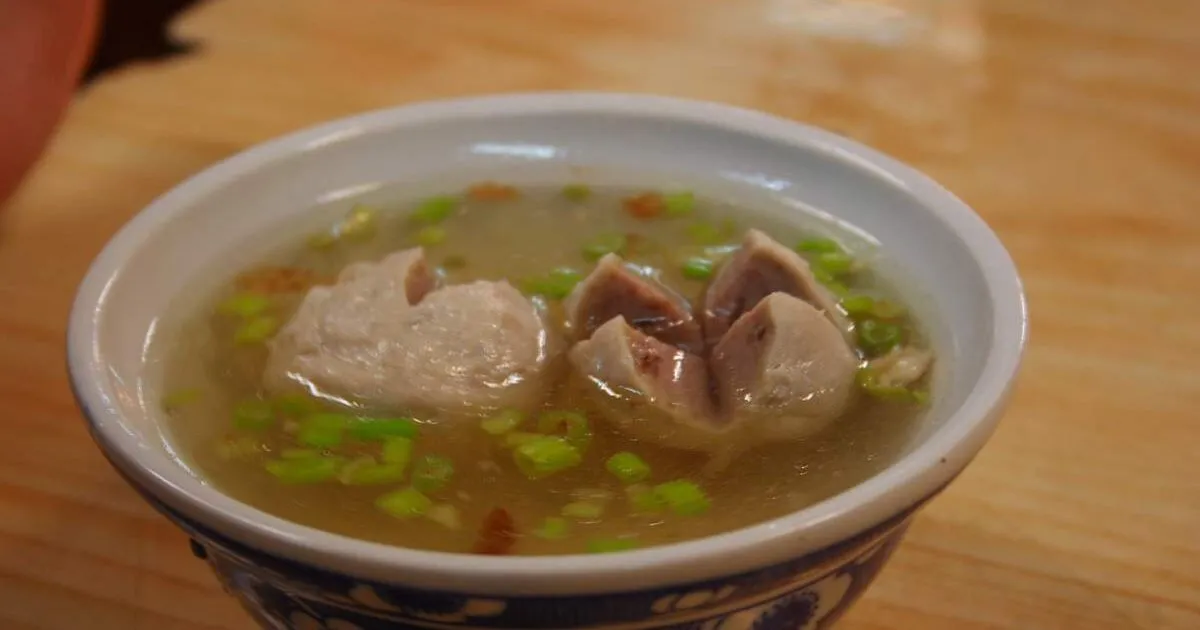
A clear, savory broth with tender daikon and pork meatballs that bounce - that is gong wan tang 貢丸湯, the soup Taiwanese home cooks reach for on cold days and sick days. It is light but deeply comforting, the way chicken noodle soup is in the US, and it comes together in two parts: springy pork balls and a clean bone broth.
The balls are the point. Gong wan 貢丸 literally means “to beat, balls,” and the beating is what makes them bouncy - the meat is processed with ice water until the proteins bind into a pale, sticky paste. The good news: you can make the real thing at home, or take the same shortcut most busy cooks in Taiwan use and buy frozen gong wan from the Asian market. This recipe covers both paths, and it pairs well with other dim sum-style dishes like Cantonese steamed beef meatballs and shrimp balls.
Key Takeaways
- Gong wan are bouncy because the pork is beaten into a sticky paste - cold meat and 10 minutes of mixing do the work.
- Frozen store-bought gong wan are the realistic shortcut; add them straight from the freezer so the broth stays clear.
- Blanch the bones and simmer gently for a clear, clean broth - no murky soup.
- Daikon adds natural sweetness and turns translucent as it cooks.
- Boiling toughens the balls and clouds the broth. Keep everything at a gentle simmer.
How to Make Taiwanese Meatball Soup
- Grind or finely chop very cold pork shoulder into chunks small enough for a food processor.
- Process the pork with the ice water, egg white, cornstarch, sugar, salt, white pepper, Shaoxing wine, and fish sauce until it becomes a pale, sticky paste, about 3 to 4 minutes, scraping the sides once or twice.
- Chill the paste 30 minutes so it firms up enough to shape into balls.
- Meanwhile, blanch the pork bones in boiling water 5 to 7 minutes, drain, and rinse well.
- Return the bones to a clean pot with 8 cups water and the ginger. Simmer gently 1 to 1 1/2 hours, skimming foam, until the broth is light and savory.
- Add the daikon and simmer 30 to 40 minutes until tender and translucent.
- With wet hands, shape the chilled paste into balls about 1 1/2 inches wide.
- Poach the balls in the broth 8 to 10 minutes, until they float and feel springy.
- Season the soup with salt and white pepper. Serve hot, garnished with scallions and cilantro.
Ingredients
- 1 1/2 lb (680 g) pork shoulder or pork butt, chilled, cut into chunks
- 2 tablespoons ice water
- 1 egg white
- 1 1/2 teaspoons cornstarch
- 1 teaspoon sugar
- 1 teaspoon salt
- 1/2 teaspoon white pepper
- 1/2 teaspoon Shaoxing wine
- 1/2 teaspoon fish sauce
- 1 lb (450 g) pork bones (neck or back bones)
- 8 cups water
- 4 slices fresh ginger
- 1 medium daikon radish, peeled and cut into chunks
- Salt and white pepper to taste
- Chopped scallions and cilantro for garnish
What Is Gong Wan Tang?
Gong wan tang is the soup that gong wan are cooked in, and gong wan are Taiwan’s signature pork balls. The name comes from the way they are made: 貢丸 (gong wan) breaks down to “to beat” and “ball.” Unlike Western meatballs, which stay soft and crumbly, gong wan are famous for their springy, almost rubbery bounce. The texture comes from the mixing - cold pork, ice water, and a food processor whip the meat proteins until the whole batch binds together like a stiff mousse.
Hsinchu, a city south of Taipei, is the traditional home of gong wan, and the Hsinchu style is still the benchmark. These days most balls sold in Taiwan are made by food suppliers and sold frozen, which is why the frozen shortcut at home is completely authentic.
The Bounce Secret, Explained
Bounciness in gong wan comes from myosin, a protein in the pork that unwinds and re-bonds when the meat is beaten with salt. Salt pulls the myosin out of the muscle fibers, and the mechanical beating turns it into a sticky web that holds everything together. When the cooked ball is pressed, that web snaps back - the bounce.
Three things make it work:
- Cold everything: cold pork, ice water, chilled paste. Warm fat smears instead of binds.
- Enough beating: process until the paste turns light pink and sticks to the bowl. Under-mixed, the balls fall apart in the broth.
- A gentle poach: hot water at a bare simmer, not a rolling boil. Boiling sets the outside before the inside binds, giving a tough skin and a crumbly middle.
Store-Bought Gong Wan Shortcut
If you do not want to make the balls from scratch, buy frozen Taiwanese pork meatballs from the Asian market - the Wei-Chuan brand is a common one. Drop them into the simmering broth straight from the freezer. Do not thaw them first: thawed balls soften and release starch into the soup, clouding the broth. Simmer 8 to 10 minutes until they float and are heated through, then season.
This shortcut still gives you the full soup experience in under an hour - skip the ball-making steps and start with the broth.
Variations
- Rice noodle version: serve the soup with thin rice vermicelli or udon for a fuller meal - this is how 貢丸米粉湯 (gong wan misua soup) is often eaten.
- Seaweed: add a strip of kombu to the broth while it simmers for extra umami.
- Extra heat: serve with chili oil or a spoonful of Taiwanese chili crisp on the side.
- Homemade vs frozen mix: make a double batch of balls and freeze half raw - they keep 2 months and poach straight from frozen.
For more pan-Asian ball inspiration, see our Asian meatball recipes roundup.
Slow Cooker Version
Do not want to watch the pot? After blanching the bones, put them in a slow cooker with 8 cups of water and the ginger. Cook on LOW 6 to 8 hours, or HIGH 3 to 4 hours. Add the daikon during the last 1 1/2 to 2 hours on LOW (45 to 60 minutes on HIGH). Drop the balls in for the final 20 to 30 minutes on LOW (10 to 15 on HIGH) - straight from the freezer if you are using store-bought gong wan. Season and serve. The broth comes out just as clear.
What to Serve It With
Gong wan tang is usually a side soup - a bowl next to rice, plain noodles, or a braised dish. A few drops of sesame oil and a pinch of extra white pepper at the table are the traditional finish. Chili oil is the modern addition and worth offering.
Storage and Reheating
Store the finished soup in an airtight container in the fridge for up to 3 days. The flavor actually improves overnight as the daikon keeps soaking up broth. Reheat gently on the stove over medium-low heat - never boil it once the meatballs are in, or they toughen and the broth clouds. Freezing the finished soup is not recommended: daikon turns mushy and the balls lose their bounce.
FAQ
What does gong wan mean? Gong wan 貢丸 literally translates to “to beat, balls.” The name refers to the beating method that gives Taiwanese pork balls their signature bounce.
Can I use store-bought meatballs? Yes. Frozen Taiwanese pork meatballs (gong wan) from the Asian market work great - add them directly to the simmering broth without thawing.
What can I use instead of pork bones for the broth? Chicken stock is the easiest swap, though the flavor will be lighter. If you use boxed stock, skip the salt until the end and taste first.
Why are my meatballs not bouncy? Usually under-mixing, warm meat, or boiling instead of poaching. Beat the paste until light pink and sticky, keep everything cold, and simmer gently.
Is this soup gluten free? Yes, as written. Just check the Shaoxing wine (some brands contain wheat) or swap in dry sherry.
What is the best cut of pork for gong wan? Pork shoulder or butt: it has enough fat to stay juicy, and the fat helps the paste bind. Very lean loin works but the balls come out drier and less springy.
Can I make gong wan without a food processor? Yes. Chop the cold pork very finely by hand, then beat the mixture in a bowl with chopsticks or a wooden spoon until it turns pale and sticky. It takes longer and needs strong arms, but the result is the same.
Can I freeze the meatballs? Yes. Form raw balls and freeze them on a tray, then bag them. They keep about 2 months and cook straight from frozen in simmering broth.
Sources
- Oh Snap! Let’s Eat: Taiwanese Meatball Soup with Daikon - broth method and store-bought shortcut
- The Singing Horse: Taiwanese Bouncy Pork Balls - homemade gong wan method and etymology
- It’s My Dish: Taiwanese Meatball - gong wan quest and flavor notes
- Wikimedia Commons: Gongwantan.JPG - hero image (CC BY-SA 3.0)
- TaiwanCooking: 自製貢丸 Bouncy Meatballs - technique video
