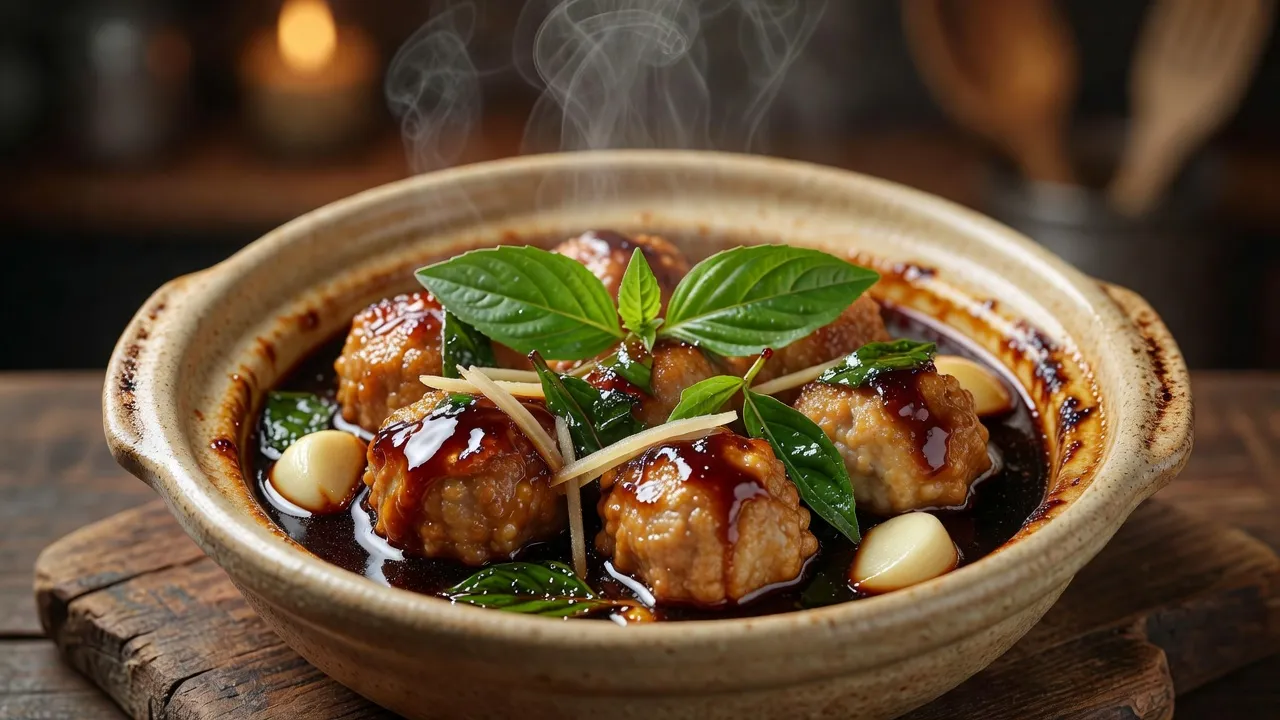
Taiwanese three cup meatballs bring the iconic flavors of san bei ji - Taiwan’s famous basil chicken - into an easy weeknight meatball dinner. Ground pork meatballs are pan-seared until golden, then braised in a glossy sauce of equal parts soy sauce, sesame oil, and rice wine with whole garlic cloves, ginger, and a generous handful of fresh Thai basil. Ready in 30 minutes, this recipe delivers the bold, aromatic flavor of Taiwanese night market food without the deep fryer.
The three cup technique is one of Taiwan’s most beloved cooking methods. The name refers to the equal proportions of soy sauce, sesame oil, and rice wine that form the braising liquid. Unlike Korean bulgogi meatballs which lean sweet and sticky, three cup meatballs are deeply savory with a nutty sesame undertone and the bright punch of fresh basil. For more Asian-inspired meatballs, check out our Asian meatballs curation.
Key Takeaways
- Three cup sauce = equal parts soy sauce, sesame oil, and rice wine. The 1:1:1 ratio is the foundation of the dish - do not change it.
- Whole garlic cloves are toasted until golden, then braised in the sauce until sweet and creamy. They are a key feature, not a garnish.
- Fresh Thai basil goes in at the very end - it wilts in 30 seconds and adds the bright, peppery aroma that defines three cup cooking.
- 30 minutes total - 10 minutes prep, 20 minutes cooking. One skillet for searing and braising.
- Ground pork is traditional for Taiwanese meatballs. Beef works but changes the flavor profile significantly.
How to Make Taiwanese Three-Cup Meatballs
- Make the meatball mixture. Combine pork, panko, soy sauce, sesame oil, garlic, and green onion in a bowl. Mix until just combined - do not overwork or the meatballs will be dense and rubbery. (See prep hint: Mix Until Just Combined)
- Shape into meatballs. Wet your hands and roll into 24 meatballs, about 1.25 inches across. A medium cookie scoop keeps them uniform.
- Sear the meatballs. Heat neutral oil in a large skillet or wok over medium-high heat. Brown meatballs in batches for 2 to 3 minutes per side until golden on the outside. They do not need to be cooked through yet. Transfer to a plate.
- Toast the aromatics. Reduce heat to medium. Add whole garlic cloves and ginger coins to the same pan. Toast for 1 to 2 minutes until fragrant and lightly golden on the edges. (See prep hint: Whole Garlic Cloves)
- Make the three cup sauce. Add sesame oil, soy sauce, rice wine, and sugar to the pan. Stir to combine and bring to a simmer. The sauce should bubble gently around the garlic and ginger. (See prep hint: Rice Wine (Michiu))
- Return meatballs to the pan. Nestle them into the sauce in a single layer. Cover and cook for 8 to 10 minutes, turning once halfway through, until the sauce reduces and glazes the meatballs. The internal temperature should reach 160F (71C).
- Add Thai basil. Toss the basil leaves into the pan and stir for 30 seconds until wilted and fragrant. The residual heat is enough - do not cook the basil further or it turns bitter.
- Serve. Spoon jasmine rice into bowls. Top with meatballs and sauce, making sure to scoop up the whole garlic cloves and ginger. Garnish with sliced red chili and extra basil if desired.
Ingredients
For the Meatballs
- 1 lb (450 g) ground pork, 80/20
- 1/4 cup panko breadcrumbs
- 1 tbsp soy sauce
- 1 tsp sesame oil
- 2 cloves garlic, minced
- 1 green onion, finely sliced
For the Three Cup Sauce
- 1 tbsp neutral oil, for searing
- 8 cloves garlic, peeled and left whole
- 1-inch piece fresh ginger, sliced into coins
- 3 tbsp sesame oil
- 3 tbsp soy sauce
- 3 tbsp rice wine (Michiu or dry sherry)
- 1 tbsp sugar
- 1 cup packed fresh Thai basil leaves
For Serving
- Jasmine rice, cooked
- Sliced red chili
- Extra basil leaves
What Makes Three Cup Different from Other Asian Meatballs?
Three cup cooking is uniquely Taiwanese. While Thai basil meatballs use fish sauce, oyster sauce, and bird’s eye chilies, three cup relies on the clean, bold trio of soy sauce, sesame oil, and rice wine. The result is richer and nuttier than Thai basil pork, with a deeper umami backbone.
The technique also differs from Chinese stir-fries. Three cup is a braise, not a stir-fry. The meatballs cook in the sauce with the lid on, absorbing flavor as the liquid reduces into a glossy glaze. This is the same method used for the original san bei ji (three cup chicken) that made the dish famous across Taiwan.
Tips for Perfect Three Cup Meatballs
Use ground pork with some fat. Lean pork dries out during braising. An 80/20 ratio keeps the meatballs juicy while the fat renders into the sauce for extra richness.
Do not skip the whole garlic. Toasting whole cloves until golden, then braising them in the sauce, transforms them into sweet, creamy bites. They are a defining feature of three cup cooking - eating the garlic is part of the experience.
Toast the ginger coins. Slicing ginger into coins rather than mincing lets you toast them until golden and fragrant. The ginger adds warmth without overpowering the dish.
Use fresh Thai basil, not Italian basil. Thai basil has a stronger, more peppery flavor with an anise note that holds up to the hot sauce. Italian basil turns bitter and loses its aroma when heated.
Let the sauce reduce. After braising, the sauce should coat the meatballs in a glossy glaze, not pool at the bottom of the pan. If it is too thin, remove the lid and cook for another 1 to 2 minutes.
Storage and Meal Prep
Three cup meatballs keep well in the fridge for 3 to 4 days in an airtight container. The flavor deepens overnight as the meatballs absorb more of the braising liquid.
To reheat: Warm in a skillet over medium heat with a splash of water to loosen the sauce. Microwave works too - 2 minutes at 70% power, stirring halfway.
To freeze: Cool completely, then freeze in a single layer on a baking sheet. Transfer to a freezer bag once solid. Keeps for 2 to 3 months. Thaw in the fridge overnight before reheating.
Frequently Asked Questions
What is three cup cooking?
Three cup (san bei) is a Taiwanese braising technique built on equal parts soy sauce, sesame oil, and rice wine. The name literally means “three cups” - one cup of each ingredient. Originally made with chicken (san bei ji), the method works with pork, tofu, fish, and vegetables. The sauce reduces into a glossy, intensely flavored glaze.
Can I use chicken instead of pork?
Yes. Ground chicken works well and produces lighter meatballs. Use the same proportions and cooking times. Ground turkey is another option, though it is leaner and may dry out slightly during braising - add an extra teaspoon of sesame oil to the mixture.
What rice wine should I use?
Taiwanese Michiu (mijiu) rice wine is traditional and has a mild, slightly sweet flavor. If unavailable, dry sherry or Chinese Shaoxing wine are good substitutes. Avoid sweet cooking wines - they add too much sugar and throw off the 1:1:1 ratio.
Do I have to use whole garlic cloves?
Whole toasted garlic is a signature element of three cup cooking and strongly recommended. If you prefer, you can mince 4 cloves and add them with the ginger instead. The flavor will be more evenly distributed but you lose the sweet, creamy whole-clove texture.
Can I make this in an Instant Pot?
Yes. Sear the meatballs using the saute function, then add the sauce and aromatics. Cook on high pressure for 5 minutes with natural release. The basil goes in after depressurizing. The sauce may be thinner than stovetop - simmer on saute mode for 2 to 3 minutes to reduce.
Is three cup the same as Chinese soy sauce chicken?
No. Chinese soy sauce chicken uses a master stock with star anise, cinnamon, and rock sugar - a different flavor profile entirely. Three cup is distinctly Taiwanese, relying on the clean trio of soy sauce, sesame oil, and rice wine with fresh basil and ginger.
Sources
- Serious Eats - Three Cup Chicken - Detailed technique explanation for the classic san bei ji
- The Woks of Life - Three Cup Chicken - Traditional Taiwanese recipe with ingredient substitutions
- Red House Spice - Three Cup Tofu - Plant-based adaptation showing the versatility of three cup sauce