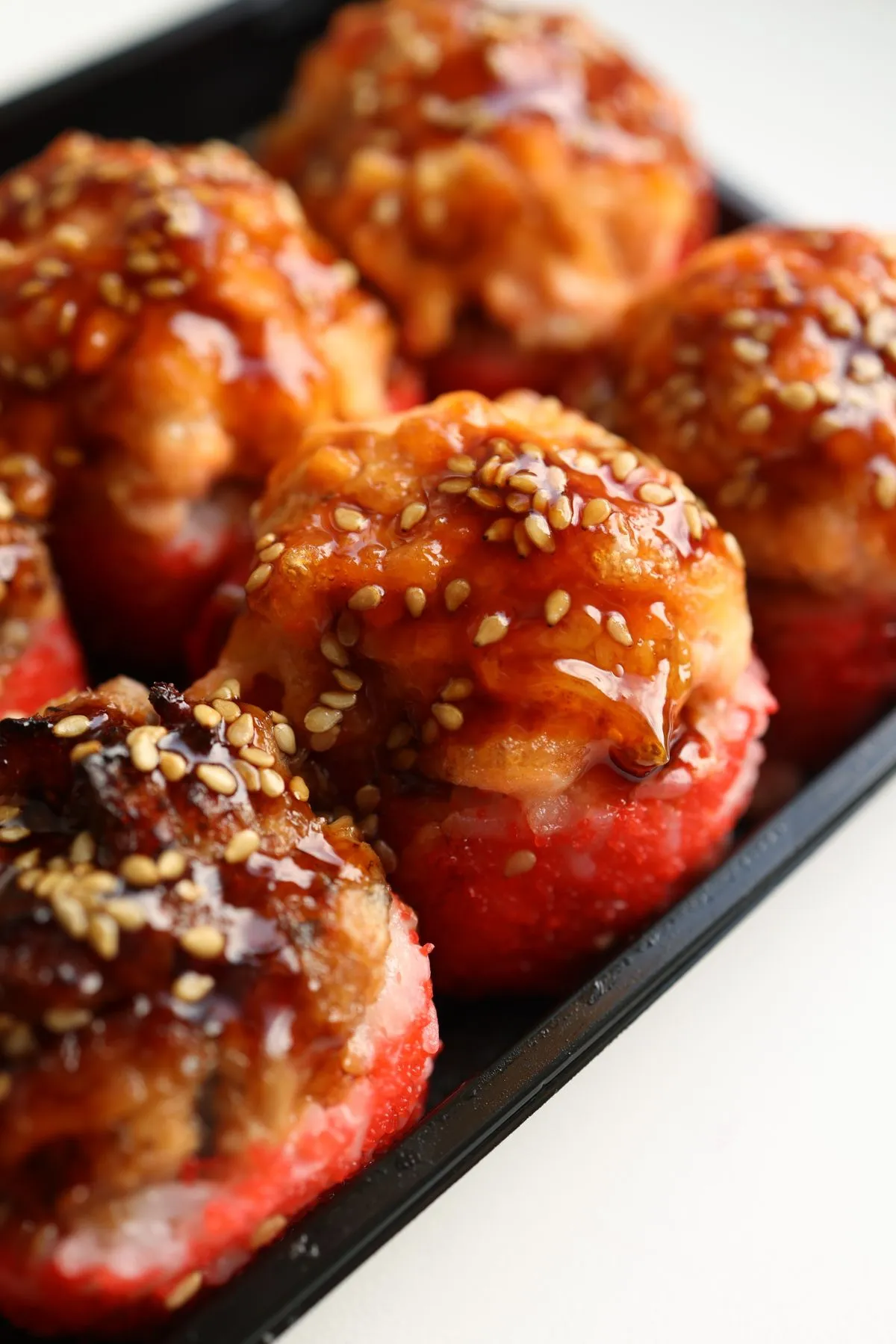
Korean wanja jorim (완자조림) are tender braised meatballs glazed in a sweet-savory soy sauce - a classic Korean comfort dish that’s been a staple in Korean homes for generations. The meatballs are pan-fried until golden, then simmered in a glossy jorim jang (braising sauce) until every bite is coated in rich, caramelized flavor. Ready in 35 minutes, wanja jorim works as a weeknight dinner over rice or as party appetizers on bamboo skewers.
This recipe is different from Korean bulgogi meatballs - those use a honey-soy glaze with Asian pear for sweetness. Wanja jorim leans on a traditional Korean braising sauce built from soy sauce, brown sugar, and sesame oil, with the option of gochujang for heat. For more Korean-inspired recipes, see our Korean BBQ bulgogi meatballs, kimchi meatballs, and the full Asian meatballs collection.
Key Takeaways
- Tofu is the secret ingredient. Mashed soft tofu adds moisture and tenderness without making the meatballs taste like tofu. It melts into the meat during cooking, keeping them juicy even with lean beef.
- Wanja means meatball in Korean. Jorim means braised. The dish is defined by the two-step method: pan-fry first, then braise in sauce until glazed.
- Cornstarch dredge creates a light crust that helps the sauce cling to each meatball. Shake off excess so the coating stays thin.
- Jorim jang is the traditional Korean braising sauce - soy sauce, sugar, sesame oil, and optionally gochujang. The same sauce base works for braised tofu, eggs, and vegetables.
- Party-friendly. Thread the glazed meatballs onto bamboo skewers and serve with extra sauce for dipping. A classic Korean lunch box (dosirak) item.
How to Make Korean Wanja Jorim
- Make the meatball mixture. Combine beef, pork, mashed tofu, panko, garlic, soy sauce, sesame oil, sugar, pepper, and green onions in a large bowl. Mix in quick circular motions with your hand until evenly blended - do not overwork. (See prep hint: Drain and Mash Tofu)
- Shape the meatballs. Roll into about 30 small meatballs, roughly 1 inch across. Place on a baking sheet. Dredge each meatball lightly in cornstarch, shaking off excess.
- Pan-fry the meatballs. Heat neutral oil in a large skillet over medium heat. Add half the meatballs and fry for 4 to 5 minutes, turning occasionally, until golden brown on all sides but not cooked through. Transfer to a plate and repeat with the remaining meatballs. (See prep hint: Mix by Hand)
- Make the braising sauce. In the same skillet (do not wipe it out), combine soy sauce, brown sugar, rice vinegar, sesame oil, and gochujang if using. Bring to a boil over medium heat.
- Braise the meatballs. Return all meatballs to the skillet. Stir the cornstarch slurry and pour it into the sauce. Reduce heat to medium-low and simmer for 5 to 6 minutes, turning the meatballs occasionally, until the sauce thickens into a glossy glaze and the meatballs reach 160F (71C) internally.
- Garnish and serve. Sprinkle with toasted sesame seeds and sliced green onions. Serve hot over steamed rice or with bamboo skewers as an appetizer.
Ingredients
For the Meatballs
- 1 lb (450 g) ground beef, 80/20
- 1/2 lb (225 g) ground pork
- 4 oz (115 g) soft tofu, drained and mashed
- 1/4 cup panko breadcrumbs
- 3 cloves garlic, minced
- 2 tbsp soy sauce
- 1 tbsp sesame oil
- 1 tsp sugar
- 1/2 tsp black pepper
- 2 green onions, finely sliced
- 2 tbsp cornstarch, for dredging
- 2 tbsp neutral oil, for pan-frying
For the Braising Sauce (Jorim Jang)
- 1/3 cup soy sauce
- 2 tbsp brown sugar
- 1 tbsp rice vinegar
- 1 tbsp sesame oil
- 1 tsp gochujang (optional, for heat)
- 1 tsp cornstarch mixed with 1 tbsp water
For Serving
- Toasted sesame seeds
- Sliced green onions
- Steamed rice
What Is Wanja Jorim?
Wanja (완자) is the Korean word for meatball. Jorim (조림) means braised or simmered in sauce. Together, wanja jorim describes the cooking technique: meatballs that are first pan-fried for color and texture, then braised in a sweet-savory sauce until the glaze clings to every surface.
The dish has roots in Korean Royal Court cuisine. Traditionally, meatballs (called gogi wanja, or “meat balls”) were an essential ingredient in Sinsello, an elaborate Royal Court hotpot. Over time, wanja jorim became a beloved home cooking dish - popular as a lunch box item, party appetizer, or weeknight dinner served over rice.
The braising sauce, known as jorim jang, is one of the foundational sauce bases in Korean cooking. The same soy-sugar-sesame combination appears in braised tofu (dubu jorim), braised eggs (mayak jieran), and braised anchovies - making this recipe a gateway to dozens of other Korean dishes.
Tips for Perfect Wanja Jorim
Use a beef-pork blend. The pork adds fat and moisture that keeps the meatballs tender. If you only have beef, use 80/20 grind - lean beef produces dry, crumbly meatballs.
Do not skip the tofu. The mashed soft tofu is not just filler - it adds moisture and creates a lighter, more tender texture. Press it between paper towels for 5 minutes before mashing to remove excess water.
Small meatballs cook faster. Wanja are traditionally small - about 1 inch across. This size pan-fries evenly, braises quickly, and works perfectly as party appetizers on skewers.
Cornstarch dredge matters. The light cornstarch coating serves two purposes: it creates a slight crust during pan-frying, and it helps the braising sauce thicken and cling to each meatball. Shake off excess so the coating stays thin.
Brown in batches. Crowding the pan steams the meatballs instead of searing them. Work in 2 batches for the best golden crust.
The sauce should be glossy, not runny. The cornstarch slurry thickens the jorim jang into a glaze that coats each meatball. If the sauce is too thin, simmer another minute. If too thick, add a splash of water.
Variations
Spicy Wanja Jorim. Add 1 to 2 tablespoons of gochujang to the braising sauce for a spicy kick. The fermented chili paste adds depth and heat without overwhelming the soy-sesame base.
Chicken Wanja. Substitute ground chicken for the beef-pork blend. Chicken wanja are lighter and work well as a party appetizer. Reduce braising time by 1 minute since chicken cooks faster.
Tofu Wanja (Vegetarian). Replace the meat with extra-firm tofu, crumbled and mixed with the same seasonings. The braising sauce is naturally vegan - use tamari instead of soy sauce for a gluten-free version.
Wanja Jeon (Pan-Fried Version). Instead of braising, dip the shaped meatballs in beaten egg and pan-fry until golden on all sides. This is the classic Korean pancake-style meatball, served with a soy-vinegar dipping sauce.
Add Vegetables. Finely diced mushrooms, water chestnuts, or carrots mixed into the meatball add texture and flavor. Chop them very small so the meatballs hold together.
How to Store and Reheat
Fridge: Store leftover meatballs in an airtight container for up to 3 days. Reheat in a skillet over medium heat with a splash of water to loosen the glaze.
Freezer: Place cooled meatballs in a single layer on a baking sheet, freeze until solid, then transfer to a freezer bag. Freeze for up to 3 months. Thaw overnight in the refrigerator before reheating.
Meal prep: Make the meatballs up to 24 hours ahead and store uncooked in the refrigerator. Pan-fry and braise when ready to serve.
FAQ
What does wanja jorim mean? Wanja (완자) means meatball in Korean, and jorim (조림) means braised or simmered in sauce. Together, the name describes the cooking technique - meatballs that are first pan-fried for color, then braised in a sweet-savory soy sauce until glazed.
Is wanja jorim spicy? Traditional wanja jorim is not spicy - it’s sweet and savory. However, many modern versions add gochujang (Korean fermented chili paste) to the braising sauce for a mild to moderate heat. The recipe works perfectly without it.
Can I use ground turkey instead of beef and pork? Yes. Ground turkey works as a substitute, though the meatballs will be leaner and slightly drier. Add an extra tablespoon of sesame oil or a tablespoon of mayonnaise to the mixture to compensate for the lower fat content.
What is the difference between wanja jorim and Korean meatball soup? Wanja jorim are pan-fried and braised in a thick glaze, giving them a caramelized, sticky exterior. Korean meatball soup (wanjakuk) features meatballs simmered in a clear anchovy or kelp broth - a completely different preparation and flavor profile.
How do I serve wanja jorim as an appetizer? Thread the glazed meatballs onto bamboo skewers (2 to 3 per skewer) and serve with extra jorim jang in a small dipping bowl. This is how wanja jorim is commonly served at Korean parties and gatherings.
Can I bake wanja jorim instead of pan-frying? You can bake the meatballs at 400F (200C) for 15 to 18 minutes until browned, then add them to the braising sauce on the stovetop. The pan-fried version develops better color and flavor, but baking works for large batches.