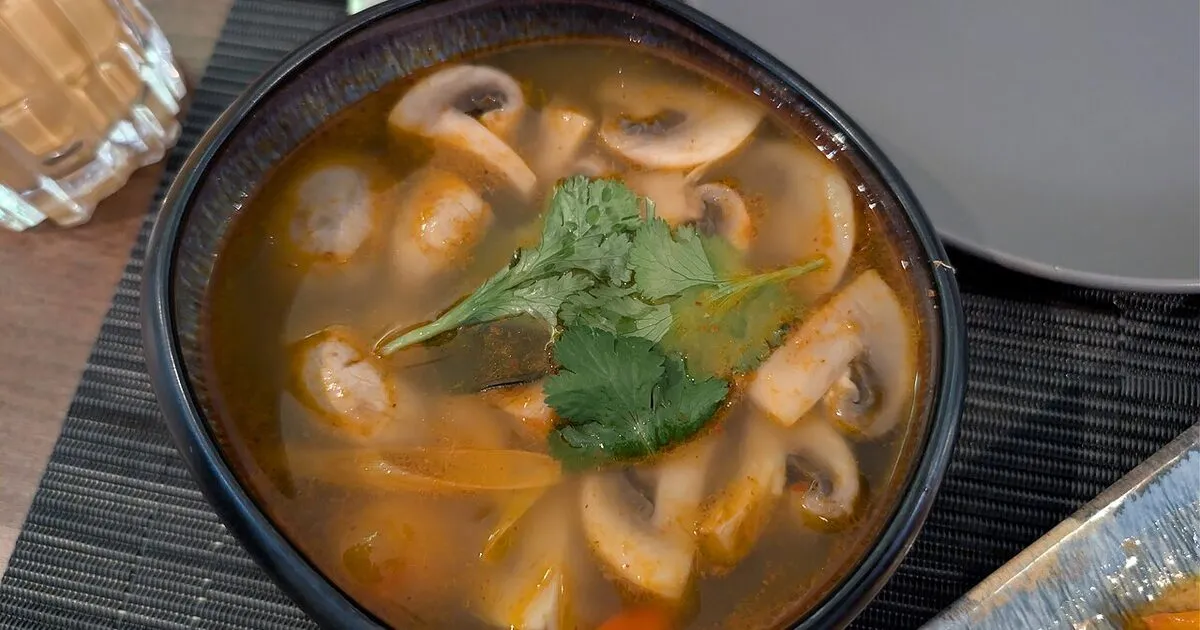
Tom yum meatballs take Thailand’s most famous hot and sour soup and swap the usual shrimp for tender, aromatic meatballs. The broth still gets its signature punch from the same three herbs that define tom yum everywhere: lemongrass, galangal, and kaffir lime leaves, balanced by fish sauce and fresh lime. The meatballs, spiked with red curry paste, soak up that broth instead of just floating in it.
The dish is a 35-minute one-pot dinner that lands the full tom yum experience without a seafood run. The meatballs brown first for flavor, then simmer in the aromatic broth while you set the table. Serve it clear and bright, or go creamy with a swirl of coconut milk (tom yum nam khon style) - both are pictured in every Thai restaurant worth its salt.
This recipe works with ground pork or chicken, dials the heat from mild to fiery, and doubles easily for meal prep. It also fits right into the Thai lineup on this site if you love the coconut galangal soup or the red curry meatballs. Let’s get cooking.
Key Takeaways
- Tom yum broth is lemongrass, galangal, and kaffir lime leaves simmered in stock, sharpened with fish sauce and lime juice.
- Brown the meatballs first - 5 to 6 minutes per batch builds flavor and keeps them intact in the broth.
- Simmer the aromatics 8 to 10 minutes before adding anything else so the herbs really perfume the broth.
- Clear or creamy is your call - skip the coconut milk for classic tom yum, add it for tom yum nam khon.
- Fish sauce and lime go in at the end, off the heat, so the sour-salty balance stays bright.
How to Make Tom Yum Meatballs
- In a bowl, combine the ground pork or chicken, red curry paste, 1 tablespoon of the fish sauce, egg, panko, garlic, and cilantro stems. Mix gently until just combined, then roll into about 18 small meatballs, 1 1/2 inches across.
- Heat the oil in a Dutch oven or wide pot over medium-high heat. Brown the meatballs in batches for 5 to 6 minutes until golden on all sides, then transfer to a plate.
- Pour off excess fat, add the chicken broth, and bring to a simmer. Add the smashed lemongrass, galangal, torn kaffir lime leaves, and chilies. Simmer for 8 to 10 minutes to infuse the broth.
- Add the mushrooms and cherry tomatoes and cook 2 minutes. Stir in the nam prik pao if using, then return the meatballs to the pot. Simmer gently for 8 to 10 minutes until the meatballs are cooked through to 165°F in the center.
- Remove from the heat. Stir in the remaining 1 tablespoon fish sauce and the lime juice. For creamy nam khon tom yum, stir in the coconut milk. Remove the lemongrass and lime leaves, ladle into bowls, and garnish with cilantro and sliced chili.
Ingredients
- 1 lb (450 g) ground pork or ground chicken
- 2 tbsp red curry paste
- 2 tbsp fish sauce, divided
- 1 large egg
- 1/2 cup panko breadcrumbs
- 2 cloves garlic, minced
- 2 tbsp finely chopped cilantro stems
- 1 tbsp neutral oil, for browning
- 4 cups chicken broth
- 2 stalks lemongrass, trimmed and smashed
- 3 to 4 slices fresh galangal (or ginger)
- 4 to 5 kaffir lime leaves, torn
- 1 to 2 Thai bird’s eye chilies, lightly smashed (to taste)
- 1 cup sliced mushrooms (straw or shiitake)
- 1/2 cup cherry tomatoes, halved
- 1 tbsp nam prik pao (Thai chili jam), optional
- 2 tbsp lime juice, plus wedges for serving
- 1/2 cup coconut milk, optional (nam khon style)
- Fresh cilantro leaves and sliced red chili, for garnish
What Is Tom Yum?
Tom yum (ต้มยำ) is Thailand’s iconic hot and sour soup, and the name translates roughly to “boiled” (tom) with “mixed” (yum) flavors. Its identity comes from four aromatic pillars: lemongrass, galangal, kaffir lime leaves, and fresh bird’s eye chilies, plus fish sauce for salt and lime juice for sourness. When shrimp are the star it is called tom yum goong; with chicken, tom yum gai. Tom yum with meatballs is the same broth built around ground meat instead.
There are two classic presentations. Clear tom yum keeps the broth clean and brothy, with a sharp, almost bracing balance of hot and sour. Tom yum nam khon (literally “golden water”) adds coconut milk for a creamy, mellowed version that many Western diners first meet at Thai restaurants. Both start from the same aromatic base, so you can split a pot and try each.
| Style | Broth | Character | Best when |
|---|---|---|---|
| Tom yum (clear) | Stock + aromatics, no milk | Sharp, hot, sour, brothy | You want the classic Thai balance |
| Tom yum nam khon | Same base + coconut milk | Creamy, mellow, rich | First-timers and comfort cravings |
The herbs are the non-negotiables. Lemongrass gives citrusy freshness, galangal (a more peppery, piney cousin of ginger) adds warmth, and kaffir lime leaves perfume everything. They infuse the broth and get removed before serving - nobody eats the leaves. For more on the coconut-cream version of Thai soup, see the tom kha gai-style coconut galangal soup on this site.
Tips for the Best Tom Yum Meatballs
- Buy whole herbs, not just paste. The paste gets you close, but simmering real lemongrass, galangal, and lime leaves is what makes the broth taste like a Thai restaurant. Use them fresh and smash or tear them to release the oils.
- Keep the meatballs small. Golf-ball-sized meatballs (1 1/2 inches) cook through in the simmer without drying out and fit neatly in a soup spoon.
- Brown, do not cook through. The browning step is for crust and flavor. The meatballs finish cooking in the broth, so pull them from the pan while still pale in the middle.
- Taste and balance at the end. The classic tom yum triangle is salty (fish sauce), sour (lime), and spicy (chilies). Add them gradually off the heat and taste after each addition.
- Galangal substitutes fine. Fresh galangal is the authentic choice, but ginger stands in acceptably. Use half the amount and know the broth will be slightly sweeter and less peppery.
- Skip the coconut milk for a lighter bowl. Clear tom yum is genuinely low-calorie and bright. Add coconut milk only if you want the creamy nam khon version.
Variations
- Ground chicken or turkey. Lean poultry makes a lighter meatball that picks up broth flavor beautifully. Add a teaspoon of oil to the mixture so it stays tender - same trick used in the healthy turkey meatballs.
- Tofu or vegan version. Swap the meat for crumbled firm tofu bound with panko and a flax egg, use vegetable broth, and replace fish sauce with soy sauce or tamari. The broth carries the dish either way.
- Spicy noodle bowl. Simmer rice noodles in the broth for the last 3 to 4 minutes and you have tom yum noodle soup with meatballs, in the spirit of Thai boat noodles.
- Meal prep bowls. Portion the soup with jasmine rice or noodles into containers. The broth gets more intense overnight, which most people like even more.
- Milder heat for kids. Use one mild chili seeded, or skip the fresh chilies and let each bowl add chili crisp or sriracha at the table.
For more Thai meatball inspiration, browse the Thai meatball recipes roundup, or the wider Asian meatball recipes collection.
Storage and Reheating
- Fridge: Store tom yum meatballs in a covered container for up to 4 days. Remove the lemongrass and lime leaves before storing - they turn bitter as they sit.
- Freeze: Freeze the soup without coconut milk for up to 3 months. Thaw overnight in the fridge and reheat gently; add the coconut milk and a squeeze of fresh lime after reheating.
- Reheat: Warm over medium-low heat until simmering, 8 to 10 minutes. Always add a fresh squeeze of lime after reheating - the sourness fades in the fridge.
FAQ
What is tom yum made of? Tom yum is a Thai hot and sour soup built on lemongrass, galangal, kaffir lime leaves, and bird’s eye chilies simmered in stock, then seasoned with fish sauce and lime juice. Shrimp (goong), chicken (gai), or meatballs can be the main protein. The name means “boiled mixed” in Thai.
Is tom yum soup spicy? Classic tom yum is genuinely spicy, with heat from fresh bird’s eye chilies. This recipe keeps it adjustable: one smashed chili is a mild warm tingle, two makes it properly hot, and you can skip the fresh chilies entirely for a kid-friendly bowl while keeping the lemongrass and lime character.
Can I use ground beef or turkey for tom yum meatballs? Yes. Ground pork and chicken are the classic choices, but beef and turkey both work. Lean turkey needs a teaspoon of oil added to the mix to stay juicy. Cook any meatball to 165°F in the center before serving.
What is the difference between tom yum and tom kha? Tom yum is a hot and sour soup with a clear, sharp broth made from lemongrass, galangal, kaffir lime leaves, fish sauce, and lime. Tom kha gai is a milder, creamier coconut milk soup built on many of the same aromatics. This recipe’s nam khon variation bridges the two by adding coconut milk to classic tom yum.
Can I make tom yum meatballs ahead of time? Yes. Form the meatballs up to a day ahead and keep them covered in the fridge, and prep the smashed lemongrass and torn lime leaves in a bowl so the soup comes together in minutes. The finished soup keeps 4 days in the fridge and freezes up to 3 months (without coconut milk).
What goes well with tom yum meatballs? Steamed jasmine rice is the classic pairing, and rice noodles turn it into a noodle soup. A simple cucumber salad and cold drinks balance the heat. For a full Thai spread, pair it with Thai chicken meatballs with sweet chili sauce as an appetizer.
