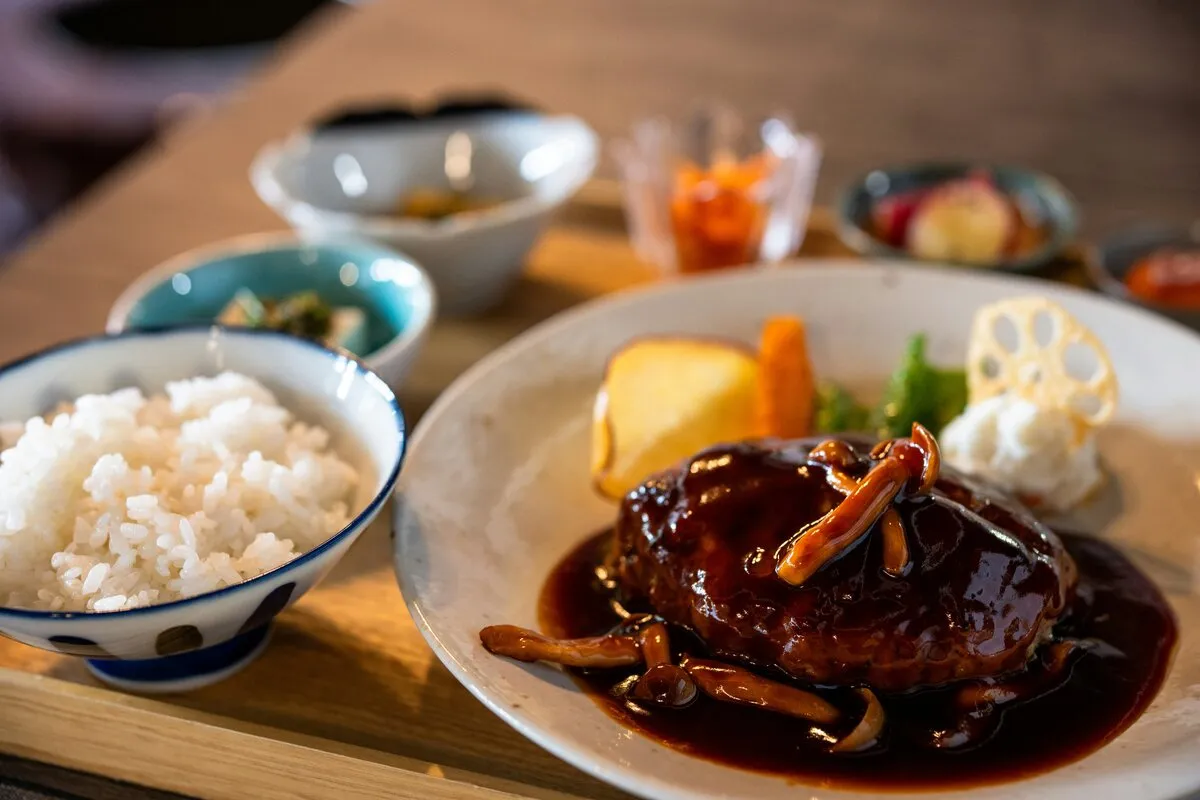
Japanese hambagu (ハンバーグ) is a pan-seared beef and pork patty served over rice with a glossy sauce. It is one of the most beloved dishes in Japanese home cooking - a yoshoku classic that has nothing to do with buns, ketchup, or American burgers. If you love Japanese tsukune, hambagu is the beef-and-pork counterpart - same springy technique, richer flavor.
The key difference: hambagu uses a panade of panko and milk for a springy, bouncy texture. The patties are seared until golden, then steam-finished under a lid with red wine. Served over rice with a quick ketchup-Worcestershire sauce, this is comfort food at its most satisfying - ready in about 35 minutes.
Key Takeaways
- Use a beef-pork blend (2:1 ratio) - pure beef makes hambagu too dense. The pork adds fat and tenderness that keeps the patty juicy.
- Sauté the onion first - raw onion releases moisture during cooking and makes the patty fall apart. Cook it until soft and let it cool before mixing.
- Soak the panko in milk - this is the panade. It keeps the meat moist and creates the signature springy texture.
- Knead the mixture - unlike Western burgers where overworking is bad, hambagu needs kneading to develop the bouncy texture. Press, fold, and slap the mixture until it feels sticky and cohesive.
- Indent the center - press a shallow thumbprint in each patty to prevent puffing into a dome during cooking.
How to Make Japanese Hambagu
-
Saute the onion: Heat 1 tbsp oil in a skillet over medium heat. Add the finely diced onion and cook 5 to 7 minutes, stirring often, until soft and translucent. Transfer to a large bowl and let cool for 5 minutes.
-
Make the panade: While the onion cools, combine the panko and milk in a small bowl. Let it sit 3 to 5 minutes until the breadcrumbs absorb the liquid and turn mushy.
-
Mix the meat: Add the ground beef, ground pork, egg, salt, pepper, and nutmeg to the cooled onions. Add the soaked panko. Mix with your hands until just combined - do not overmix.
-
Knead for springiness: Transfer the mixture to a clean surface. Knead by pressing and folding 30 to 40 times, then slap the mixture against the bowl 10 to 15 times. The mixture should become sticky and pale.
-
Shape the patties: Divide the mixture into 4 equal portions. Shape each into a thick oval patty about 1 inch thick. Toss each patty gently between your hands 5 to 6 times to release air pockets. Make a shallow indent in the center of each patty with your thumb - this prevents puffing during cooking.
-
Pan-sear the hambagu: Heat 1 tbsp oil in a large skillet over medium-high heat. When the oil shimmers, place the patties in the pan. Sear without moving for 3 to 4 minutes until a deep golden-brown crust forms.
-
Flip and sear the other side: Flip each patty and sear another 3 minutes. The center will still be raw at this point - that is expected.
-
Steam-finish with wine: Pour the red wine around the patties (not directly on top). Immediately cover the skillet with a lid. Reduce heat to medium-low and steam for 5 to 6 minutes until the internal temperature reaches 160F (71C).
-
Make the sauce: Transfer the hambagu to plates. Add the butter, ketchup, Worcestershire sauce, and oyster sauce to the same skillet. Stir over medium heat for 1 to 2 minutes until glossy and bubbling.
-
Serve immediately: Spoon the sauce generously over each hambagu. Serve with steamed rice and shredded cabbage.
Ingredients
- 1/2 large onion (5 oz / 140 g), finely diced
- 1 tbsp neutral oil (for sauteing onions)
- 1/2 lb (225 g) ground beef (80/20)
- 1/4 lb (115 g) ground pork
- 1/3 cup panko (Japanese breadcrumbs)
- 2 tbsp whole milk
- 1 large egg
- 1/2 tsp kosher salt
- 1/4 tsp freshly ground black pepper
- 1/4 tsp ground nutmeg
- 1 tbsp neutral oil (for searing)
- 3 tbsp red wine (for steaming)
- 1 tbsp unsalted butter
- 4 tbsp ketchup
- 2 tbsp Worcestershire sauce
- 1 tbsp oyster sauce
- Steamed Japanese rice, for serving
- Shredded cabbage or steamed vegetables, for serving
What Is Hambagu?
Hambagu (ハンバーグ) is a yoshoku dish - Japan’s homegrown style of Western-inspired cooking. The name comes from “Hamburg steak,” the German dish that traveled to Japan in the late 1800s during the Meiji era. But hambagu is not a copy of the original. It evolved into something distinctly Japanese: softer, springier, and served over rice rather than in a bun.
According to the Japan Hamburg Association, hambagu is the most popular home-cooked meat dish in Japan. Family restaurants, teishoku diners, and home kitchens all serve their own versions, with sauce variations ranging from classic demi-glace to ponzu-style wafu.
The defining features that set hambagu apart from Western meatballs or Salisbury steak:
| Feature | Hambagu | Western Burger | Salisbury Steak |
|---|---|---|---|
| Meat | Beef-pork blend (2:1) | Beef only | Beef only |
| Binder | Panko + milk panade | None | Breadcrumbs |
| Texture | Springy, bouncy | Coarse, crumbly | Dense, firm |
| Cooking | Sear + steam-finish | Grill or pan-sear | Pan-fry + gravy |
| Serving | Over rice | In a bun | With mashed potatoes |
| Sauce | Demi-glace, wafu, or ketchup-Worcestershire | Ketchup, mustard | Brown gravy |
Sauce Variations
The basic hambagu sauce shown here uses ketchup, Worcestershire sauce, and oyster sauce - the most common home-cooking version in Japan. But hambagu sauces fall into three main styles:
Classic (ketchup-Worcestershire): The everyday version. Quick, tangy, sweet. Most family restaurants serve this.
Demi-glace: A richer, restaurant-style sauce made from brown stock, tomato paste, red wine, and butter. More involved but deeply savory.
Wafu (Japanese-style): Lighter and more refined. Made with ponzu, soy sauce, and sometimes yuzu kosho. Served with grated daikon radish on top.
For weeknight cooking, the ketchup-Worcestershire blend shown in this recipe is the fastest and most forgiving. It comes together in the same skillet while the hambagu rests. If you want a creamier sauce option, try our French meatballs in Dijon cream sauce for comparison.
Tips for Juicy Hambagu
Do not skip the panade. The panko-milk mixture is what makes hambagu springy instead of crumbly. It absorbs meat juices during cooking and keeps the interior moist. For a deeper dive into panade technique, see our how to make meatballs guide.
Cool the onions first. Hot onions cook the egg and start the proteins binding before you want them to. Let them cool to room temperature before mixing with the meat.
Use a meat thermometer. Hambagu must be cooked through (160F / 71C) - unlike American burgers, a rare center is not traditional or recommended. The steam-finish method keeps it juicy even at full doneness. For more on internal temperatures and meatball techniques, check our how to make meatballs guide.
Indent the center. Meat contracts as it cooks. Without the indent, the center puffs up and you end up with a dome instead of a flat patty.
Do not press the patties while cooking. This squeezes out the juices. Let the sear do the work, then trust the steam to finish the center.
Serving Suggestions
Hambagu is traditionally served as a teishoku (set meal) with:
- Steamed Japanese rice
- Shredded raw cabbage
- Miso soup
- Pickled vegetables (tsukemono)
For a quick weeknight version, skip the sides and serve the hambagu directly over a bowl of rice with the sauce spooned on top. Add a fried egg for a heartier meal.
Storage and Reheating
Fridge: Store cooked hambagu in an airtight container for up to 3 days. The sauce keeps separately for 4 days.
Freezer: Wrap cooled patties individually in plastic wrap, then place in a freezer bag. Freeze for up to 2 months. Thaw in the fridge overnight.
Reheat: Warm in a covered skillet over medium-low heat with a splash of water or broth. Add the sauce and stir until heated through, about 3 to 4 minutes. Microwave works too - cover and heat at 50% power in 30-second intervals.
Frequently Asked Questions
What is the difference between hambagu and a hamburger?
Hambagu is a ground meat patty served over rice, not in a bun. It uses a beef-pork blend mixed with a panko-milk panade, creating a springy, bouncy texture unlike any Western burger. The patty is seared then steam-finished under a lid, not grilled. It is a yoshoku dish - Japan’s adaptation of Western cooking - not an American import.
Can I use only ground beef for hambagu?
You can, but the texture will be denser and less tender. The pork adds fat and moisture that keeps the patty juicy. If using all beef, choose 80/20 and consider adding an extra tablespoon of milk to the panade.
What is the best sauce for hambagu?
The most common home-cooking sauce is ketchup mixed with Worcestershire sauce and oyster sauce. Restaurant versions use demi-glace (a brown stock-based sauce) or wafu (ponzu and soy sauce). The ketchup-Worcestershire blend is fastest and most accessible for weeknight cooking.
How do I know when hambagu is done?
Hambagu must reach an internal temperature of 160F (71C). Unlike American burgers, a rare center is not traditional. The steam-finish method with the lid on cooks the center gently while keeping the exterior juicy.
Can I make hambagu ahead of time?
Yes. Shape the patties and refrigerate for up to 24 hours before cooking. You can also freeze shaped raw patties for up to 2 months. Cook from thawed or frozen - add 2 to 3 minutes to the steam time if cooking from frozen.