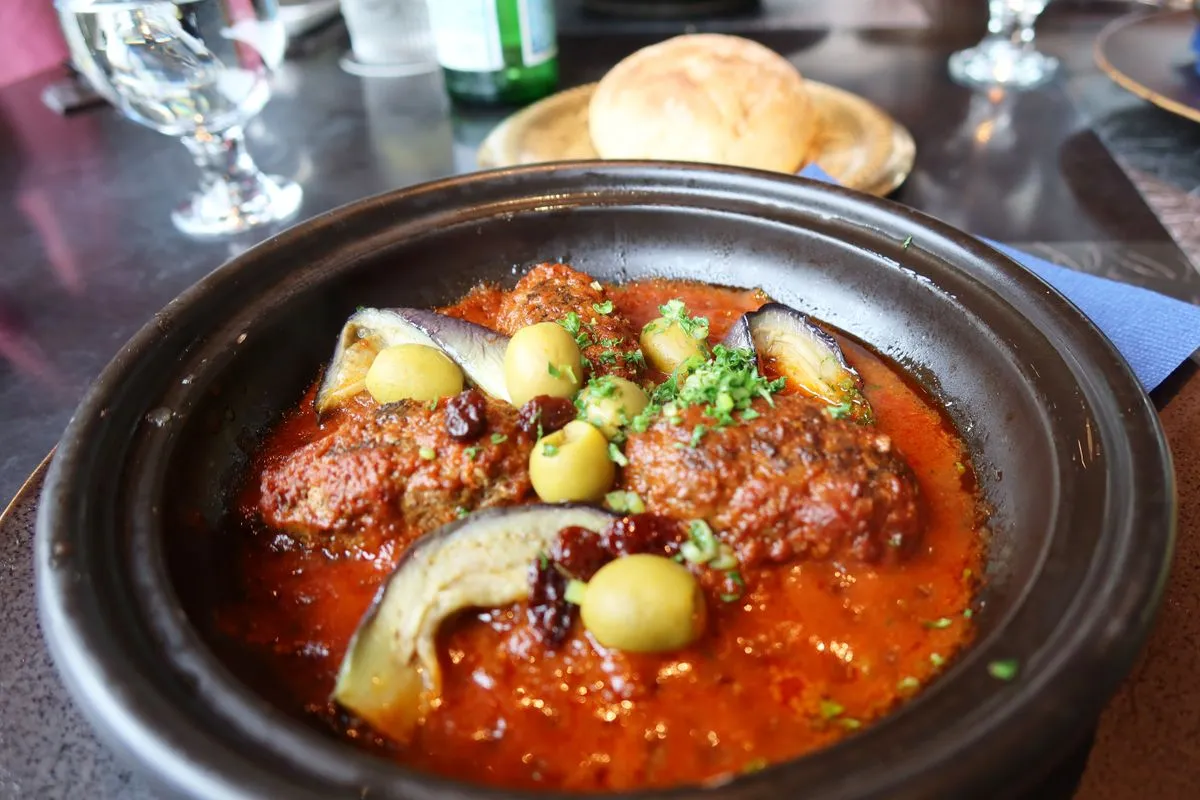
Moroccan kefta with preserved lemon and olives is a fragrant North African meatball dish where spiced lamb simmers in a rich tomato sauce, then gets finished with the salty tang of preserved lemons and briny green olives. The whole dish comes together in 40 minutes and fills the kitchen with the warm scent of cumin, cinnamon, and paprika.
Kefta - or kofta - is the Moroccan term for seasoned ground meat shaped into small balls or patties. The word comes from the Persian kufta, meaning to pound. In Morocco, kefta appears everywhere from street-food grills to home-cooked tagines. This preserved lemon version is a classic comfort dish, traditionally cooked in a clay tagine pot but equally easy in any deep skillet.
Key Takeaways
- Use ground lamb or a lamb-beef blend. Lamb is traditional in Moroccan kefta and has more fat than beef, which keeps the meatballs juicy. A 50/50 blend works well if you prefer a milder flavor.
- Only the preserved lemon rind is used. Scrape off and discard the soft pulp and seeds. Rinse the rind briefly under water to remove excess salt, then slice it. The rind delivers a salty, fermented tang that fresh lemon cannot match.
- Sear before simmering. Browning the meatballs in hot oil creates a caramelized crust that adds depth to the tomato sauce and prevents the kefta from falling apart in the liquid.
- Add preserved lemon at the end. Cooking preserved lemon for too long mellows its punch. Stir it in during the last 2 to 3 minutes to preserve its bright, salty character.
- Serve over couscous or with khobz bread. The fluffy grains or warm flatbread soak up the tomato sauce beautifully.
How to Make Moroccan Kefta with Preserved Lemon and Olives
- Make the meatball mixture. Combine ground lamb, breadcrumbs, grated onion, garlic, cilantro, parsley, cumin, paprika, cinnamon, turmeric, salt, pepper, and cayenne in a bowl. Mix gently with your hands until just combined. Do not overmix.
- Shape into 24 small meatballs, about 1.25 inches across. Set aside on a plate.
- Sear the meatballs. Heat olive oil in a large deep skillet or tagine over medium-high heat. Add the meatballs in a single layer and sear for 2 minutes per side until golden brown. Work in batches if needed - crowding the pan causes steaming, not browning. Remove and set aside.
- Build the tomato sauce. In the same skillet, reduce heat to medium. Add the diced onion and cook for 5 to 6 minutes until soft and translucent.
- Add garlic and spices. Stir in garlic, cumin, paprika, cinnamon, and turmeric. Cook for 1 minute until fragrant. Blooming the spices in oil releases their full flavor.
- Pour in the crushed tomatoes and water or broth. Stir well and bring to a gentle simmer. Cook for 5 minutes, stirring occasionally.
- Return the meatballs to the sauce. Nestle them into the tomato mixture. Cover and simmer for 10 to 12 minutes until the meatballs are cooked through and the sauce has thickened.
- Add the preserved lemon and olives. Stir gently and cook for 2 to 3 minutes to let the flavors meld. Taste and adjust seasoning. Add honey if the sauce tastes too acidic.
- Garnish with fresh cilantro. Serve over fluffy couscous or with warm khobz bread.
Ingredients
For the meatballs:
- 1 lb (450 g) ground lamb or beef (or a 50/50 blend)
- 1/3 cup fine breadcrumbs or panko
- 1 small onion, finely grated and squeezed dry
- 2 cloves garlic, minced
- 2 tbsp fresh cilantro, finely chopped
- 2 tbsp fresh parsley, finely chopped
- 1 tsp ground cumin
- 1 tsp paprika
- 1/2 tsp ground cinnamon
- 1/2 tsp ground turmeric
- 1/2 tsp salt
- 1/4 tsp black pepper
- 1/4 tsp cayenne pepper (optional)
For the tomato sauce:
- 2 tbsp olive oil
- 1 medium onion, finely diced
- 3 cloves garlic, minced
- 1 tsp ground cumin
- 1 tsp paprika
- 1/2 tsp ground cinnamon
- 1/4 tsp ground turmeric
- 1 can (14 oz / 400 g) crushed tomatoes
- 1/2 cup water or chicken broth
- 1 preserved lemon, quartered and sliced (rind only, pulp discarded)
- 1/2 cup green olives (Moroccan or Cerignola), pitted
- 1 tbsp honey (optional)
- Salt and pepper to taste
- Fresh cilantro for garnish
For serving:
- Couscous or khobz bread
What Are Preserved Lemons
Preserved lemons are whole lemons packed in salt and their own juice for 3 to 4 weeks until the rind softens and the flavor transforms. The result is nothing like fresh lemon - the rind becomes intensely salty, tangy, and almost floral, with a deep fermented quality that no amount of fresh citrus can replicate.
In Moroccan cooking, preserved lemons appear in tagines, salads, couscous dishes, and grilled meats. They are a pantry staple - a jar lasts for months in the refrigerator. Only the rind is used; the pulp and seeds are discarded because they become bitter during the preservation process.
You can find preserved lemons at Middle Eastern grocery stores, well-stocked supermarkets, or online. To use, rinse the rind briefly under water to remove excess salt, then slice or chop it. One lemon goes a long way - a quarter to half a lemon is enough for most recipes.
Tips for Perfect Moroccan Kefta
Why sear the meatballs first
Searing creates a golden-brown crust through the Maillard reaction - the same process that gives steak its deep flavor. This crust holds the meatball together during simmering and adds complexity to the tomato sauce as the browned bits dissolve into the liquid. Without searing, the meatballs taste flat and the texture is softer.
The spice blend is the heart of the dish
Cumin, paprika, cinnamon, and turmeric form the classic Moroccan kefta spice profile. Cumin brings earthiness, paprika adds color and mild sweetness, cinnamon contributes warmth, and turmeric gives a golden hue. Together they create the distinctive flavor that makes Moroccan meatballs different from Italian, Turkish, or Asian styles.
Make your own preserved lemons
If you cannot find preserved lemons, you can make them at home. Pack quartered lemons tightly into a clean jar, cover with kosher salt, seal, and refrigerate for 3 to 4 weeks. Shake the jar every few days. The salt draws out the juices and preserves the rind. Homemade preserved lemons taste brighter than store-bought.
Do not overmix the meatball mixture
Overmixing develops the proteins in the meat and makes the kefta dense and rubbery. Mix until the spices and herbs are evenly distributed, then stop. The mixture should look slightly rough, not smooth and paste-like.
Variations
Kefta Mkaouara (With Eggs)
The most famous version of Moroccan kefta adds eggs at the end. After the meatballs simmer in the tomato sauce for 10 minutes, crack 4 to 6 eggs directly into the sauce. Cover and cook for 5 to 6 minutes until the whites are set but the yolks are still runny. This transforms the dish into a shakshuka-style one-pot meal - perfect for brunch or a light dinner.
With Carrots and Potatoes
Add 2 medium carrots (sliced into rounds) and 1 large potato (cubed) to the sauce along with the crushed tomatoes. The vegetables need 15 to 20 minutes of simmering to become tender, so add the meatballs after the vegetables have had a head start.
Baked Kefta
Skip the searing step. Shape the meatballs, place them on a baking sheet, and bake at 400F (200C) for 12 to 14 minutes. Meanwhile, make the tomato sauce on the stovetop. Combine the baked meatballs with the sauce, add preserved lemon and olives, and simmer for 5 minutes. This method is less hands-on and works well for larger batches.
Spicy Kefta with Harissa
Add 1 to 2 tablespoons of harissa paste to the tomato sauce along with the crushed tomatoes. Harissa - a North African chili paste made from roasted peppers, garlic, and spices - adds smoky heat that complements the preserved lemon beautifully. Start with 1 tablespoon and adjust to taste.
Serving Suggestions
- Couscous: The classic pairing. Fluffy couscous absorbs the tomato sauce and balances the richness of the meatballs. Use instant couscous for speed or traditional steamed couscous for better texture.
- Khobz bread: Moroccan round flatbread, perfect for scooping up sauce and meatballs. Pita or naan works as a substitute.
- Cucumber-tomato salad: A simple salad of diced cucumber, tomato, red onion, and lemon juice adds freshness and cuts through the richness.
- Harissa on the side: For those who want extra heat, a small dish of harissa on the table lets each person customize their spice level.
- Moroccan mint tea: The traditional finish to any Moroccan meal. Sweet, strong green tea with fresh mint.
Storage and Reheating
- Fridge: Cooked kefta keeps in an airtight container for up to 4 days. The flavors deepen overnight.
- Freezer: Freeze the meatballs and sauce together for up to 3 months. Thaw in the refrigerator overnight.
- Reheat: Warm gently in a saucepan over medium-low heat, stirring occasionally. Add a splash of water if the sauce has thickened too much. The preserved lemon flavor intensifies after freezing.
FAQ
What is the difference between kefta and kofta
They are the same word from different regions. Kefta is the Moroccan/North African spelling and pronunciation. Kofta is used in Turkey, Iran, and South Asia. Both refer to seasoned ground meat shaped into balls or patties. The spice profiles differ by region - Moroccan kefta uses cumin, cinnamon, and paprika, while Turkish kofta favors cumin and mint.
Can I use beef instead of lamb
Yes. Ground beef works, though lamb is traditional and has more fat, which keeps the meatballs juicy. If using lean beef (90/10 or leaner), add 1 tablespoon of olive oil to the mixture to compensate for the lower fat content. A 50/50 beef-lamb blend gives you the best of both worlds.
Where can I find preserved lemons
Middle Eastern grocery stores, well-stocked supermarkets (check the international aisle), and online retailers. Look for brands from Morocco or France. A jar typically costs $5 to $8 and lasts for months in the refrigerator since you only use small amounts.
Can I make this without a tagine
Absolutely. A deep skillet with a lid works perfectly. The tagine is traditional but not required - the dish is about the flavors, not the vessel. A Dutch oven or any heavy-bottomed pot with a lid produces the same result.
What olives work best
Moroccan olives (small, green, slightly wrinkled) are the traditional choice. Cerignola olives (large, mild, buttery) are a good substitute. Avoid black olives - they are too mild and their color clashes with the tomato sauce. If the olives are very salty, rinse them briefly before adding.
Is this dish spicy
Not by default. The cayenne pepper is optional and adds mild heat. The dominant flavors are warm spices (cumin, cinnamon, paprika) and the salty tang of preserved lemon. If you want heat, add cayenne to the meatball mixture or harissa to the sauce.
Sources
- Moroccan Meatballs with Preserved Lemons and Olives - My Moorish Plate
- Kefta Mkaouara - The Spruce Eats
- Preserved Lemons: A Moroccan Pantry Staple - Saveur
- Safe Minimum Internal Temperature Chart - USDA FSIS
Related: Lamb Kofta with Mint Yogurt Sauce | Kabab Karaz (Syrian Sour Cherry Meatballs) | Greek Youvarlakia Avgolemono | Korean BBQ Bulgogi Meatballs