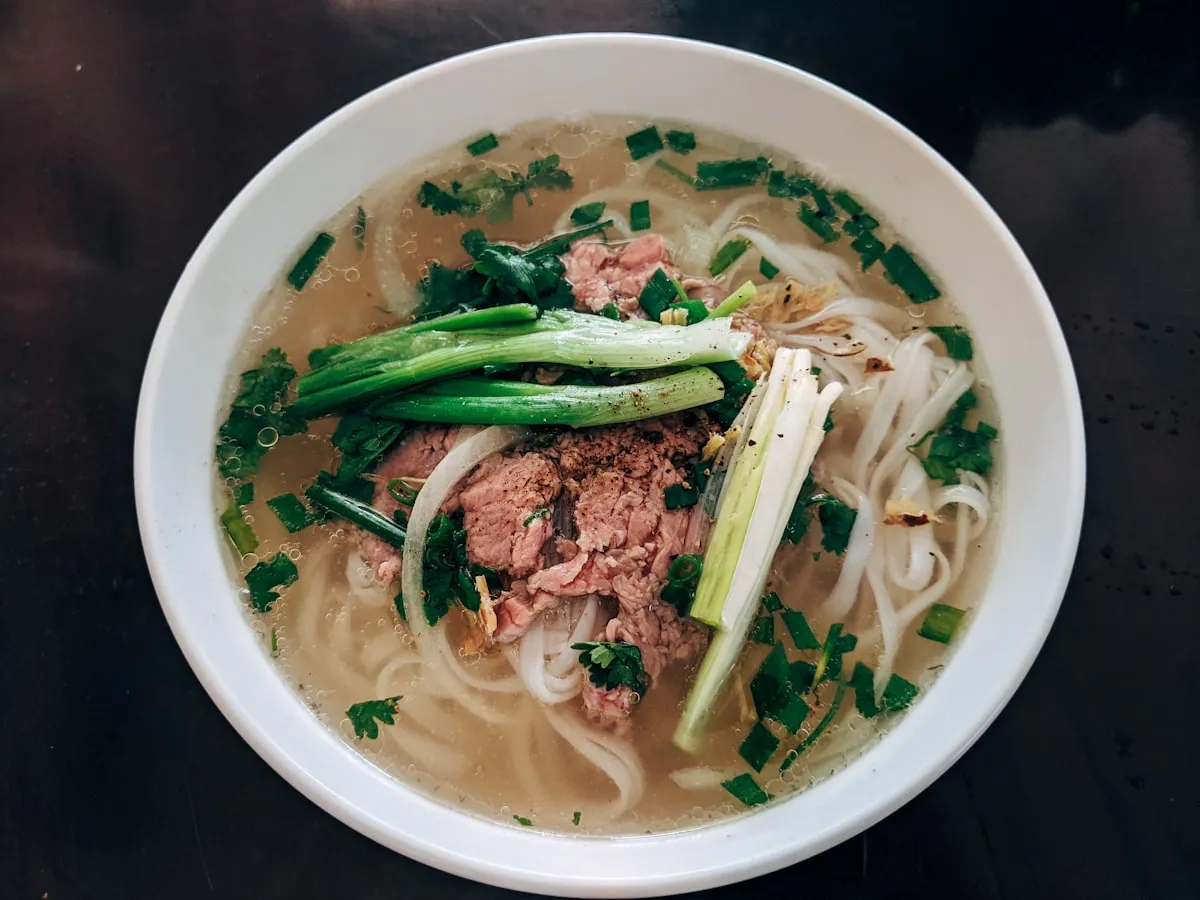
Vietnamese meatball pho (pho bo vien) is a bowl of springy beef meatballs swimming in aromatic star anise broth over rice noodles with fresh herbs. It is not pho tai (rare beef pho). The meatballs here are bouncy, not crumbly - think snap, not crumbling. That texture comes from whipping lean beef into a paste, not from breadcrumbs or eggs.
This version builds a rich pho broth in under an hour using charred aromatics and toasted whole spices, then poaches small, perfectly round meatballs directly in the simmering broth. The result is a restaurant-quality bowl of pho bo vien you can make on a weeknight.
For more Vietnamese flavors, see xiu mai meatballs in tomato sauce and Vietnamese meatball banh mi. For another springy Asian meatball style, try bakso.
Key Takeaways
- Bouncy, not crumbly: Vietnamese bo vien meatballs get their snap from whipped beef paste, not breadcrumbs or eggs.
- Charred aromatics: Direct-flame charring on onion and ginger is what separates real pho broth from a quick spice broth.
- Whole spices: Star anise, cinnamon, coriander, and cloves toasted and simmered create the signature pho fragrance.
- Poach in broth: Meatballs go straight into the simmering broth - no separate browning step needed.
- Fresh garnishes: Bean sprouts, Thai basil, lime, jalapeño, and hoisin at the table are non-negotiable.
How to Make Vietnamese Meatball Pho
-
Char the aromatics. Place the halved onion and halved ginger directly over a gas flame or under a broiler. Turn occasionally until blackened in spots, about 5 to 7 minutes. Rinse off loose char under cold water so the broth stays clean. This step builds the smoky backbone of real pho broth.
-
Toast the spices. In a large pot over medium heat, add star anise, cinnamon stick, coriander seeds, and cloves. Toast for 1 to 2 minutes, shaking the pot, until fragrant. Do not burn - you want warmth, not bitterness.
-
Build the broth. Add beef broth (or water), charred onion, ginger, and toasted spices to the pot. Bring to a boil, then reduce to a gentle simmer for 25 to 30 minutes. The longer it simmers, the deeper the flavor.
-
Whip the beef paste. While the broth simmers, add ground beef, fish sauce, cornstarch, baking powder, sugar, white pepper, and grated garlic to a stand mixer fitted with a paddle attachment. Whip on medium speed for 3 to 4 minutes until the mixture becomes a smooth, sticky paste. This develops the myosin protein that creates the signature bouncy texture. A hand mixer works too - just take a few extra minutes.
-
Shape the meatballs. Wet your hands with cold water. Pinch off small portions of the beef paste and roll into balls about 1 inch across. You should get 20 to 24 meatballs. Cold hands help - dip them in ice water between batches if the paste gets warm and sticky.
-
Season the broth. Remove the onion, ginger, and whole spices from the broth using a strainer or slotted spoon. Stir in fish sauce, sugar, and salt. Taste - it should be savory, aromatic, and slightly sweet. Adjust to your liking.
-
Poach the meatballs. Bring the broth back to a gentle simmer - not a rolling boil, which can break the meatballs apart. Gently drop each meatball into the broth. Cook for 5 to 7 minutes until they float to the surface and are cooked through.
-
Prepare the noodles. While meatballs poach, cook dried rice noodles according to package directions. Drain well and divide among 4 deep bowls.
-
Assemble and serve. Ladle hot broth and meatballs over the noodles. Set out bean sprouts, Thai basil, lime wedges, sliced jalapeño, cilantro, and hoisin sauce. Each person builds their own bowl at the table.
Ingredients
Bouncy Beef Meatballs (Bo Vien)
- 1 lb (450 g) ground beef, lean (90/10 or leaner - fat prevents the springy texture)
- 1 tbsp fish sauce
- 1 tsp cornstarch (or potato starch)
- 1/2 tsp baking powder
- 1/4 tsp sugar
- 1/4 tsp white pepper
- 1 clove garlic, finely grated
Pho Broth
- 1 tsp neutral oil
- 1 large onion, halved
- 3-inch piece fresh ginger, halved lengthwise
- 3 whole star anise
- 1 cinnamon stick (about 3 inches)
- 1 tbsp coriander seeds
- 4 whole cloves
- 6 cups (1.4 L) beef broth or water
- 2 tbsp fish sauce
- 1 tbsp rock sugar or regular sugar
- 1 tsp salt
Noodles and Garnish
- 8 oz (225 g) dried flat rice noodles (banh pho)
- Bean sprouts
- Thai basil
- Lime wedges
- Sliced jalapeño
- Cilantro
- Hoisin sauce
What Is Pho Bo Vien?
Pho bo vien is Vietnamese beef meatball noodle soup. “Pho” is the rice noodle soup base; “bo” means beef; “vien” means ball or sphere. Unlike pho tai (rare beef pho) where thin slices of raw beef cook in hot broth, bo vien uses pre-shaped meatballs that get poached directly in the soup.
The meatballs are the star here. Vietnamese bo vien have a springy, bouncy, almost rubbery texture - completely different from Italian or American meatballs. That snap comes from a technique that is closer to making fish balls than mixing ground beef with breadcrumbs. Lean beef is whipped into a smooth paste, which develops the myosin protein and creates the characteristic bounce.
Pho bo vien is one of the most popular pho variations in Vietnam, especially in the south. Street vendors and pho shops across Ho Chi Minh City and the Mekong Delta serve it as a quick, satisfying lunch.
Why Lean Beef Matters
Italian meatballs use fattier beef (80/20) for flavor and moisture. Vietnamese bo vien use lean beef (90/10 or leaner) for a completely different reason - texture.
Fat interferes with protein binding. When beef is whipped into a paste, the proteins (myosin) form a network that creates the bouncy spring. Fat globules break up that network, resulting in a crumbly, dense meatball instead of a snappy one.
If you can only find regular ground beef (80/20), chill it in the freezer for 20 minutes before whipping. Cold fat is more solid and interferes less with protein development. The result won’t be as springy as true bo vien, but it will be closer than room-temperature fatty beef.
The Broth: Charred Aromatics and Toasted Spices
Real pho broth has a smoky, fragrant depth that comes from two techniques working together.
Charring the onion and ginger over direct flame creates blackened spots that add a subtle smokiness. This is not optional - it is what separates restaurant pho from a quick weeknight approximation. A gas burner works best; a broiler is the backup.
Toasting whole spices before simmering releases their essential oils and deepens the flavor. Star anise is the signature pho spice - warm, slightly sweet, almost licorice-like. Cinnamon adds warmth, coriander adds citrusy brightness, and cloves add depth. Toast them in a dry pot just until fragrant, then simmer with the broth.
The broth should be clear, not cloudy. A gentle simmer - not a rolling boil - keeps it clean. Boiling agitates the aromatics and turns the broth murky.
How to Get the Bouncy Texture
The key to Vietnamese meatball texture is whipping, not mixing.
When ground beef is whipped at medium speed with a stand mixer, the myosin proteins in the meat unfold and form a network - similar to kneading bread dough. This network is what creates the snap when you bite into the meatball.
Three things make this work:
- Lean beef. Fat breaks the protein network. Use 90/10 or leaner.
- Cornstarch and baking powder. Cornstarch helps bind; baking powder gives a light, springy bite.
- Whipping time. 3 to 4 minutes of continuous mixing with a paddle attachment. You want a smooth, sticky paste - not just well-combined ground beef.
If the meatball feels dense and chewy rather than springy, it was undermixed. If it feels rubbery and tough, it was overmixed or the beef was too warm. Cold beef, cold hands, and ice water between shaping batches keeps the texture right.
Serving Pho: The Garnish Tray
Pho is never served plain. The garnish tray is as important as the broth.
| Garnish | What it adds |
|---|---|
| Bean sprouts | Crunch and freshness |
| Thai basil | Anise-like aroma, bright green |
| Lime wedge | Acid to cut the rich broth |
| Jalapeño slices | Heat and color |
| Cilantro | Herbal brightness |
| Hoisin sauce | Sweet depth for dipping meatballs |
Tear bean sprouts and basil into the hot broth so they wilt slightly. Squeeze lime over the top. Drizzle hoisin on the side for dipping individual meatballs. Sriracha is optional - many pho shops add it, but purists skip it.
Tips for Better Pho
- Simmer, don’t boil. A rolling boil clouds the broth and makes it bitter.
- Strain the broth. Remove all solids before serving. A clear broth looks and tastes better.
- Cold water for shaping. Wet hands with ice water between meatballs. Warm hands melt the fat in the paste and make shaping difficult.
- Don’t crowd the pot. Meatballs need space to float. If the pot is too small, cook in two batches.
- Noodles last. Cook and drain noodles just before serving. They turn mushy if they sit in hot broth too long.
Variations
- Instant Pot shortcut: Pressure cook the broth ingredients on high for 20 minutes with a natural release. Faster than stovetop simmering, though you lose some of the charred aroma.
- Chicken pho: Replace beef broth with chicken broth and use ground chicken for the meatballs. Add the same spices. The texture won’t be as springy, but the flavor works.
- Tom yum style: Add lemongrass, makrut lime leaves, and a splash of chili paste to the broth for a Thai-Vietnamese hybrid.
- Grilled bo vien: Poach meatballs as directed, then grill on skewers for a smoky char. Serve with a peanut dipping sauce as an appetizer - similar to Indonesian bakso goreng.
- Meal prep: Keep broth, noodles, and meatballs separate in the fridge. Reheat broth and meatballs together; cook fresh noodles when serving.
FAQ
What makes Vietnamese meatballs bouncy?
The bouncy texture comes from whipping lean ground beef into a smooth paste with cornstarch and baking powder. This develops the myosin protein in the meat, creating a network similar to bread dough. Italian meatballs use breadcrumbs and eggs for a crumbly texture; Vietnamese bo vien use protein development for a springy snap.
Can I use store-bought pho broth?
Yes, but it won’t taste like the real thing. Store-bought pho broth usually lacks the smoky charred onion and ginger flavor. If you use it, add a few drops of sesame oil and extra fish sauce to boost depth. For the meatballs, make them from scratch - there is no shortcut for the bouncy texture.
Do I need a stand mixer to make bo vien?
A stand mixer with a paddle attachment is the easiest way, but a hand mixer works too. You can also chop the beef very fine with a knife and beat it with the back of the blade against a cutting board - this is the traditional method but takes longer. The goal is a smooth, sticky paste, not just mixed ground beef.
What rice noodles should I use for pho?
Use dried flat rice noodles labeled “banh pho” or “pho noodles.” They come in different widths - medium (about 1/8 inch) works best for pho bo vien. Fresh rice noodles work too but cook faster. Do not use rice vermicelli or other Asian noodles - they have a different texture and thickness.
How long does pho broth keep?
Pho broth keeps in the fridge for 4 to 5 days or in the freezer for up to 3 months. The broth actually improves overnight as the flavors meld. Strain it well before storing. Reheat gently - a rolling boil can cloud a clear broth.
Is pho bo vien spicy?
The base recipe is not spicy. Heat comes from sliced jalapeño or sriracha added at the table. Traditional pho broth is aromatic and savory, not hot. Adjust the garnishes to your own heat preference.